The US’s wrong priorities on terrorism

By Jonathan Power

Were the killings in the church in Charleston terrorism, meant to intimidate the black population of America? Of course they were. Moreover, they were a reflection of the still widespread white hatred for America’s first black president, Barack Obama.

Indeed, as the New York Times editorialized last week, “The main terrorist threat in the US is not from violent Muslim extremists, but from right-wing extremists. (Many of them anti-black.) Just ask the police”. The New York Times has studied 382 police forces and 74% reported extremism by whites. Severe Muslim extremism was only 3% of the total.

The number of violent plots carried out by international terrorists remains very low and most attempts were disrupted. ‘

Last year not one US citizen at home died from international terrorism. The number of Americans killed abroad was 24. In contrast, at home, right-wing, white, extremists, made 337 attacks per year in the decade after 9/11, causing 254 fatalities. So much for attacks by Al-Qaeda-type terrorists.

Nevertheless, if one looks at it from a world-wide perspective, there was last year an increase in the number of terrorist attacks, jumping by 35% in a single year, but overwhelmingly concentrated in the Middle East, principally in Iraq (the legacy of President George Bush’s and UK Prime Minister Tony Blair’s invasion), with Syria, Pakistan, Afghanistan, India and Nigeria next.

Al Qaeda affiliates, including the most deadly of all, the Islamic State, rampant in Syria and Iraq, have become among the world’s foremost purveyors of terrorist violence. Even so the number of deaths, 32,727, is about the same as the number killed annually in car accidents in the US.

The misinformation that most Americans suffer from, thanks to a slanted media and the frenzy of mainly Republican politicians, is extremely worrying, not least because it is pushing Obama back into the sinkhole of Middle Eastern self-destructiveness.

Just two beheadings of American citizens in late August and September by the IS seems to have shifted a war-weary nation that shunned more war to instead increasing the support for US airstrikes from 52% of those of voting age to 78%, and for deploying ground troops from 19% to 44%.

As Micah Zencho writes in the US magazine, Foreign Policy, “This is unsurprising because people are exposed to threatening television news coverage which is far more likely to support hawkish foreign policies”. One might add that in America’s close ally, Saudi Arabia, beheadings for crimes, even adultery, are a regular occurrence, and are rarely mentioned by US media.

Obama has been pushed by this reporting, Republican pressure, the Pentagon and even some of his White House and State Department staff to expand the bombing of Syria and the IS, and has deployed hundreds of troops to train the Iraqi army that eight years of occupation could not achieve.

That said, the worsening Middle Eastern trends are only a small fraction of overall violent deaths. According to the NGO, The Geneva Declaration, less than 7% of the world’s violent deaths were the result of terrorism. 93% were interpersonal violence, gang violence and economically motivated crimes.

Citizens of several Central American and Caribbean countries are still more likely to be the victim of homicide than Iraqis or Syrians.

Back to Charleston: America should be focusing on crimes against blacks rather than putting so much of the nation’s energy into tackling Middle East terrorism. As Obama said the other day, “We as a country will have to reckon with the fact that this type of mass violence does not happen in other advanced countries”. Black Americans are killed at 12 times the rate of people in other developed countries.

If one compares various countries’ rate of homicides against the Human Development Index, an overall measure of the standard of living and welfare, we get a picture of who is top in the violence league. Among the developed countries, the US’s rate of homicide deaths is 5.2 per 100,000 persons, more than three times its neighbour, Canada. France and the UK are at 1.1. Italy and Sweden are 0.9. Denmark is 0.8 and Japan 0.4. The Arab countries are also well placed in the league. Bahrain and the United Arab Emirates (which includes Dubai) are 0.7 and Saudi Arabia 0.8.

America’s primary concern should be its gun laws, not international terrorism. Despite mass killings in schools and other places Obama’s attempts to tighten gun laws have been shot down. It’s not just Republicans in Congress who vote against Obama on this but Democrats too.

Once the Iranian deal on its nuclear program is signed, probably in a week’s time, Obama should use an executive order to ban the public wearing of arms, military-type weapons and the buying of guns with no questions asked.

This should be America’s priority, not hysterical overstatements about the savagery of international terrorism.

Copyright: Jonathan Power 2015

Foreign affairs columnist, film-maker and author

Share

Leave a Reply

Your email address will not be published. Required fields are marked *

Related Posts

Peace is promoted by constructive proposals and dialogue Four preceding PressInfos have expressed concern over — and criticised — the ongoing, militarisation of the EU. Some will say: but there are no alternatives. We believe that there are always alternatives, that democracies are characterised by alternatives and choice, and that openly discussed alternatives will improve the quality and legitimacy of society’s decision–making. In addition, it is an intellectual and moral challenge to not only criticise but also be constructive. If we only tell people that we think they are wrong, they are not likely to listen. However, if we say: what are your views on this set of ideas and steps? — we may sometimes engage them in dialogue and sow a seed. Most people in power circles live their daily lives in in a time frame and a social space where certain ideas, viewpoints and concepts are just not...
Photos © TFF 2000 Read PressInfo 90 “Lift the Sanctions and Bring More Aid to Yugoslavia” See Pictures from Belgrade © TFF 2000 Please reprint, copy, archive, quote or re-post this item, but please retain the source.
By Jan ObergTFF co-founder and director February 11, 2026 PART 3 — ECONOMICS, TRADE & FINANCIAL SOVEREIGNTY A. Trade Measures & Market Signaling Economic pressure can be applied instantly and scaled without violence. Immediate Measures (within a week) Government boycott US goods and services  A very powerful signal which over time will be felt. Targeted tariffs on selected U.S. goods Symbolic but high-visibility sectors send a clear message. Suspend trade facilitation talks A peaceful pause that signals deep concern. Freeze U.S. participation in public procurement – military procurement in particular A nonviolent way to reduce influence. Competition law review of U.S. corporations A legal tool to scrutinise market dominance. Longer-Term Measures EU–Asia–Africa trade corridors Reducing reliance on U.S. markets. European supply chains for critical minerals Strategic autonomy in resource access. European Strategic Trade Authority Monitoring coercive practices globally. Euro-denominated commodity markets Weakening the dollar’s pricing monopoly. The EU must resume contacts and negotiations with Russia, focusing on energy cooperation To...

Recent Articles

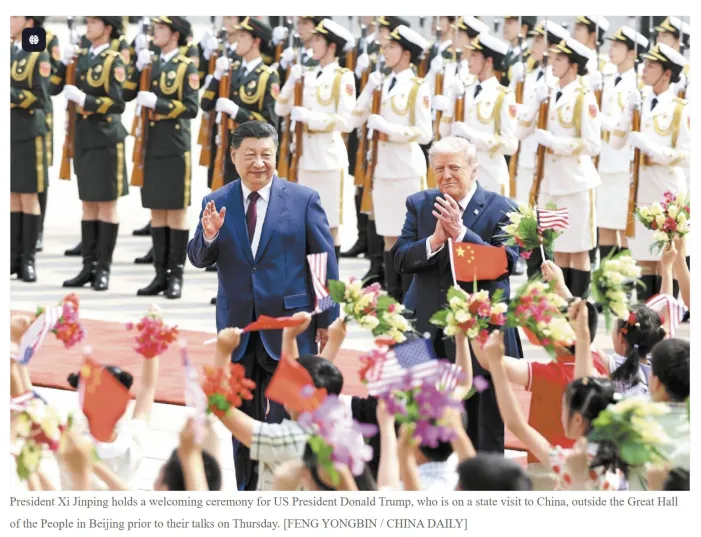
Jan Oberg May 15, 2026 Go to this Fox News page and scroll the whole way down: President Donald Trump tells the world that his meeting with President Xi Jinping yielded a lot of very concrete political and economic results – of course, only where the Chinese side, according to him, agreed with him. He does not mention the Taiwan issue, but Secretary of State, Marco Rubio, says that it did not feature prominently in their talks and that the US policy on Taiwan has not changed. Then go to China Daily – or Global Times – and you will see that for the Chinese it is framework, principles, structure of cooperation etc. that matters – all embedded in the overall idea of “constructive bilateral relationship of strategic stability.” Nowhere is any concrete agreement or deal – all that Trump refers to – mentioned. At the general level, this gives you insights into the very different social...
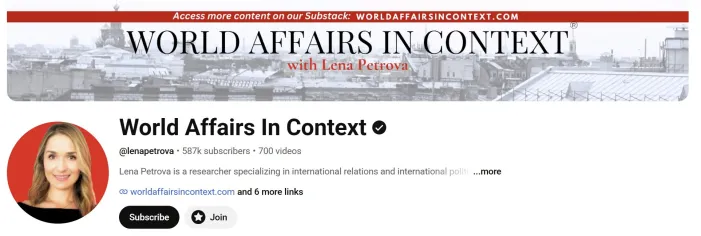
Lena Petrova of “World Affairs In Context” with more than half a million subscribers on YouTube wanted to explore what a peace researcher like me has to say about, among other things, the First and the Second Cold War and why eethics has disappeared from politics. I am particularly happy about this conversation that also yielded an amazing number of very appreciative comments on YouTube. No doubt, people are longing for alternatives, including peace perspectives.
The MIMAC – Military-Industrial-Media-Academic Complex – drives the world’s rampant militarism and wars without end. Here is a short reflection of how it works against all interests of humanity. #5 deals with why there is no real enemy or threat images/analysis. It’s all ex-post constructions. And, btw, theTFF Peace Pulse is now on Rumble.

TFF on Substack

Discover more from TFF Transnational Foundation & Jan Oberg.

Most Popular

Jan Oberg May 15, 2026 Go to this Fox News page and scroll the whole way down: President Donald Trump tells the world that his meeting with President Xi Jinping yielded a lot of very concrete political and economic results – of course, only where the Chinese side, according to him, agreed with him. He does not mention the Taiwan issue, but Secretary of State, Marco Rubio, says that it did not feature prominently in their talks and that the US policy on Taiwan has not changed. Then go to China Daily – or Global Times – and you will see that for the Chinese it is framework, principles, structure of cooperation etc. that matters – all embedded in the overall idea of “constructive bilateral relationship of strategic stability.” Nowhere is any concrete agreement or deal – all that Trump refers to – mentioned. At the general level, this gives you insights into the very different social...
Lena Petrova of “World Affairs In Context” with more than half a million subscribers on YouTube wanted to explore what a peace researcher like me has to say about, among other things, the First and the Second Cold War and why eethics has disappeared from politics. I am particularly happy about this conversation that also yielded an amazing number of very appreciative comments on YouTube. No doubt, people are longing for alternatives, including peace perspectives.
The MIMAC – Military-Industrial-Media-Academic Complex – drives the world’s rampant militarism and wars without end. Here is a short reflection of how it works against all interests of humanity. #5 deals with why there is no real enemy or threat images/analysis. It’s all ex-post constructions. And, btw, theTFF Peace Pulse is now on Rumble.
Read More
Screenshot-2026-05-15-103534
Jan Oberg May 15, 2026 Go to this Fox News page and scroll the whole way down: President Donald Trump tells the world that his meeting with President Xi Jinping yielded a lot of very concrete political and economic results – of course, only where the Chinese side, according to him, agreed with him. He does not mention the Taiwan issue, but Secretary of State, Marco Rubio, says that it did not feature prominently in their talks and that the US policy on Taiwan has not changed. Then go to China Daily – or Global Times – and you will see that for the Chinese it is framework, principles, structure of cooperation etc. that matters – all embedded in the overall idea of “constructive bilateral relationship of strategic stability.” Nowhere is any concrete agreement or deal – all that Trump refers to – mentioned. At the general level, this gives you insights into the very different social...
Screenshot-2026-05-12-104023
Lena Petrova of “World Affairs In Context” with more than half a million subscribers on YouTube wanted to explore what a peace researcher like me has to say about, among other things, the First and the Second Cold War and why eethics has disappeared from politics. I am particularly happy about this conversation that also yielded an amazing number of very appreciative comments on YouTube. No doubt, people are longing for alternatives, including peace perspectives.
Screenshot-2026-04-13-154551 (2)
The MIMAC – Military-Industrial-Media-Academic Complex – drives the world’s rampant militarism and wars without end. Here is a short reflection of how it works against all interests of humanity. #5 deals with why there is no real enemy or threat images/analysis. It’s all ex-post constructions. And, btw, theTFF Peace Pulse is now on Rumble.
Screenshot-2026-04-13-154551 (1)
Jan Oberg, TFF director April 28, 2026 In this third TFF Peace Pulse, I make the important distinction between the violence and the conflict that violence is a symptom of. If you want peace, focus on the underlying conflict because that is the key to resolution, peacemaking, and a better future for the parties. The West is obsessed with violence, just look around you – and 90+ per cent of the public debate is about military issues and other violence – totally wasted for peace. These Peace Pulses will only be published here a few times. You will also not find them on YouTube and Vimeo because both platforms have blocked TFF and me; you know, peace is dangerous these days. Most TFF’s videos since 2007 are now on Rumble.
Screenshot-2026-04-13-154551
In contrast to most, we’ll bring alternatives, solutions, hope and strategies for a better future. Times are dangerous, yes, but that only intensifies the need for constructive thinking and action! Jan Oberg, TFF director April 13, 2026 The new TFF Peace Pulse uses video messages in a new way: Max 3-5-minute-long comments, ideas or perhaps mini-lectures, all about peace – positive peace. We launch them today on April 13, 2026 with a carefully crafted visual aesthetic fitting the content. We hope to publish them regularly from now on. We launch Peace Pulse (PP) – for a number of reasons. The world is in chaos, and there are countless reasons to feel concerned, frustrated, even angry. The atmosphere is saturated with doom and gloom, with negative energy and rear‑mirror thinking, while vision, imagination, alternatives, strategies and genuine future‑mindedness remain in short supply. And without them, we simply can’t save the world. Looking at problems from a hundred angles will...
IMG_5165 (1)
PART II — Publishing Peace in a System That Prioritises Militarism Jan Oberg, TFF director April 10, 2026 How TFF Maintains a Daily Voice in a Digital World Built for Noise This article is part of the series “TFF at 40″ and it invites you to learn about Four Decades of Publishing Peace. It takes a look at how a small, people‑financed peace foundation has communicated across four generations of technology — from wax stencils and fax machines to mass email and Substack — and why TFF continues to publish every single day in a system that rewards noise, conflict, and militarism. ◆ What it means to publish peace every single day in a digital system built for 24/7 news and other noise, confrontation, and militarism. How TFF’s independence, continuity, and global readership defy algorithms, donor cycles, and Western media censorhip — and why the Majority World keeps listening. When the...