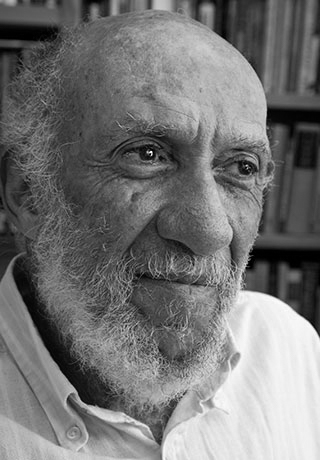
– Month after month professor Richard Falk who is also the UN Secretary-General’s Rapporteur for the Occupied Territories, urges you to be aware of this rampant but invisible human rights violation by Israeli authorities. Please speak up, share with your friends and alert your media and politicians wherever you are.
Zionist lobbies throw around accusations of ‘anti-semitism’ which could be seen as a psycho-political projection of what might be appropriately be termed ‘anti-Palestinianism’, says blog editor Jan Oberg
When it is realized that Mahatma Gandhi shook the British Empire with a series of hunger strikes, none lasting more than 21 days, it is shameful that Palestinian hunger strikers ever since last December continue to exhibit their extreme courage by refusing food for periods ranging between 40 and over 90 days, and yet these exploits are unreported by the media and generally ignored by relevant international institutions.
The latest Palestinians who have aroused emergency concerns among Palestinians, because their hunger strikes have brought them to death’s door, are Hassan Safadi and Samer Al-Barq. Both had ended long earlier strikes because they were promised releases under an Egyptian brokered deal that was announced on May 14, 2012, and not consistently implemented by Israel.
Three respected human rights organizations that have a long and honorable record of investigating Israeli prison conditions have issued a statement in the last several days expressing their ‘grave concern’ about the medical condition of these two men and their ‘utmost outrage’ at the treatment that they have been receiving from the Israeli Prison Service.
For instance, Hassan Safadi, now on the 59th day of a second hunger strike, having previously ended a 71 day fast after the release agreement was signed, is reported by Addameer and Physicians for Human Rights-Israel, to be suffering from kidney problems, extreme weakness, severe weight loss, headaches, dizziness, and has difficulty standing. It is well established in medical circles that there exists a serious and risk of cardio-vascular failure for a hunger strike that lasts beyond 45 days.
In addition to the physical strains of a prolonged hunger strike, the Israeli Prison Service deliberately aggravates the situation facing these hunger strikers in ways that have been aptly described as cruel and degrading punishment. Such language is generally qualifies as the accepted international definition of torture.
For instance, hunger strikers are punitively placed in solitary confinement or put coercively in the presence of other prisoners or guards not on hunger strikes so as to be taunted by those enjoying food. It is also an added element of strain that these individuals were given false hopes of release, and then had these expectations dashed without even the disclosure of reasons. Both of these strikers have been and are being held under administrative detention procedures that involve secret evidence and the absence of criminal charges.
The scrupulous Israel human rights organization, B’Tselem, has written that the use of administrative detention is a violation of international humanitarian law unless limited to truly exceptional cases, which has not been the case as attested even in the Israeli press.
Hassan Safaedi’s experience with administrative detention exhibits the manner of its deployment by Israeli occupation authorities. Administrative detention was initially relied upon to arrest him when he was a child of 16, and since then he has served a variety of prison terms without charges or trial, and well authenticated reports of abuse, amounting to a total of ten years, which means that during his 34 years of life a considerable proportion of his life has been behind bars on the basis of being alleged security threat, but without any opportunity for elemental due process in the form of opportunity to counter evidence, presumption of innocence, and confronting accusations.
Amnesty International has recently again called for an international investigation of the treatment of Palestinian detainees and reassurances that Palestinians are not being punished because they have recourse to hunger strikes.
It is important to be reminded of the context of hunger strikes. Such undertakings require great determination of which most of us are incapable, and an exceptionally strong inner commitment that connects life and death in a powerful, almost mystical, unity. It is no wonder that Palestinian hunger strikers have been inspired by the 1989 Tiananman Square Declaration of Hunger Strikers: “We are not in search of death; we are looking for real life.”
The ten IRA hunger strikers, led by Bobby Sands, who died in 1981 at the Maze Prison in Northern Ireland transformed the British Government’s approach to the conflict, leading to establishing at last a genuine peace process that was climaxed by the Good Friday Agreement that brought the violence mostly to an end. Hunger strikes of this depth send a signal of desperation that can only be ignored by a mobilization of moral insensitivity generating a condition that is somewhere between what psychologists call ‘denial’ and others describe as ‘moral numbness.’
So why has the world media ignored the Palestinian hunger strikers?
Must we conclude that only Palestinian violence is newsworthy for the West?
Must Palestinian hunger striking prisoners die before their acts are of notice?
Why is so much attention given to human rights abuses elsewhere in the world, and so little attention accorded to the Palestinian struggle that is supposed to engage the United Nations and underpin so much of the conflictual behavior in the Middle East?
Aside from a few online blogs and the Electric Intifada there is a media blackout about these most recent hunger strikes, another confirmation of the Politics of Invisibility when it comes to Palestinian victimization.
After all, the United Nations, somewhat ill-advisedly, is one of the four parties (the others being the United States, Russia, the European Union) composing The Quartet, which has set forth the roadmap that is supposed to produce peace, and should exhibit some special responsibility for such a breach of normalcy in the treatment of Palestinians detained in Israeli prisons.
Addameer, al-Haq, and Physicians for Human Rights-Israel have called on three international actors to do something about this situation, at the very least, by way of fact-finding missions and reports—UN High Commissioner of Human Rights, the European Union, and the High Contracting Parties of the Fourth Geneva Convention.
Is it too much to expect some sort of response? We do not expect the United States Government, so partisan in all aspects of the conflict, to raise its voice despite its protestations of concern about human rights in a wide array of countries and despite President Obama’s almost forgotten promises made in his June 2009 Cairo speech to understand the suffering of the Palestinian people and to turn a new page in Middle Eastern policy.
Since I have been following this saga of hunger strikes unfold in recent months, starting with Khader Adnan and Hana Shalabi in December 2011, I have been deeply moved by the consistently elevated human quality of these hunger strikers that is disclosed through their statements and interactions with family members and the public. Their words of devotion and loving solidarity are possessed of an authenticity only associated with feelings rarely expressed except in extreme situations when life itself is in jeopardy.
This tenderness of language, an absence of hate and even bitterness, and a tone of deep love and devotion is what makes these statements from the heart so compelling. I find these sentiments to be spiritually uplifting. Such utterances deserve to be as widely shared as possible to allow for a better understanding of what is being lost through this long night of the soul afflicting the Palestinian people. Surely, also, the politics of struggle is implicit, but the feelings being expressed are at once deeply political and beyond politics.
I can only hope that informed and sensitive writers, poets, singers, and journalists, especially among the Palestinians, who share my understanding of these hunger strikes will do their best to convey to the world the meaning of such Palestinian explorations in the interior politics of nonviolence.
These are stories that deserve to be told in their fullness maybe by interviews, maybe through a series of biographical sketches, maybe by poems, paintings, and songs, but they need to be told at this time in the same spirit of love, empathy, solidarity, and urgency that animates theses utterances of the Palestinian hunger strikers.
I paste below one sample to illustrate what I have been trying to express: a letter from Hassan Safadi to his mother written during his current hunger strike, published on July 30, 2012 by the Electric Intifada, translated from Arabic by a young Palestinian blogger, Linah Alsaafin, who contributed a moving commentary that is a step in the direction I am encouraging:
“First I want to thank you dear mother for your wonderful letter, whose every word penetrated my heart and immersed me in happiness, love and tenderness. I am blessed to have a mother like you. Please thank everyone who stood in solidarity and prayed for me.
What increased my happiness and contentment was you writing that you raise your head up proudly because of me…I hope your head will always be lifted high and your spirits elevated oh loved one. As for waiting for my release, I remind you mother we are believers.
We are waiting for God’s mercy with patience…as Prophet Muhammad related God’s words, “I am as my slave thinks…” As you await my release, think positively and God willing, God will not leave you and your work and He will not disappoint your expectations.
Thank God I have a mother like you, a patient believer who prays for me from her heart, and I thank you dear mother for the beautiful song you wrote that warmed my chest as I read the lyrics..
Congratulations to Nelli’s [his sister] twins…I pray to God they will be attributed to Muslims and to Islam and for them to receive the best upbringing, and for their time to be better than our time.
Say hello and salute Abu Jamal and thank him for his efforts and say hello to Ayah and Amir and tell them I miss them, tell everyone who asked about me I say hello, and pray for them.
How beautiful the last line in your letter is! “God is with you, may He protect you and take care of you…I leave you in His safe hands.”
Please mother, always pray for me using those words especially in the month of Ramadan, happy holidays.
Your son”