Nigeria - I have seen the future and know it works

/10/jonathanpower2.jpg”>

Did you know that Nigeria, the most populated country in black Africa, is now one of the top five fastest growing big economies in the world? (The others are China, India, Turkey and Argentina.)

The image of Nigeria is of poverty, crime, corruption, election fiddling and maladministration. Africa, I find from my family and friends, is still a continent where death stalks – war, starving children and impoverished refugees.

But the tale of progress is unsung. This wretchedness is the only news that penetrates. Only one western newspaper, the Financial Times, has a full time correspondent in Nigeria where one third of all the black people in the world live. The rest get their news from the fickle eye of television and the rest of the newspaper pack.

In the last six months the only news from Nigeria is the bombings of the extremist Islamic grouping, Boko Haram. It has caused a lot of mayhem yet its influence and damage is mainly confined to a handful of northern states. If you have watched the Academy Award winner, “The Iron Lady”, you will have seen that the Irish Republican Army was far more frightening. By a hair’s breadth it failed to blow up Prime Minister Margaret Thatcher and murdered the Queen’s cousin. Nothing comparable to this has happened in Nigeria.

Before Boko Haram the media’s focus was on the insurgents of the delta area of the great Niger river. One of the world’s major oil producers, oil has polluted both the land and minds of local inhabitants. One result was young men picking up guns, blowing up oil wells, kidnapping oil workers and stealing vast amounts of oil. Great television. Exciting news reports.

Now that the late president, Uramu Yar’Adua and his successor, President Goodluck Jonathan, have ended most of the insurgency with careful negotiation that involved an amnesty and a hefty financial settlement that includes job training, the violence is dramatically down. This end of the story has been reported only a little.

In Abuja I interviewed the resident chief of the International Monetary Fund, Scott Rogers. He told me if you take out the oil sector and agriculture from the national income statistics Nigeria is growing at 12% a year which he calls “phenomenal”. Growth is happening in manufacturing, telecommunications (which grew at the astonishing rate of 35% and adds 2% to the annual growth rate of the whole economy), retail and wholesale trade, solid minerals and construction. Just in the last year the number of informal businesses has doubled.

Last year trade with the UK increased by 65%. If Nigeria can get a grip on its power shortage problem, says the brilliant, reforming finance minister, Ngozi Iweala, growth will hit double digits. Even the traditional poor relation, agriculture, is growing at 6% a year, a good step ahead of population growth. That is one of the top three in Africa.

In many parts of Nigeria the state of health clinics and schools remains appalling. Infant mortality in the north is one of the worst in the world. Although it has an extensive network of good tarmac highways too many roads have serious potholes.

Still the progress is very visible. One indicator of the “trickle down” of the wealth to the masses is the proliferation of motorbikes – with helmet clad riders. There are a number of cities which have become “modern”. Abuja is one – although its poorer workers are located in deprived satellite towns. Calabar is another – a city of a million where two successive governors have transformed it. There are tree-lined and pothole-free roads, flower beds common, parks, health clinics, clean water, inoculations, primary schools for everyone and a lack of slums. Along the river is built a beautiful esplanade.

I asked President Goodluck Jonathan why this couldn’t be emulated. “It is commitment”, he replied. “States are not short of money but it is how they use it. Corruption and the siphoning off of state funds is a serious problem.”

– “But look at Lagos”, he went on, “a city of 15 million with a bad reputation. You now see good, clean, roads with trees all along, interchanges with flowers and no litter and bus lanes. The traffic is moving and delays are less. Poverty is decreasing and crime is down. Investment from overseas is increasing at a fast rate and the economy is growing at well over 10% a year. There are more health clinics and elementary schools. Again, it is because of two good governors.” The airport has dramatically improved. However, the port is still a nest of inefficiency and corruption.

I remember Lagos before Olusegun Obasanjo was elected after the fall of the military dictatorship. One could even find the occasional dead body on the edge of the road waiting to be picked up.

I came away after a two week stay convinced I have seen the future and know it works.

Copyright: Jonathan Power

Foreign affairs columnist, film-maker and author

Share

Leave a Reply

Your email address will not be published. Required fields are marked *

Related Posts

Peace is promoted by constructive proposals and dialogue Four preceding PressInfos have expressed concern over — and criticised — the ongoing, militarisation of the EU. Some will say: but there are no alternatives. We believe that there are always alternatives, that democracies are characterised by alternatives and choice, and that openly discussed alternatives will improve the quality and legitimacy of society’s decision–making. In addition, it is an intellectual and moral challenge to not only criticise but also be constructive. If we only tell people that we think they are wrong, they are not likely to listen. However, if we say: what are your views on this set of ideas and steps? — we may sometimes engage them in dialogue and sow a seed. Most people in power circles live their daily lives in in a time frame and a social space where certain ideas, viewpoints and concepts are just not...
Photos © TFF 2000 Read PressInfo 90 “Lift the Sanctions and Bring More Aid to Yugoslavia” See Pictures from Belgrade © TFF 2000 Please reprint, copy, archive, quote or re-post this item, but please retain the source.
Av FRANK SØHOLM GREVIL 16 augusti 2004  Vi er nu nået til tredje akt i det absurde teaterstykke, der i analogi med de store skueprocesser i Moskva 1936-38 er blevet døbt ‘Grevil-sagen’. Første akt bestod i min anonyme fremlæggelse af egenhændigt nedklassificerede rapporter i Berlingske Tidende i februar og marts. Andet akt udgjordes af min fremtræden med navn og billede i Information i april samt den efterfølgende mediestorm, som uden min direkte medvirken kostede en forsvarsminister taburetten samt en sigtelse for brud på tavshedspligten. Tredje akt bliver en retssag, hvor jeg står tiltalt for at have overtrådt straffelovens bestemmelser om uberettiget videregivelse eller udnyttelse af fortrolige oplysninger. Statsanklageren har ovenikøbet valgt at påberåbe sig særligt skærpende omstændigheder. Da jeg aldrig har modtaget betaling for at stille rapporterne til rådighed eller lade mig interviewe, må det skærpende bestå i, at “videregivelsen eller udnyttelsen er sket under sådanne omstændigheder, at det påfører...

Recent Articles

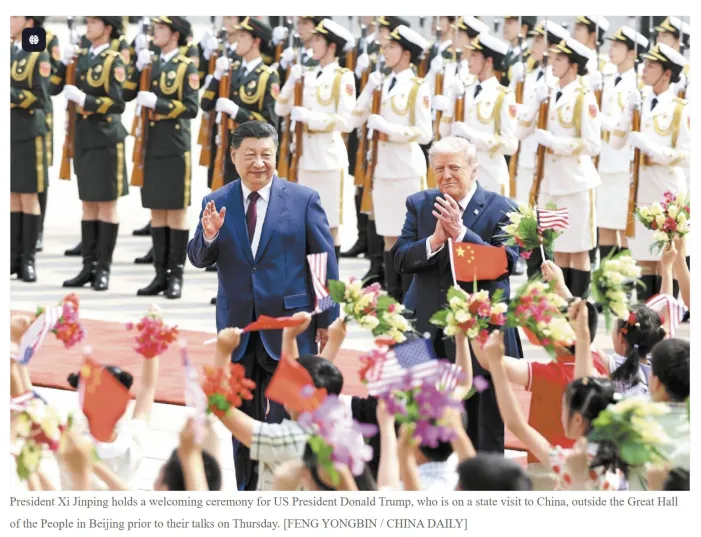
Jan Oberg May 15, 2026 Go to this Fox News page and scroll the whole way down: President Donald Trump tells the world that his meeting with President Xi Jinping yielded a lot of very concrete political and economic results – of course, only where the Chinese side, according to him, agreed with him. He does not mention the Taiwan issue, but Secretary of State, Marco Rubio, says that it did not feature prominently in their talks and that the US policy on Taiwan has not changed. Then go to China Daily – or Global Times – and you will see that for the Chinese it is framework, principles, structure of cooperation etc. that matters – all embedded in the overall idea of “constructive bilateral relationship of strategic stability.” Nowhere is any concrete agreement or deal – all that Trump refers to – mentioned. At the general level, this gives you insights into the very different social...
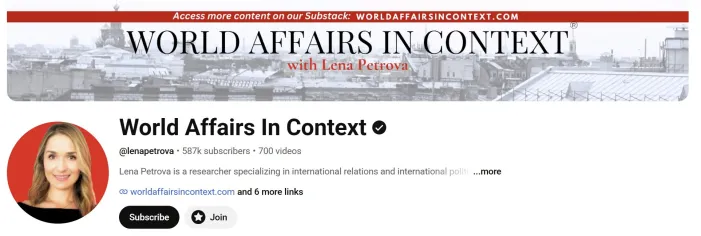
Lena Petrova of “World Affairs In Context” with more than half a million subscribers on YouTube wanted to explore what a peace researcher like me has to say about, among other things, the First and the Second Cold War and why eethics has disappeared from politics. I am particularly happy about this conversation that also yielded an amazing number of very appreciative comments on YouTube. No doubt, people are longing for alternatives, including peace perspectives.
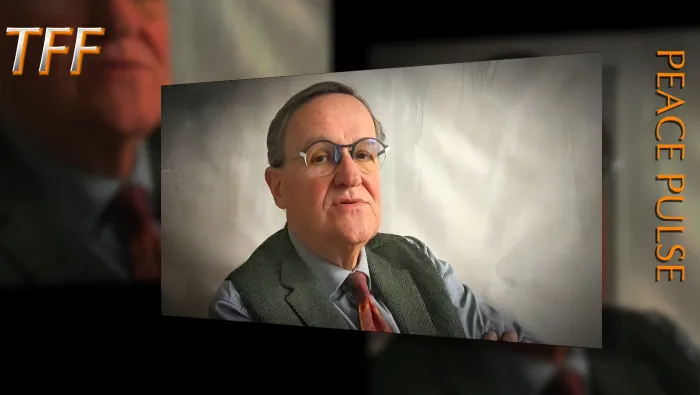
The MIMAC – Military-Industrial-Media-Academic Complex – drives the world’s rampant militarism and wars without end. Here is a short reflection of how it works against all interests of humanity. #5 deals with why there is no real enemy or threat images/analysis. It’s all ex-post constructions. And, btw, theTFF Peace Pulse is now on Rumble.

TFF on Substack

Discover more from TFF Transnational Foundation & Jan Oberg.

Most Popular

Jan Oberg May 15, 2026 Go to this Fox News page and scroll the whole way down: President Donald Trump tells the world that his meeting with President Xi Jinping yielded a lot of very concrete political and economic results – of course, only where the Chinese side, according to him, agreed with him. He does not mention the Taiwan issue, but Secretary of State, Marco Rubio, says that it did not feature prominently in their talks and that the US policy on Taiwan has not changed. Then go to China Daily – or Global Times – and you will see that for the Chinese it is framework, principles, structure of cooperation etc. that matters – all embedded in the overall idea of “constructive bilateral relationship of strategic stability.” Nowhere is any concrete agreement or deal – all that Trump refers to – mentioned. At the general level, this gives you insights into the very different social...
Lena Petrova of “World Affairs In Context” with more than half a million subscribers on YouTube wanted to explore what a peace researcher like me has to say about, among other things, the First and the Second Cold War and why eethics has disappeared from politics. I am particularly happy about this conversation that also yielded an amazing number of very appreciative comments on YouTube. No doubt, people are longing for alternatives, including peace perspectives.
The MIMAC – Military-Industrial-Media-Academic Complex – drives the world’s rampant militarism and wars without end. Here is a short reflection of how it works against all interests of humanity. #5 deals with why there is no real enemy or threat images/analysis. It’s all ex-post constructions. And, btw, theTFF Peace Pulse is now on Rumble.
Read More
Screenshot-2026-05-15-103534
Jan Oberg May 15, 2026 Go to this Fox News page and scroll the whole way down: President Donald Trump tells the world that his meeting with President Xi Jinping yielded a lot of very concrete political and economic results – of course, only where the Chinese side, according to him, agreed with him. He does not mention the Taiwan issue, but Secretary of State, Marco Rubio, says that it did not feature prominently in their talks and that the US policy on Taiwan has not changed. Then go to China Daily – or Global Times – and you will see that for the Chinese it is framework, principles, structure of cooperation etc. that matters – all embedded in the overall idea of “constructive bilateral relationship of strategic stability.” Nowhere is any concrete agreement or deal – all that Trump refers to – mentioned. At the general level, this gives you insights into the very different social...
Screenshot-2026-05-12-104023
Lena Petrova of “World Affairs In Context” with more than half a million subscribers on YouTube wanted to explore what a peace researcher like me has to say about, among other things, the First and the Second Cold War and why eethics has disappeared from politics. I am particularly happy about this conversation that also yielded an amazing number of very appreciative comments on YouTube. No doubt, people are longing for alternatives, including peace perspectives.
Screenshot-2026-04-13-154551 (2)
The MIMAC – Military-Industrial-Media-Academic Complex – drives the world’s rampant militarism and wars without end. Here is a short reflection of how it works against all interests of humanity. #5 deals with why there is no real enemy or threat images/analysis. It’s all ex-post constructions. And, btw, theTFF Peace Pulse is now on Rumble.
Screenshot-2026-04-13-154551 (1)
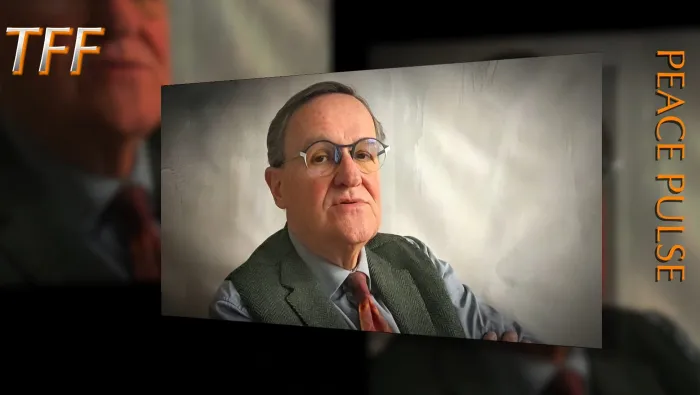
Jan Oberg, TFF director April 28, 2026 In this third TFF Peace Pulse, I make the important distinction between the violence and the conflict that violence is a symptom of. If you want peace, focus on the underlying conflict because that is the key to resolution, peacemaking, and a better future for the parties. The West is obsessed with violence, just look around you – and 90+ per cent of the public debate is about military issues and other violence – totally wasted for peace. These Peace Pulses will only be published here a few times. You will also not find them on YouTube and Vimeo because both platforms have blocked TFF and me; you know, peace is dangerous these days. Most TFF’s videos since 2007 are now on Rumble.
Screenshot-2026-04-13-154551
In contrast to most, we’ll bring alternatives, solutions, hope and strategies for a better future. Times are dangerous, yes, but that only intensifies the need for constructive thinking and action! Jan Oberg, TFF director April 13, 2026 The new TFF Peace Pulse uses video messages in a new way: Max 3-5-minute-long comments, ideas or perhaps mini-lectures, all about peace – positive peace. We launch them today on April 13, 2026 with a carefully crafted visual aesthetic fitting the content. We hope to publish them regularly from now on. We launch Peace Pulse (PP) – for a number of reasons. The world is in chaos, and there are countless reasons to feel concerned, frustrated, even angry. The atmosphere is saturated with doom and gloom, with negative energy and rear‑mirror thinking, while vision, imagination, alternatives, strategies and genuine future‑mindedness remain in short supply. And without them, we simply can’t save the world. Looking at problems from a hundred angles will...
IMG_5165 (1)
PART II — Publishing Peace in a System That Prioritises Militarism Jan Oberg, TFF director April 10, 2026 How TFF Maintains a Daily Voice in a Digital World Built for Noise This article is part of the series “TFF at 40″ and it invites you to learn about Four Decades of Publishing Peace. It takes a look at how a small, people‑financed peace foundation has communicated across four generations of technology — from wax stencils and fax machines to mass email and Substack — and why TFF continues to publish every single day in a system that rewards noise, conflict, and militarism. ◆ What it means to publish peace every single day in a digital system built for 24/7 news and other noise, confrontation, and militarism. How TFF’s independence, continuity, and global readership defy algorithms, donor cycles, and Western media censorhip — and why the Majority World keeps listening. When the...