
Ten questions for coming Chinese and US leaders

johangaltung

Writing from Kyoto, Japan

Japanese media make it look as if China attacked Japan in the 1930s-1940s, massacred a major city, with a concentration camp beating Auschwitz in cruelty. And, Japan fears a repetition. Well, Japan fears something, probably what Western aggressors fear too: Of course, we never did anything wrong, but one day they may come and treat us the way we treated them.

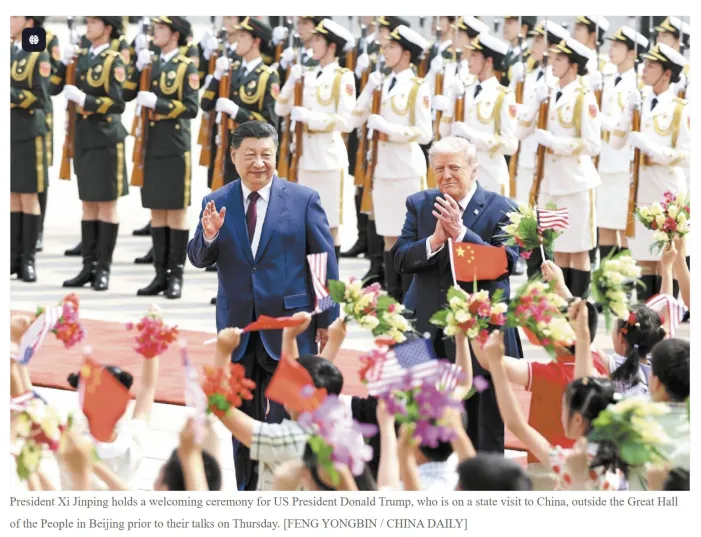
In 2012 the power will/may change in both superpowers, and we have a right to know how the power-wielders look at some basic issues. David Shambaugh, director of the China Policy Program in the Elliott School of International Affairs, George Washington University, put “Ten Questions for China’s heir presumptive (International Herald Tribune 11-12 Feb 2012), ahead of the coming president Xi Jinping’s visit to Washington.

Nothing wrong in doing that, the questions are all relevant, designed to find out whether Xi “embraces and shapes positive changes for China at home and abroad or is he another risk-adverse apparatchik”.

Let us design similar questions to US presidential candidates about US problems. A little economic background: in 1980 China was the world No. 11 in GDP, in 1986 No. 8, in 2002 No. 6, in 2010 No. 2. In 2012?

Question No. 1: Will Xi return to a politically reformist path for the Chinese Communist Party? Can Xi stand up to the state security apparatus, the military, the party propaganda system and large state-owned enterprises-or be beholden to them?
Can Obama-Romney stand up to their agencies and military, to US mainstream media propaganda and to corporate enterprises, like those running the US Federal Reserve bank? To Goldman-Sachs?

No. 2: Can Xi turn the rhetoric of economic ‘rebalancing’ into reality? Away from exports from coastal areas to domestic consumption and to the interior? (Many will say this is not only rhetoric, though).
Will Obama-Romney turn the rhetoric of job-creation into reality, or be beholden to the finance economy?

No. 3: Will Xi be able to devise a more humane policy toward Tibet and Xinjiang?
Will Obama-Romney devise a humane policy toward Hawaiians yearning for sovereignty in their lands annexed in 1898, and toward the First Nations yearning for dignity in lands conquered from 1607 in Virginia and 1620 in Massachusetts?

No. 4: Can Xi and the party apparatus reign in the nationalism that is pushing the government to take extreme positions on territorial disputes with China’s neighbors, to “stand up” to the United States and behave aggressively internationally?
True, China’s views clashes with neighbors’ over some islands/islets, but major issues with Russia have been settled, as opposed to the rather major USA-Mexico issue over the 1846-48 war; they are probably not even conscious of it.
Will Obama-Romney reign in the planned deployment of much of the 300-ship strong US Navy to the Pacific to “stand up” to China, or will they prefer to invite a similar Chinese deployment off the US West Coast for balance? And, will they stop aggressive behavior internationally, not only major wars with invasion and occupation, but also drones and special ops in many countries, unknown even to their own governments, with extra-judicial killings?

No. 5: Will Xi be sufficiently confident to call the relaxation of tightened control of mainstream media, social media, the Internet, and educational institutions?
Will Obama-Romney be sufficiently confident to prohibit three major arms industry corporations to exercise control of the three major mainstream TV channels, CNN-ABC-NBC? Forbid CIA-FBI and credit card companies from spying-controlling social media? To withdraw FBI agents deployed to US university campuses?

No. 6: Can Xi reign in the military, which has demonstrated a worrisome tendency in recent years to undertake actions that provoke China’s neighbors–independently of civilian control?
Can Obama-Romney stop the US military, not from provoking, but from killing millions all over the world, overtly under the Pentagon and covertly under the CIA and other agencies? Partly independently of any civilian control under the War Powers Act, partly with Congress support–except for one honorable lady representative?

No. 7: Will Xi authorize a foreign policy that is more substance than rhetoric? Will Obama-Romney authorize a foreign policy that is more rhetoric than substance? The world has had enough US foreign policy substance; rhetoric does not kill.

No. 8: How will Xi handle the growing discontent across Africa, the Middle East and Latin America over China’s rapacious and mercantilist energy, aid and trade policies?
How will Obama-Romney handle it? If not, they will suffer the consequences.

No. 9: Will Xi take a more active, supportive, less obstructionist role in global governance?
Will Obama-Romney stop crippling the UN, using the Security Council for US purposes, being sensitive to needs and voices from other regions?

No. 10: Will Xi have the strategic foresight to invest in the advancement of the relationship with the United States?
Whereas China learns much from the US, will Obama-Romney have the strategic foresight to learn how to lift the bottom up, economic distribution, and green technology from China, thereby advancing the relation?

Questions should not be asked of Chinese leaders without having similar questions answered about the USA first, and vice versa.

China has as a principle not to confront the USA, and has attacked neither Japan nor the US; the latter are the ones that attacked China. Hence, a little et tu Brute – look at yourself – may be useful in identifying key world problems.
Share

Leave a Reply

Your email address will not be published. Required fields are marked *

Related Posts

Peace is promoted by constructive proposals and dialogue Four preceding PressInfos have expressed concern over — and criticised — the ongoing, militarisation of the EU. Some will say: but there are no alternatives. We believe that there are always alternatives, that democracies are characterised by alternatives and choice, and that openly discussed alternatives will improve the quality and legitimacy of society’s decision–making. In addition, it is an intellectual and moral challenge to not only criticise but also be constructive. If we only tell people that we think they are wrong, they are not likely to listen. However, if we say: what are your views on this set of ideas and steps? — we may sometimes engage them in dialogue and sow a seed. Most people in power circles live their daily lives in in a time frame and a social space where certain ideas, viewpoints and concepts are just not...
Photos © TFF 2000 Read PressInfo 90 “Lift the Sanctions and Bring More Aid to Yugoslavia” See Pictures from Belgrade © TFF 2000 Please reprint, copy, archive, quote or re-post this item, but please retain the source.
By Jan ObergTFF co-founder and director February 11, 2026 PART 3 — ECONOMICS, TRADE & FINANCIAL SOVEREIGNTY A. Trade Measures & Market Signaling Economic pressure can be applied instantly and scaled without violence. Immediate Measures (within a week) Government boycott US goods and services  A very powerful signal which over time will be felt. Targeted tariffs on selected U.S. goods Symbolic but high-visibility sectors send a clear message. Suspend trade facilitation talks A peaceful pause that signals deep concern. Freeze U.S. participation in public procurement – military procurement in particular A nonviolent way to reduce influence. Competition law review of U.S. corporations A legal tool to scrutinise market dominance. Longer-Term Measures EU–Asia–Africa trade corridors Reducing reliance on U.S. markets. European supply chains for critical minerals Strategic autonomy in resource access. European Strategic Trade Authority Monitoring coercive practices globally. Euro-denominated commodity markets Weakening the dollar’s pricing monopoly. The EU must resume contacts and negotiations with Russia, focusing on energy cooperation To...

Recent Articles

Jan Oberg May 15, 2026 Go to this Fox News page and scroll the whole way down: President Donald Trump tells the world that his meeting with President Xi Jinping yielded a lot of very concrete political and economic results – of course, only where the Chinese side, according to him, agreed with him. He does not mention the Taiwan issue, but Secretary of State, Marco Rubio, says that it did not feature prominently in their talks and that the US policy on Taiwan has not changed. Then go to China Daily – or Global Times – and you will see that for the Chinese it is framework, principles, structure of cooperation etc. that matters – all embedded in the overall idea of “constructive bilateral relationship of strategic stability.” Nowhere is any concrete agreement or deal – all that Trump refers to – mentioned. At the general level, this gives you insights into the very different social...
Lena Petrova of “World Affairs In Context” with more than half a million subscribers on YouTube wanted to explore what a peace researcher like me has to say about, among other things, the First and the Second Cold War and why eethics has disappeared from politics. I am particularly happy about this conversation that also yielded an amazing number of very appreciative comments on YouTube. No doubt, people are longing for alternatives, including peace perspectives.
The MIMAC – Military-Industrial-Media-Academic Complex – drives the world’s rampant militarism and wars without end. Here is a short reflection of how it works against all interests of humanity. #5 deals with why there is no real enemy or threat images/analysis. It’s all ex-post constructions. And, btw, theTFF Peace Pulse is now on Rumble.

TFF on Substack

Discover more from TFF Transnational Foundation & Jan Oberg.

Most Popular

Jan Oberg May 15, 2026 Go to this Fox News page and scroll the whole way down: President Donald Trump tells the world that his meeting with President Xi Jinping yielded a lot of very concrete political and economic results – of course, only where the Chinese side, according to him, agreed with him. He does not mention the Taiwan issue, but Secretary of State, Marco Rubio, says that it did not feature prominently in their talks and that the US policy on Taiwan has not changed. Then go to China Daily – or Global Times – and you will see that for the Chinese it is framework, principles, structure of cooperation etc. that matters – all embedded in the overall idea of “constructive bilateral relationship of strategic stability.” Nowhere is any concrete agreement or deal – all that Trump refers to – mentioned. At the general level, this gives you insights into the very different social...
Lena Petrova of “World Affairs In Context” with more than half a million subscribers on YouTube wanted to explore what a peace researcher like me has to say about, among other things, the First and the Second Cold War and why eethics has disappeared from politics. I am particularly happy about this conversation that also yielded an amazing number of very appreciative comments on YouTube. No doubt, people are longing for alternatives, including peace perspectives.
The MIMAC – Military-Industrial-Media-Academic Complex – drives the world’s rampant militarism and wars without end. Here is a short reflection of how it works against all interests of humanity. #5 deals with why there is no real enemy or threat images/analysis. It’s all ex-post constructions. And, btw, theTFF Peace Pulse is now on Rumble.
Read More
Screenshot-2026-05-15-103534
Jan Oberg May 15, 2026 Go to this Fox News page and scroll the whole way down: President Donald Trump tells the world that his meeting with President Xi Jinping yielded a lot of very concrete political and economic results – of course, only where the Chinese side, according to him, agreed with him. He does not mention the Taiwan issue, but Secretary of State, Marco Rubio, says that it did not feature prominently in their talks and that the US policy on Taiwan has not changed. Then go to China Daily – or Global Times – and you will see that for the Chinese it is framework, principles, structure of cooperation etc. that matters – all embedded in the overall idea of “constructive bilateral relationship of strategic stability.” Nowhere is any concrete agreement or deal – all that Trump refers to – mentioned. At the general level, this gives you insights into the very different social...
Screenshot-2026-05-12-104023
Lena Petrova of “World Affairs In Context” with more than half a million subscribers on YouTube wanted to explore what a peace researcher like me has to say about, among other things, the First and the Second Cold War and why eethics has disappeared from politics. I am particularly happy about this conversation that also yielded an amazing number of very appreciative comments on YouTube. No doubt, people are longing for alternatives, including peace perspectives.
Screenshot-2026-04-13-154551 (2)
The MIMAC – Military-Industrial-Media-Academic Complex – drives the world’s rampant militarism and wars without end. Here is a short reflection of how it works against all interests of humanity. #5 deals with why there is no real enemy or threat images/analysis. It’s all ex-post constructions. And, btw, theTFF Peace Pulse is now on Rumble.
Screenshot-2026-04-13-154551 (1)
Jan Oberg, TFF director April 28, 2026 In this third TFF Peace Pulse, I make the important distinction between the violence and the conflict that violence is a symptom of. If you want peace, focus on the underlying conflict because that is the key to resolution, peacemaking, and a better future for the parties. The West is obsessed with violence, just look around you – and 90+ per cent of the public debate is about military issues and other violence – totally wasted for peace. These Peace Pulses will only be published here a few times. You will also not find them on YouTube and Vimeo because both platforms have blocked TFF and me; you know, peace is dangerous these days. Most TFF’s videos since 2007 are now on Rumble.
Screenshot-2026-04-13-154551
In contrast to most, we’ll bring alternatives, solutions, hope and strategies for a better future. Times are dangerous, yes, but that only intensifies the need for constructive thinking and action! Jan Oberg, TFF director April 13, 2026 The new TFF Peace Pulse uses video messages in a new way: Max 3-5-minute-long comments, ideas or perhaps mini-lectures, all about peace – positive peace. We launch them today on April 13, 2026 with a carefully crafted visual aesthetic fitting the content. We hope to publish them regularly from now on. We launch Peace Pulse (PP) – for a number of reasons. The world is in chaos, and there are countless reasons to feel concerned, frustrated, even angry. The atmosphere is saturated with doom and gloom, with negative energy and rear‑mirror thinking, while vision, imagination, alternatives, strategies and genuine future‑mindedness remain in short supply. And without them, we simply can’t save the world. Looking at problems from a hundred angles will...
IMG_5165 (1)
PART II — Publishing Peace in a System That Prioritises Militarism Jan Oberg, TFF director April 10, 2026 How TFF Maintains a Daily Voice in a Digital World Built for Noise This article is part of the series “TFF at 40″ and it invites you to learn about Four Decades of Publishing Peace. It takes a look at how a small, people‑financed peace foundation has communicated across four generations of technology — from wax stencils and fax machines to mass email and Substack — and why TFF continues to publish every single day in a system that rewards noise, conflict, and militarism. ◆ What it means to publish peace every single day in a digital system built for 24/7 news and other noise, confrontation, and militarism. How TFF’s independence, continuity, and global readership defy algorithms, donor cycles, and Western media censorhip — and why the Majority World keeps listening. When the...