
Tony Robinson: We must stop the march towards World War III, now!

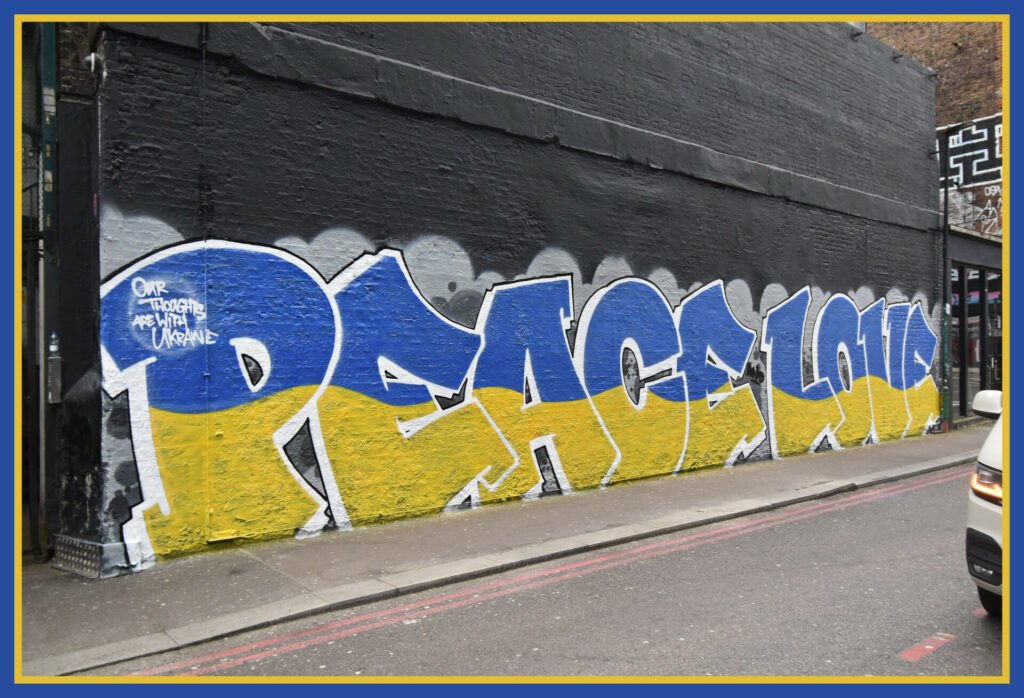
Image by Loco Steve on Flickr

Tony Robinson

March 1, 2023

In Europe, North America and a few other countries that feed themselves with information from the western media, it can have escaped no one’s attention that we are actually on the march towards World War III.

The similarities with the 1930s are terrifying:

  • Multiple fronts of military activity are opening up; one in Ukraine and two more on the way in Iran and Taiwan.
  • Extreme nationalism is on the rise, together with violent scapegoating of migrants of all kinds and, in fact, of anyone who is not a white, cis-gendered, heterosexual, male.
  • A deteriorating economic situation is leaving vast swathes of people impoverished, even in the world’s “richest” countries,
  • Propaganda is spewing from the media of all factions, dehumanising those who live in countries on the other side of the conflict, and,
  • Any attempt at raising voices for peace and negotiated settlements to conflicts is silenced or vilified, and those who attempt to do so are labelled as “appeasers”.

Yes, all the ingredients are here for the outbreak of an all-out world war from which human civilisation will not survive.

At this critical juncture in human history, we find the “peace” movement in the west to be totally fragmented and unable to give a clear and unified response. In the run-up to the war in Iraq in 2003, millions of people around the world marched against a war that they understood would never affect them personally because it was too far away geographically. Now when we are on the brink of a war that will affect the entire planet, the world is silent!

Originally published by Pressenza on February 28, 2023

We can identify two tendencies in this fragmented panorama; those who blame everything on the West, NATO and their military pretensions to global hegemony on the one hand and justify the invasion as an unfortunate but necessary evil; and those who blame everything on Vladimir Putin and his pretensions to re-establish the old Soviet Union. Both sides justify the bloodshed and even go as far as to call for more weapons to be sent to the region. Both factions put the value of “the State” above human life and in both cases, the last thing to be considered is the welfare of the people of the conflict region who never asked for this war, and who are being slaughtered in their thousands. Both sides see this conflict as a zero-sum game; someone must win and someone must lose. Both sides ignore the fact that the end to every conflict is eventually negotiated around a conference table. Both sides would prefer to see mass slaughter rather than negotiate a solution in which further deaths are prevented.

In this context, maybe now is the time to launch a call for a new peace movement that is centred on the welfare of human beings and the planet, first and foremost.

The foundations of a new peace movement

Before asking what would the foundations of a new peace movement be, we must ask, what does the world that we aspire to look like? It is not an abstract question because a world where conflict is not resolved through the armed act of war is not the world we live in today. If we want a world where people behave differently, we need an image of something different, a new utopia, a Universal Human Nation.

Today, more than ever before, ordinary citizens across the planet must come together and stand on a common platform of rights and responsibilities that have nothing to do with gender, economic status, religion, colour of skin, sexual orientation or nationality.

But what would this platform look like? What are the principles, what are the conditions, what are the rights and responsibilities that underpin a world in which everyone can live in harmony?

The need to start from the absolute sacredness of life and the planet

Firstly, it must be clear that the world that we aspire to must be sustainable. We only have one planet. It is illogical and detrimental to the survival of the human species to continue to allow activity that exhausts the planet’s resources. Planet Earth has to be cared for so that all forms of life can be sustained, not just for five years until the next election, but for hundreds of millions of years.

Secondly, however we are organised, there can be no other value above human life and the sustainability of the planet. The Nation State, lines on maps, religions, monarchs, money, the free market and other abstract concepts have all been used as the basis on which to organise society. All of them have resulted in incredible violence and cruelty against both human beings and the planet. A future system of global governance must be based on the principle that human life is the central value.

Thirdly, the right to a dignified life for all human beings must be enshrined in the constitution of a new world. A world which allows individuals or groups of human beings to subjugate other human beings to a life of pain and suffering is what have now and it doesn’t work.

Fourthly, the constitution of the new world must be based on the agreement that war and weapons of war are illegal. We can never again allow a small group of human beings to impose their will on the vast majority under the threat of war and violence. It is unlikely in the near future that human beings will develop the capacity to prevent conflict from happening at source, but we can develop the capacity through a legal framework to abolish violence and the use of weapons as a means to resolve conflict.

Finally, we must recognise that violence is not only the physical act of harming another person. Violence is also economic, psychological, sexual, cultural, religious, moral, etc. Violence in all its forms must be abolished and we must educate the future generations with the tools for resolving conflict through nonviolent personal and social transformation.

The time is now; the situation is urgent.

A massive awakening of public consciousness to the danger that we are threatened with is urgent!

The time has come for all the good people all around the world to reject the violence imposed by the global system in which we live.

The time has come to create the new world that we aspire to and to move in that direction through social organisation.

Perhaps this call to action from Europe for Peace can be a step in the right direction?

Will we be able to do it? The alternative doesn’t bear thinking about.

The author
Humanist Movement Activist, ex-Director of the Middle East Treaty Organization and coordinating committee member of Abolition 2000 – Global Network to Eliminate Nuclear Weapons, author of the book “Coffee with Silo and the Quest for Meaning in Life” and producer of the film “The Beginning of the End of Nuclear Weapons.” See his articles here.

Tony – an old friend of TFF – is also an editor at the unique and amazing global Pressenza – an international news agency dedicated to news about peace and nonviolence with offices in Athens, Barcelona, Berlin, Bordeaux, Brussels, Budapest, Buenos Aires, Florence, Lima, London, Madrid, Manila, Mar del Plata, Milan, Montreal, Munich, New York, Palermo, Paris, Porto, Quito, Rome, Santiago, Sao Paulo, Turin, Valencia and Vienna. (In other words, not the agency referred to by Western mainstream media. But you should consult it on a daily basis and see how widespread nonviolent activism actually is.)

tony.robinson@pressenza.com

#EuropeForPeace

Share

Leave a Reply

Your email address will not be published. Required fields are marked *

Related Posts

Lena Petrova of “World Affairs In Context” with more than half a million subscribers on YouTube wanted to explore what a peace researcher like me has to say about, among other things, the First and the Second Cold War and why eethics has disappeared from politics. I am particularly happy about this conversation that also yielded an amazing number of very appreciative comments on YouTube. No doubt, people are longing for alternatives, including peace perspectives.
The MIMAC – Military-Industrial-Media-Academic Complex – drives the world’s rampant militarism and wars without end. Here is a short reflection of how it works against all interests of humanity. #5 deals with why there is no real enemy or threat images/analysis. It’s all ex-post constructions. And, btw, theTFF Peace Pulse is now on Rumble.
Jan Oberg, TFF director April 28, 2026 In this third TFF Peace Pulse, I make the important distinction between the violence and the conflict that violence is a symptom of. If you want peace, focus on the underlying conflict because that is the key to resolution, peacemaking, and a better future for the parties. The West is obsessed with violence, just look around you – and 90+ per cent of the public debate is about military issues and other violence – totally wasted for peace. These Peace Pulses will only be published here a few times. You will also not find them on YouTube and Vimeo because both platforms have blocked TFF and me; you know, peace is dangerous these days. Most TFF’s videos since 2007 are now on Rumble.

Recent Articles

Burundi – hopp om fred Burundi, var är det nu det ligger? Det är nånting med Hutsier och Tutuer – eller vad de nu heter – som mördar varandra med machete-knivar, nånting med fattigdom, korruption, militärdiktatur, nöd och elände? Det hopplösa, mörka Afrika i ett bananskal, eller hur? Tja. Jag har precis varit där. Det ligger naturligtvis någonting i det. Och det finns en del orsaker till att vi inte ser mycket om landet i massmedia. En av dem är att det inte försiggår något folkmord just nu, ingen naturkatastrofer, ingen kupp. Det finns ingen misslyckad FN-mission, USA och EU har få intressen, Madeleine Halfbright har inte sagt något om det nyss, NATO:s Solana ser inte bombningar i Burundi som viktiga för firandet av alliansens 50-årsdag i april. För en tid sedan då 50 människor mördades strömmade hundratals journalister med CNN i spetsen till Burundi…men för att snabbt försvinna till Kongo...
Burundi – håb forude Burundi, hvor er det nu det ligger? Det er noget med Hutsier og Tutuer – eller hvad de nu hedder – der laver folkemord med machete-knive på hinanden, noget med fattigdom, korruption, militærdiktatur, nød og elendighed? Det håbløse, mørke Afrika i en bananskal, ikke? Tjah. Jeg har lige været der. Der er selvfølgelig noget om snakken. Der er en del årsager til at man ikke hører særligt meget om livet i dette lille land. En af dem er at der ikke foregår noget folkemord for tiden, ingen naturkatastrofer, intet kup. Der er ingen mislykket FN-mission, USA og EU har ingen interesser, Madeleine Halfbright har ikke sagt noget om det, NATO’s Solana ser ikke bombinger i Burundi som afgørende forud for alliancens 50årsdag. For nogen tid siden da et halvt hundrede mennesker var blevet dræbt valfartede hundreder af journalister med CNN i spidsen dertil . . . men...
Rambouillet (Rambo-Yeah) og Rashid Vi skriver fredag den 19. januar. For få dage siden kom jeg hjem fra små tre uger i Skopje, Beograd og Kosovo. Min analyse og min intuition siger mig dét, jeg ikke vil høre: bombningerne nærmer sig. Det var 34. besøg siden 1991. Jeg er delvist uddannet i Dubrovnik, fra 1974. Jeg kan ikke slippe det. Det er altså også mit land, der atter trues af den kulturkreds, jeg tilhører. Radmila og Peca i Beograd, venner siden 1974, intellektuelle der har valgt ikke at forlade landet og netop har sagt nej til et ophold i udlandet. Datteren Anja på 9 skal vokse op hér. "Jeg rejste ned nu," siger jeg, "fordi der enten ville falde bomber eller blive en eller anden slags ‘forhandling’ og jeg vil være hér hvis I blir bombet, for jeg skammer mig over hvad Danmark og andre lande gør." Hun får tårer...

TFF on Substack

Discover more from TFF Transnational Foundation & Jan Oberg.

Most Popular

Burundi – hopp om fred Burundi, var är det nu det ligger? Det är nånting med Hutsier och Tutuer – eller vad de nu heter – som mördar varandra med machete-knivar, nånting med fattigdom, korruption, militärdiktatur, nöd och elände? Det hopplösa, mörka Afrika i ett bananskal, eller hur? Tja. Jag har precis varit där. Det ligger naturligtvis någonting i det. Och det finns en del orsaker till att vi inte ser mycket om landet i massmedia. En av dem är att det inte försiggår något folkmord just nu, ingen naturkatastrofer, ingen kupp. Det finns ingen misslyckad FN-mission, USA och EU har få intressen, Madeleine Halfbright har inte sagt något om det nyss, NATO:s Solana ser inte bombningar i Burundi som viktiga för firandet av alliansens 50-årsdag i april. För en tid sedan då 50 människor mördades strömmade hundratals journalister med CNN i spetsen till Burundi…men för att snabbt försvinna till Kongo...
Burundi – håb forude Burundi, hvor er det nu det ligger? Det er noget med Hutsier og Tutuer – eller hvad de nu hedder – der laver folkemord med machete-knive på hinanden, noget med fattigdom, korruption, militærdiktatur, nød og elendighed? Det håbløse, mørke Afrika i en bananskal, ikke? Tjah. Jeg har lige været der. Der er selvfølgelig noget om snakken. Der er en del årsager til at man ikke hører særligt meget om livet i dette lille land. En af dem er at der ikke foregår noget folkemord for tiden, ingen naturkatastrofer, intet kup. Der er ingen mislykket FN-mission, USA og EU har ingen interesser, Madeleine Halfbright har ikke sagt noget om det, NATO’s Solana ser ikke bombinger i Burundi som afgørende forud for alliancens 50årsdag. For nogen tid siden da et halvt hundrede mennesker var blevet dræbt valfartede hundreder af journalister med CNN i spidsen dertil . . . men...
Rambouillet (Rambo-Yeah) og Rashid Vi skriver fredag den 19. januar. For få dage siden kom jeg hjem fra små tre uger i Skopje, Beograd og Kosovo. Min analyse og min intuition siger mig dét, jeg ikke vil høre: bombningerne nærmer sig. Det var 34. besøg siden 1991. Jeg er delvist uddannet i Dubrovnik, fra 1974. Jeg kan ikke slippe det. Det er altså også mit land, der atter trues af den kulturkreds, jeg tilhører. Radmila og Peca i Beograd, venner siden 1974, intellektuelle der har valgt ikke at forlade landet og netop har sagt nej til et ophold i udlandet. Datteren Anja på 9 skal vokse op hér. "Jeg rejste ned nu," siger jeg, "fordi der enten ville falde bomber eller blive en eller anden slags ‘forhandling’ og jeg vil være hér hvis I blir bombet, for jeg skammer mig over hvad Danmark og andre lande gør." Hun får tårer...
Read More
Burundi – hopp om fred Burundi, var är det nu det ligger? Det är nånting med Hutsier och Tutuer – eller vad de nu heter – som mördar varandra med machete-knivar, nånting med fattigdom, korruption, militärdiktatur, nöd och elände? Det hopplösa, mörka Afrika i ett bananskal, eller hur? Tja. Jag har precis varit där. Det ligger naturligtvis någonting i det. Och det finns en del orsaker till att vi inte ser mycket om landet i massmedia. En av dem är att det inte försiggår något folkmord just nu, ingen naturkatastrofer, ingen kupp. Det finns ingen misslyckad FN-mission, USA och EU har få intressen, Madeleine Halfbright har inte sagt något om det nyss, NATO:s Solana ser inte bombningar i Burundi som viktiga för firandet av alliansens 50-årsdag i april. För en tid sedan då 50 människor mördades strömmade hundratals journalister med CNN i spetsen till Burundi…men för att snabbt försvinna till Kongo...
Burundi – håb forude Burundi, hvor er det nu det ligger? Det er noget med Hutsier og Tutuer – eller hvad de nu hedder – der laver folkemord med machete-knive på hinanden, noget med fattigdom, korruption, militærdiktatur, nød og elendighed? Det håbløse, mørke Afrika i en bananskal, ikke? Tjah. Jeg har lige været der. Der er selvfølgelig noget om snakken. Der er en del årsager til at man ikke hører særligt meget om livet i dette lille land. En af dem er at der ikke foregår noget folkemord for tiden, ingen naturkatastrofer, intet kup. Der er ingen mislykket FN-mission, USA og EU har ingen interesser, Madeleine Halfbright har ikke sagt noget om det, NATO’s Solana ser ikke bombinger i Burundi som afgørende forud for alliancens 50årsdag. For nogen tid siden da et halvt hundrede mennesker var blevet dræbt valfartede hundreder af journalister med CNN i spidsen dertil . . . men...
Rambouillet (Rambo-Yeah) og Rashid Vi skriver fredag den 19. januar. For få dage siden kom jeg hjem fra små tre uger i Skopje, Beograd og Kosovo. Min analyse og min intuition siger mig dét, jeg ikke vil høre: bombningerne nærmer sig. Det var 34. besøg siden 1991. Jeg er delvist uddannet i Dubrovnik, fra 1974. Jeg kan ikke slippe det. Det er altså også mit land, der atter trues af den kulturkreds, jeg tilhører. Radmila og Peca i Beograd, venner siden 1974, intellektuelle der har valgt ikke at forlade landet og netop har sagt nej til et ophold i udlandet. Datteren Anja på 9 skal vokse op hér. "Jeg rejste ned nu," siger jeg, "fordi der enten ville falde bomber eller blive en eller anden slags ‘forhandling’ og jeg vil være hér hvis I blir bombet, for jeg skammer mig over hvad Danmark og andre lande gør." Hun får tårer...
Konflikthåndtering – den ny kolde krig Det internationale såkaldte “samfund” er tilstede som fredsskabere i snart sagt hver eneste konflikt og krig med sine diplomater, soldater, genopbygningshjælp, monitorer, jurister, ambassadører, fredsbevarere, mæglere, politi, eksperter, forhandlere og med agenter, satelliter, hangarfartøjer og kampfly på alert. Fredsforstyrrende fraktioner skal bringes til det berømte forhandlingsbord omkring hvilket de under det internationale samfunds pres skal sige ja til fredsplaner, Den generelle, tidstypiske mediedækning af politiske konflikter og krige befæster mere eller mindre bevidst to dybt misvisende, men funktionelle, opfattelser. (A) Konflikter handler om gode versus mindre gode aktører og konfliktløsning er følgelig et spørgsmål om at straffe de onde og belønne de gode, ofrene. (B) Verden er opdelt i to parter, ja der er to verdener: På den ene side er der "fredsforstyrrerne" – slyngelstater, hitleristiske diktatorer, forfejlede stater, primitive og onde aktører, terrorister, folk der ikke forstår andet end store bogstaver og bomber...
Försoningens tid Att förlåta någon innebär att man accepterar den som handlat felaktigt och som ångrar det. Försoning är ett klarläggande och en accept av det som hänt, ett viljesmässigt beslut om att komma vidare och se framåt. Vi kan förlåta en annan människa hans eller hennes gärningar och därmed erbjuda en ny start. Vi försonas med fakta och med den skyldige och eventuellt också med att vi själva kan ha varit en medverkande orsak till att det gick som det gick. Förlåtelse och försoning handlar emellertid inte om att glömma. Ett par av mina kväkarvänner miste för några år sedan sin son och blivande svärdotter i en bilolycka, ett resultat av en annan bilists helt oansvariga manöver. Det var viktigt för dem att träffa den människa som förvållat dem så stor smärta. Straffet i sig var inte viktigt för dem utan de sade till honom: "vi kan förlåta Dig...
Ett expanderande NATO är konfliktbevarande Nato expanderar i en värld där de samlade militärutgifterna motsvarar årsinkomsten för jordens 49 procent fattigaste, skriver fredsforskaren Jan Øberg. Satsningen på Nato:s utvidgning går ut på att kämpa mot fiktiva hot och skapar exakt det man säger sig vilja undvika, ekonomisk kris, instabilitet och nya hot. Nato expanderar. De globala militära utgifterna har årligen fallit med några få procent. Men den nya teknologins slagkraft ökar. Kärnvapenindustrins forskare hotas inte av arbetslöshet. Enbart USA har en militär budget på drygt 250 miljarder dollar och världens samlade militärutgifter motsvarar årsinkomsten för de 49 procent fattigaste på klotet. Tyskland expanderar. En gång i tiden förstod man att ett förenat Tyskland måste vara neutralt. Men Gorbatjov, som gav Sovjetunionens och Warszawapaktens upplösning till Västvärlden i tron att han skulle få någonting i gengäld, serverade också ett förenat Tyskland till Nato på en silverbricka. Delvis kärnvapen-nedrustning följde liksom ryska...