
A Russian Voice - Andrey Kortunov: The OSCE remains a platform for dialogue

Andrei Kortunov

December 28, 2022

Poland’s defiant refusal to allow the Russian foreign minister’s attendance at the OSCE Ministerial Council meeting in Lodz on December 1-2 provoked a boisterous diplomatic uproar. As might be expected, it gave a new impulse to the long-standing debate about the OSCE’s value to Russia. With less than a month remaining before the Polish OSCE chairmanship expires, it is barely possible to imagine that the new chairmanships—North Macedonia in 2023, Estonia in 2024 and even Finland in 2025—might change the general algorithm of Moscow’s interaction with this organization for the better.

It is not surprising that the voices of those calling for a withdrawal from the OSCE altogether are getting louder in Russia, especially given that our country has already left the Council of Europe this spring. The cases for withdrawal range from ideological (“the OSCE promotes values alien to Russians”) to financial (“Russia could make a better use of EUR 8 million that it annually contributes to the OSCE budget”).

Some hope that the OSCE, without Russia, would not be able to function, perhaps even losing its legitimacy as a pan-European institution. Moscow, for its part, could start an alternative “Eurasian” OSCE—for example, on the basis of the SCO or some other Russia-friendly multilateral platform.

The desire to turn the page on Russia’s foreign policy of the past as soon as possible is understandable and, to some extent, even justified. Yet, it is far from accidental that the address of Alexander Lukashevich, the Russian Permanent Representative to the OSCE, at the final session of the Council of Foreign Ministers’ meeting sounded restrained and even stroke a note of cautious optimism.

The special military operation does not change the fact that Russia is the largest European nation. The tough stand-off between Moscow and Brussels does not mean that the European continent has ceased to be a common geographical space for Russia and its Western neighbors. And the OSCE remains one of the few threads that bind this space into a coherent whole.

Assuming that a full-fledged dialogue between Russia and NATO, as well as between Russia and the EU, won’t be reinstated in the foreseeable future, the OSCE appears to be the most promising, even if very modest for the time being, continent-wide platform for discussing issues pertaining to security and development.

Incidentally, this has always been the case, despite many alternative platforms present. It was at the OSCE summit late the previous century that an adapted version of the CFE Treaty was signed. It’s on the OSCE venues that the Vienna Document on Confidence and Security-Building Measures was negotiated and adopted in 2011. It is within the framework of the OSCE that the so-called structured dialogue on security issues was launched in 2016.

We should add that the OSCE was the only international organization that was able to deliver a tangible contribution to de-escalation of the conflict in eastern Ukraine by deploying a special monitoring mission to the Donbass as early as March 2014 and maintaining its presence in the conflict zone for eight years. Even though the experience of the OSCE observers does not look unambiguously successful and is heavily criticized both in Moscow and in Kiev, we must still admit the obvious: no other international structure has a comparable experience in the “field presence”. This means that this experience of OSCE will have to be invoked one way or another, as soon as the need for international monitoring of any prospective ceasefire agreement between Russia and Ukraine arises.
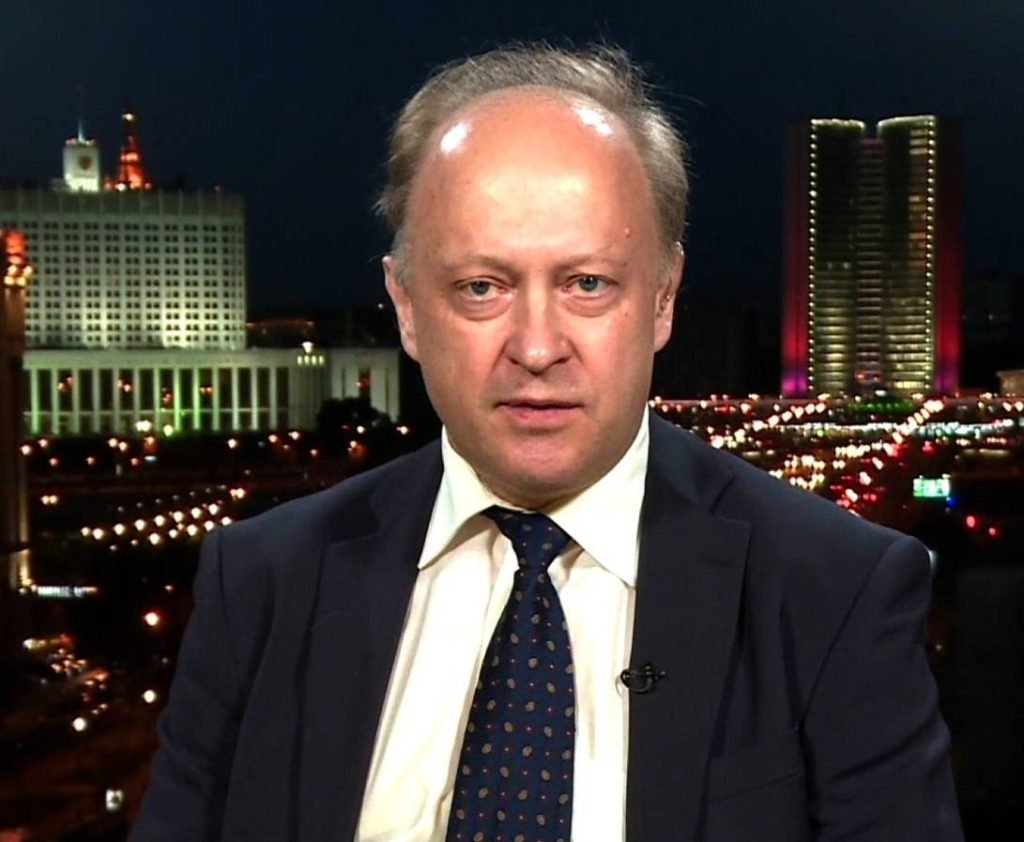
Dr Andrey Kortunov, RIAC Director General

No doubt, we should not overestimate the possible role of the OSCE in Europe’s future. If there ever was a chance to place this organization at the core of the future European security and development framework, that chance was irrevocably lost a quarter century ago. Neither the OSCE nor any other international institution will carry us back into the world that had existed prior to February 24, 2022, let alone into the world of hopes and illusions, dating from the Charter of Paris for a New Europe of 1990.

Yet, the Helsinki Final Act of the Conference on Security and Cooperation in Europe, dated 1975, which launched the process of multilateral pan-European cooperation, was signed in a deeply divided Europe. The main goal of the Helsinki process was not so much to immediately overcome a glaring divide between the East and the West, as to stabilize the European politics amid that split. In the present-day environment, the lessons learnt through the pan-European process about 50 years ago are becoming relevant once again.

First published in Izvestiya. The published by the RIAC – The Russian International Affairs Council on December 5, 2022 – of which Dr Kortunov is the director general since 2011.

Unlike our mainstream adversaries, warmongering propagandists and other destructive forces, TFF has no source of state, corporate or institutional finance whatsoever. Such are the conditions for truly independent peace research in these times. Everything peace has been cancelled. But we are still here – and will be. 

The foundation and this homepage run entirely on voluntary support from its readers and we who produce it, are all volunteers. To support TFF, you do not have to agree with every argument or article, only to welcome alternative voices, research-based knowledge and dialogue about important matters. Click to do a good deed:

[paypal-donation]

Bonus video

An interview with Dr Kortunov from March 2022

Share

Leave a Reply

Your email address will not be published. Required fields are marked *

Related Posts

TFF’s comprehensive proposal for dialogue about true peace in Ukraine is due in a day or two Jan Oberg November 20, 2025 What is being whispered through diplomatic corridors today is not peace, but quackery. The alleged 28‑point plan drafted in Washington and Moscow is mentioned as a solution to the Ukraine war. It is being negotiated by US businessman, real estate developer and Trump ally, Steve Witkoff, and by Kirill Dmitriev, who is CEO of the Russian Direct Investment Fund and a close ally of Putin, according to India’s Economic Times. For presumably good reasons, their education, qualifications and experience in international conflict analysis and peace-making remain untold. They look like surgeons who have never opened a medical textbook. It is nothing more than a mirage: a framework of concessions imposed on Ukraine’s citizens, negotiated without Kyiv, and excluding Europe. Like Gaza, it promises “peace” while institutionalising injustice. If half of what is available about...
Talk at the Beijing Foreign Studies University, September 2010 Excellencies, ladies and gentlemen It is a great honor to be on a panel with the Director of CPC-CC Foreign Affairs, the Deputy Foreign Affairs Minister, the Editor-in-chief of China Daily, the Dean of the National Office of Chinese Language, the Deputy Commander of the People’s Liberation Army.  I express my gratitude to the Chinese People’s Association for Peace and Disarmament and the American Friends Service Committee for having brought me to this tenth visit to China since 1973, and to Beijing Foreign Studies University for inviting me to this Forum on Public Diplomacy and China’s International Image. I define public diplomacy as diplomacy for the people and by the people. The purpose is neither public relations nor propaganda, but to bring the peoples of the world together by making them understandable to each other.  Like languages have their own logic,...
In 2021 the administration said it would pursue ‘relentless diplomacy.’ They call it something else today in Ukraine. Ted Snider October 9, 2024 It is said that Henry Kissinger asserted that little can be won at the negotiating table that isn’t earned on the battlefield. In several wars in recent weeks, U.S. officials have echoed that approach. State Department spokesperson Matthew Miller recently said that the U.S. “supports[s] a ceasefire” in Lebanon while simultaneously recognizing that “military pressure can at times enable diplomacy.” Meanwhile, Secretary of State Antony Blinken has expressed the doctrine as doing “all that we can to strengthen Ukraine’s position on the battlefield so it has the strongest possible position at the negotiating table.” This article was published first by Responsible Statecraft on October 8, 2024 here But during the Biden administration, the iteration of Kissinger’s doctrine has gone well beyond the generals supporting the diplomats. The...

Recent Articles

2003 The capital Bujumbura 2006 The capital Bujumbura 2006 Gitega, the second largest town& its surroundings 2007 Muramvia Back to Oberg’s Photography main page
By JONATHAN POWER August 16, 2000 LONDON – Remember the summer of ’98? In the sweltering, torpid heat of a Roman august, charged with exhaust fumes, the international community gave its overwhelming approval to the establishment of an International Criminal Court that will enable those accused of “crimes against humanity” to be tried and, if convicted, sentenced. Only seven nations opposed or abstained from the motion, including Israel, China, India and the U.S.A. where the Pentagon had successfully waged bureaucratic guerrilla war to undermine the initially sympathetic stance of President Bill Clinton. Two years on we can now see what an epochal event that was. In a the stroke of 120 pens it changed the climate on political thuggery. After numerous half-starts and false starts ever since the Nuremberg and Tokyo trials that convicted the war criminals of the Second World War, the world at last had agreed en masse a common...
By Jonathan Power April 8th 2004 LONDON – There is a widely held opinion abroad that Brazil never had the chance of profoundly changing for the better- shedding its widespread poverty and dire income distribution- until Lula (President Luiz Inácio da Silva) came along last year. This is not entirely false, but neither is it entirely true. Brazil has long made a kind of progress- in the last century it was second only to Taiwan as the fastest growing economy in the world- but it has been appallingly uneven. Part of the story of contemporary Brazil is clear to the eye in this small village of 7,000 people in the arid north east, along with the Amazon the poorest part of this vast country. Twenty five years or so ago I used to come to Pilõezinhos regularly when I had a close friend living here, Valéria Rezende, a radical, grass roots-stirring...

TFF on Substack

Discover more from TFF Transnational Foundation & Jan Oberg.

Most Popular

2003 The capital Bujumbura 2006 The capital Bujumbura 2006 Gitega, the second largest town& its surroundings 2007 Muramvia Back to Oberg’s Photography main page
By JONATHAN POWER August 16, 2000 LONDON – Remember the summer of ’98? In the sweltering, torpid heat of a Roman august, charged with exhaust fumes, the international community gave its overwhelming approval to the establishment of an International Criminal Court that will enable those accused of “crimes against humanity” to be tried and, if convicted, sentenced. Only seven nations opposed or abstained from the motion, including Israel, China, India and the U.S.A. where the Pentagon had successfully waged bureaucratic guerrilla war to undermine the initially sympathetic stance of President Bill Clinton. Two years on we can now see what an epochal event that was. In a the stroke of 120 pens it changed the climate on political thuggery. After numerous half-starts and false starts ever since the Nuremberg and Tokyo trials that convicted the war criminals of the Second World War, the world at last had agreed en masse a common...
By Jonathan Power April 8th 2004 LONDON – There is a widely held opinion abroad that Brazil never had the chance of profoundly changing for the better- shedding its widespread poverty and dire income distribution- until Lula (President Luiz Inácio da Silva) came along last year. This is not entirely false, but neither is it entirely true. Brazil has long made a kind of progress- in the last century it was second only to Taiwan as the fastest growing economy in the world- but it has been appallingly uneven. Part of the story of contemporary Brazil is clear to the eye in this small village of 7,000 people in the arid north east, along with the Amazon the poorest part of this vast country. Twenty five years or so ago I used to come to Pilõezinhos regularly when I had a close friend living here, Valéria Rezende, a radical, grass roots-stirring...
Read More
Generic thumbnail
2003 The capital Bujumbura 2006 The capital Bujumbura 2006 Gitega, the second largest town& its surroundings 2007 Muramvia Back to Oberg’s Photography main page
By JONATHAN POWER August 16, 2000 LONDON – Remember the summer of ’98? In the sweltering, torpid heat of a Roman august, charged with exhaust fumes, the international community gave its overwhelming approval to the establishment of an International Criminal Court that will enable those accused of “crimes against humanity” to be tried and, if convicted, sentenced. Only seven nations opposed or abstained from the motion, including Israel, China, India and the U.S.A. where the Pentagon had successfully waged bureaucratic guerrilla war to undermine the initially sympathetic stance of President Bill Clinton. Two years on we can now see what an epochal event that was. In a the stroke of 120 pens it changed the climate on political thuggery. After numerous half-starts and false starts ever since the Nuremberg and Tokyo trials that convicted the war criminals of the Second World War, the world at last had agreed en masse a common...
By Jonathan Power April 8th 2004 LONDON – There is a widely held opinion abroad that Brazil never had the chance of profoundly changing for the better- shedding its widespread poverty and dire income distribution- until Lula (President Luiz Inácio da Silva) came along last year. This is not entirely false, but neither is it entirely true. Brazil has long made a kind of progress- in the last century it was second only to Taiwan as the fastest growing economy in the world- but it has been appallingly uneven. Part of the story of contemporary Brazil is clear to the eye in this small village of 7,000 people in the arid north east, along with the Amazon the poorest part of this vast country. Twenty five years or so ago I used to come to Pilõezinhos regularly when I had a close friend living here, Valéria Rezende, a radical, grass roots-stirring...
Mearsheimer-800x418-1
A friendly quarrel while we agree that the US sanctions are a weapon of mass destruction and kill more people than wars do. And that we must talk much more about sanctions than we have so far. Jan Oberg, TFF director March 16, 2026 John Mearsheimer recently stated that U.S. sanctions murdered around 38 million people between 1971 and 2021 – see the video below. It is a dramatic figure, and it has spread quickly because it captures, in one sentence, the enormous human cost of modern sanctions. I share his concern about the destructive effects of economic coercion. But the specific number he cites — and the way he attributes it — deserves a friendly academic clarification. The figure comes from a 2023 Lancet Global Health article estimating the mortality effects of unilateral U.S. and EU sanctions over the past half‑century. This is the first point where Mearsheimer’s shorthand diverges from the text: the study...
Screenshot-2026-05-15-103534
Jan Oberg May 15, 2026 Go to this Fox News page and scroll the whole way down: President Donald Trump tells the world that his meeting with President Xi Jinping yielded a lot of very concrete political and economic results – of course, only where the Chinese side, according to him, agreed with him. He does not mention the Taiwan issue, but Secretary of State, Marco Rubio, says that it did not feature prominently in their talks and that the US policy on Taiwan has not changed. Then go to China Daily – or Global Times – and you will see that for the Chinese it is framework, principles, structure of cooperation etc. that matters – all embedded in the overall idea of “constructive bilateral relationship of strategic stability.” Nowhere is any concrete agreement or deal – all that Trump refers to – mentioned. At the general level, this gives you insights into the very different social...
Screenshot-2026-05-12-104023
Lena Petrova of “World Affairs In Context” with more than half a million subscribers on YouTube wanted to explore what a peace researcher like me has to say about, among other things, the First and the Second Cold War and why eethics has disappeared from politics. I am particularly happy about this conversation that also yielded an amazing number of very appreciative comments on YouTube. No doubt, people are longing for alternatives, including peace perspectives.