
David Swanson: How to Oppose Both Sides of a War

TFF Associate

It’s tricky to oppose both sides of a war, and rarer even than supporting both sides. The weapons dealers support both sides.

In obedience to their televisions, people all over the world spend a great deal of time expressing the opinions dished out by those televisions regarding a particular war that is far from the worst war at the moment. It is the war that creates the greatest risk of nuclear apocalypse, but that does not typically enter into the opinions.

You cannot just state that you oppose both sides, because that will quite literally be understood by almost everyone as asserting the unrelated and ridiculous proposition that the two sides are identical, and that will be understood as outrageous propaganda on behalf of whichever side the listener opposes.

So, you have to denounce specific outrages by Russia while in the same breath denouncing specific outrages by the United States/Ukraine/NATO, while also in the same breath explicitly explaining the obvious point that these outrages are different from each other and placing them in historical context.

You can’t just provide a video exclusively denouncing US/NATO/Ukraine outrages or a video exclusively denouncing Russian outrages, even if you like both videos, because one of the two cheering sections will have tuned out by the time the speakers have cleared their throats.

You can’t even just favor peace, because that will be taken as a horrible insult to whichever side of a war someone favors — and not simply as an insult but as suspected paid propaganda for the other side.

One thing you can do is set up a webpage to send people to with a collection of resources, but a great many people will never go to it or scroll down any farther than it takes them to mistakenly guess which of the two sides you are on.

You can even set up an entire website making the case that all wars are outrages on all sides and debunking each common myth to the contrary and explaining the available alternatives, but this will generally be understood (even agreed with and sympathized with) as applying to every other war in history, but not to the one currently in mind.

So you actually need to take a deep breath and tell people:

I oppose all of the horrible killing and destruction in Ukraine, fully aware of the imperialistic history of Russia and of the fact that NATO expansion predictably and intentionally led to this war, disgusted that peace activists in Russia are locked up, and sickened that they are so effectively ignored in the U.S. that it’s not needed except for high-profile whistleblowers — and I hold these weird positions while actually not suffering from any particularly extreme ignorance of the history of the Cold War or NATO expansion or the death-grip of U.S. weapons dealers on the U.S. government or the status of the U.S. government as top weapons dealer, top promoter of militarism to other governments, top foreign base builder, top war instigator, top coup facilitator, and yes, thank you, I have heard about the rightwing lunatics in the Ukrainian as well as the Russian governments and militaries, I just haven’t picked one of the two to want killing people or overseeing nuclear weapons or powerplants during battles, and I am indeed sickened by all the slaughtering of people the Russian military is engaged in, even while I can’t fathom why human rights groups should feel ashamed for reporting on the atrocities being committed by the Ukrainian military, and I do know how much the U.S. and UK have done to prevent peaceful resolution as well as how much Russia has, and I am aware that some Russians feel scared and threatened and that Russian-speaking Ukrainians have felt scared and threatened, just as I am aware that other Ukrainians — not to mention Western television viewers — feel scared and threatened; in fact I myself feel quite scared and threatened that the risk of nuclear apocalypse is going to keep climbing while the war continues, and I think that both sides, while radically different, and deserving blame for very different things, should be able to recognize at the very least that a stalemate that drags on and on, killing and destroying, while building the risk of nuclear war, serves nobody other than the weapons dealers, not even the politicians, so that it would be better to negotiate peace now than to do so later or to find it to be too late, that the world has non-optional environmental and disease crises it could be better dealing with in the absence of this insane butchery; and this could be recognized with or without recognizing that the two sides have been able to negotiate, with some outside help, on questions of grain exports and prisoner exchanges, rendering ridiculous the tired claims by both sides that the other side is a monster with whom one shouldn’t and couldn’t negotiate; and with or without recognizing that both sides have engaged in both unspeakable horrors and restraint of various sorts, targeting helpless people for death and suffering both more than is acceptable and less than is possible; and with or without beginning to open any minds to the alternatives that existed for both sides even at the point of greatest escalation, and the nonviolent unarmed defense alternatives that exist for governments and nations around the world should they choose to pursue them on the scale that would make them most effective.

Then take a breath and duck below the table, just in case.
About the author

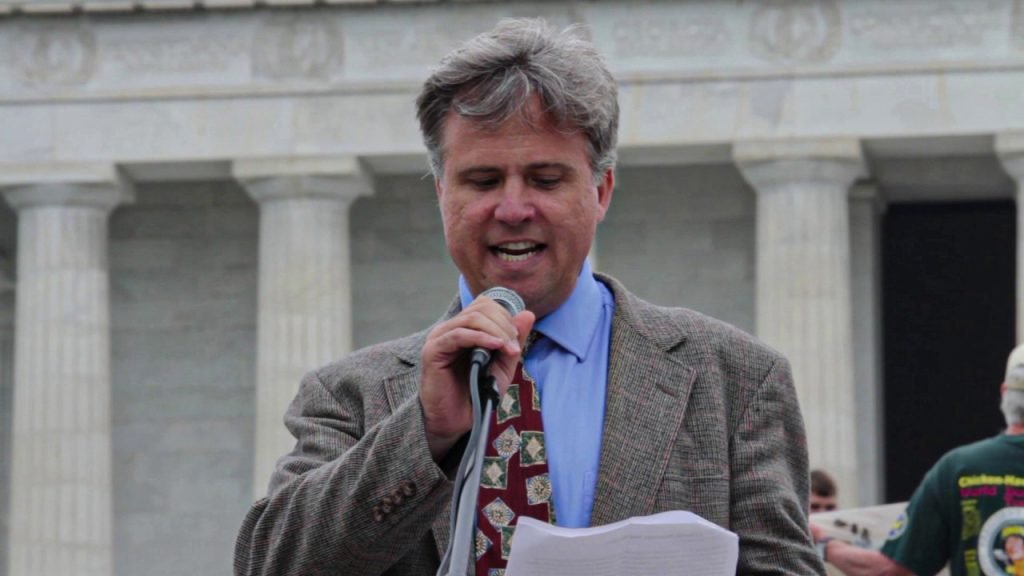
David Swanson is an author, activist, journalist, and radio host. He is executive director of World BEYOND War and campaign coordinator for RootsAction.org. Swanson’s books include War Is A Lie and When the World Outlawed War. He blogs at DavidSwanson.org and WarIsACrime.org. He hosts Talk World Radio. He is a Nobel Peace Prize Nominee.

Swanson was awarded the 2018 Peace Prize by the U.S. Peace Memorial Foundation. He was also awarded a Beacon of Peace Award by the Eisenhower Chapter of Veterans For Peace in 2011, and the Dorothy Eldridge Peacemaker Award by New Jersey Peace Action in 2022.

Swanson is on the advisory boards of Nobel Peace Prize WatchVeterans For PeaceAssange DefenseBPUR, and Military Families Speak Out. He is an Associate of the Transnational Foundation and a Patron of Platform for Peace and Humanity.

Please help TFF remain truly independent by contributing if you benefited from this article

[paypal-donation]

Share

Leave a Reply

Your email address will not be published. Required fields are marked *

Related Posts

Jan Oberg May 15, 2026 Go to this Fox News page and scroll the whole way down: President Donald Trump tells the world that his meeting with President Xi Jinping yielded a lot of very concrete political and economic results – of course, only where the Chinese side, according to him, agreed with him. He does not mention the Taiwan issue, but Secretary of State, Marco Rubio, says that it did not feature prominently in their talks and that the US policy on Taiwan has not changed. Then go to China Daily – or Global Times – and you will see that for the Chinese it is framework, principles, structure of cooperation etc. that matters – all embedded in the overall idea of “constructive bilateral relationship of strategic stability.” Nowhere is any concrete agreement or deal – all that Trump refers to – mentioned. At the general level, this gives you insights into the very different social...
The MIMAC – Military-Industrial-Media-Academic Complex – drives the world’s rampant militarism and wars without end. Here is a short reflection of how it works against all interests of humanity. #5 deals with why there is no real enemy or threat images/analysis. It’s all ex-post constructions. And, btw, theTFF Peace Pulse is now on Rumble.
Jan Oberg, TFF director April 28, 2026 In this third TFF Peace Pulse, I make the important distinction between the violence and the conflict that violence is a symptom of. If you want peace, focus on the underlying conflict because that is the key to resolution, peacemaking, and a better future for the parties. The West is obsessed with violence, just look around you – and 90+ per cent of the public debate is about military issues and other violence – totally wasted for peace. These Peace Pulses will only be published here a few times. You will also not find them on YouTube and Vimeo because both platforms have blocked TFF and me; you know, peace is dangerous these days. Most TFF’s videos since 2007 are now on Rumble.

Recent Articles

2003 The capital Bujumbura 2006 The capital Bujumbura 2006 Gitega, the second largest town& its surroundings 2007 Muramvia Back to Oberg’s Photography main page
By JONATHAN POWER August 16, 2000 LONDON – Remember the summer of ’98? In the sweltering, torpid heat of a Roman august, charged with exhaust fumes, the international community gave its overwhelming approval to the establishment of an International Criminal Court that will enable those accused of “crimes against humanity” to be tried and, if convicted, sentenced. Only seven nations opposed or abstained from the motion, including Israel, China, India and the U.S.A. where the Pentagon had successfully waged bureaucratic guerrilla war to undermine the initially sympathetic stance of President Bill Clinton. Two years on we can now see what an epochal event that was. In a the stroke of 120 pens it changed the climate on political thuggery. After numerous half-starts and false starts ever since the Nuremberg and Tokyo trials that convicted the war criminals of the Second World War, the world at last had agreed en masse a common...
By Jonathan Power April 8th 2004 LONDON – There is a widely held opinion abroad that Brazil never had the chance of profoundly changing for the better- shedding its widespread poverty and dire income distribution- until Lula (President Luiz Inácio da Silva) came along last year. This is not entirely false, but neither is it entirely true. Brazil has long made a kind of progress- in the last century it was second only to Taiwan as the fastest growing economy in the world- but it has been appallingly uneven. Part of the story of contemporary Brazil is clear to the eye in this small village of 7,000 people in the arid north east, along with the Amazon the poorest part of this vast country. Twenty five years or so ago I used to come to Pilõezinhos regularly when I had a close friend living here, Valéria Rezende, a radical, grass roots-stirring...

TFF on Substack

Discover more from TFF Transnational Foundation & Jan Oberg.

Most Popular

2003 The capital Bujumbura 2006 The capital Bujumbura 2006 Gitega, the second largest town& its surroundings 2007 Muramvia Back to Oberg’s Photography main page
By JONATHAN POWER August 16, 2000 LONDON – Remember the summer of ’98? In the sweltering, torpid heat of a Roman august, charged with exhaust fumes, the international community gave its overwhelming approval to the establishment of an International Criminal Court that will enable those accused of “crimes against humanity” to be tried and, if convicted, sentenced. Only seven nations opposed or abstained from the motion, including Israel, China, India and the U.S.A. where the Pentagon had successfully waged bureaucratic guerrilla war to undermine the initially sympathetic stance of President Bill Clinton. Two years on we can now see what an epochal event that was. In a the stroke of 120 pens it changed the climate on political thuggery. After numerous half-starts and false starts ever since the Nuremberg and Tokyo trials that convicted the war criminals of the Second World War, the world at last had agreed en masse a common...
By Jonathan Power April 8th 2004 LONDON – There is a widely held opinion abroad that Brazil never had the chance of profoundly changing for the better- shedding its widespread poverty and dire income distribution- until Lula (President Luiz Inácio da Silva) came along last year. This is not entirely false, but neither is it entirely true. Brazil has long made a kind of progress- in the last century it was second only to Taiwan as the fastest growing economy in the world- but it has been appallingly uneven. Part of the story of contemporary Brazil is clear to the eye in this small village of 7,000 people in the arid north east, along with the Amazon the poorest part of this vast country. Twenty five years or so ago I used to come to Pilõezinhos regularly when I had a close friend living here, Valéria Rezende, a radical, grass roots-stirring...
Read More
Generic thumbnail
2003 The capital Bujumbura 2006 The capital Bujumbura 2006 Gitega, the second largest town& its surroundings 2007 Muramvia Back to Oberg’s Photography main page
By JONATHAN POWER August 16, 2000 LONDON – Remember the summer of ’98? In the sweltering, torpid heat of a Roman august, charged with exhaust fumes, the international community gave its overwhelming approval to the establishment of an International Criminal Court that will enable those accused of “crimes against humanity” to be tried and, if convicted, sentenced. Only seven nations opposed or abstained from the motion, including Israel, China, India and the U.S.A. where the Pentagon had successfully waged bureaucratic guerrilla war to undermine the initially sympathetic stance of President Bill Clinton. Two years on we can now see what an epochal event that was. In a the stroke of 120 pens it changed the climate on political thuggery. After numerous half-starts and false starts ever since the Nuremberg and Tokyo trials that convicted the war criminals of the Second World War, the world at last had agreed en masse a common...
By Jonathan Power April 8th 2004 LONDON – There is a widely held opinion abroad that Brazil never had the chance of profoundly changing for the better- shedding its widespread poverty and dire income distribution- until Lula (President Luiz Inácio da Silva) came along last year. This is not entirely false, but neither is it entirely true. Brazil has long made a kind of progress- in the last century it was second only to Taiwan as the fastest growing economy in the world- but it has been appallingly uneven. Part of the story of contemporary Brazil is clear to the eye in this small village of 7,000 people in the arid north east, along with the Amazon the poorest part of this vast country. Twenty five years or so ago I used to come to Pilõezinhos regularly when I had a close friend living here, Valéria Rezende, a radical, grass roots-stirring...
Mearsheimer-800x418-1
A friendly quarrel while we agree that the US sanctions are a weapon of mass destruction and kill more people than wars do. And that we must talk much more about sanctions than we have so far. Jan Oberg, TFF director March 16, 2026 John Mearsheimer recently stated that U.S. sanctions murdered around 38 million people between 1971 and 2021 – see the video below. It is a dramatic figure, and it has spread quickly because it captures, in one sentence, the enormous human cost of modern sanctions. I share his concern about the destructive effects of economic coercion. But the specific number he cites — and the way he attributes it — deserves a friendly academic clarification. The figure comes from a 2023 Lancet Global Health article estimating the mortality effects of unilateral U.S. and EU sanctions over the past half‑century. This is the first point where Mearsheimer’s shorthand diverges from the text: the study...
Screenshot-2026-05-15-103534
Jan Oberg May 15, 2026 Go to this Fox News page and scroll the whole way down: President Donald Trump tells the world that his meeting with President Xi Jinping yielded a lot of very concrete political and economic results – of course, only where the Chinese side, according to him, agreed with him. He does not mention the Taiwan issue, but Secretary of State, Marco Rubio, says that it did not feature prominently in their talks and that the US policy on Taiwan has not changed. Then go to China Daily – or Global Times – and you will see that for the Chinese it is framework, principles, structure of cooperation etc. that matters – all embedded in the overall idea of “constructive bilateral relationship of strategic stability.” Nowhere is any concrete agreement or deal – all that Trump refers to – mentioned. At the general level, this gives you insights into the very different social...
Screenshot-2026-05-12-104023
Lena Petrova of “World Affairs In Context” with more than half a million subscribers on YouTube wanted to explore what a peace researcher like me has to say about, among other things, the First and the Second Cold War and why eethics has disappeared from politics. I am particularly happy about this conversation that also yielded an amazing number of very appreciative comments on YouTube. No doubt, people are longing for alternatives, including peace perspectives.