
John Pilger: War In Europe And The Rise Of Raw Propaganda

John Pilger

April 5, 2022

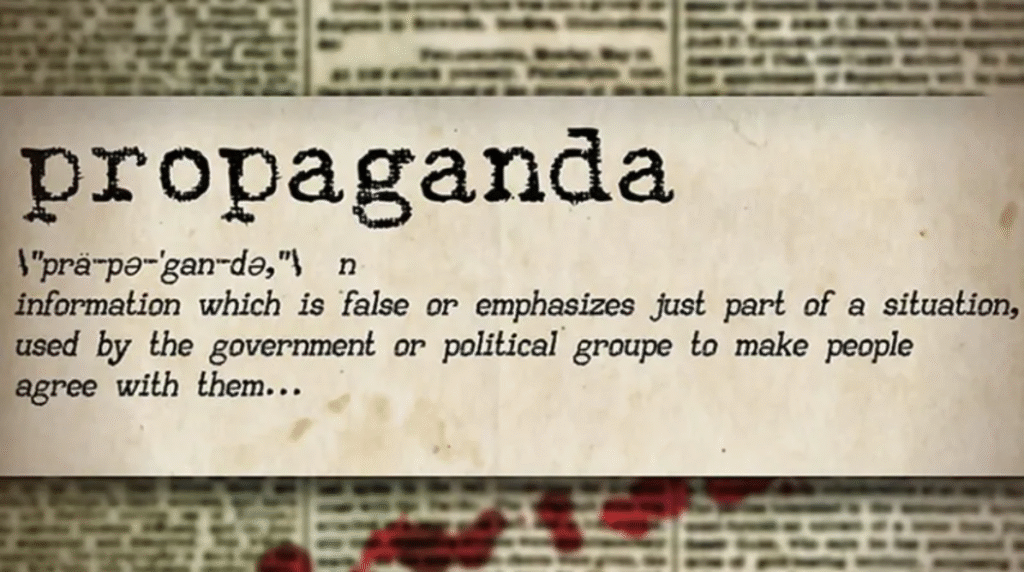
Marshall McLuhan’s prophecy that “the successor to politics will be propaganda” has happened. Raw propaganda is now the rule in Western democracies, especially the US and Britain. On matters of war and peace, ministerial deceit is reported as news. Inconvenient facts are censored, demons are nurtured. The model is corporate spin, the currency of the age.

In 1964, Marshall McLuhan famously declared, “The medium is the message.” The lie is the message now.

Originally published by EurasiaReview on February 19, 2022

But is this new? It is more than a century since Edward Bernays, the father of spin, invented “public relations” as a cover for war propaganda. What is new is the virtual elimination of dissent in the mainstream.

The great editor David Bowman, author of The Captive Press, called this “a defenestration of all who refuse to follow a line and to swallow the unpalatable and are brave”. He was referring to independent journalists and whistleblowers, the honest mavericks to whom media organisations once gave space, often with pride. The space has been abolished.

The war hysteria that has rolled in like a tidal wave in recent weeks and months is the most striking example. Known by its jargon, “shaping the narrative”, much if not most of it is pure propaganda.

The Russians are coming. Russia is worse than bad. Putin is evil, “a Nazi-like Hitler”, salivated the Labour MP Chris Bryant. Ukraine is about to be invaded by Russia – tonight, this week, next week. The sources include an ex CIA propagandist who now speaks for the US State Department and offers no evidence of his claims about Russian actions because “it comes from the US Government”.

The no-evidence rule also applies in London. The British Foreign Secretary, Liz Truss, who spent £500,000 of public money flying to Australia in a private plane to warn the Canberra government that both Russia and China were about to pounce, offered no evidence. Antipodean heads nodded; the “narrative” is unchallenged there. One rare exception, former prime minister Paul Keating, called Truss’s warmongering “demented”.

Truss has blithely confused the countries of the Baltic and the Black Sea. In Moscow, she told the Russian foreign minister that Britain would never accept Russian sovereignty over Rostov and Voronezh – until it was pointed out to her that these places were not part of Ukraine but in Russia. (Read the Russian press about the buffoonery of this pretender to 10 Downing Street and cringe.)

This entire farce, recently starring Boris Johnson in Moscow playing a clownish version of his hero, Churchill, might be enjoyed as satire were it not for its wilful abuse of facts and historical understanding and the real danger of war.

Vladimir Putin refers to the “genocide” in the eastern Donbas region of Ukraine. Following the coup in Ukraine in 2014 – orchestrated by Barack Obama’s “point person” in Kyiv, Victoria Nuland – the coup regime, infested with neo-Nazis, launched a campaign of terror against Russian-speaking Donbas, which accounts for a third of Ukraine’s population.

Overseen by CIA director John Brennan in Kyiv, “special security units” coordinated savage attacks on the people of Donbas, who opposed the coup. Video and eyewitness reports show bussed fascist thugs burning the trade union headquarters in the city of Odessa, killing 41 people trapped inside. The police are standing by. Obama congratulated the “duly elected” coup regime for its “remarkable restraint”.

In the US media, the Odessa atrocity was played down as “murky” and a “tragedy” in which “nationalists” (neo-Nazis) attacked “separatists” (people collecting signatures for a referendum on a federal Ukraine). Rupert Murdoch’s Wall Street Journal damned the victims – “Deadly Ukraine Fire Likely Sparked by Rebels, Government Says”.

Professor Stephen Cohen, acclaimed as America’s leading authority on Russia, wrote, “The pogrom-like burning to death of ethnic Russians and others in Odessa reawakened memories of Nazi extermination squads in Ukraine during world war two. [Today] storm-like assaults on gays, Jews, elderly ethnic Russians, and other ‘impure’ citizens are widespread throughout Kyiv-ruled Ukraine, along with torchlight marches reminiscent of those that eventually inflamed Germany in the late 1920s and 1930s …

“The police and official legal authorities do virtually nothing to prevent these neo-fascist acts or to prosecute them. On the contrary, Kyiv has officially encouraged them by systematically rehabilitating and even memorialising Ukrainian collaborators with Nazi German extermination pogroms, renaming streets in their honour, building monuments to them, rewriting history to glorify them, and more.”

Today, neo-Nazi Ukraine is seldom mentioned. That the British are training the Ukrainian National Guard, which includes neo-Nazis, is not news. (See Matt Kennard’s Declassified report in Consortium 15 February). The return of violent, endorsed fascism to 21st-century Europe, to quote Harold Pinter, “never happened … even while it was happening”.

On 16 December, the United Nations tabled a resolution that called for “combating glorification of Nazism, neo-Nazism and other practices that contribute to fuelling contemporary forms of racism”. The only nations to vote against it were the United States and Ukraine.

Almost every Russian knows that it was across the plains of Ukraine’s “borderland” that Hitler’s divisions swept from the west in 1941, bolstered by Ukraine’s Nazi cultists and collaborators. The result was more than 20 million Russians dead.

Setting aside the manoeuvres and cynicism of geopolitics, whomever the players, this historical memory is the driving force behind Russia’s respect-seeking, self-protective security proposals, which were published in Moscow in the week the UN voted 130-2 to outlaw Nazism.

They are:

+ NATO guarantees that it will not deploy missiles in nations bordering Russia. (They are already in place from Slovenia to Romania, with Poland to follow)

+ NATO to stop military and naval exercises in nations and seas bordering Russia.

+ Ukraine will not become a member of NATO.

+ the West and Russia to sign a binding East-West security pact.

+ the landmark treaty between the US and Russia covering intermediate-range nuclear weapons to be restored. (The US abandoned it in 2019).

These amount to a comprehensive draft of a peace plan for all of post-war Europe and ought to be welcomed in the West. But who understands their significance in Britain? What they are told is that Putin is a pariah and a threat to Christendom.

Russian-speaking Ukrainians, under economic blockade by Kyiv for seven years, are fighting for their survival. The “massing” army we seldom hear about are the thirteen Ukrainian army brigades laying siege to Donbas: an estimated 150,000 troops. If they attack, the provocation to Russia will almost certainly mean war.

In 2015, brokered by the Germans and French, the presidents of Russia, Ukraine, Germany and France met in Minsk and signed an interim peace deal. Ukraine agreed to offer autonomy to Donbas, now the self-declared republics of Donetsk and Luhansk.

The Minsk agreement has never been given a chance. In Britain, the line,  amplified by Boris Johnson, is that Ukraine is being “dictated to” by world leaders. For its part, Britain is arming Ukraine and training its army.

Since the first Cold War, NATO has effectively marched right up to Russia’s most sensitive border having demonstrated its bloody aggression in Yugoslavia, Afghanistan, Iraq, Libya and broken solemn promises to pull back.  

Having dragged European “allies” into American wars that do not concern them, the great unspoken is that NATO itself is the real threat to European security.

In Britain, a state and media xenophobia is triggered at the very mention of “Russia”. Mark the knee-jerk hostility with which the BBC reports Russia. Why? Is it because the restoration of imperial mythology demands, above all, a permanent enemy? Certainly, we deserve better.

Originally published at EurasiaReview on February 19, 2022

About the author

*John Pilger can be reached through his website: www.johnpilger.comPilger is an Australian journalist, writer, scholar, and documentary filmmaker. He has been mainly based in Britain since 1962. He is also currently Visiting Professor at Cornell University in New York.

Please help TFF remain truly independent by contributing if you benefited from this article

Share

Leave a Reply

Your email address will not be published. Required fields are marked *

Related Posts

Jan Oberg May 15, 2026 Go to this Fox News page and scroll the whole way down: President Donald Trump tells the world that his meeting with President Xi Jinping yielded a lot of very concrete political and economic results – of course, only where the Chinese side, according to him, agreed with him. He does not mention the Taiwan issue, but Secretary of State, Marco Rubio, says that it did not feature prominently in their talks and that the US policy on Taiwan has not changed. Then go to China Daily – or Global Times – and you will see that for the Chinese it is framework, principles, structure of cooperation etc. that matters – all embedded in the overall idea of “constructive bilateral relationship of strategic stability.” Nowhere is any concrete agreement or deal – all that Trump refers to – mentioned. At the general level, this gives you insights into the very different social...
Jan Oberg, TFF director April 9, 2026 I was recently invited to have a good, long talk about the world – and, of course, about peace too – with Boris Malagurski on his Weight of Chains Channel on YouTube. It was a real joy and seems to have been greatly appreciated by the viewers too. Mr Malagurski and I shall of course be grateful if you share this conversation in your circles – of course, only if you like what you see and hear  And remember that this one – like hundreds of others with TFF Associates – can be enjoyed at our TFF Video Collection.
A friendly quarrel while we agree that the US sanctions are a weapon of mass destruction and kill more people than wars do. And that we must talk much more about sanctions than we have so far. Jan Oberg, TFF director March 16, 2026 John Mearsheimer recently stated that U.S. sanctions murdered around 38 million people between 1971 and 2021 – see the video below. It is a dramatic figure, and it has spread quickly because it captures, in one sentence, the enormous human cost of modern sanctions. I share his concern about the destructive effects of economic coercion. But the specific number he cites — and the way he attributes it — deserves a friendly academic clarification. The figure comes from a 2023 Lancet Global Health article estimating the mortality effects of unilateral U.S. and EU sanctions over the past half‑century. This is the first point where Mearsheimer’s shorthand diverges from the text: the study...

Recent Articles

Burundi – hopp om fred Burundi, var är det nu det ligger? Det är nånting med Hutsier och Tutuer – eller vad de nu heter – som mördar varandra med machete-knivar, nånting med fattigdom, korruption, militärdiktatur, nöd och elände? Det hopplösa, mörka Afrika i ett bananskal, eller hur? Tja. Jag har precis varit där. Det ligger naturligtvis någonting i det. Och det finns en del orsaker till att vi inte ser mycket om landet i massmedia. En av dem är att det inte försiggår något folkmord just nu, ingen naturkatastrofer, ingen kupp. Det finns ingen misslyckad FN-mission, USA och EU har få intressen, Madeleine Halfbright har inte sagt något om det nyss, NATO:s Solana ser inte bombningar i Burundi som viktiga för firandet av alliansens 50-årsdag i april. För en tid sedan då 50 människor mördades strömmade hundratals journalister med CNN i spetsen till Burundi…men för att snabbt försvinna till Kongo...
Burundi – håb forude Burundi, hvor er det nu det ligger? Det er noget med Hutsier og Tutuer – eller hvad de nu hedder – der laver folkemord med machete-knive på hinanden, noget med fattigdom, korruption, militærdiktatur, nød og elendighed? Det håbløse, mørke Afrika i en bananskal, ikke? Tjah. Jeg har lige været der. Der er selvfølgelig noget om snakken. Der er en del årsager til at man ikke hører særligt meget om livet i dette lille land. En af dem er at der ikke foregår noget folkemord for tiden, ingen naturkatastrofer, intet kup. Der er ingen mislykket FN-mission, USA og EU har ingen interesser, Madeleine Halfbright har ikke sagt noget om det, NATO’s Solana ser ikke bombinger i Burundi som afgørende forud for alliancens 50årsdag. For nogen tid siden da et halvt hundrede mennesker var blevet dræbt valfartede hundreder af journalister med CNN i spidsen dertil . . . men...
Rambouillet (Rambo-Yeah) og Rashid Vi skriver fredag den 19. januar. For få dage siden kom jeg hjem fra små tre uger i Skopje, Beograd og Kosovo. Min analyse og min intuition siger mig dét, jeg ikke vil høre: bombningerne nærmer sig. Det var 34. besøg siden 1991. Jeg er delvist uddannet i Dubrovnik, fra 1974. Jeg kan ikke slippe det. Det er altså også mit land, der atter trues af den kulturkreds, jeg tilhører. Radmila og Peca i Beograd, venner siden 1974, intellektuelle der har valgt ikke at forlade landet og netop har sagt nej til et ophold i udlandet. Datteren Anja på 9 skal vokse op hér. "Jeg rejste ned nu," siger jeg, "fordi der enten ville falde bomber eller blive en eller anden slags ‘forhandling’ og jeg vil være hér hvis I blir bombet, for jeg skammer mig over hvad Danmark og andre lande gør." Hun får tårer...

TFF on Substack

Discover more from TFF Transnational Foundation & Jan Oberg.

Most Popular

Burundi – hopp om fred Burundi, var är det nu det ligger? Det är nånting med Hutsier och Tutuer – eller vad de nu heter – som mördar varandra med machete-knivar, nånting med fattigdom, korruption, militärdiktatur, nöd och elände? Det hopplösa, mörka Afrika i ett bananskal, eller hur? Tja. Jag har precis varit där. Det ligger naturligtvis någonting i det. Och det finns en del orsaker till att vi inte ser mycket om landet i massmedia. En av dem är att det inte försiggår något folkmord just nu, ingen naturkatastrofer, ingen kupp. Det finns ingen misslyckad FN-mission, USA och EU har få intressen, Madeleine Halfbright har inte sagt något om det nyss, NATO:s Solana ser inte bombningar i Burundi som viktiga för firandet av alliansens 50-årsdag i april. För en tid sedan då 50 människor mördades strömmade hundratals journalister med CNN i spetsen till Burundi…men för att snabbt försvinna till Kongo...
Burundi – håb forude Burundi, hvor er det nu det ligger? Det er noget med Hutsier og Tutuer – eller hvad de nu hedder – der laver folkemord med machete-knive på hinanden, noget med fattigdom, korruption, militærdiktatur, nød og elendighed? Det håbløse, mørke Afrika i en bananskal, ikke? Tjah. Jeg har lige været der. Der er selvfølgelig noget om snakken. Der er en del årsager til at man ikke hører særligt meget om livet i dette lille land. En af dem er at der ikke foregår noget folkemord for tiden, ingen naturkatastrofer, intet kup. Der er ingen mislykket FN-mission, USA og EU har ingen interesser, Madeleine Halfbright har ikke sagt noget om det, NATO’s Solana ser ikke bombinger i Burundi som afgørende forud for alliancens 50årsdag. For nogen tid siden da et halvt hundrede mennesker var blevet dræbt valfartede hundreder af journalister med CNN i spidsen dertil . . . men...
Rambouillet (Rambo-Yeah) og Rashid Vi skriver fredag den 19. januar. For få dage siden kom jeg hjem fra små tre uger i Skopje, Beograd og Kosovo. Min analyse og min intuition siger mig dét, jeg ikke vil høre: bombningerne nærmer sig. Det var 34. besøg siden 1991. Jeg er delvist uddannet i Dubrovnik, fra 1974. Jeg kan ikke slippe det. Det er altså også mit land, der atter trues af den kulturkreds, jeg tilhører. Radmila og Peca i Beograd, venner siden 1974, intellektuelle der har valgt ikke at forlade landet og netop har sagt nej til et ophold i udlandet. Datteren Anja på 9 skal vokse op hér. "Jeg rejste ned nu," siger jeg, "fordi der enten ville falde bomber eller blive en eller anden slags ‘forhandling’ og jeg vil være hér hvis I blir bombet, for jeg skammer mig over hvad Danmark og andre lande gør." Hun får tårer...
Read More
Burundi – hopp om fred Burundi, var är det nu det ligger? Det är nånting med Hutsier och Tutuer – eller vad de nu heter – som mördar varandra med machete-knivar, nånting med fattigdom, korruption, militärdiktatur, nöd och elände? Det hopplösa, mörka Afrika i ett bananskal, eller hur? Tja. Jag har precis varit där. Det ligger naturligtvis någonting i det. Och det finns en del orsaker till att vi inte ser mycket om landet i massmedia. En av dem är att det inte försiggår något folkmord just nu, ingen naturkatastrofer, ingen kupp. Det finns ingen misslyckad FN-mission, USA och EU har få intressen, Madeleine Halfbright har inte sagt något om det nyss, NATO:s Solana ser inte bombningar i Burundi som viktiga för firandet av alliansens 50-årsdag i april. För en tid sedan då 50 människor mördades strömmade hundratals journalister med CNN i spetsen till Burundi…men för att snabbt försvinna till Kongo...
Burundi – håb forude Burundi, hvor er det nu det ligger? Det er noget med Hutsier og Tutuer – eller hvad de nu hedder – der laver folkemord med machete-knive på hinanden, noget med fattigdom, korruption, militærdiktatur, nød og elendighed? Det håbløse, mørke Afrika i en bananskal, ikke? Tjah. Jeg har lige været der. Der er selvfølgelig noget om snakken. Der er en del årsager til at man ikke hører særligt meget om livet i dette lille land. En af dem er at der ikke foregår noget folkemord for tiden, ingen naturkatastrofer, intet kup. Der er ingen mislykket FN-mission, USA og EU har ingen interesser, Madeleine Halfbright har ikke sagt noget om det, NATO’s Solana ser ikke bombinger i Burundi som afgørende forud for alliancens 50årsdag. For nogen tid siden da et halvt hundrede mennesker var blevet dræbt valfartede hundreder af journalister med CNN i spidsen dertil . . . men...
Rambouillet (Rambo-Yeah) og Rashid Vi skriver fredag den 19. januar. For få dage siden kom jeg hjem fra små tre uger i Skopje, Beograd og Kosovo. Min analyse og min intuition siger mig dét, jeg ikke vil høre: bombningerne nærmer sig. Det var 34. besøg siden 1991. Jeg er delvist uddannet i Dubrovnik, fra 1974. Jeg kan ikke slippe det. Det er altså også mit land, der atter trues af den kulturkreds, jeg tilhører. Radmila og Peca i Beograd, venner siden 1974, intellektuelle der har valgt ikke at forlade landet og netop har sagt nej til et ophold i udlandet. Datteren Anja på 9 skal vokse op hér. "Jeg rejste ned nu," siger jeg, "fordi der enten ville falde bomber eller blive en eller anden slags ‘forhandling’ og jeg vil være hér hvis I blir bombet, for jeg skammer mig over hvad Danmark og andre lande gør." Hun får tårer...
Konflikthåndtering – den ny kolde krig Det internationale såkaldte “samfund” er tilstede som fredsskabere i snart sagt hver eneste konflikt og krig med sine diplomater, soldater, genopbygningshjælp, monitorer, jurister, ambassadører, fredsbevarere, mæglere, politi, eksperter, forhandlere og med agenter, satelliter, hangarfartøjer og kampfly på alert. Fredsforstyrrende fraktioner skal bringes til det berømte forhandlingsbord omkring hvilket de under det internationale samfunds pres skal sige ja til fredsplaner, Den generelle, tidstypiske mediedækning af politiske konflikter og krige befæster mere eller mindre bevidst to dybt misvisende, men funktionelle, opfattelser. (A) Konflikter handler om gode versus mindre gode aktører og konfliktløsning er følgelig et spørgsmål om at straffe de onde og belønne de gode, ofrene. (B) Verden er opdelt i to parter, ja der er to verdener: På den ene side er der "fredsforstyrrerne" – slyngelstater, hitleristiske diktatorer, forfejlede stater, primitive og onde aktører, terrorister, folk der ikke forstår andet end store bogstaver og bomber...
Försoningens tid Att förlåta någon innebär att man accepterar den som handlat felaktigt och som ångrar det. Försoning är ett klarläggande och en accept av det som hänt, ett viljesmässigt beslut om att komma vidare och se framåt. Vi kan förlåta en annan människa hans eller hennes gärningar och därmed erbjuda en ny start. Vi försonas med fakta och med den skyldige och eventuellt också med att vi själva kan ha varit en medverkande orsak till att det gick som det gick. Förlåtelse och försoning handlar emellertid inte om att glömma. Ett par av mina kväkarvänner miste för några år sedan sin son och blivande svärdotter i en bilolycka, ett resultat av en annan bilists helt oansvariga manöver. Det var viktigt för dem att träffa den människa som förvållat dem så stor smärta. Straffet i sig var inte viktigt för dem utan de sade till honom: "vi kan förlåta Dig...
Ett expanderande NATO är konfliktbevarande Nato expanderar i en värld där de samlade militärutgifterna motsvarar årsinkomsten för jordens 49 procent fattigaste, skriver fredsforskaren Jan Øberg. Satsningen på Nato:s utvidgning går ut på att kämpa mot fiktiva hot och skapar exakt det man säger sig vilja undvika, ekonomisk kris, instabilitet och nya hot. Nato expanderar. De globala militära utgifterna har årligen fallit med några få procent. Men den nya teknologins slagkraft ökar. Kärnvapenindustrins forskare hotas inte av arbetslöshet. Enbart USA har en militär budget på drygt 250 miljarder dollar och världens samlade militärutgifter motsvarar årsinkomsten för de 49 procent fattigaste på klotet. Tyskland expanderar. En gång i tiden förstod man att ett förenat Tyskland måste vara neutralt. Men Gorbatjov, som gav Sovjetunionens och Warszawapaktens upplösning till Västvärlden i tron att han skulle få någonting i gengäld, serverade också ett förenat Tyskland till Nato på en silverbricka. Delvis kärnvapen-nedrustning följde liksom ryska...