
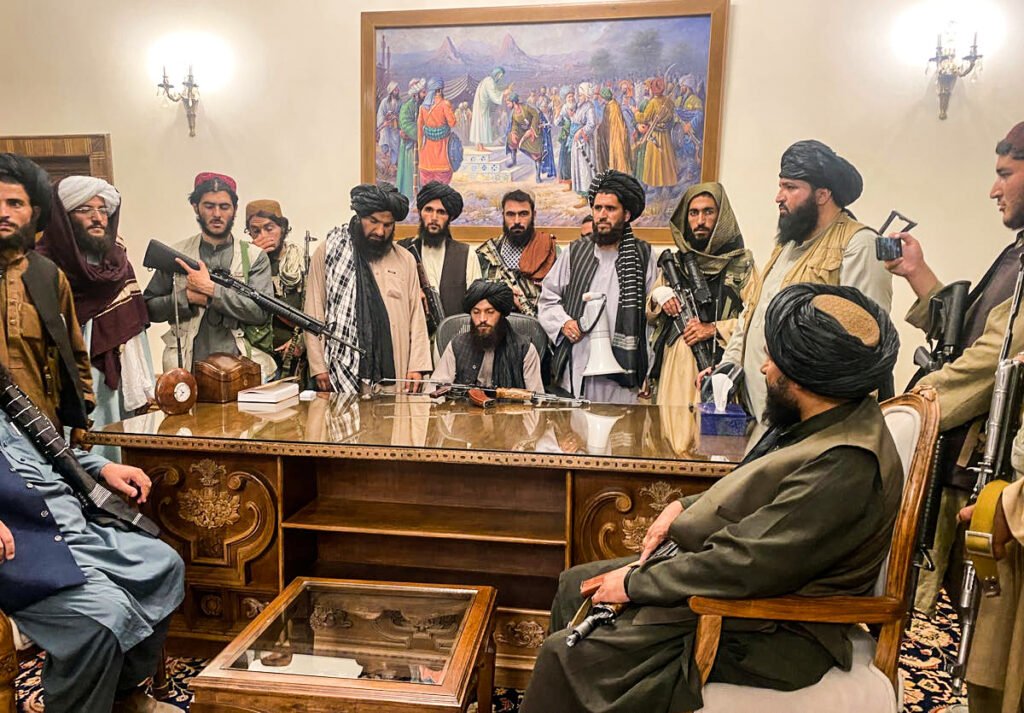

Top Nine Policy Recommendations for the U.S. in the wake of Afghanistan Debacle

TFF Associate

I do not wish to rub salt into the wounds of US and British officials who are responsible for the humiliating debacle in Afghanistan, but there is no way of sugar-coating this appalling tragedy, especially for hard-pressed Afghans who have experienced war and occupation for over 40 years.

In my contacts with various senior Afghan officials and ordinary civilians, especially women, during the past 40 years, I had been very encouraged and impressed by how they used a short period of peace to get educated, to establish a civil society, to serve their country and to assume positions of responsibility with relative ease, only for all those hopes and dreams to come tumbling down in a matter of few weeks.

The hasty withdrawal of US forces from Afghanistan in the dead of night, the hurried departure of US personnel and a few Afghan helpers under fire from Kabul Airport, and the lightning speed of Taliban victories can only be compared to the fall of Saigon on 30 April 1975 and for the British to the Suez fiasco of 7 November 1956.

Originally published by Juan Cole’s Informed Comment

In fact, it can be argued that the fall of Afghanistan has been worse than either of those occasions because both in the war in Vietnam and the invasion of Egypt the other side received powerful support from major powers, while in the case of Afghanistan a bunch of fanatics on motorbikes with no foreign support with the exception of some backing from Pakistan managed to defeat the world’s most powerful superpower.

The Taliban conquered most of Afghanistan in less than two weeks and a day after surrounding Kabul, the Western-backed President Ashraf Ghani who only a day earlier had promised strong resistance fled to Tajikistan with his vice-president and a few other senior officials, leaving the ordinary people to the mercy of the Taliban. It was an act of abject cowardice and betrayal.

No doubt, many articles and books will be written about this great geopolitical failure by the West, but here are some initial thoughts.

1- Already former President Trump and a number of neocons are blaming President Biden for his hasty departure, but this is totally unfair. The problem started with the start of the US venture in Afghanistan, not in the way that it ended. Initially, both the Mujahedin and the Taliban were supported by the West and by Pakistan, Saudi Arabia and UAE to confront the Soviet forces that had occupied Afghanistan. In fact, it seems that the creation of the Mujahedin predated the Soviet invasion of Afghanistan.

In a remarkable book, former CIA Director and Defense Secretary Robert M. Gates revealed the scale of covert support for the Afghan Mujahedin, even six months prior to the Soviet invasion of Afghanistan in 1979. [Robert M. Gates, From the Shadows: The Ultimate Insider’s Story of Five Presidents and How They Won the Cold War (New York: Simon & Schuster, 1996), pp. 143-49.]

2- The factor that was most responsible for the fall of Afghanistan was President Trump’s decision to announce the withdrawal of US forces from Afghanistan, even without consulting Afghan leaders or Western allies. His decision to hold talks with the representatives of the Taliban in Doha behind the back of the Afghan government emboldened the Taliban and undermined the morale of Afghan leaders and armed forces. It seems in this case, America first became America only.

In his various interviews with the media, Tom Tugendhat, chair of the Foreign Affairs Committee of the British Parliament, said that negotiating with the Taliban behind the back of the Afghan government was as if US officials had negotiated with IRA terrorists at the height of the Troubles behind the back of British officials about the fate of Ireland. He complained: “we abandoned the Afghan people”.

3- A clear lesson drawn from the failure of Western intervention in Afghanistan, the same as in Iraq, Libya, Syria, Yemen, etc., is that trying to follow old colonial wars in the 19th and the 20th centuries in the current century is bound to fail.

The United States has spent trillions of dollars on these futile wars with a huge loss of life only to leave the situation worse than before it intervened. In today’s world, most countries and even militia have access to deadly weapons and are not as likely to put up with foreign occupation the way people in the third world were prepared to do in previous centuries.

This does not mean isolationism, but a clear and coherent strategy of working with other countries to achieve common goals. The world is faced with many existential threats, climate change, food and water shortage leading to mass migration, the pandemic, the threat of annihilation by nuclear weapons, etc. None of these problems can be resolved by war or by countries separately. They require collective action and a move away from war to cooperation.

4- One major consequence of the latest failure must be to limit the power and ambition of the neoconservatives and their dream of world domination. The time has come to end the dominance of neocon cabals who have been responsible for distorting US foreign policy and causing mayhem and misery around the world. Millions of liberal Americans who are opposed to the aggressive policies of the neocons must find their voice and must force the neocons to take a backseat in foreign policy.

5- The latest events in Afghanistan must also have a lesson for Israeli right-wing leaders to realise that reliance on brute force and on American backing has its limits. They can ensure their future presence in the Middle East not by non-stop expansion, suppression of the Palestinians and occupation of more and more of their lands. They should seriously start negotiating with the Palestinians in good faith before it is too late.

6- European countries should learn that blind support for US policies is a disservice to them as well as to the United States’ long-term interests. Had they been bold enough to pursue an independent course of action on Afghanistan and other Middle East crises they would have been able to remind some neoconservative US politicians of their excesses and mistakes when they go wrong and prevent catastrophes later. They should act as independent states, rather than as colonies.

7- The resurgence of the Taliban is not only of major importance to Afghanistan but also has many geopolitical ramifications. Without a doubt, it cannot be good news for US interests, at least in the short term, but the rule of the fanatics in Kabul can pose many dangers for the neighbouring countries.

There are different scenarios for the Taliban’s relations with neighbouring countries. Pakistan is a clear winner because of its links with its own Pashtun populations and its historical relations with the Taliban in Afghanistan. The Taliban clearly need foreign friends in order to keep their population happy. They could either form an alliance with Pakistan, China and Iran that already have good relations, in which case it will be against India’s interests. Alternatively, they can form an alliance with India and Central Asian states with Russian backing, which would weaken their reliance upon Iran and China. Their best policy, however, would be to have good relations with all their neighbours and with all outside powers, including the West.

8- Finally, understandably, there is a great deal of apprehension in Afghanistan, especially among Afghan women, about a return to the harsh practices of the last time that the Taliban were in power. Despite the promises of some Taliban leaders that they have learned from the past and have moderated their policies, the behaviour of some Taliban fighters in the cities that they have occupied during the past two weeks has been far from reassuring. There have been summary executions, including the dragging of the bodies of some of their victims through the streets. In some cities, they have expelled women from their jobs and have forced them to go back to the home.

The Taliban must realise that the Afghanistan that they are inheriting is very different from the country that they ruled 20 years ago. There are many more educated Afghans now than there were before. Women have experienced a long period of freedom and social involvement. The whole Afghan society has had a taste of democracy and freedom. They are unlikely to put up with the Taliban’s old, medieval beliefs and practices. For the sake of the vast majority of Afghan people and for the sake of not making themselves isolated as they were before, they must adopt a more progressive and more moderate form of Islam, especially as most of their practices are not in conformity with Islamic teachings. In any case, the world today is not that of 1,400 years ago, and they must move with the times, as Islam prescribes.

9- Now that the West has left Afghanistan and betrayed millions of ordinary Afghans, it is incumbent upon Western governments to at least continue their humanitarian assistance to the Afghan people who will be in need of help more than ever before. It is also important that they take an active interest in the behaviour of the Taliban and will use all the international organisations to ensure that the rights of girls, women, ethnic groups and religious minorities will be respected.

If you feel this article gave you perspectives you don’t get by the mainstream media, please help TFF continue to produce such perspectives – for peace and against all the failed wars.

Bonus Video added by Informed Comment:

ABC News: “Kabul falls to Taliban”

Former Professor and Dean of the Faculty of Languages, University of Isfahan; former lecturer at Cambridge, Harvard and Oxford universities; retired Editor for Middle East and North Africa, BBC Monitoring.

Share

Leave a Reply

Your email address will not be published. Required fields are marked *

Related Posts

PRESS RELEASE – 6 OCTOBER 2025 LAY DOWN YOUR ARMSPEACE PRIZE FOR 2025 is awarded Francesca Albanese The United Nations Special Rapporteur on the occupied Palestinian territories – as the person who, in accordance with Alfred Nobel’s will, has “done the most or the best work for fraternity between nations and for the abolition or reduction of standing armies as well as for the holding and promotion of peace congresses.” Francesca Albanese has forcefully and unwaveringly worked against Israel’s full-scale war on the occupied Palestinian territories, in particular Israel´s ongoing genocide against the Palestinian people. She has confronted Israel’s systematic war crimes and crimes against humanity in a truly global outreach. Further, she has brought governments, international organisations and people’s groups together to underline the responsibility of the world at large to act and to stop arming, enabling, and profiting from Israel’s ongoing criminal actions. But first of all, Albanese...
Officially, the drones were not identified. By simply thinking critically – which journalists and selected experts no longer do – there may be a good reason for that. And this article will never be mentioned in Denmark… Drones over Denmark. No damage. No trace. No answers. Yet the headlines scream “Russian threat,” and Prime Minister Mette Frederiksen speaks with a certainty that defies logic: “We don’t know they were Russian—but we know Russia is the biggest threat to Europe.” It could be nobody else – unless you make an interest analysis which I did two days ago. This is not security policy. It’s theatre. And the audience is being played. Let’s rewind. These drones—unphotographed, untracked, unclaimed—appear and vanish like ghosts. Airports shut down. Panic spreads. Military budgets swell. And the narrative hardens: Russia is behind it. But what if that’s not just wrong but deliberately misleading? Here’s a hypothesis for...
And why the world, especially the EU, must now declare itself independent of the United States. UN’s 80th anniversary This year, the United Nations celebrates the 80th anniversary of its founding. The UN was formed after the scourge of the Second World War, in which 70 to 85 million people were killed and many countries were destroyed. That war came on the heels of the First World War, which also killed between 15 and 22 million people. After the Second World War, especially after the use of nuclear weapons by the United States, which marked a turning point in the history of warfare that could result in the end of civilisation as we know it, humanity decided to move away from the era of empires and big power politics and usher in a new era of peace, freedom and cooperation. These were the principles enshrined in the UN Charter. The United States...

Recent Articles

Gandhi, Arun. Lord Richard Attenborough. Kasturba: a lifeNew Delhi: Penguin Books Ltd., 2000.315 pp, 295 Indian Rs, US $22.51 January 29, 2002 Arun Gandhi, grandson to Mohandas and Kasturba, has written a thorough account of Kasturba’s life. Arun begins with a description of Kasturba’s childhood in Porbandar in the late1800s, before she met Mohandas. By having chosen to embark on difficult research into his grandmother’s life, including her first years which are not well-documented, Arun ensures that the reader receives an intimate and life-long portrait of this amazing woman. Kasturba is presented as a lively woman &endash; obedient, yet with a mind of her own. As the relationship between Kasturba and Mohandas developed, Arun maintains that Kasturba’s influence over Mohandas in her own quiet way also grew, to which some of Mohandas’ writings also attest.  Arun paints a vivid picture of the beginnings of Mohandas’ non-violence movement in South Africa, a...
In response to an urgent Appeal from all the living Nobel Peace Prize Laureates, the General Assembly of the United Nations, on November 1998, unanimously declared the first decade of the twenty-first century to be The Decade for a Culture of Peace and Nonviolence. While people are naturally concerned about the amount of violence in our world and how it threatens our future, the Nobel Laureates are right to remind us of the potential of nonviolence and our calling to build a culture of peace and nonviolence.  The twentieth century is instructive in the way that the philosophy and practice of nonviolence have begun to flourish and in the way that nonviolent movements have had an exponential growth across the world. Mohandas Gandhi and Martin Luther King, Jr. are the most famous nonviolent leaders but many have built upon the paths they charted as in country after country, tyrannies and...
We know that medical personnel have failed to report to higher authorities wounds that were clearly caused by torture and that they have neglected to take steps to interrupt this torture. In addition, they have turned over prisoners’ medical records to interrogators who could use them to exploit the prisoners’ weaknesses or vulnerabilities. We have not yet learned the extent of medical involvement in delaying and possibly falsifying the death certificates of prisoners who have been killed by torturers. A May 22 article on Abu Ghraib in the New York Times states that “much of the evidence of abuse at the prison came from medical documents” and that records and statements “showed doctors and medics reporting to the area of the prison where the abuse occurred several times to stitch wounds, tend to collapsed prisoners or see patients with bruised or reddened genitals.” http://www.truthout.org/docs_04/080604J.shtml#16 According to the article, two doctors who...

TFF on Substack

Discover more from TFF Transnational Foundation & Jan Oberg.

Most Popular

Gandhi, Arun. Lord Richard Attenborough. Kasturba: a lifeNew Delhi: Penguin Books Ltd., 2000.315 pp, 295 Indian Rs, US $22.51 January 29, 2002 Arun Gandhi, grandson to Mohandas and Kasturba, has written a thorough account of Kasturba’s life. Arun begins with a description of Kasturba’s childhood in Porbandar in the late1800s, before she met Mohandas. By having chosen to embark on difficult research into his grandmother’s life, including her first years which are not well-documented, Arun ensures that the reader receives an intimate and life-long portrait of this amazing woman. Kasturba is presented as a lively woman &endash; obedient, yet with a mind of her own. As the relationship between Kasturba and Mohandas developed, Arun maintains that Kasturba’s influence over Mohandas in her own quiet way also grew, to which some of Mohandas’ writings also attest.  Arun paints a vivid picture of the beginnings of Mohandas’ non-violence movement in South Africa, a...
In response to an urgent Appeal from all the living Nobel Peace Prize Laureates, the General Assembly of the United Nations, on November 1998, unanimously declared the first decade of the twenty-first century to be The Decade for a Culture of Peace and Nonviolence. While people are naturally concerned about the amount of violence in our world and how it threatens our future, the Nobel Laureates are right to remind us of the potential of nonviolence and our calling to build a culture of peace and nonviolence.  The twentieth century is instructive in the way that the philosophy and practice of nonviolence have begun to flourish and in the way that nonviolent movements have had an exponential growth across the world. Mohandas Gandhi and Martin Luther King, Jr. are the most famous nonviolent leaders but many have built upon the paths they charted as in country after country, tyrannies and...
We know that medical personnel have failed to report to higher authorities wounds that were clearly caused by torture and that they have neglected to take steps to interrupt this torture. In addition, they have turned over prisoners’ medical records to interrogators who could use them to exploit the prisoners’ weaknesses or vulnerabilities. We have not yet learned the extent of medical involvement in delaying and possibly falsifying the death certificates of prisoners who have been killed by torturers. A May 22 article on Abu Ghraib in the New York Times states that “much of the evidence of abuse at the prison came from medical documents” and that records and statements “showed doctors and medics reporting to the area of the prison where the abuse occurred several times to stitch wounds, tend to collapsed prisoners or see patients with bruised or reddened genitals.” http://www.truthout.org/docs_04/080604J.shtml#16 According to the article, two doctors who...
Read More
Imagen-thumbnail-The-Transnational-1
Gandhi, Arun. Lord Richard Attenborough. Kasturba: a lifeNew Delhi: Penguin Books Ltd., 2000.315 pp, 295 Indian Rs, US $22.51 January 29, 2002 Arun Gandhi, grandson to Mohandas and Kasturba, has written a thorough account of Kasturba’s life. Arun begins with a description of Kasturba’s childhood in Porbandar in the late1800s, before she met Mohandas. By having chosen to embark on difficult research into his grandmother’s life, including her first years which are not well-documented, Arun ensures that the reader receives an intimate and life-long portrait of this amazing woman. Kasturba is presented as a lively woman &endash; obedient, yet with a mind of her own. As the relationship between Kasturba and Mohandas developed, Arun maintains that Kasturba’s influence over Mohandas in her own quiet way also grew, to which some of Mohandas’ writings also attest.  Arun paints a vivid picture of the beginnings of Mohandas’ non-violence movement in South Africa, a...
Imagen-thumbnail-The-Transnational-1
In response to an urgent Appeal from all the living Nobel Peace Prize Laureates, the General Assembly of the United Nations, on November 1998, unanimously declared the first decade of the twenty-first century to be The Decade for a Culture of Peace and Nonviolence. While people are naturally concerned about the amount of violence in our world and how it threatens our future, the Nobel Laureates are right to remind us of the potential of nonviolence and our calling to build a culture of peace and nonviolence.  The twentieth century is instructive in the way that the philosophy and practice of nonviolence have begun to flourish and in the way that nonviolent movements have had an exponential growth across the world. Mohandas Gandhi and Martin Luther King, Jr. are the most famous nonviolent leaders but many have built upon the paths they charted as in country after country, tyrannies and...
Imagen-thumbnail-The-Transnational-1
We know that medical personnel have failed to report to higher authorities wounds that were clearly caused by torture and that they have neglected to take steps to interrupt this torture. In addition, they have turned over prisoners’ medical records to interrogators who could use them to exploit the prisoners’ weaknesses or vulnerabilities. We have not yet learned the extent of medical involvement in delaying and possibly falsifying the death certificates of prisoners who have been killed by torturers. A May 22 article on Abu Ghraib in the New York Times states that “much of the evidence of abuse at the prison came from medical documents” and that records and statements “showed doctors and medics reporting to the area of the prison where the abuse occurred several times to stitch wounds, tend to collapsed prisoners or see patients with bruised or reddened genitals.” http://www.truthout.org/docs_04/080604J.shtml#16 According to the article, two doctors who...
Imagen-thumbnail-The-Transnational-1
Jan Øberg behandler i artiklen en lang række faktorer, som ligger til grund for den måde vores samfund er organiseret på – og derfor også for konflikter. Artiklen introducerer således sammenhængen mellem familien, foreninger, regeringer, NGO’ er, nation, stat, nationalstat og alliancer for på denne måde bedre at kunne forstå konflikter og i sidste ende blive klogere mht. at løse disse. Øberg, der er fortaler for global bevidsthed, hvilket skal ses i lyset af den øgede globalisering, skelner mellem kulturkamp og kulturdialog. Endelig behandles begrebet magt og magtesløshed: giver magt ret til at udøve magt – fordi man mener at have ret? Litteraturliste og arbejdsspørgsmål efter artiklen. Ordene vi bruger om verden I satellitperspektiv kan man godt tale om den menneskelige familie eller menneskeheden. Udtrykket understreger, at der eksisterer – eller burde eksistere – et fællesskab fordi vi alle er mennesker og sammen bebor denne klode og ingen anden. Og...
Imagen-thumbnail-The-Transnational-1
Kapitel 2: Forskellige sider af Europa og USA…fortsat 2.5 Militære relationer I forbifarten har vi allerede sagt nogle ting om USA’s militære situation. Kig lige en gang til på afsnit 2.3. Nu skal vi uddybe det militære forhold mellem USA og EU. Der er en række ligheder mellem visse europæiske landes og USA’s militær. Næsten alle er med på en eller anden måde i NATO, direkte som medlem – selv Island, der ikke har et forsvar – eller indirekte i Partnerskab for Fred. USA og Canada er med i OSCE (på dansk OSSE), Organisationen for Sikkerhed og Samarbejde i Europa, der tæller over 50 lande. USA samt England og Frankrig er kernevåbenstater og de har styrker til intervention langt borte fra hjemlandet, om end USA’s er tifold større. Alle har også en omfattende våbeneksport og bruger den som et middel til at tjene penge og få loyale venner på, det...
Imagen-thumbnail-The-Transnational-1
Background Christian Harleman and Jan Oberg conducted a fact-finding mission to Burundi between November 26 and December 6, 2003. (See websites about the country here). The first TFF mission took place in March 1999. Unfortunately, since then it has not been practically possible to implement the co-operation with Burundi’s Ministry of Education and Burundian NGOs that was planned at the time. The 2003 mission had three purposes. First, to do fact-finding in general about the situation and, in particular, the progress under the Arusha Peace Process. Second, to explore the possibilities for co-operation between the government and relevant NGOs on the one hand and TFF on the other, in order to develop and deepen the existing competence in fields such as conflict-understanding, reconciliation and peace-building. Finally, third, to find out whether it would be possible, in co-operation with the Swedish Rescue Services Agency (Statens Räddningsverk), to establish a health care unit that...


