
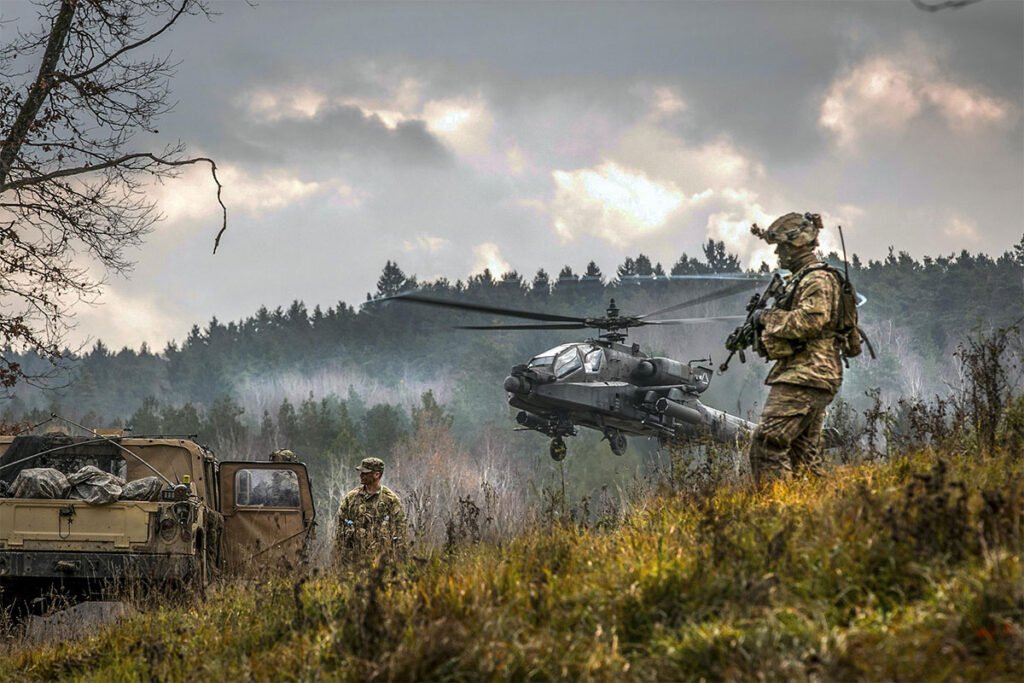
Welcome to Bootprint - TFF's online magazine on militarism and environment

Today TFF launches “Bootprint – Militarism and Environment” – a curated, free-of-charge online magazine that brings you quality knowledge about the connections between the two most urgent problems that humanity faces.

These two main clusters of problems which, if not solved, threaten to destroy humanity, our Earth and all future potentials are:

Environment – with catchwords such as climate change, global warming, CO2 footprint, non-sustainability, pollution, resource depletion, species extinction, variety and diversity reduction, rain forest destruction, overconsumption, fossil fuels economy, limitless material growth, etc. etc. – and

Militarism – with catchwords such as warfare, nuclear weapons, arms production and trade, militarization of land, air, space and oceans, tension creating, interventionism, base networks, terrorism, cyber and propaganda warfare, other weapons of mass destruction, special forces operations, intelligence agency crimes, imperialism, etc.

The two clusters a fundamentally connected – militarism is enormously destructive of the environment; climate change and other processes in the global environment cause increasing risks to our security. Wars produce refugees, refugee migrations cause social upheaval and xenophobia and immense environmental degradation, etc.

And there are the opportunity cost relations: whenever resources and budgets are spent on militarism, we are reducing the chance to solve the environmental problems because of the perverse proportions between the comparatively tiny budgets for peace and sustainability and welfare, on the one hand, and the seemingly unlimited budgets for everything related to violence, on the other.

You can’t have the cake and blow it up too.

The two clusters are also connected at deeper cultural levels and ways of thinking. They are both fundamentally expressive of the human acceptance of violence as legitimate and effective – violence against Mother Nature in a broad sense and violence against other people, cultures, political systems, religions, or whatever. Violence for a mission civilisatrice.

They both flow from a deep-seated contempt for weakness on the one hand and an – absurd, naive – belief in anthropocentrism, on the other. That is, that Man is the centre of everything and that some men are more central than others.

Wars are fought against those considered lower, (morally) weaker, less powerful, lower in a civilisational ranking system than “we” are. Mother Nature shall be the object of scientific research, exploration and experimentation – in order to be controlled, shaped, manipulated – in order to serve Man.

It was during the process of this male scientific penetration and control of female Nature aiming at finding her secrets in the smallest building block that we stumbled upon the atom which was then, immediately and tragically, put to destructive use on July 16, 1945, and used – unnecessarily – on Hiroshima and Nagasaki less than a month later.

The deep thought patterns embedded in these two global problems are one and the same, carry the same message: Dominate, control, exploit as much as you can! Use your superiority against the weaker and serve yourselves, the egoistic, not the common good – and use violence ad libitum! Might makes right!

Doris Lessing called it Shikasta – a fundamental flaw in our civilisation’s ‘code’ of human and societal thinking that will lead to destruction unless… unless we stop and begin to think of how it is we think. And then change fundamentally the way we act, do politics and define the meaning of the term society.

It goes without saying – but should, therefore, be emphasized: It borders on the bizarre that, today, there is intense world attention only to the environment themes and hardly any to the peace. And that there are very few connectors between the two – in science, politics, activism and media.

But we must ask: What’s the use of fighting to stop climate change – the Whimper – if even one small nuclear weapon goes off or a major war breaks out – the Bang – somewhere tomorrow?

And how can anyone believe that we can save the environment and create a global, sustainable future while the warfare and militarism system is maintained unchanged – perhaps with measures to make it “green” – and the global military continues to consume resources and funds nobody understands anymore?

How can anyone with his head overground believe that MIMAC – Military-Industrial-Media-Academic Complex – can continue to invent enemies and require more and more resources as the perpetuum mobile it is and serving only itself – while we are trying to make the rest of the civil and civilised world sustainable?

If so, then we are doomed.

The Bulletin Of The Atomic Scientists recently put its famous world warning Doomsday Clock at 100 seconds to midnight, the closest to predictable world catastrophe ever. Mind you, it is intended to reflect basic changes in the level of continuous danger in which mankind lives in the nuclear age.

Is it really to ask too much holistic thinking that we address both issues – before each of them – and their combined effects – bring us beyond the point of no return?

Integral thinking and action will come. It is so self-evident that it must come. The slogan for both areas: Reduce all kinds of violence in thinking, speaking and action. And devise a constructive program for both areas – integral positive future thinking and scenario-development. What you can visualize, people may work for – what you cannot visualize, nobody will work for.

And the world could be such a beautiful, peaceful, sustainable place. We don’t need Utopias. We don’t need Dystopia. We need Eutopia – visions or the future world that is better and really possible and for which it is meaningful to work.

In times of fake and omission, of denial and escapism and of political systems that have proven incapable of turning the ship in time – we have known about these two problems and the necessity to find solutions to them – for a good 70 years and done far too little – we need knowledge (not only information) and holistic thinking more than ever.

Today, TFF launches a curated online magazine on Flipboard to help you find your own way through these issues and how they are interconnected – “Bootprint – Militarism and Environment”. It’s on Flipboard and works particularly well on your phone, just download its app.

It’s just an embryo, a small guide to begin with (about 50 posts). It’s by no means complete – but there is enough to browse for the seriously concerned citizen – in line with TFF’s wish to contribute to public education and constructive action.

More will be added as time goes by.

Bootprint holds more diagnosis and prognosis than treatment and constructive policy proposals in it. At this point. It’s a reflection of the research and debate as it is. But we shall need, ASAP, to integrate constructive solution-thinking and policies for both problem cluster as one.

It contains materials from many perspectives and written by a diversity of people and institution, civil and also military. TFF takes no responsibility for views brought forward in these articles and videos, some of them may be based on values we do not share. But they are part of the knowledge base and the debate.

We hope you will benefit from Bootprint.

We hope you will alert us too quality materials to be included – send them to TFF@transnational.org.

We hope you will press “Follow” and spread whatever message you find important in some of these articles and videos and share them with everyone you know and decision-makers you think must learn.

TFF and its Associates are painfully aware that we can do only very little about these huge problems. But the ocean consists of drops. But we are happy to add our drop to the ocean of knowledge and thinking – and thereby help bring about both peace and sustainability through the only means that will have a real, lasting effect: Knowledge and education on how to reduce all kinds of violence and on how to channel resources to civilian development of both the inner and outer human beings and all human beings.

And now listen…

If you think “Bootprint” is yet another good initiative from TFF for a better world…

[paypal-donation]

TFF’s first online magazine on Flipboard is “Transnational Peace Affairs” and can be browsed and followed here.

Peace & future researcher + ‌Art Photographer

Share

Leave a Reply

Your email address will not be published. Required fields are marked *

Related Posts

PRESS RELEASE – 6 OCTOBER 2025 LAY DOWN YOUR ARMSPEACE PRIZE FOR 2025 is awarded Francesca Albanese The United Nations Special Rapporteur on the occupied Palestinian territories – as the person who, in accordance with Alfred Nobel’s will, has “done the most or the best work for fraternity between nations and for the abolition or reduction of standing armies as well as for the holding and promotion of peace congresses.” Francesca Albanese has forcefully and unwaveringly worked against Israel’s full-scale war on the occupied Palestinian territories, in particular Israel´s ongoing genocide against the Palestinian people. She has confronted Israel’s systematic war crimes and crimes against humanity in a truly global outreach. Further, she has brought governments, international organisations and people’s groups together to underline the responsibility of the world at large to act and to stop arming, enabling, and profiting from Israel’s ongoing criminal actions. But first of all, Albanese...
Officially, the drones were not identified. By simply thinking critically – which journalists and selected experts no longer do – there may be a good reason for that. And this article will never be mentioned in Denmark… Drones over Denmark. No damage. No trace. No answers. Yet the headlines scream “Russian threat,” and Prime Minister Mette Frederiksen speaks with a certainty that defies logic: “We don’t know they were Russian—but we know Russia is the biggest threat to Europe.” It could be nobody else – unless you make an interest analysis which I did two days ago. This is not security policy. It’s theatre. And the audience is being played. Let’s rewind. These drones—unphotographed, untracked, unclaimed—appear and vanish like ghosts. Airports shut down. Panic spreads. Military budgets swell. And the narrative hardens: Russia is behind it. But what if that’s not just wrong but deliberately misleading? Here’s a hypothesis for...
And why the world, especially the EU, must now declare itself independent of the United States. UN’s 80th anniversary This year, the United Nations celebrates the 80th anniversary of its founding. The UN was formed after the scourge of the Second World War, in which 70 to 85 million people were killed and many countries were destroyed. That war came on the heels of the First World War, which also killed between 15 and 22 million people. After the Second World War, especially after the use of nuclear weapons by the United States, which marked a turning point in the history of warfare that could result in the end of civilisation as we know it, humanity decided to move away from the era of empires and big power politics and usher in a new era of peace, freedom and cooperation. These were the principles enshrined in the UN Charter. The United States...

Recent Articles

We know that medical personnel have failed to report to higher authorities wounds that were clearly caused by torture and that they have neglected to take steps to interrupt this torture. In addition, they have turned over prisoners’ medical records to interrogators who could use them to exploit the prisoners’ weaknesses or vulnerabilities. We have not yet learned the extent of medical involvement in delaying and possibly falsifying the death certificates of prisoners who have been killed by torturers. A May 22 article on Abu Ghraib in the New York Times states that “much of the evidence of abuse at the prison came from medical documents” and that records and statements “showed doctors and medics reporting to the area of the prison where the abuse occurred several times to stitch wounds, tend to collapsed prisoners or see patients with bruised or reddened genitals.” http://www.truthout.org/docs_04/080604J.shtml#16 According to the article, two doctors who...
Jan Øberg behandler i artiklen en lang række faktorer, som ligger til grund for den måde vores samfund er organiseret på – og derfor også for konflikter. Artiklen introducerer således sammenhængen mellem familien, foreninger, regeringer, NGO’ er, nation, stat, nationalstat og alliancer for på denne måde bedre at kunne forstå konflikter og i sidste ende blive klogere mht. at løse disse. Øberg, der er fortaler for global bevidsthed, hvilket skal ses i lyset af den øgede globalisering, skelner mellem kulturkamp og kulturdialog. Endelig behandles begrebet magt og magtesløshed: giver magt ret til at udøve magt – fordi man mener at have ret? Litteraturliste og arbejdsspørgsmål efter artiklen. Ordene vi bruger om verden I satellitperspektiv kan man godt tale om den menneskelige familie eller menneskeheden. Udtrykket understreger, at der eksisterer – eller burde eksistere – et fællesskab fordi vi alle er mennesker og sammen bebor denne klode og ingen anden. Og...
Kapitel 2: Forskellige sider af Europa og USA…fortsat 2.5 Militære relationer I forbifarten har vi allerede sagt nogle ting om USA’s militære situation. Kig lige en gang til på afsnit 2.3. Nu skal vi uddybe det militære forhold mellem USA og EU. Der er en række ligheder mellem visse europæiske landes og USA’s militær. Næsten alle er med på en eller anden måde i NATO, direkte som medlem – selv Island, der ikke har et forsvar – eller indirekte i Partnerskab for Fred. USA og Canada er med i OSCE (på dansk OSSE), Organisationen for Sikkerhed og Samarbejde i Europa, der tæller over 50 lande. USA samt England og Frankrig er kernevåbenstater og de har styrker til intervention langt borte fra hjemlandet, om end USA’s er tifold større. Alle har også en omfattende våbeneksport og bruger den som et middel til at tjene penge og få loyale venner på, det...

TFF on Substack

Discover more from TFF Transnational Foundation & Jan Oberg.

Most Popular

We know that medical personnel have failed to report to higher authorities wounds that were clearly caused by torture and that they have neglected to take steps to interrupt this torture. In addition, they have turned over prisoners’ medical records to interrogators who could use them to exploit the prisoners’ weaknesses or vulnerabilities. We have not yet learned the extent of medical involvement in delaying and possibly falsifying the death certificates of prisoners who have been killed by torturers. A May 22 article on Abu Ghraib in the New York Times states that “much of the evidence of abuse at the prison came from medical documents” and that records and statements “showed doctors and medics reporting to the area of the prison where the abuse occurred several times to stitch wounds, tend to collapsed prisoners or see patients with bruised or reddened genitals.” http://www.truthout.org/docs_04/080604J.shtml#16 According to the article, two doctors who...
Jan Øberg behandler i artiklen en lang række faktorer, som ligger til grund for den måde vores samfund er organiseret på – og derfor også for konflikter. Artiklen introducerer således sammenhængen mellem familien, foreninger, regeringer, NGO’ er, nation, stat, nationalstat og alliancer for på denne måde bedre at kunne forstå konflikter og i sidste ende blive klogere mht. at løse disse. Øberg, der er fortaler for global bevidsthed, hvilket skal ses i lyset af den øgede globalisering, skelner mellem kulturkamp og kulturdialog. Endelig behandles begrebet magt og magtesløshed: giver magt ret til at udøve magt – fordi man mener at have ret? Litteraturliste og arbejdsspørgsmål efter artiklen. Ordene vi bruger om verden I satellitperspektiv kan man godt tale om den menneskelige familie eller menneskeheden. Udtrykket understreger, at der eksisterer – eller burde eksistere – et fællesskab fordi vi alle er mennesker og sammen bebor denne klode og ingen anden. Og...
Kapitel 2: Forskellige sider af Europa og USA…fortsat 2.5 Militære relationer I forbifarten har vi allerede sagt nogle ting om USA’s militære situation. Kig lige en gang til på afsnit 2.3. Nu skal vi uddybe det militære forhold mellem USA og EU. Der er en række ligheder mellem visse europæiske landes og USA’s militær. Næsten alle er med på en eller anden måde i NATO, direkte som medlem – selv Island, der ikke har et forsvar – eller indirekte i Partnerskab for Fred. USA og Canada er med i OSCE (på dansk OSSE), Organisationen for Sikkerhed og Samarbejde i Europa, der tæller over 50 lande. USA samt England og Frankrig er kernevåbenstater og de har styrker til intervention langt borte fra hjemlandet, om end USA’s er tifold større. Alle har også en omfattende våbeneksport og bruger den som et middel til at tjene penge og få loyale venner på, det...
Read More
Imagen-thumbnail-The-Transnational-1
We know that medical personnel have failed to report to higher authorities wounds that were clearly caused by torture and that they have neglected to take steps to interrupt this torture. In addition, they have turned over prisoners’ medical records to interrogators who could use them to exploit the prisoners’ weaknesses or vulnerabilities. We have not yet learned the extent of medical involvement in delaying and possibly falsifying the death certificates of prisoners who have been killed by torturers. A May 22 article on Abu Ghraib in the New York Times states that “much of the evidence of abuse at the prison came from medical documents” and that records and statements “showed doctors and medics reporting to the area of the prison where the abuse occurred several times to stitch wounds, tend to collapsed prisoners or see patients with bruised or reddened genitals.” http://www.truthout.org/docs_04/080604J.shtml#16 According to the article, two doctors who...
Imagen-thumbnail-The-Transnational-1
Jan Øberg behandler i artiklen en lang række faktorer, som ligger til grund for den måde vores samfund er organiseret på – og derfor også for konflikter. Artiklen introducerer således sammenhængen mellem familien, foreninger, regeringer, NGO’ er, nation, stat, nationalstat og alliancer for på denne måde bedre at kunne forstå konflikter og i sidste ende blive klogere mht. at løse disse. Øberg, der er fortaler for global bevidsthed, hvilket skal ses i lyset af den øgede globalisering, skelner mellem kulturkamp og kulturdialog. Endelig behandles begrebet magt og magtesløshed: giver magt ret til at udøve magt – fordi man mener at have ret? Litteraturliste og arbejdsspørgsmål efter artiklen. Ordene vi bruger om verden I satellitperspektiv kan man godt tale om den menneskelige familie eller menneskeheden. Udtrykket understreger, at der eksisterer – eller burde eksistere – et fællesskab fordi vi alle er mennesker og sammen bebor denne klode og ingen anden. Og...
Imagen-thumbnail-The-Transnational-1
Kapitel 2: Forskellige sider af Europa og USA…fortsat 2.5 Militære relationer I forbifarten har vi allerede sagt nogle ting om USA’s militære situation. Kig lige en gang til på afsnit 2.3. Nu skal vi uddybe det militære forhold mellem USA og EU. Der er en række ligheder mellem visse europæiske landes og USA’s militær. Næsten alle er med på en eller anden måde i NATO, direkte som medlem – selv Island, der ikke har et forsvar – eller indirekte i Partnerskab for Fred. USA og Canada er med i OSCE (på dansk OSSE), Organisationen for Sikkerhed og Samarbejde i Europa, der tæller over 50 lande. USA samt England og Frankrig er kernevåbenstater og de har styrker til intervention langt borte fra hjemlandet, om end USA’s er tifold større. Alle har også en omfattende våbeneksport og bruger den som et middel til at tjene penge og få loyale venner på, det...
Imagen-thumbnail-The-Transnational-1
Background Christian Harleman and Jan Oberg conducted a fact-finding mission to Burundi between November 26 and December 6, 2003. (See websites about the country here). The first TFF mission took place in March 1999. Unfortunately, since then it has not been practically possible to implement the co-operation with Burundi’s Ministry of Education and Burundian NGOs that was planned at the time. The 2003 mission had three purposes. First, to do fact-finding in general about the situation and, in particular, the progress under the Arusha Peace Process. Second, to explore the possibilities for co-operation between the government and relevant NGOs on the one hand and TFF on the other, in order to develop and deepen the existing competence in fields such as conflict-understanding, reconciliation and peace-building. Finally, third, to find out whether it would be possible, in co-operation with the Swedish Rescue Services Agency (Statens Räddningsverk), to establish a health care unit that...
Imagen-thumbnail-The-Transnational-1
Former UN Under-Secretary-General with special responsibility for peacekeeping operations TFF associate August 20, 2003 YRINGHAM, Mass.- Ralph Bunche was born in Detroit 100 years ago today (August 7, 2003). His passionate determination to get results did not extend to seeking credit for them, so his work is better remembered than he is. Of all his many accomplishments – civil rights pioneer, Nobel Peace Prize laureate, chief drafter of two chapters of the United Nations charter, negotiator of the armistices that ended the first Arab-Israeli war – Bunche said he was proudest of developing what came to be known as peacekeeping. Setting up the United Nations Truce Supervision Organization in Palestine in 1948, Bunche formulated the principles that have governed peacekeeping operations ever since. In the 1956 Suez crisis, working with Secretary General Dag Hammarskjold and Lester Pearson of Canada, he organized the first peacekeeping force, the United Nations Emergency Force...
– nästan 11 månader Till Sofia nästan 11 månader # 1  Till Sofias huvudsida Till alla Privata Foto-Serier