Power grows out of the barrel of a gun - but then...

in 1914 the Europeans conquered 84% of the globe. The puzzle is why did they rise to the top when for centuries the Chinese, Japanese, Ottomans and South Asians were far more advanced?

The short answer, as Mao Zedong once said, is that “Power grows out of the barrel of a gun”.

Europeans were at the forefront of gunpowder technology for 200+ years.

This may seem odd since firearms and gunpowder originated in China and the rocket in India. Yet by the late 17th century Chinese, Japanese and Ottoman military technology was lagging behind Europe’s.

War was what monarchs did in Europe.

War often had become, in the words of Galileo, a “royal sport”. Thomas Hobbes wrote that glory and reputation were one of the three causes of war. Another cause was that tax rates were so much higher in Europe than in the East – funds for war were often plentifully available. But on the other side of the world kings, princes and even military leaders were much less bellicose. The Europeans spent a far higher proportion of their national income on warfare – twice what was spent in China. Although China could have conquered neighbouring states it showed little interest in doing so.

But why were the Europeans so successful compared with the rest of the world?

In a new book, “Why Did Europe Conquer The World”, Professor Philip Hoffman of the Californian Institute for Technology suggests some of the answers.

Europeans had no hegemon, as China did. It was made up of independent states that were often at war with each other. Competition pushed arms technology forward. Glory and the defeat of religious enemies kept the waging of war on the boil.

Europe was fragmented from the time of the fall of the Roman Empire. If Charlemagne’s medieval empire had remained intact for another generation then perhaps a dominant power might have emerged in Europe. By contrast, China was unified under an empire for nearly half of the two millennia between 221BC and AD 1911. Consequently China was often the dominant power in East Asia, which meant that fewer rivals would challenge it and force it to spend heavily, not least on developing the gun powder power of its armaments. Moreover, to fight the raiding Mongols on horseback, its one significant enemy, bows and arrows were more suitable.

Japan slowed down its development of gunpowder technology when the Tokugawa Shogunate united Japan, ending civil war.

In India in the 18th century the leaders and states, as the Mughal Empire disintegrated, fought constantly, but were unable to mobilize resources on a large scale as they inherited a very decentralized Mughal Empire. Faced with Britain’s East India Company with its massive financial resources raised in Europe’s burgeoning capital markets and its advanced armaments they succumbed to its military prowess. In China the Company’s steam-powered gunboats bullied their way into trade concessions during the first Opium War.

For its part the Ottoman Empire suffered from skimpy tax receipts and the corruption of local leaders who collected taxes.

Russia, however, did become a great power and challenged western Europe on occasion. The Czars, particularly Peter the Great, conscripted huge numbers of serfs. Peter and, later, Catherine the Great were finely attuned to developments in western Europe. They borrowed almost everything, not the least the latest in gunpowder technology. The Russian navy wiped out the Ottoman fleet by firing new explosive shells instead of traditional solid canon balls.

By the time of 1814 and the creation of the peace-making Concert of Europe, Europeans had had enough of centuries of war on their own soil.

But Europeans continued to fight each other (and the local people) in Africa, the south east Asian islands and the Caribbean. This kept the research into new weapons going.

In Rhodesia Cecil Rhodes used 700 Europeans with machine guns to overcome 5,000 rifle-bearing Ndebele warriors. The poet Hillaire Belloc wrote:

“Whatever happens we have got
The Maxim gun, and they have not”.

Conquest in the Caribbean led to such high profits from the slave trade and sugar exports that it funded a large part of Britain’s Industrial Revolution.

What does this mean for today – a race to have the most modern military? Surely not.

Europe, shedding the Concert of Europe, tore itself apart in 1914 and again in 1945. That is where the full stop in this story should have been put. The destruction was beyond understanding.

Countries today that aspire to use their “gun powder” to dominate the world must think again. It is to the US, China and Russia, I speak.

Copyright: Jonathan Power 2015

Foreign affairs columnist, film-maker and author

Share

Leave a Reply

Your email address will not be published. Required fields are marked *

Related Posts

A donors’ conference, co-sponsered by the Burundian government, the Belgian government and UNDP will be held in Brussels January 12-13, 2004. This PressInfo offers a perspective on its urgency. See also TFF’s new Burundi Forum. Imagine for a moment that politics is about goodness and generosity. Where could a few million dollars of government aid and a few civil society organisations – guaranteed – win the hearts of extremely poor millions who want peace and already work hard to achieve it after 10 years of war and genocide? The answer is Burundi, the heart-shaped country in the heart of Africa. Burundi makes a good story from Africa. But what does the world know about Burundi, its problems and struggles? Burundi’s tough reality Here are the basic facts. Burundi’s population is about 7 million and it is number 171 out of the 175 countries on the UNDP’s human development index. Their life...
Peace is promoted by constructive proposals and dialogue Four preceding PressInfos have expressed concern over — and criticised — the ongoing, militarisation of the EU. Some will say: but there are no alternatives. We believe that there are always alternatives, that democracies are characterised by alternatives and choice, and that openly discussed alternatives will improve the quality and legitimacy of society’s decision–making. In addition, it is an intellectual and moral challenge to not only criticise but also be constructive. If we only tell people that we think they are wrong, they are not likely to listen. However, if we say: what are your views on this set of ideas and steps? — we may sometimes engage them in dialogue and sow a seed. Most people in power circles live their daily lives in in a time frame and a social space where certain ideas, viewpoints and concepts are just not...
Photos © TFF 2000 Read PressInfo 90 “Lift the Sanctions and Bring More Aid to Yugoslavia” See Pictures from Belgrade © TFF 2000 Please reprint, copy, archive, quote or re-post this item, but please retain the source.

Recent Articles

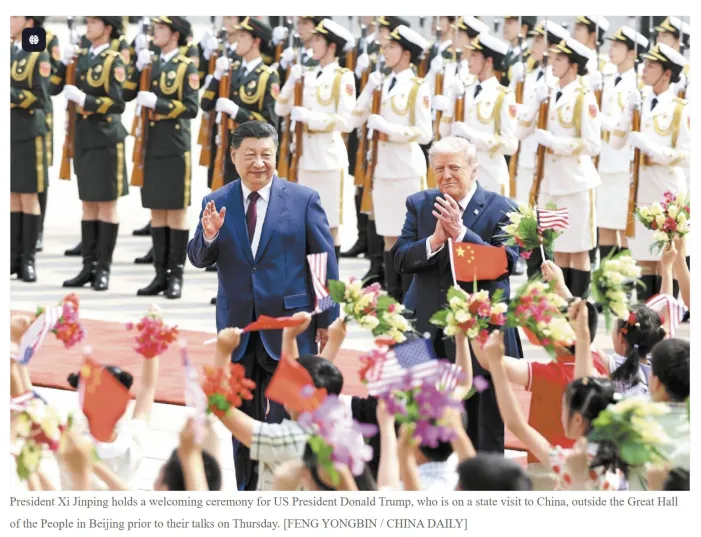
Jan Oberg May 15, 2026 Go to this Fox News page and scroll the whole way down: President Donald Trump tells the world that his meeting with President Xi Jinping yielded a lot of very concrete political and economic results – of course, only where the Chinese side, according to him, agreed with him. He does not mention the Taiwan issue, but Secretary of State, Marco Rubio, says that it did not feature prominently in their talks and that the US policy on Taiwan has not changed. Then go to China Daily – or Global Times – and you will see that for the Chinese it is framework, principles, structure of cooperation etc. that matters – all embedded in the overall idea of “constructive bilateral relationship of strategic stability.” Nowhere is any concrete agreement or deal – all that Trump refers to – mentioned. At the general level, this gives you insights into the very different social...
Lena Petrova of “World Affairs In Context” with more than half a million subscribers on YouTube wanted to explore what a peace researcher like me has to say about, among other things, the First and the Second Cold War and why eethics has disappeared from politics. I am particularly happy about this conversation that also yielded an amazing number of very appreciative comments on YouTube. No doubt, people are longing for alternatives, including peace perspectives.
The MIMAC – Military-Industrial-Media-Academic Complex – drives the world’s rampant militarism and wars without end. Here is a short reflection of how it works against all interests of humanity. #5 deals with why there is no real enemy or threat images/analysis. It’s all ex-post constructions. And, btw, theTFF Peace Pulse is now on Rumble.

TFF on Substack

Discover more from TFF Transnational Foundation & Jan Oberg.

Most Popular

Jan Oberg May 15, 2026 Go to this Fox News page and scroll the whole way down: President Donald Trump tells the world that his meeting with President Xi Jinping yielded a lot of very concrete political and economic results – of course, only where the Chinese side, according to him, agreed with him. He does not mention the Taiwan issue, but Secretary of State, Marco Rubio, says that it did not feature prominently in their talks and that the US policy on Taiwan has not changed. Then go to China Daily – or Global Times – and you will see that for the Chinese it is framework, principles, structure of cooperation etc. that matters – all embedded in the overall idea of “constructive bilateral relationship of strategic stability.” Nowhere is any concrete agreement or deal – all that Trump refers to – mentioned. At the general level, this gives you insights into the very different social...
Lena Petrova of “World Affairs In Context” with more than half a million subscribers on YouTube wanted to explore what a peace researcher like me has to say about, among other things, the First and the Second Cold War and why eethics has disappeared from politics. I am particularly happy about this conversation that also yielded an amazing number of very appreciative comments on YouTube. No doubt, people are longing for alternatives, including peace perspectives.
The MIMAC – Military-Industrial-Media-Academic Complex – drives the world’s rampant militarism and wars without end. Here is a short reflection of how it works against all interests of humanity. #5 deals with why there is no real enemy or threat images/analysis. It’s all ex-post constructions. And, btw, theTFF Peace Pulse is now on Rumble.
Read More
Screenshot-2026-05-15-103534
Jan Oberg May 15, 2026 Go to this Fox News page and scroll the whole way down: President Donald Trump tells the world that his meeting with President Xi Jinping yielded a lot of very concrete political and economic results – of course, only where the Chinese side, according to him, agreed with him. He does not mention the Taiwan issue, but Secretary of State, Marco Rubio, says that it did not feature prominently in their talks and that the US policy on Taiwan has not changed. Then go to China Daily – or Global Times – and you will see that for the Chinese it is framework, principles, structure of cooperation etc. that matters – all embedded in the overall idea of “constructive bilateral relationship of strategic stability.” Nowhere is any concrete agreement or deal – all that Trump refers to – mentioned. At the general level, this gives you insights into the very different social...
Screenshot-2026-05-12-104023
Lena Petrova of “World Affairs In Context” with more than half a million subscribers on YouTube wanted to explore what a peace researcher like me has to say about, among other things, the First and the Second Cold War and why eethics has disappeared from politics. I am particularly happy about this conversation that also yielded an amazing number of very appreciative comments on YouTube. No doubt, people are longing for alternatives, including peace perspectives.
Screenshot-2026-04-13-154551 (2)
The MIMAC – Military-Industrial-Media-Academic Complex – drives the world’s rampant militarism and wars without end. Here is a short reflection of how it works against all interests of humanity. #5 deals with why there is no real enemy or threat images/analysis. It’s all ex-post constructions. And, btw, theTFF Peace Pulse is now on Rumble.
Screenshot-2026-04-13-154551 (1)
Jan Oberg, TFF director April 28, 2026 In this third TFF Peace Pulse, I make the important distinction between the violence and the conflict that violence is a symptom of. If you want peace, focus on the underlying conflict because that is the key to resolution, peacemaking, and a better future for the parties. The West is obsessed with violence, just look around you – and 90+ per cent of the public debate is about military issues and other violence – totally wasted for peace. These Peace Pulses will only be published here a few times. You will also not find them on YouTube and Vimeo because both platforms have blocked TFF and me; you know, peace is dangerous these days. Most TFF’s videos since 2007 are now on Rumble.
Screenshot-2026-04-13-154551
In contrast to most, we’ll bring alternatives, solutions, hope and strategies for a better future. Times are dangerous, yes, but that only intensifies the need for constructive thinking and action! Jan Oberg, TFF director April 13, 2026 The new TFF Peace Pulse uses video messages in a new way: Max 3-5-minute-long comments, ideas or perhaps mini-lectures, all about peace – positive peace. We launch them today on April 13, 2026 with a carefully crafted visual aesthetic fitting the content. We hope to publish them regularly from now on. We launch Peace Pulse (PP) – for a number of reasons. The world is in chaos, and there are countless reasons to feel concerned, frustrated, even angry. The atmosphere is saturated with doom and gloom, with negative energy and rear‑mirror thinking, while vision, imagination, alternatives, strategies and genuine future‑mindedness remain in short supply. And without them, we simply can’t save the world. Looking at problems from a hundred angles will...
IMG_5165 (1)
PART II — Publishing Peace in a System That Prioritises Militarism Jan Oberg, TFF director April 10, 2026 How TFF Maintains a Daily Voice in a Digital World Built for Noise This article is part of the series “TFF at 40″ and it invites you to learn about Four Decades of Publishing Peace. It takes a look at how a small, people‑financed peace foundation has communicated across four generations of technology — from wax stencils and fax machines to mass email and Substack — and why TFF continues to publish every single day in a system that rewards noise, conflict, and militarism. ◆ What it means to publish peace every single day in a digital system built for 24/7 news and other noise, confrontation, and militarism. How TFF’s independence, continuity, and global readership defy algorithms, donor cycles, and Western media censorhip — and why the Majority World keeps listening. When the...