TFF global posts 2020

Showing 1-10 of 137 stories

Sort by
Categories

Year

Author / Contributor

Region

Orust
SummaryOn top of all the global problems we must solve as soon as possible comes the Corona. This statement argues that the priorities of the world are – well, perverse; everything the UN does amounts to 3% of the global military expenditures.TFF’s Board suggests that all countries reduce their military by 50% immediately. That would save about US$ 1000 billion. And that that huge sum should be re-allocated to solve the problems we had and the socio-economic consequences of the Corona pandemic. That would also – finally – be a step to prove that governments are willing to implement a policy for true disarmament and move towards human and common security for the common good.In a civilised world, this should be common sense. If you do not want to read the whole argument, just scroll down and sign this statement. “We’ve likely only seen the beginnings of the worldwide economic...
RichardFalk
Unlike most of my interviews, this one is not directly about current political concerns. It rather explores ‘peace’ in its manifold identity. The interview was conducted by Miguel Mendoça a couple of months ago for a book project consisting of such interviews from a variety of persons whose life and work touches on the theme of peace. Miguel has since abandoned the project in favour of producing his own poems. Whether such abstract ideas as peace can be usefully explored independent of concrete circumstances haunts this text. I accept most of the blame. The interaction made me realize how little thought I have given to peacefulness as a personal trait and peace as the core of benevolent political arrangements, whether local or planetary and how their interaction may be understood. I recall being rather bemused more than 25 years ago when a meditation practice was premised on the confidence that...
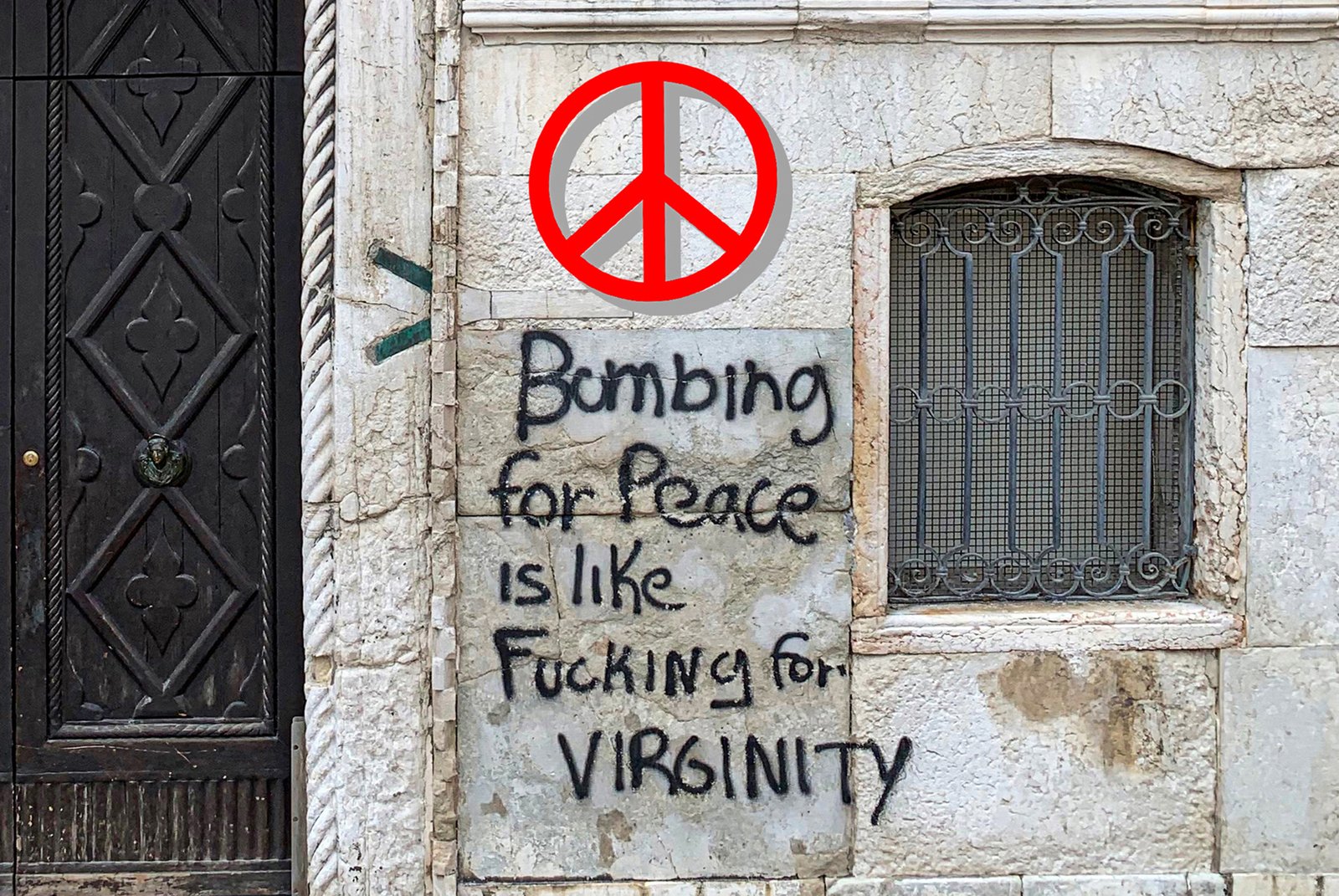
fucking4peace
Look at and listen in to three spheres of contemporary Western society – politics, research and media: The word” peace” and related words, such as the UN Charter norm of “making peace by peaceful means”, nonviolence, negotiations – have disappeared. And with the words, the discourse and with the discourse, the interest, the education and expertise, the focus, the awareness and the strategies. Let us start with the political sphere. In Scandinavia where I happen to live, today’s status is very different from the 1980s. There are no global disarmament policies or disarmament ministers; the UN’s basically non-armed peace-keeping is hardly ever mentioned; while Sweden has integrated with NATO and has soldiers under NATO command, it no longer contributes a single UN peacekeeper. Ideas such as human security, common security and confidence-building measures with the presumed enemy are never mentioned in the political discourse. The Corona crisis has also shown...
StatementPic
Lund, Sverige – 22. december, 2020 Deklarationen for TFFs Globale Omstillings-kampagne Vær rar at skrive på!Sammen med millioner kan du gør en forskel. Og bed dine familie og venner om at skrive på den også (længst nede). Hvis du ikke vil læse hele deklarationen, så læs blot denne korte udgave og gå ned til “Jeg støtter forslaget…” Kort udgaveOveni de store globale problemer, vi skal have løst, er så kommet Coronaen. Deklarationen argumenterer for at verdens prioriteter er – lad os sige, perverse. For eksempel så koster alt hvad FN gør bare 3% af verdens militære udgifter.TFF – Den Transnationale Stiftelse for Freds- og Fremtidsforskning i Lund – foreslår derfor at alle lande omgående reducerer militærudgifterne med 50%. Det vil frigøre 1000 milliarder dollar – ja, du læste rigtigt. Dette ufatteligt store beløb skal bruges til at få løst de globale problemer – som klimaforandringen, fattigdommen, sulten etc – og...
Screenshot
By Regan Durkin The Global Press Coalition for Peace, GPCP, in Washington kindly turned to me and asked me to speak with them for a longer podcast. GPCP is a rather young but very innovative civil society organization that focuses on how the media deal with conflicts, war and peace – and how it can be done better. I warmly recommend that you visit and look around. Their focus is so very important. I was very grateful for being given this opportunity since its podcasts seem to have a rather wide audience in the United States in particular. The conversation was initiated and the podcast recorded by Regan Durkin and the whole thing was a very pleasant experience. Here is how she has introduced me on their homepage: “Join us as we discuss with Dr. Jan Oberg, Founder of The Transnational Foundation for Peace & Future Research, diving into the...
China
TFF Associate in Beijing When numbers do not add up anymore, people turn to faith… I couldn’t suppress the feeling of a sense of a religious undertone when I went through the following report of more than 70 pages, released a little while ago by the US Secretary of State: The Elements of the China Challenge. It’s a 10-step blueprint for confronting the ‘China Challenge’ or maybe better phrased the 10 Commandments to counter the severe threat of China to the current world order – ‘the free world’. A senior administration official told the Washington Examiner that “over the coming weeks, the Trump administration will continue to expand the depth and breadth of the historic actions it has taken over the past four years to protect the vital interests of the United States and its allies countering Beijing’s predatory and coercive behaviors”. Also in Europe, there is an increasing stance against China...
trump
Picture design by Saulo Castro at Dribble Farhang Jahanpour TFF Associate November 20, 2020 – December 1, 2020 This is a four-part series by the author, published by the International Press Service, IPS. Below is Part 1 and this is where you find the next two:Part 2 • US Presidential Election: A Campaign of Insults and Lies – November 23, 2020Part 3 • US Presidential Election: President Trump’s Legacy of Mismanagement of the Pandemic – December 1, 2020Part 4 • The Legacy of Slavery and Racism – December 9, 2020 American democracy has survived a dangerous virus, and it has even come off the ventilator, but whether it will be restored to full health or will suffer for a long time (like a long Covid) from the negative effects of the virus of personality cult, chauvinism, populism, racism, militarism and, yes let’s say it, fascism, remains to be seen. So...

Screenshot
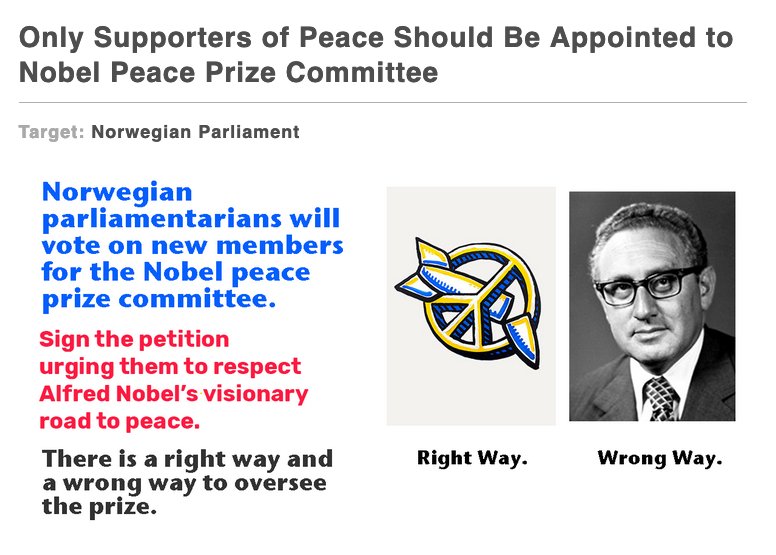
Since 2007, a number of TFF Associates – Fredrik Heffermehl to mention the leading world expert on it – have been engaged in creating awareness of the de facto and de jure misuse of the world’s in principle most prestigious prize – Alfred Nobel’s for peace. We usually do not post appeals on this public education for peace site. But this appeal, crafted by Heffermehl and David Swanson – deserves to be here. Please go to the appeal now and sign it. It is common sense and it is uncontroversial – unless you happen to believe in two things: a) that violence and war is better than peace, and b) that it’s OK that those who manage a will ignore its stated purpose completely over about a century and – with a few important exceptions – use it instead for the opposite purpose than intended by the testator. The testator,...
5043c092c025673c100aac9dc0c02a89_L
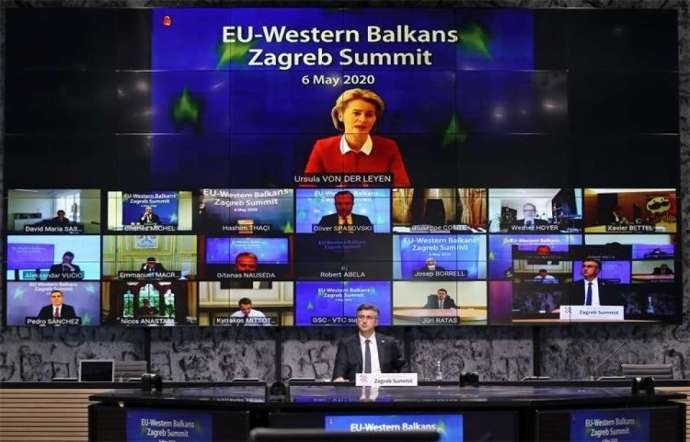
TFF Associate, professor The objective of this paper is to outline and analyse the manner in which governments on the EU’s southeastern periphery (i.e. the Western Balkans) responded to the COVID-19 pandemic and its possible after-effects. The author seeks to shed light on three particular aspects of the crisis: the (de)securitization process of COVID-19, the geopolitics of the EU enlargement process in the post-corona world, and the Balkan way of dealing with the pandemic. Following a prologue that tries to decipher what is behind the façade of this dramatic episode, the article proceeds to characterize both the securitization of COVID-19 and the “gaslighting turnaround”. It then looks at the Balkan version of the so-called “COVID-1984”, i.e. the autocratic tendencies that have blossomed amid (and thanks to) strong security concerns.The central premise is that although the current crisis seems to have been provoked by the spread of an unprecedented disease, COVID-19,...
US-EU-China
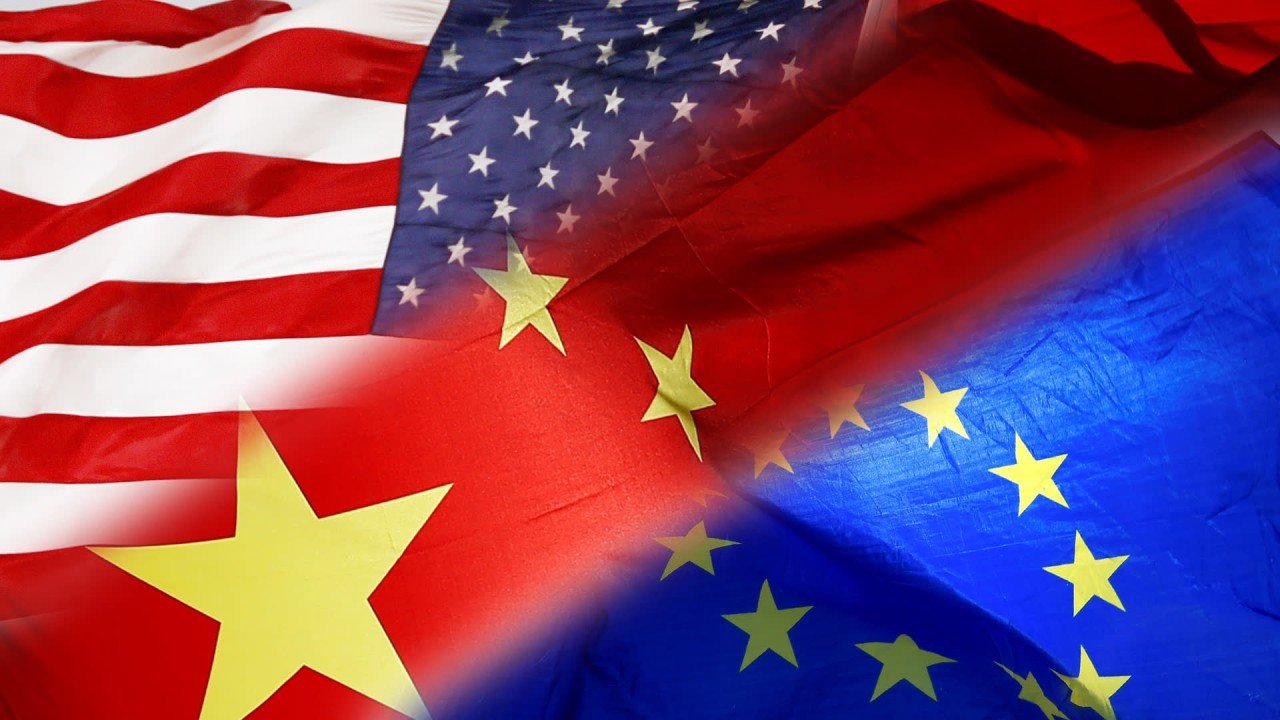
TFF Associate Not a day goes by without China appearing in Western news or social media. Almost exclusively with negative reports of human rights violations in Xinjiang or the security law in Hong Kong, government propaganda, or serious concerns that China and its communism will take over the world. Many reports and opinions from Western think tanks and researchers have been published this year about what is happening in China and how China should be approached or dealt with. The contents range from high vigilance to direct attacks in which China is labeled as a serious threat to the future of the “free world”. These pieces are widely reported in the media and often taken over by politicians for their China policy in a considerable number of Western governments. Alternative reports with different sounds or perspectives are snowed under or beaten down. As a result, the perception of China in...
AleppoTank2020_1180-72dpi
Against the Institution of War – announcing the publication of the book, The Ecological Impact of Militarism As we start the 21st century and the new millennium, our scientific and technological civilization seems to be entering a period of crisis. Today, for the first time in history, science has given to humans the possibility of a life of comfort, free from hunger and cold, and free from the constant threat of infectious disease. At the same time, science has given us the power to destroy civilization through thermonuclear war, as well as the power to make our planet uninhabitable through pollution and overpopulation. The question of which of these alternatives we choose is a matter of life or death to ourselves and our children. The crisis of civilization, which we face today, has been produced by the rapidity with which science and technology have developed. Our institutions and ideas adjust...
Screenshot
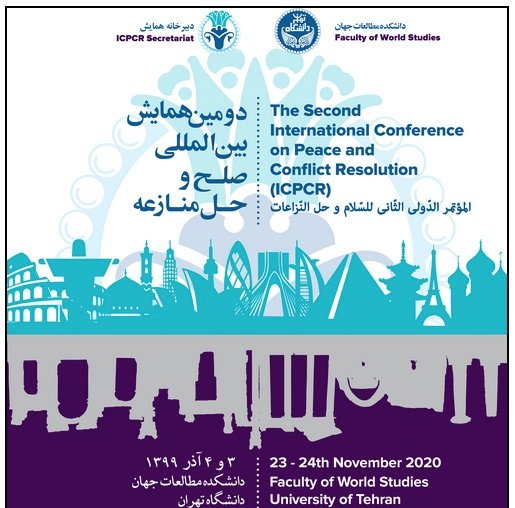
November 23 and 24, 2020, marks an important event in the international academic/university history of peace and conflict research. The reason is that the Faculty of World Studies at Tehran University holds a large – online – conference – “International Conference on Peace and Conflict Resolution (ICPCR)”. My colleague and friend there, associate professor Ali Akbar Alikhani, is the dynamic pioneer of this important endeavour which includes an international Master’s program in peace and conflict studies. It comes in the wake of a lecture I gave at the Faculty 6 years ago about peace and conflict research. As far as I’m informed, Iran is the second country in the Muslim world to establish a fill program of academic peace and conflict studies (Malaysia the first), and this conference marks the opening of this new academic field. Iran’s bustling capital also hosts an interesting, very lively, Tehran Peace Museum – but...
Categories

Year

Author / Contributor

Region