Saudi Arabia and Gulf States

Showing 1-10 of 26 stories

Sort by
Categories

Year

Author / Contributor

Region

saudis-contradict-blinken-want-a
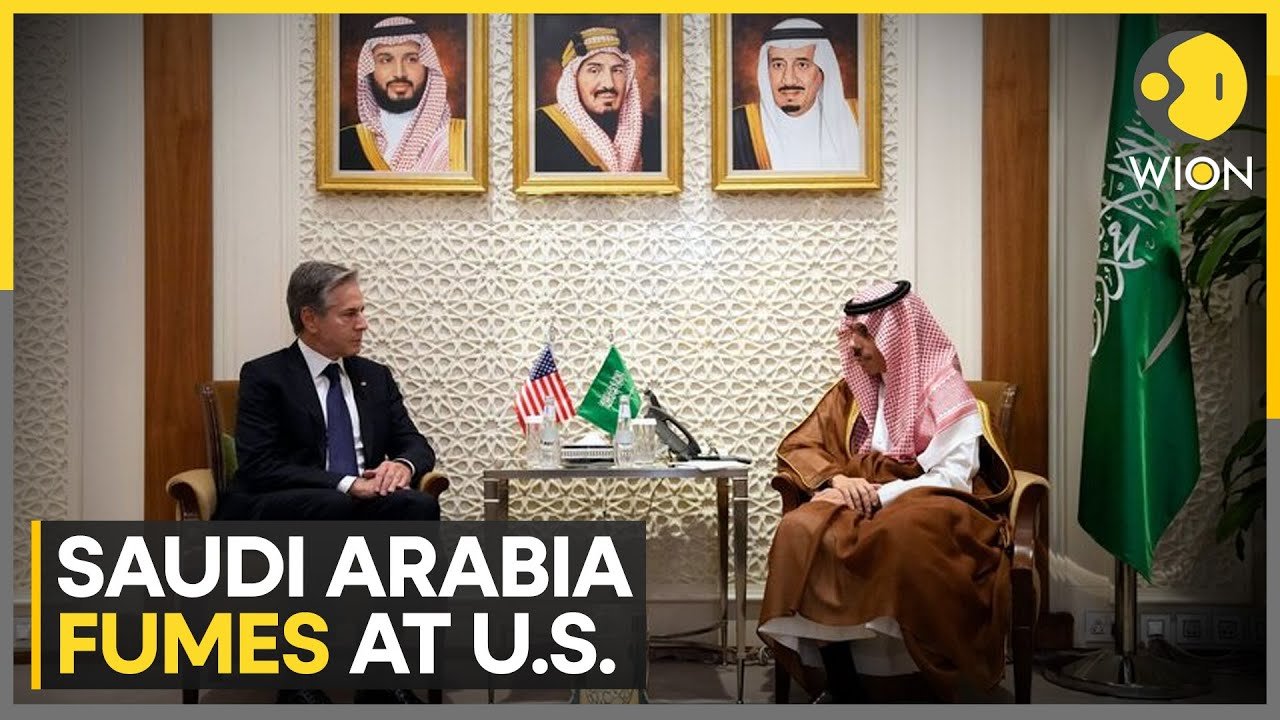
Saudis Contradict Blinken: Want Actual Palestinian State now, not a Vague ‘Peace Process’ TFF Associate On Tuesday afternoon (6 February 2024), U.S. Secretary of State Antony Blinken took part in a joint press conference with Qatari Prime Minister and Minister of Foreign Affairs Mohammed bin Abdulrahman Al Thani in Doha. The press conference was mainly about the war in Gaza and the possibility of a new pause in the fighting and exchange of hostages and prisoners. However, Blinken was also asked about his recent meeting with the Saudi Crown Prince Mohammed bin Salman and the possibility of normalisation of relations between Saudi Arabia and Israel. Blinken said (as quoted by the US Department of State): “But with regard specifically to normalization, the crown prince reiterated Saudi Arabia’s strong interest in pursuing that. But he also made clear what he had said to me before, which is that in order to...
craig-manners-OVZvuqH2pvc-unsplash
Marjorie Cohn* January 24, 2023 The Houthis say their attacks in the Red Sea will continue until there is a ceasefire in Gaza In response to Israel’s assault on the people of Gaza in early October, Yemen’s Houthi movement, Ansar Allah, began mounting attacks on commercial ships in and around the Red Sea. The Houthis said the attacks were aimed at Israeli-connected or Israel-bound ships and they would continue until there is a ceasefire in Gaza. Meanwhile, the pressure on this vital trade route is impacting the global economy as ships are being redirected to more expensive routes. On January 11, South Africa presented its case documenting Israel’s genocide in Gaza to the International Court of Justice. The following day, the U.S. and U.K. attacked 28 sites in Yemen. Tomahawk cruise missiles launched from a ballistic missile submarine killed five Yemenis and injured six. Four days later, the U.S. fired...
ISRAEL-US-DIPLOMACY-POLITICS
The U.S. Government at the highest level criticized Michelle Bachelet, the UN High Commissioner for Human Rights, because she went to China on a mission to develop opportunities for cooperation with respect to the protection of human rights. I found that criticism appalling at the time. The mission had been carefully prepared several weeks earlier by UN staff that had visited China and negotiated the itinerary of the visit, which occurred in May of this year. The whole experience seemed a win/win breakthrough as a major country opened itself up to a high degree of independent international scrutiny with respect to its human rights record, an exposure the U.S. itself has resisted and opposed. High officials in Washington let it be known in advance that they considered the trip ‘a mistake,’ and expressed consternation that its hyped allegations of ‘genocide’ associated with the treatment of the Uyghur minority in Xinjiang...
Biden-Saudi-Arabia-1140x760-1
Juan Cole July 21, 2022 Although President Joe Biden’s trip to Saudi Arabia was ostensibly about petroleum and attempting to lower gasoline prices in the US, it doesn’t seem to me that that rationale entirely explains Biden’s about-face on Saudi Arabia. For one thing, Biden must have been told that Saudi Arabia does not have much extra capacity to put more petroleum on the market and so cannot itself lower prices. Whether OPEC will be willing to loosen the quotas for member states is unclear, and whether there is much extra capacity in the organization as a whole is a question mark. So if it isn’t all about oil, what is driving the president’s Middle East trip? On the one hand, I think he is trying to pressure Iran into coming back to the Joint Comprehensive Plan of Action or JCPOA, the 2015 nuclear deal. If Biden could close that...
Tapi-pipeline-1024x768-1
Pepe Escobar August 24, 2021 At one point last week, the price of a barrel of crude oil — which had risen as high as $147 last July and, with the global economic meltdown, hit a low of $32 in 2009 — rebounded above $51. Prices at the local gas pump are expected to rise as well in the coming weeks. However, given a worldwide falloff in oil use, these price jumps may not hold for long. Still, cheap or not, oil and natural gas (as well as coal) are what drives global civilization, and that’s clearly not going to change any time soon. Originally posted on Tom Dispatch on March 24, 2009 That, in turn, means the major powers are going to be no less eager to secure key energy reserves and control the flow of energy in bust times as they were in boom times, which is where Pepe Escobar comes in. In a...
TaliTeaching
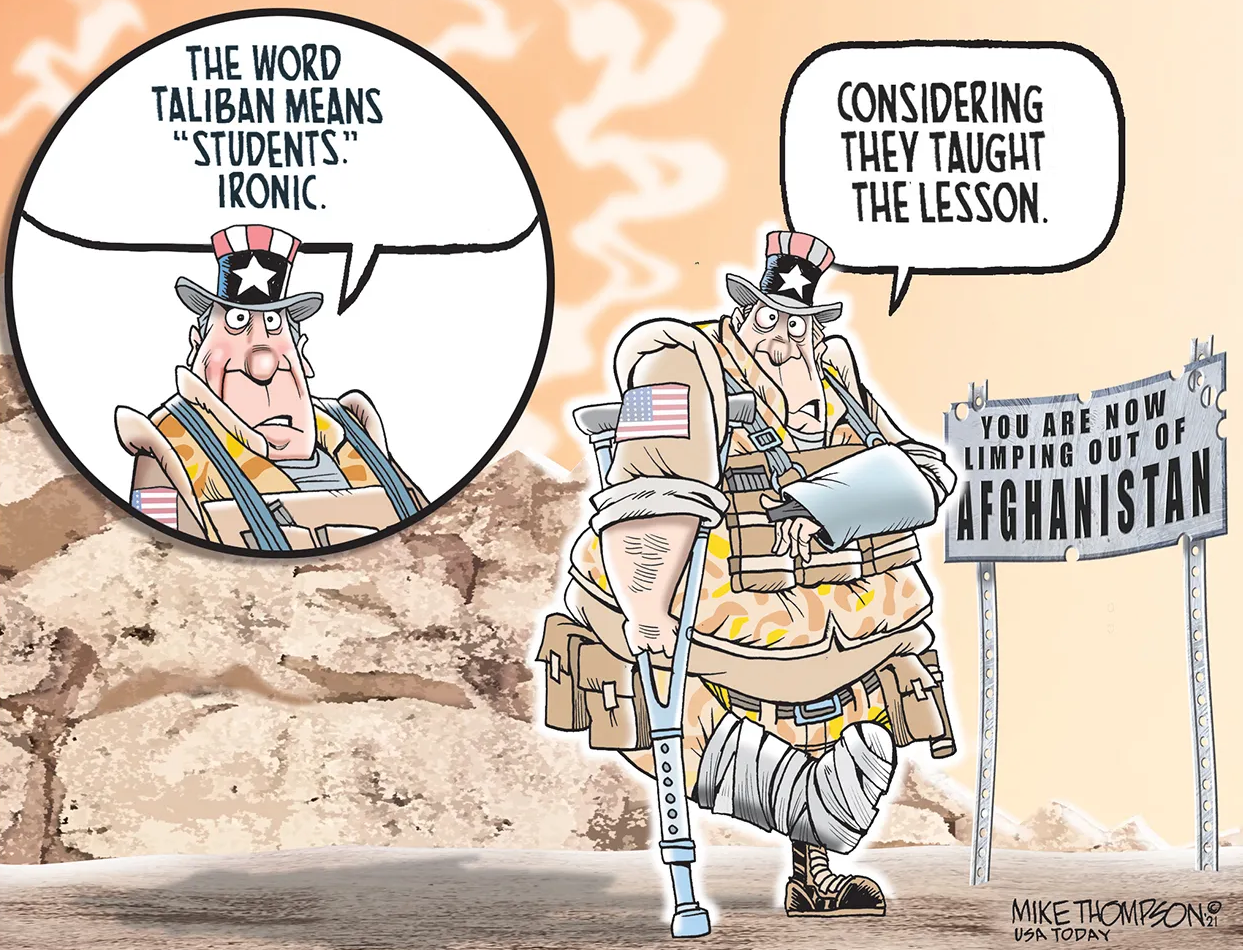
, in Washington and New York, everybody talked about who could have done it, how they did it and with what means. The only thing never brought to the fore was: WHY would somebody want to do something like 9/11 to the United States of America? By not asking the Why question, the US could stand as the innocent victim of cataclysmic violence. It would not have to do any soul searching and therefore no change of its global militarist policy. 9/11 was not a response to US foreign policy – but it needed a response. The world felt sympathy for the American suffering – much more so than for the suffering and deaths in other countries around the world. The fact is that the 9/11 attack targeted the US’ global finance-capital (World Trade Center), its global military (Pentagon) and its political (White House, however not hit) centres – not...
AleppoGirl
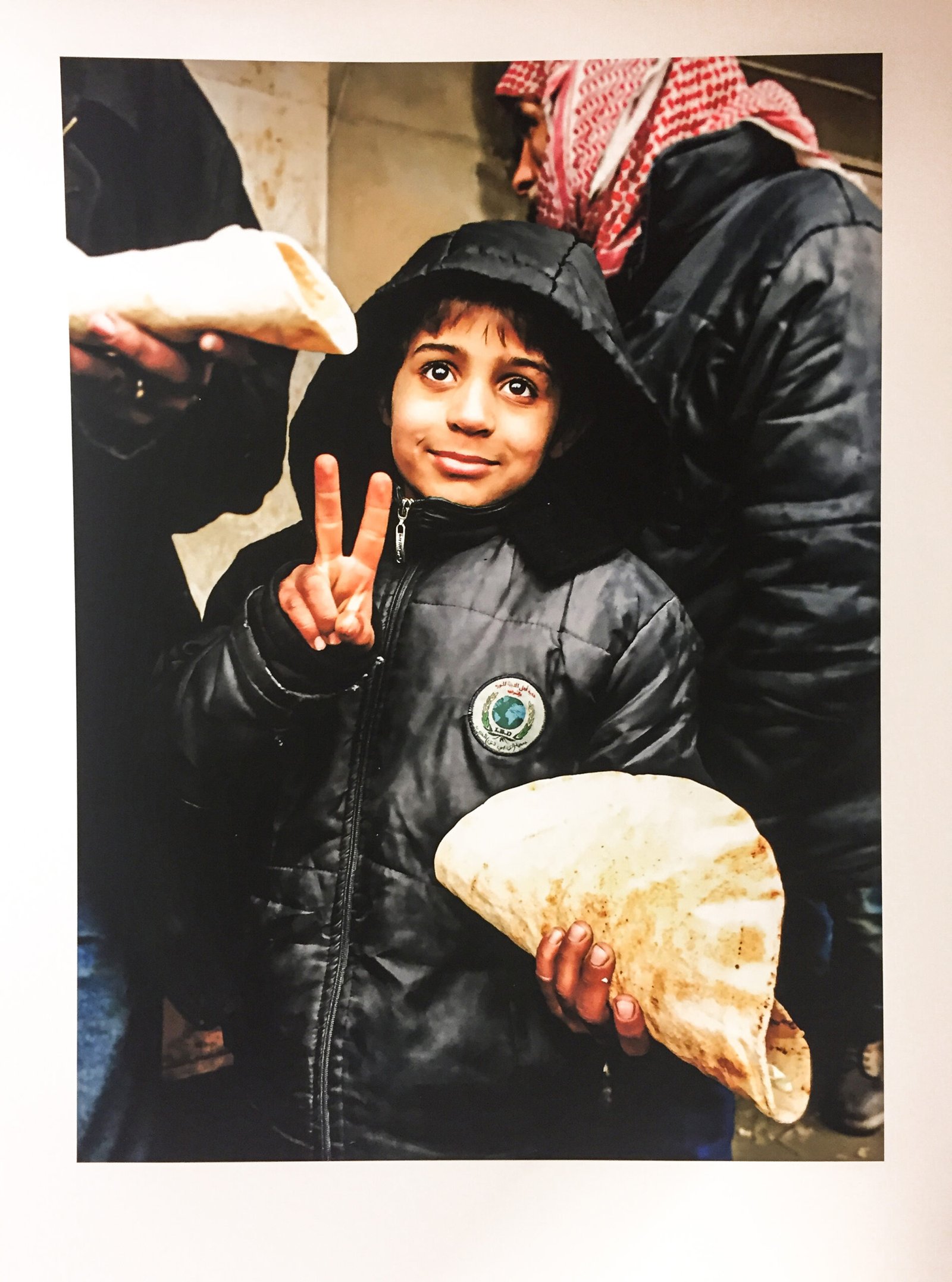
. On December 12, 2012, on the day, 4 years earlier, Western countries and allies – perversely calling themselves ‘Friends of Syria’ – carried through a regime change by statement and set up a Syrian National Council of people never elected by anyone in Syria and told the world that it was, from now on, the only ‘legitimate representative of the Syrian people!’ During the 4 years, Western, Saudi, Turkish and the Gulf States supported innumerable illegal, destructive and mainly foreign terrorist groups with the goal to undermine the legitimate Syrian government and destabilise the country – as had been recommended by US ambassador William Roebuck (1) in Damascus as far back as in 2006 (WikiLeaks documentation here). December 12, 2016, marked a fundamental turning point. Aleppo did not “fall to the dictator/butcher/mass murderer” aka President Bashar al-Assad – no, it was liberated and the occupation by terrorist groups such...
changingmeconstell
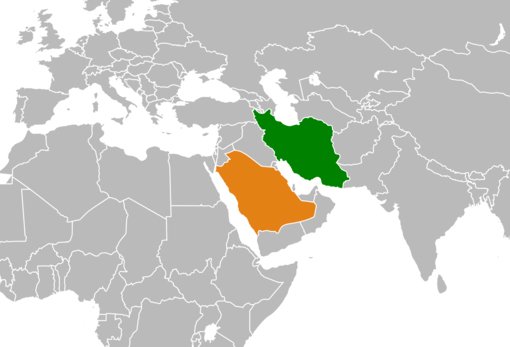
By Conn M. Hallinan November 27, 2019 The fallout from the September attack on Saudi Arabia’s Aramco oil facilities is continuing to reverberate throughout the Middle East, sidelining old enmities – sometimes for new ones – and re-drawing traditional alliances. While Turkey’s recent invasion of northern Syria is grabbing the headlines, the bigger story may be that major regional players are contemplating some historic re-alignments. Originally posted on Counterpunch on November 8, 2019, here After years of bitter rivalry, the Saudis and the Iranians are considering how they can dial down their mutual animosity. The formerly powerful Gulf Cooperation Council (GCC) of the Persian Gulf monarchs is atomizing because Saudi Arabia is losing its grip. And Washington’s former domination of the region appears to be in decline. Some of these developments are long-standing, pre-dating the cruise missile and drone assault that knocked out 50 per cent of Saudi Arabia’s oil...
US-sanctions
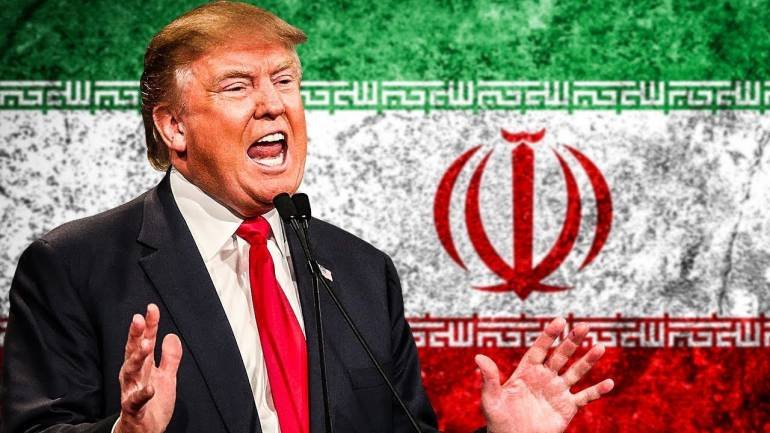
Prefatory Note: The post below is a slightly modified version of an interview published in The Nation on September 25th, following the September 14th attack on Saudi oil facilities. It follows a pattern with respect to Iran of accusations, denials, and public uncertainties. This combination of elements, given the leadership in Washington and Tehran, one blustering, the other inflexible, can easily produce an unintended stumble into war. A second shorter interview is appended, conducted prior to the attacks by an Iranian journalist, M.J. Hassani of Tasnim News Agency. It illustrates the seeming rigidity of Iran’s Supreme Guide, considered as having the final word on government policy, exceeding that of the elected leadership. Originally posted on Richard Falk’s personal blog on October 1, 2019, here Daniel Falcone Introduction to the Interview: After accusations of Iranian drone attacks on Saudi oil facilities, Iranian officials and authorities indicated that “full-fledged war” with the United States could...

YemenWar
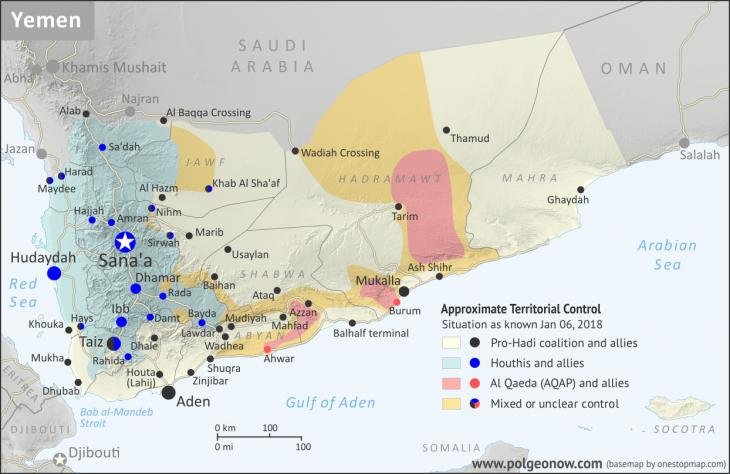
By Pepe Escobar October 1, 2019 “It is clear to us that Iran bears responsibility for this attack. There is no other plausible explanation. We support ongoing investigations to establish further details.” Originally posted on in the Asia Times on September 25, 2019 here The statement above was not written by Franz Kafka. In fact, it was written by a Kafka derivative: Brussels-based European bureaucracy. The Merkel-Macron-Johnson trio, representing Germany, France and the UK, seems to know what no “ongoing investigation” has unearthed: that Tehran was definitively responsible for the twin aerial strikes on Saudi oil installations. “There is no other plausible explanation” translates as the occultation of Yemen. Yemen only features as the pounding ground of a vicious Saudi war, de facto supported by Washington and London and conducted with US and UK weapons, which has generated a horrendous humanitarian crisis. So Iran is the culprit, no evidence provided, end of...
jonathanpower
Those, like some highly placed people in the US government and Congress, who say it is inevitable that Taiwan with its population of 24 million will one day return as part of mainland China rather as Hong Kong did, have really missed a beat. There is simply no likelihood that an overwhelming majority of Taiwanese will ever agree to that. The leader of the traditionally independence-minded Democratic Progressive party, President Tsai Ing-wen, now plays down independence and argues for the status quo. President Xi Jinping’s recent speech reiterated China’s long held view that it would use force if necessary to prevent Taiwan formal independence. He is shooting down a bird that will never fly. This toing and froing over the same words has been going on for many years. What has changed that pushes Xi to start being aggressive again? It is two things: the deteriorating relationship with the US...
Categories

Year

Author / Contributor

Region