Peace – Reconciliation

Showing 1-10 of 24 stories

Sort by
Categories

Year

Author / Contributor

Region

fred-ger
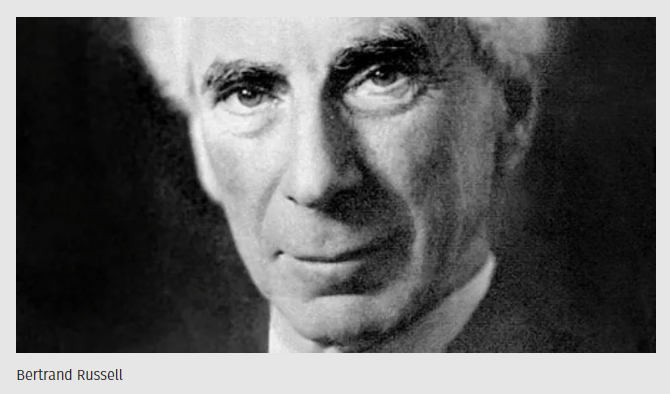
Maria Popova October 19, 2023 “To be a good human being is to have a kind of openness to the world, an ability to trust uncertain things beyond your own control,” philosopher Martha Nussbaum concluded in considering how to live with our human fragility. And yet in the face of overwhelming uncertainty, when the world seems to splinter and crumble in the palm of our civilization’s hand, something deeper and more robust than blind trust is needed to keep us anchored to our own goodness — something pulsating with rational faith in the human spirit and a profound commitment to goodness. Originally published at The Marginalian That is what Bertrand Russell (May 18, 1872–February 2, 1970) explores in the out-of-print treasure New Hopes for a Changing World (public library), composed a year after he received the Nobel Prize, while humanity was still shaking off the dust and dread of its Second World War and already shuddering with the catastrophic...
RT
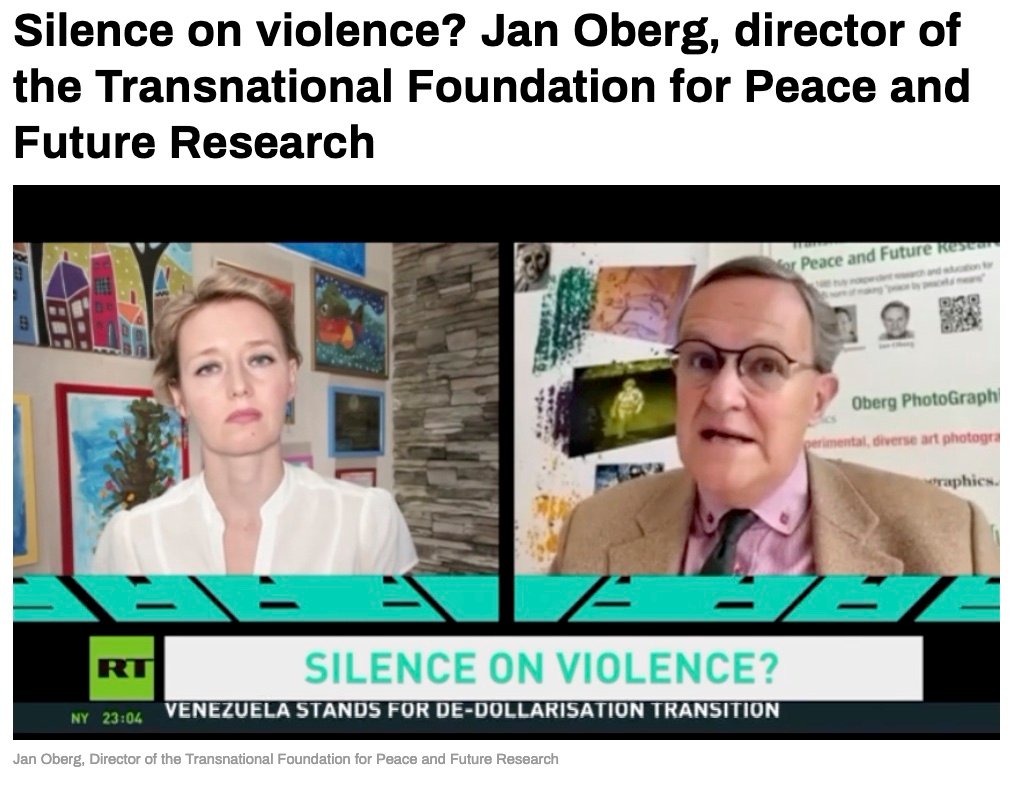
A discussion with Oksana Boyko about violence and war where the focus is on principles, ideas, concepts and ways of thinking. A delightful exchange of views that would be difficult, if not impossible, to have in similar leading media in the NATO/EU countries. For once, actually, the focus is on how to think about peace…
peaceprints
Lea has been working in the area of international relations since 2011. First, for the UN, later for a think tank on foreign policy and currently she is the Secretary-General of the UN Association in Switzerland. Originally from Switzerland, she lived in Russia and volunteered in humanitarian projects in Mongolia and Colombia. In 2017, she founded “PeacePrints – Following the Footprints of Peacebuilders” – a blog for which she travels as peace reporter to post-conflict countries to report about outstanding individuals committed to bringing a positive change. Here Lea speaks about her work and how important it is that we know, follow, learn from and honour those millions of fellow citizens around the world who cross borders, reach out and often risk their lives. Every day. And for peace.
gandhi-burning-passion
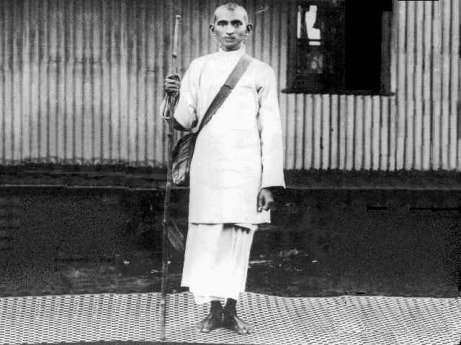
December 29, 2020 Stephanie Van Hook “A burning passion coupled with absolute detachment is the key to all success.” – Gandhi (Harijan, 9-29-1946, p. 336) When Gandhi uses the term “detachment” he does not mean a passive disinterest or cold indifference; he is pointing to an active state of conscious awareness of the unity of life. We glimpse that unity when we work to weed out private, selfish attachment and the tiresome obsession about the results of our actions; in other words, we are detached from ourselves. When we think, How does this benefit me? we are not detached. When we think, How does this benefit others? we do have some measure of detachment from ourselves, and our ability to use nonviolence more effectively comes into its own. When we couple that sense of selfless detachment with a burning passion, the apparent paradox becomes a brilliant power. But even that, he says, is only a “key.” At...
fred-image
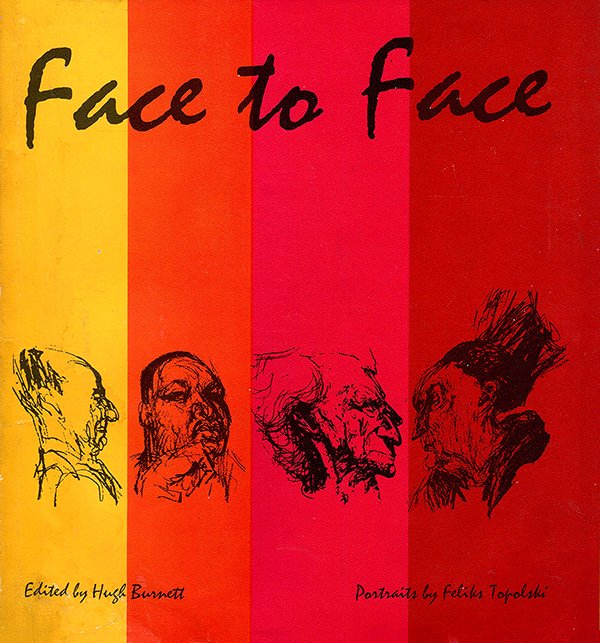
By Maria Popova October 8, 2020 In the mid-1950s, as the icy terror of the Cold War was cloaking the embering rubble of two World Wars, the BBC producer and cartoonist Hugh Burnett envisioned an unexampled program to serve both as a cross-cultural bridge and a mirror beaming back to a dimmed and discomposed humanity the noblest and most beautiful ideas of its noblest and most beautiful minds. Originally published at brainpickings Face to Face — a series of intimate conversations with people of genius, influence, and exceptional largeness of spirit, interviewed by the British broadcaster and politician John Freeman — began as short-wave radio broadcasts to listeners in the Far East and soon became a BBC television program. Television was then a young medium, aglow as any young medium with the promise of its potential and blind to its peril — something reflected with chilling clarity in Burnett’s own...
2014-10-29-Peace
60 years of peace theory and peace practice can be summarized in:                                                 EQUITY x HARMONY                              PEACE =   ——————————-                                                 TRAUMA x CONFLICT Four theory foci, four policy tasks, and four education topics. Any true education should prepare for practice, guided by general theory. Moving from denominator right to numerator left, this means: Mediation is verbal, based on dialogues with the parties, but the four tasks are very concrete, practical.  For doers not only talkers; for practical people like officers.  Hence the Big Question: Is peace theory-practice-education compatible with the military mind – however defined, and there are many military cultures in the world – or not? Originally published at TRANSCEND Thinkers so diverse as Nietzsche and Gandhi saw the military as exemplary because of the ésprit de corps and willingness to sacrifice, even their own lives. For Gandhi the kshatriya (military) caste was a model: he wanted non-violent warriors, with the same perseverance, also indispensable...
Gandhi-Writing-1100x1098-1
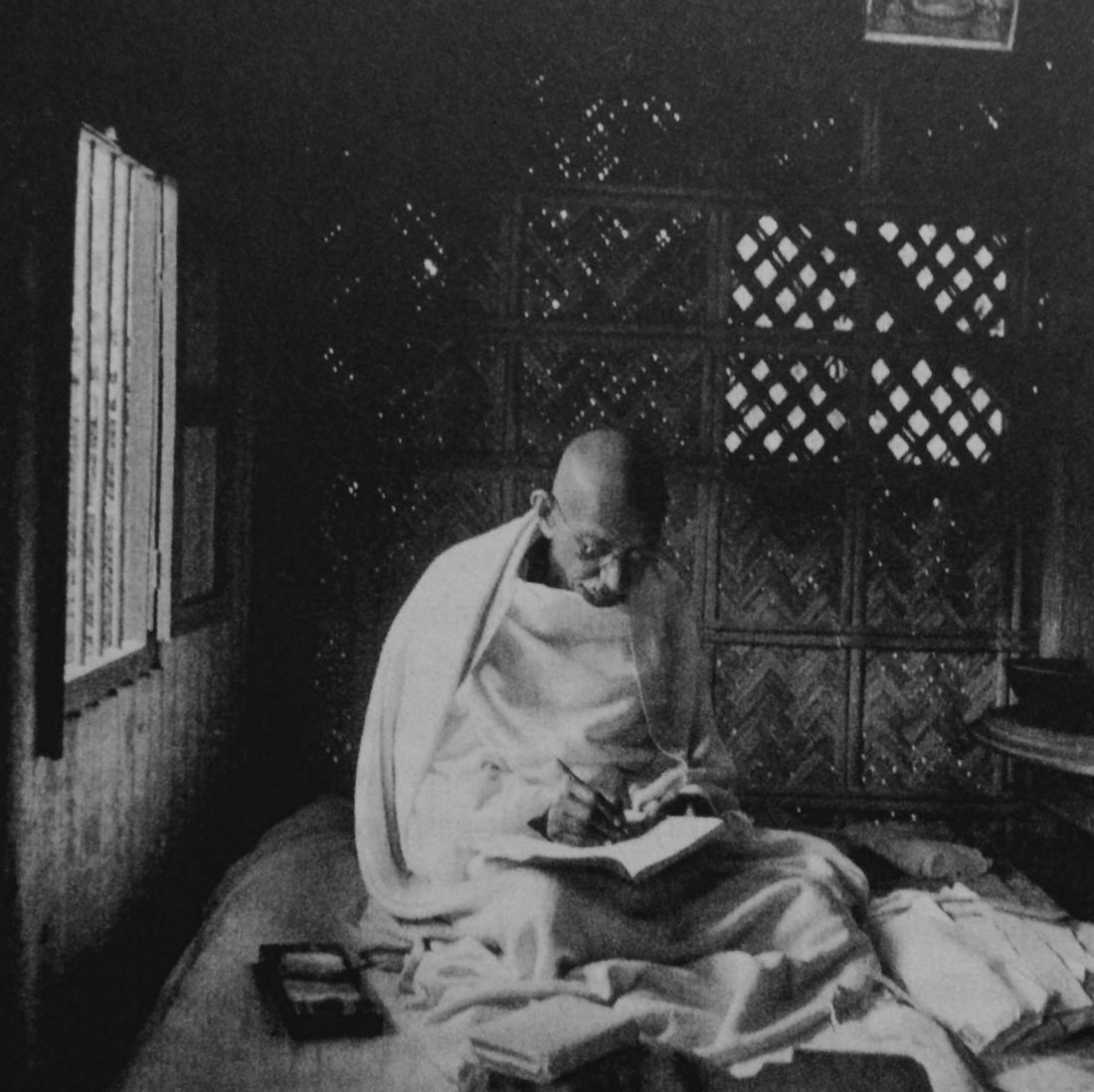
June 5, 2020 By Lynn Burnett Mahatma Gandhi’s teachings of nonviolent resistance had a famous and profound impact on the civil rights movement in the United States. That impact was facilitated in part by the journeys of two of Martin Luther King’s future mentors – Howard Thurman and Benjamin Mays, who were good friends with King’s father – to meet with Gandhi in 1936. However, the Black American interest in Gandhi goes all the way back to 1919, when the Indian freedom struggle exploded in the wake of World War I after the British Empire failed to extend greater autonomy to India despite the Indian participation in the war. Gandhi’s interests in the Black American freedom struggle date back even further – to the 1890s – when he first studied the abolitionist movement that destroyed slavery. This article traces those earlier connections between Gandhi and Black Americans, in the decades...
turkey-russia-putin-erdogan-921407
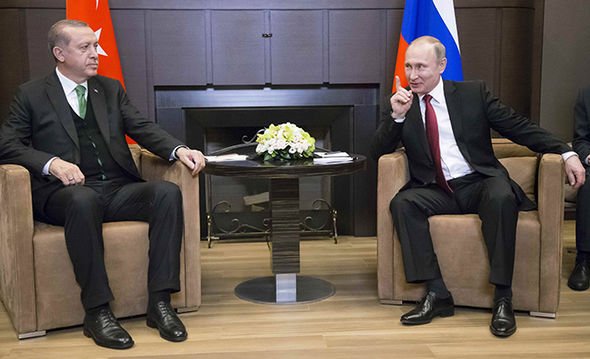
Interviewed by RT International Among other things, I argue that the international so-called ‘community’ – there definitely is no such thing – is still regrettably simple, or primitive, when it comes to making peace. Here two leaders meet and discuss affairs pertaining fundamentally to what shall happen on the territory of a third sovereign state which is not present. Their focus is on the means of violence – which have already been used and created the situation whereas there is no awareness, it seems, of how important it would have been to address the underlying conflicts. Conflicts are the basic unit if you want to create peace – the violence mostly a symptom of conflicts – problems – un-resolved. International law is violated in several ways – and has been the last 10-15 years when it comes to Syria. It started with the US deciding to go for regime change...
Sitara-one-min
By Pressenza New York September 18, 2019 Originally posted on Pressenza New York’s website on September 09, 2019 here On this show we speak with Alice Slater about the historical process of nuclear weapon treaties and the relationship between the US and Russia. Alice is the UN NGO Representative of the Nuclear Age Peace Foundation, sits on the boards of World Beyond War, Nuclear Ban US, and the Global Network Against Weapons and Nuclear Power in Space, and is a member of the Global Council of Abolition 2000. She is on the NYC Working Group for the Nobel Prize-winning International Campaign to Abolish Nuclear Weapons (ICAN) ‘s campaign to promote the newly passed treaty to ban the bomb. Alice is a member of the NYC Bar Association and has written numerous articles and op-eds for Pressenza. Political actions you can take to ban the bomb and cut down the war...
shutterstock_714035503
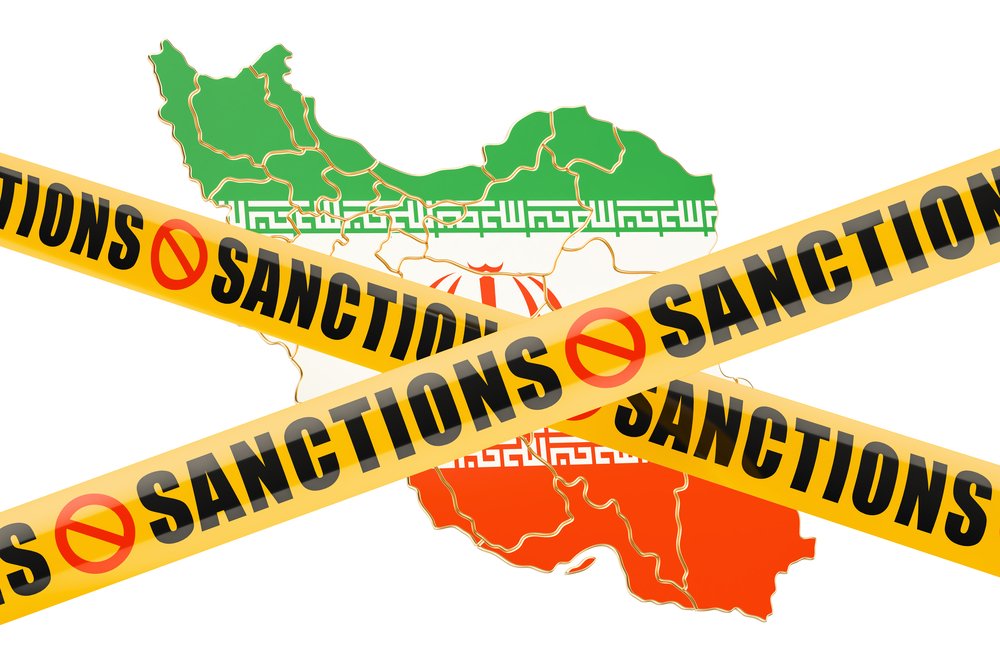
By Kevin Cashman and Cavin Kharrazian Iranian foreign minister Mohammad Javad Zarif recently visited the Group of Seven (G7) at the invitation of French president Emmanuel Macron, in what was seen as an overture to the Trump administration to negotiate over sanctions that have plagued the Iranian economy. Back in 2018, after months of increasingly hostile rhetoric, the US government withdrew from the Joint Comprehensive Plan of Action (JCPOA), or “Iran Deal,” and imposed a “maximum pressure” campaign that included unilateral, economy-wide sanctions. The Iran Deal was an agreement that provided Iran relief from existing sanctions in exchange for limits on its enrichment of uranium, among other concessions. These sanctions hampered trade between the European Union, whose leaders have sought to salvage the Iran Deal. Originally posted on September 1, 2019, on the Center for Economic and Policy Research (CEPR) here When President Trump reimposed sanctions in November 2018, it cut off...
The-enlargement-of-NATO-1949-2018_cropped_3x2
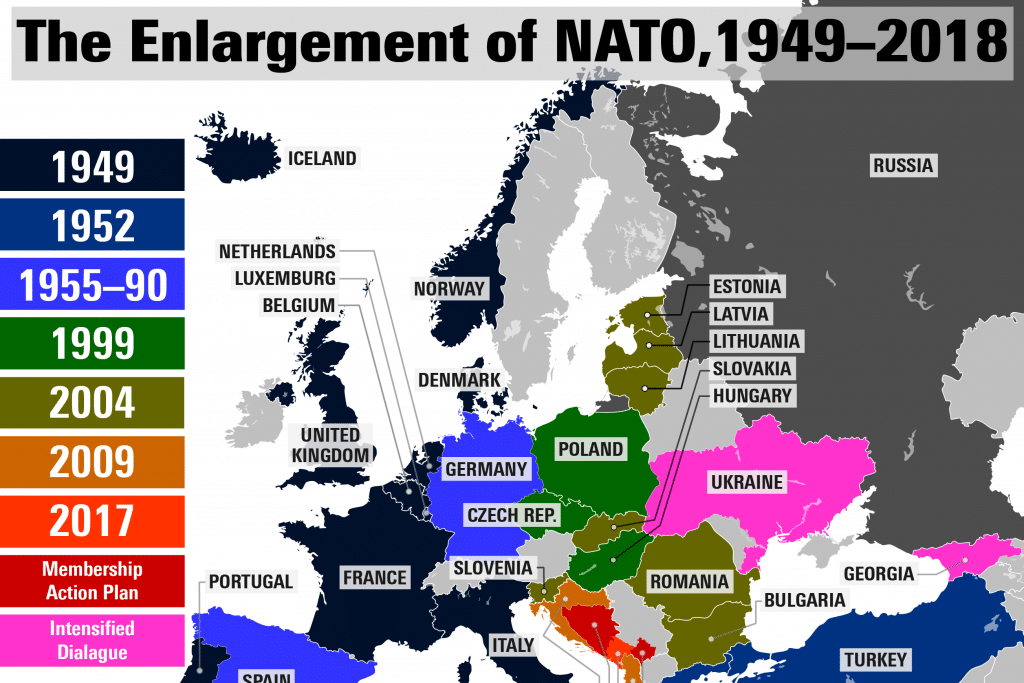
By Gordon M. Hahn July 25, 2019 NATO expansion has contributed to the causal matrix of two wars: the 2008 Georgian-South Ossetiyan/Russian Five-Day War and the ongoing Donbass civil war. The West’s April 2008 promise that both Georgia and Ukraine will become NATO members encouraged Georgian nationalism and Saakashvili’s war in South Ossetiya and consequently led to Georgia’s de facto loss of its South Ossetiyan as well as Abkhaziyan territories. Originally published on Gordon M. Hahn homepage – while Poroshenko was still president. Similarly, NATO expansion encouraged the rise of ultranationalism in Ukraine, especially western Ukraine, and the ultra-nationalist-led February 2014 Maidan revolt, leading to Ukraine’s loss of Crimea and civil war in eastern Ukraine’s Donbass regions of Donetsk and Luhansk. NATO expansion now is poised to help re-start the Donbass civil war or spark a larger Ukrainian civil war (and/or similar conflicts involving Moldova and its breakaway republic of...
kennedy_sotu1-P
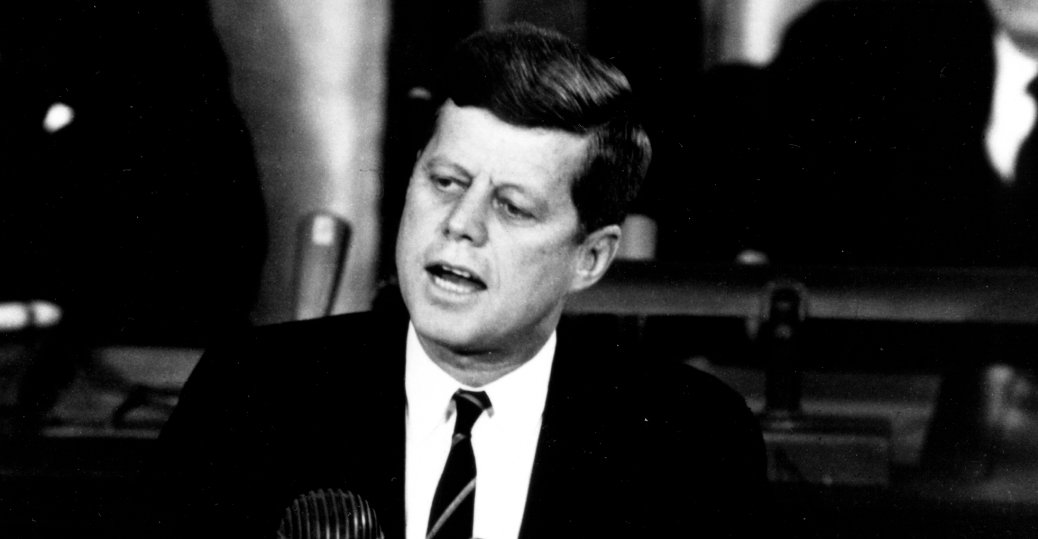
By Dr. Lawrence Wittner June 5, 2019 In late April, the highly-respected Stockholm International Peace Research Institute reported that, in 2018, world military expenditures rose to a record $1.82 trillion. The biggest military spender by far was the United States, which increased its military budget by nearly 5 percent to $649 billion (36 percent of the global total). But most other nations also joined the race for bigger and better ways to destroy one another through war. Originally publishes on Counterpunch.org on May 29th, 2019 here This situation represents a double tragedy. First, in a world bristling with weapons of vast destructive power, it threatens the annihilation of the human race. Second, as vast resources are poured into war and preparations for it, a host of other problems―poverty, environmental catastrophe, access to education and healthcare, and more―fail to be adequately addressed. But these circumstances can be changed, as shown by...

Categories

Year

Author / Contributor

Region