Media and conflict

Showing 1-10 of 204 stories

Sort by
Categories

Year

Author / Contributor

Region

Copilot_20251003_003414
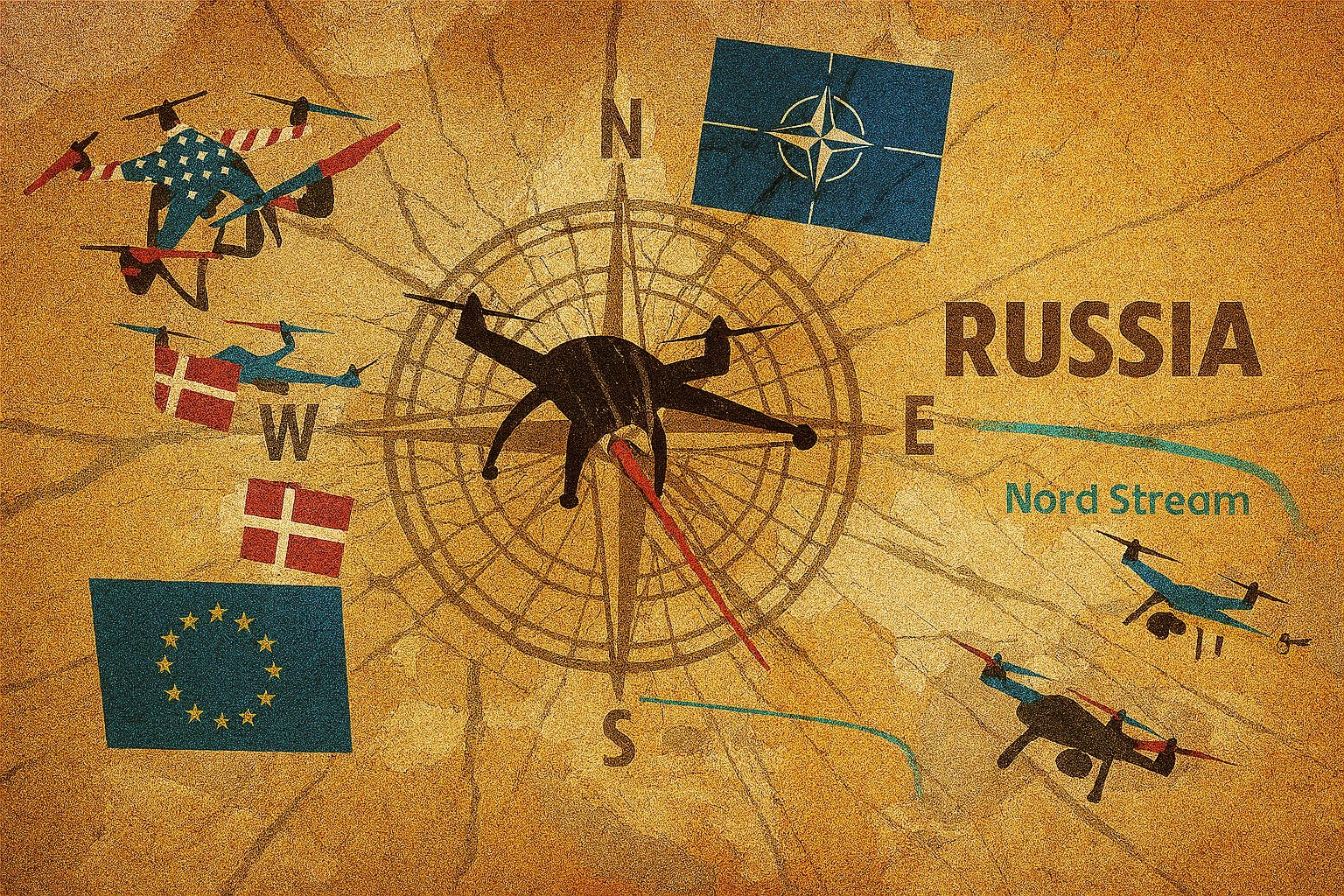
Officially, the drones were not identified. By simply thinking critically – which journalists and selected experts no longer do – there may be a good reason for that. And this article will never be mentioned in Denmark… Drones over Denmark. No damage. No trace. No answers. Yet the headlines scream “Russian threat,” and Prime Minister Mette Frederiksen speaks with a certainty that defies logic: “We don’t know they were Russian—but we know Russia is the biggest threat to Europe.” It could be nobody else – unless you make an interest analysis which I did two days ago. This is not security policy. It’s theatre. And the audience is being played. Let’s rewind. These drones—unphotographed, untracked, unclaimed—appear and vanish like ghosts. Airports shut down. Panic spreads. Military budgets swell. And the narrative hardens: Russia is behind it. But what if that’s not just wrong but deliberately misleading? Here’s a hypothesis for...
DRONE
Drones over Nordic airports. No damage. No trace. No answers. Most assume Russia—but what if that’s not so? Why is there so much we are not told? This article explores the strategic ambiguity behind recent drone incursions and asks: Who else might benefit from sending drones into NATO airspace? From Ukraine’s surprising drone supremacy to Russia’s possible signalling, the silence itself may be the loudest message. These are the kinds of questions decent, intelligent investigative journalists and commentators could easily research. Why don’t they? Did you, dear reader, know or think of this? That the most powerful weapon in today’s conflicts might be the one that leaves no trace – and no answers. Just enough fear to justify the next move? Recently, drones have repeatedly appeared over Nordic airports and near some military facilities. They cause no damage – for which reason the designation “hybrid attack” is misleading but serves a purpose. These...
maxresdefault
A slightly modified version of a text published on Sept. 1, 2025 in TMS. On August 25 Thomas Friedman, always a weathervane for political and economic establishment thinking in the West, wrote a notable column in the NY Times that was pragmatic in tone, misleading in substance, and regressive in intention. Yet it reflects a growing ambivalence toward Israel’s prolonged genocide even among longtime supporters of Israel that now highlights starvation, famine, and a gross distortion of the delivery of humanitarian aid under emergency conditions. But expressed dangerously without hiding the hope that Israel could even now restore its legitimacy without being held accountable for crimes in Gaza and despite all, still expecting to be rewarded by excluding Hamas from any further governance role in Gaza and continuing to move toward the annexation of the West Bank by formal action or through further settlement expansion. It is notable that the headline of...
Oppo
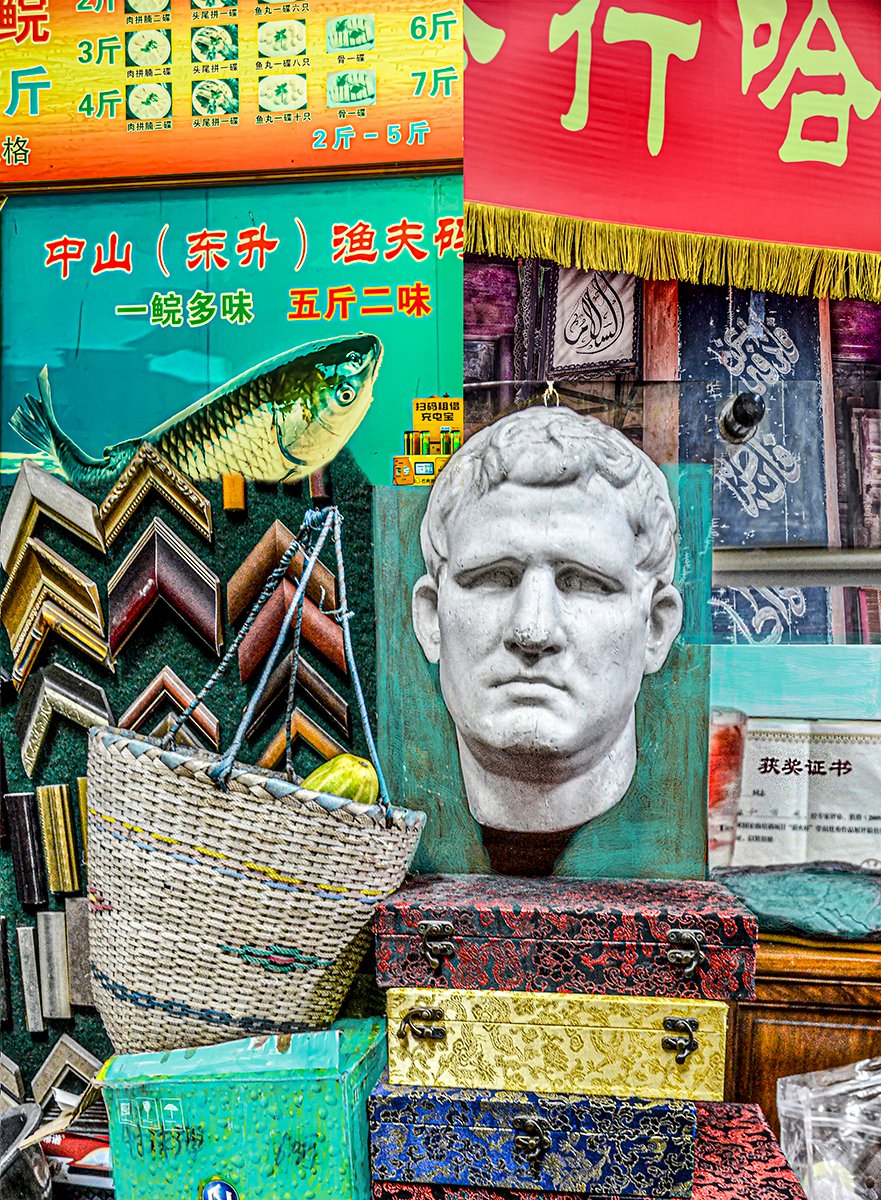
Photo Jan Oberg China has recently garnered significant attention due to its advancements in various technological fields, such as quantum physics and artificial intelligence. In media discussions and my lectures on China, it is common to encounter objections asserting that the West, particularly the United States, is certainly ahead of China. These assertions appear to be more emotional than factual. However, a more fundamental consideration is whether this question holds any significance. Cultural Perspective One aspect that Westerners often overlook is the cultural variation in understanding the relationship between abstract academic insights and practical applications of those insights. To comprehend the origin and significance of discussions on technological superiority, it is essential to acknowledge cultural and social differences between China and the West. I have explored this topic before in some of my previous articles published on the TFF website. Particularism On the cultural dimension universalist – particularist, China exhibits...
Eclecticism_90cm_300dpi_1200_100dpi
Foreword The Board of The Transnational Foundation in Sweden has decided to publish an easy-to-read, scholarly anthology that addresses one of the most important – and potentially dangerous – issues of our time: Why are the political, economic, and medialised Western images of China so consistently negative – and what can you do to understand China better? These images may be expressions of a political will to present only various shades of grey and black with the aim of building a consciousness about China as an enemy and not a partner. They may also be seen as a sort of world-dominating ethos of ignorance based upon the assumption that “we’ve-got-nothing-to-learn-from-others,’ we are the teacher. Another possibility is that the West, deep down, feels that it is getting relatively weaker from a macro-historical perspective and comforts itself with denial and accusations against “the other” of being the reason for its manifest...
Sammenhold
Today is 9 April. It marks the 80th Anniversary of Hitler’s invasion of Denmark. Denmark’s Radio reports today on how the country’s war museums have become ‘attractions’ where people queue to get in and go on guided tours, and ticket sales are booming. Of course, it never occurs to anyone to ask why Denmark and so many other countries are so preoccupied with war – monuments, anniversaries, museums, have so many bookshops with lots of books about war, war history, weapons, uniforms – use military-inspired fashion or drive city jeeps and other modern cars that look like armoured vehicles. Not to mention why there aren’t the same peace-inspired things – peace monuments, peace museums, bookshops with peace books… The answer is simple enough. The West as a culture, as a social cosmology and a collective way of thinking and behaving, is a terrible violence-based apparatus of world wars, armament, colonialism,...

Eclecticism_90cm_300dpi_1200_100dpi
Wang Yuewei(王玥玮) March 24, 2025 This is a chapter in a TFF anthology in the making “If You Want To Understand China.” Foreword, Introduction, Authors and Table of Content here. How to treat others is a core issue in a nation’s foreign policy and a direct reflection of its moral tradition. Throughout history, the performance of Western civilizations and Chinese civilization has been different. When it comes to dealing with others, China insists on pacifism and coexistence, whereas the West adopts expansionism and interventionism. Pacifism and expansionism are neither inherently good nor bad; each has its own achievements and losses. Pacifist China did not launch bloody colonial conquests despite its strength, but its conservative stance caused it to miss the Industrial Revolution. The expansionist West, through both violence and peace, spread modern technology and systems globally, but this often resulted in slaughter, plunder, and sometimes genocide in the colonies. National...
Eclecticism_90cm_300dpi_1200_100dpi
This is a chapter in a TFF anthology in the making “If You Want To Understand China.” Foreword, Introduction, Authors and Table of Content here. Cultural bias Before looking at concrete patterns of manipulation, it is necessary to point at the cultural bias that is partly driving the manipulation. Not only the regulations and protocols of most international organizations like the UN, WTO, NATO, etc., are culturally biased, the very idea of a ‘rules-based world’ as the ultimate goal of humanity is rooted in Western cultural values that are not supported by most non-Western nations. In fact, the basic idea behind TFF’s Smokescreen Report cannot be fully understood without taking the cultural bias into account. Dimensions of culture This section uses the 7-Dimension (7-D) model of national culture developed by Fons Trompenaars and Charles Hampden-Turner. These two management consultants identified the seven dimensions of culture, and the model was published...
DSC_2657-copy
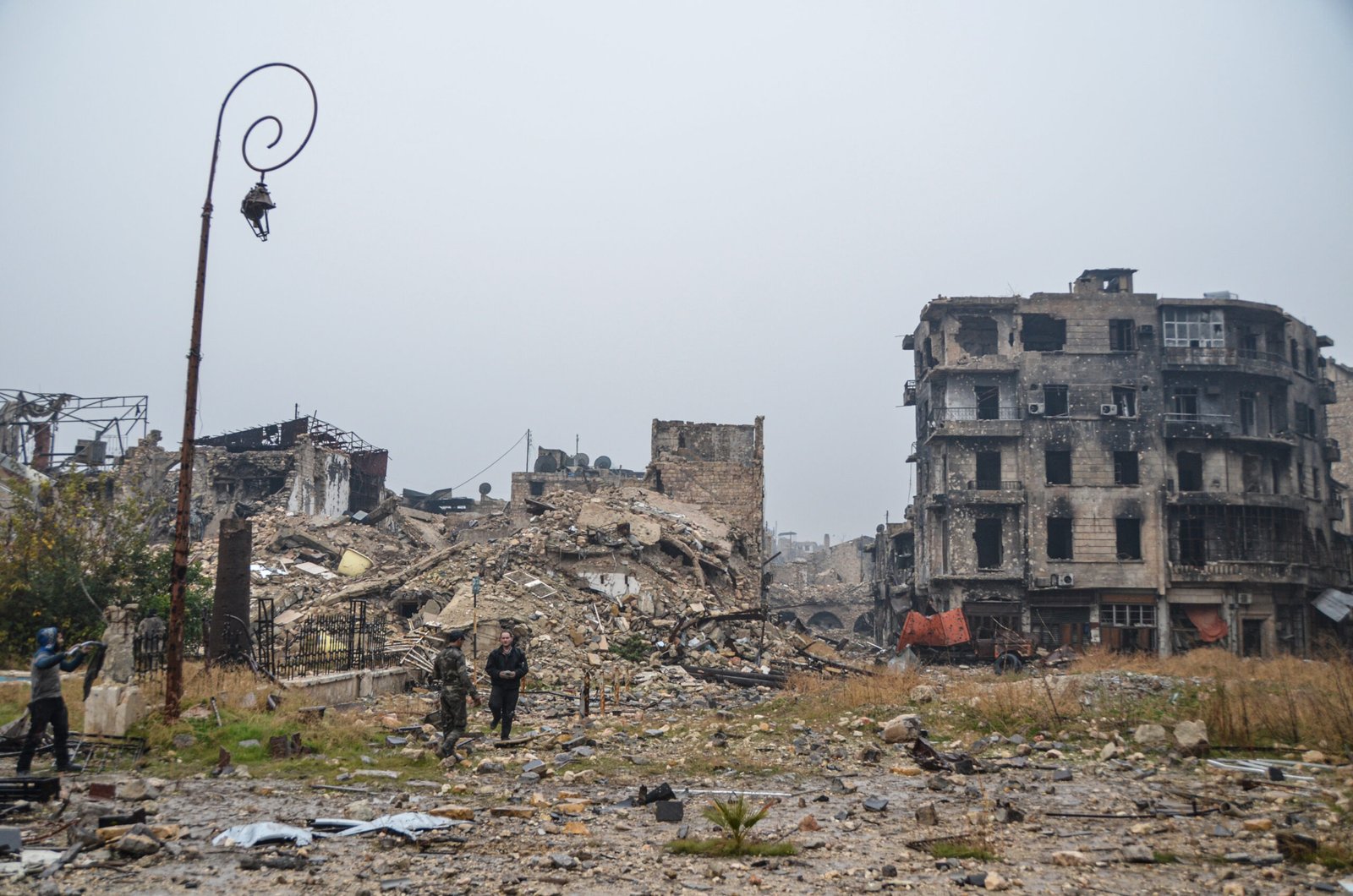
TFF is also your go-to source for understanding the Syria catastrophe in the making from now on. Introduction: The colonialist mentality Few things should surprise us anymore regarding the un-principled nature of the contemporary Western world. One day it sees a genocide and keeps supporting its ongoing barbarism. The next day – actually December 8 in the early morning – it fully supports terrorism, which, allegedly, it has been fighting since September 11, 2001. NATO countries such as the US and Turkey are the main supporters of the terrorist movements that have now occupied the cultured country, Syria, home to 25 million extremely mixed people. As far as I have looked into it, no Western leader has pointed out that taking over an entire country and sending its leadership fleeing is a violation of international law; Russia did not even plan to do so in Ukraine, but its invasion was...
YiningAvenueWoman_1200-copy
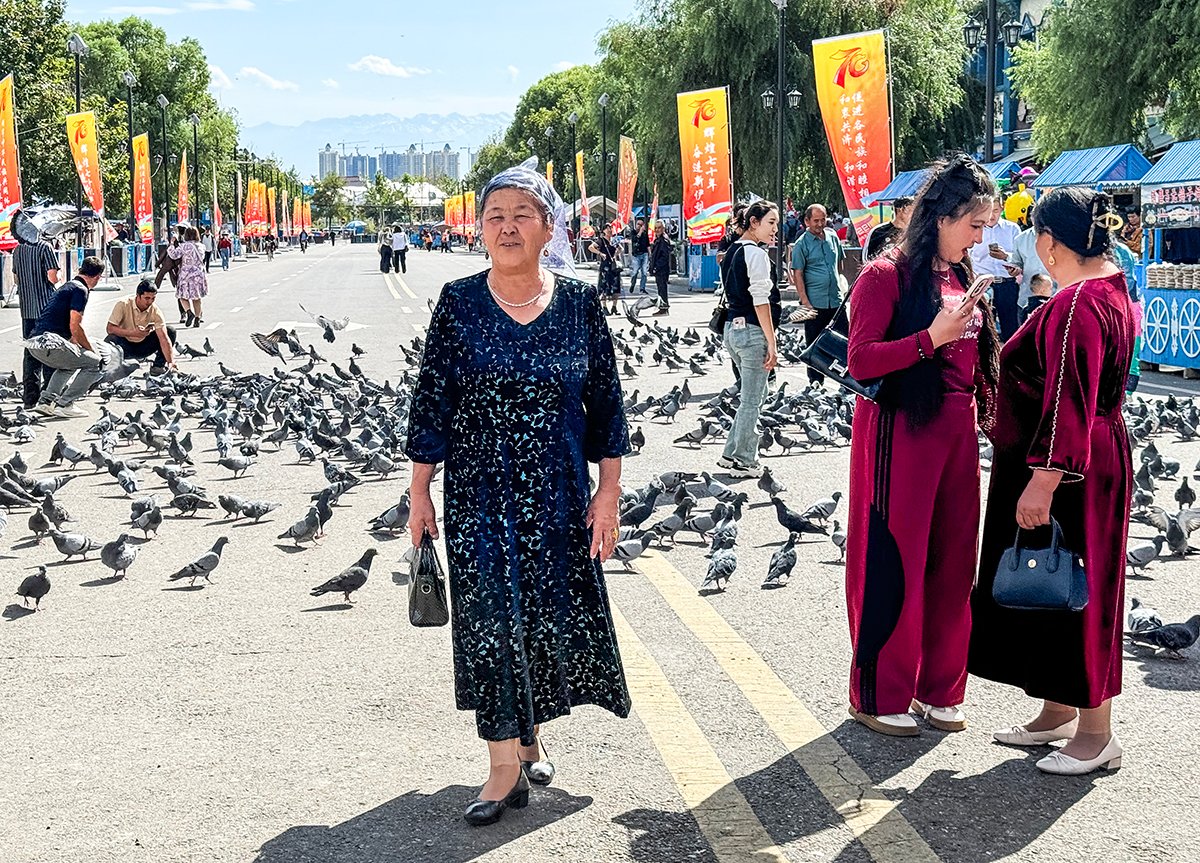
For the last time, I am stating my views on the West’s genocide accusation and why I refuse to let the US/NATO/EU Cold War policy set the agenda and discourse about China in general and Xinjiang in particular. PART I Part II A daring prediction I shall be surprised if, in about 10-15 years, Xinjiang – the North-Western province of China, its largest province three times larger than France – has not become a world-leading cultural and economic hub in humanity’s multipolar/nodal future world. It exhibits a tremendous cultural variety that seems to be moving towards unity in an amazing diversity. It has a vast natural resource potential. It interacts with eight very important neighbouring countries. It’s the crossroads of past, present and future. Xinjiang is the sine qua non of the new Silk Roads, also called the Belt and Road Initiative (BRI), which involves over 140 countries worldwide and...
YiningAvenueWoman_1200-copy
Why it is essential to travel and see for yourself and then build networks and promote dialogues in the world’s likely most serious conflict. PART II PART I I recommend you read Part I before reading this second part. A dynamic melting pot You may ask where Xinjiang’s immense cultural diversity comes from. While I have not studied its history, I have learned that it has always been one big meeting place, dating back to the first Silk Roads, where people travelled, traded, explored, and migrated. Crisscrossing also borders with eight neighbours so that over time, it became a melting pot. There is a lot of diversity; each national group or ethnicity seems to have preserved vital elements of its own culture, language, aesthetics, way of living, dancing, etc. and also become part of the unity called Xinjiang and China. A woman I met told me that each nationality’s way of dancing could be...
flagboy
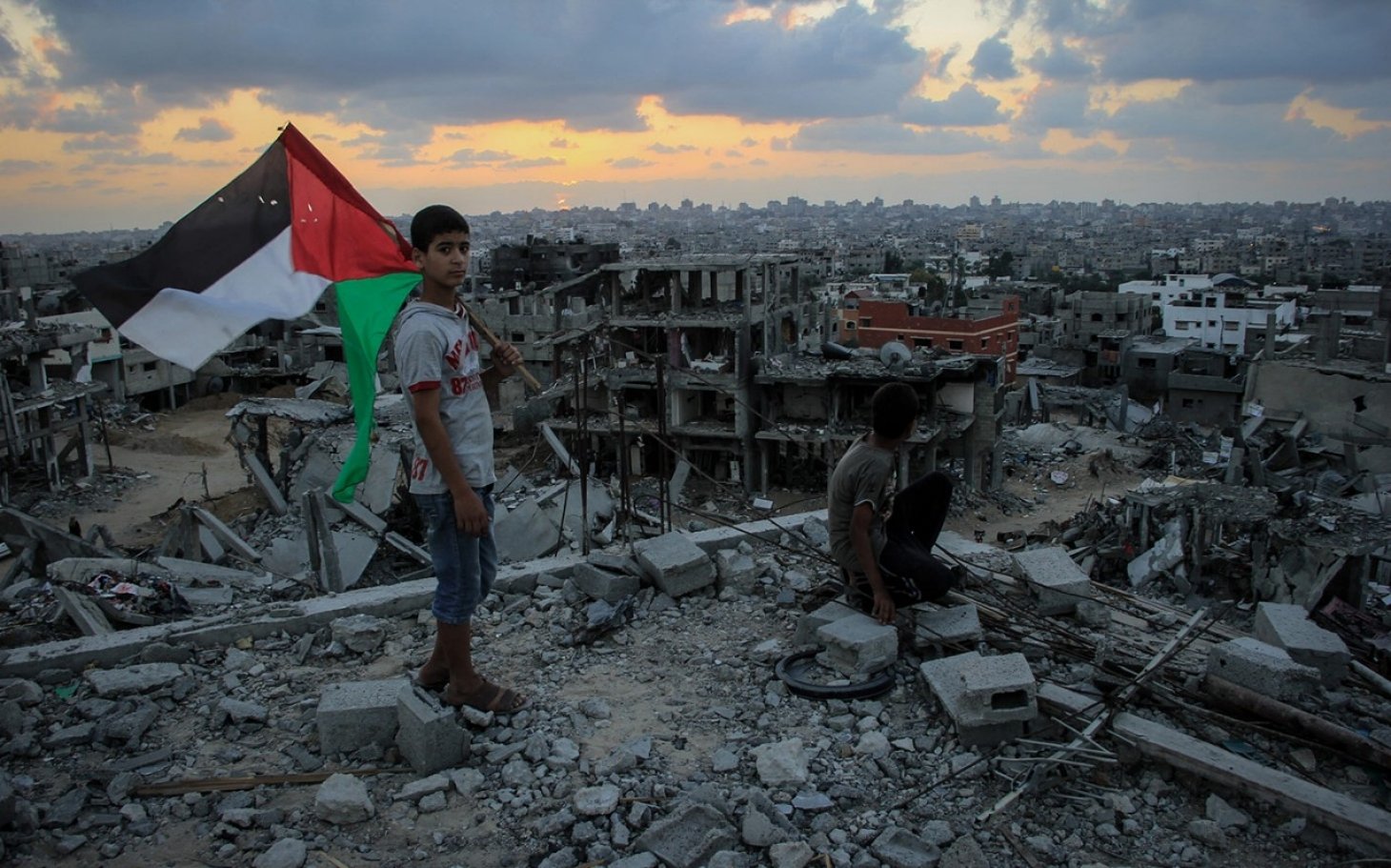
Liberal democracies remain shamefully complicit with Israel, despite its ongoing genocide against the Palestinian people Students of world politics have long understood that when it comes to the strategic interests of leading states, international law is marginalised unless it is useful in waging a propaganda war against adversaries.  Indeed, the United Nations was designed in ways that recognised this feature of international political life. Otherwise, giving the winners of World War II a right of veto would make no sense.  Such an exemption from international law was also evident at the war crimes trials held in Nuremberg and Tokyo after World War II, at which only the crimes of the losers were scrutinised for legal accountability, and obvious crimes of the victors – such as the indiscriminate bombing of Dresden and the atomic bomb attacks on Hiroshima and Nagasaki – were not prosecuted.  To this day, for understandable reasons, many...
Categories

Year

Author / Contributor

Region