Art and peace

Showing 1-10 of 15 stories

Sort by
Categories

Year

Author / Contributor

Region

TrumpTitanicMuseums
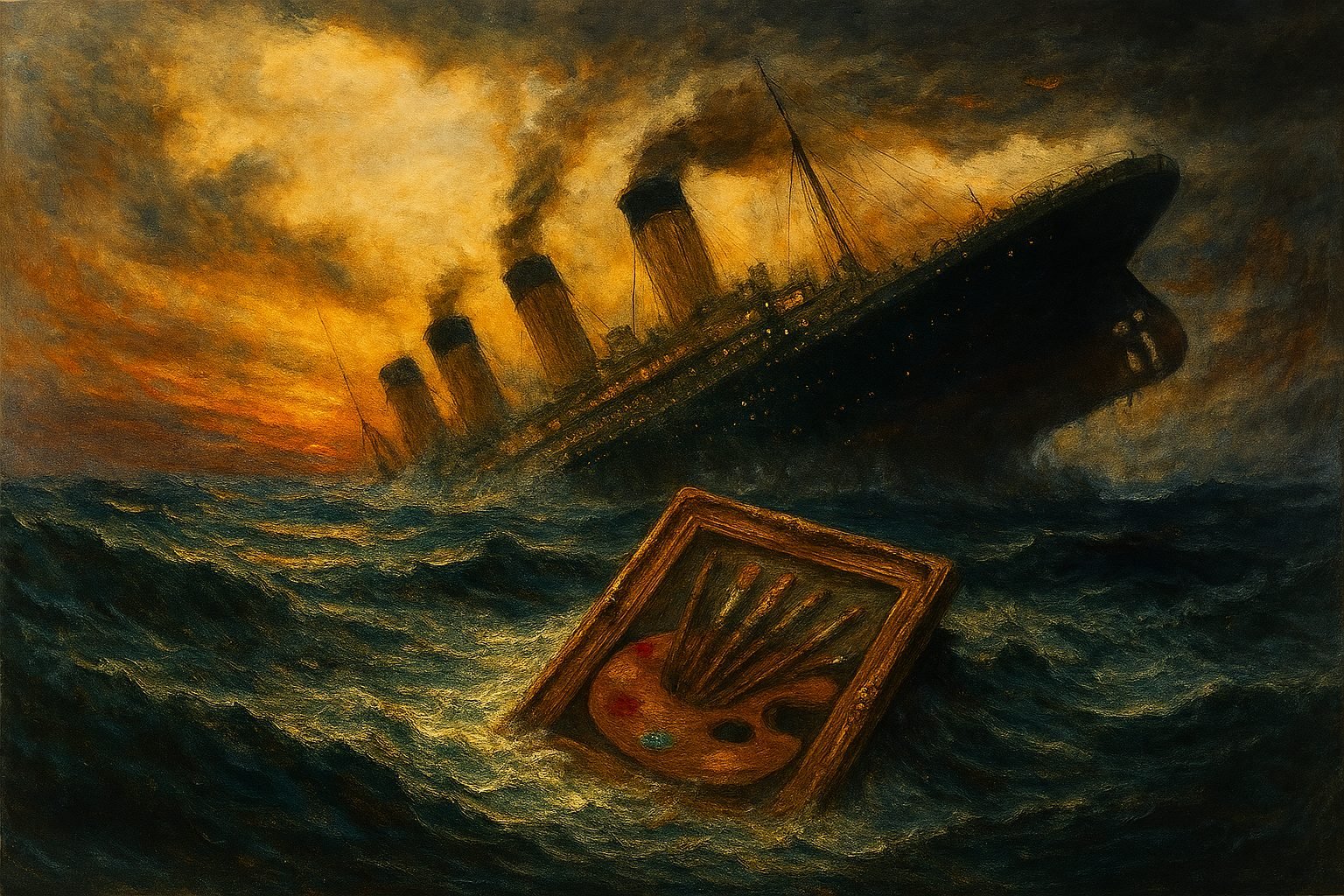
America’s Strategic Assault on Art, Academia, and the Imagination That Sustains Peace The United States once stood as a beacon of cultural audacity—a place where dissent could be beautiful, and beauty and innovation could challenge the present order of things. Its museums, universities, and artists helped inspire a worldwide imagination rooted in creative freedom and innovation. But today, under the Trump regime’s second term, those dynamic qualities are being systematically dismantled. Just read this. As Trump goes after the arts, many museums remain silent | CNN As CNN reports, the administration has launched an aggressive campaign to “eradicate improper ideology” from federally funded museums. Exhibitions involving race, gender, and identity are being censored or cancelled. Amy Sherald’s reimagining of the Statue of Liberty as a Black, trans woman was pulled from the Smithsonian after curators objected to its symbolism. Sherald warned that “history shows us what happens when governments demand loyalty...
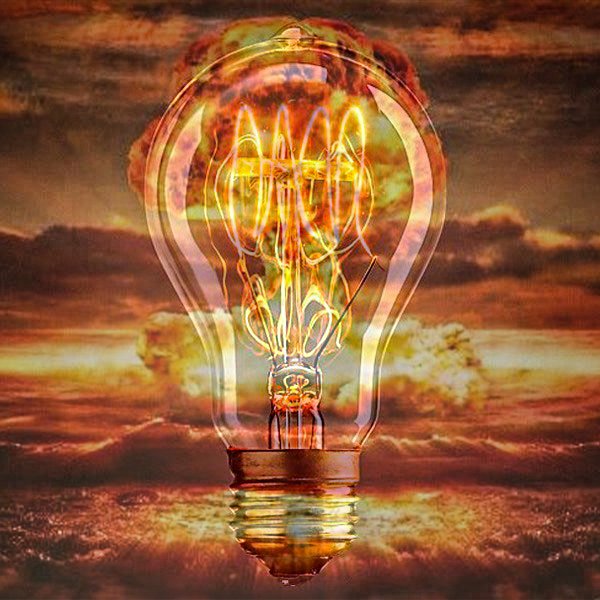
BulbAndBomb-kopia
list=PLgfli1PY64h3bpPsycG1E1PquoujN9wIIu0026ab_channel=NeutralityStudies”,”type”:”video”,”providerNameSlug”:”youtube”,”responsive”:true,”className”:”wp-embed-aspect-16-9 wp-has-aspect-ratio”} –>
MopsMore4_1000_100dpi
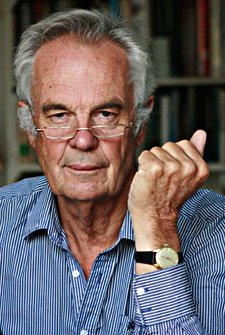
I assume that most readers here know me as a peace and conflict researcher and as co-founder and director of the Transnational Foundation for Peace and Future Research, TFF. However, since 2009, I’ve also worked as an art photographer, done projects, and arranged almost 30 exhibitions in my studio here in Lund, Sweden. See more on Oberg PhotoGraphics. I grew up with contemporary art; it’s always been an essential, joyful interest of mine. And in 2002-2003, I found out that I could reach people not only with texts but also with images. Back then, I went on fact-finding in Iraq and interviewed some 160 people at all levels and also took photos with an early digital low-resolution camera – of people, cafées, nature, streets, children, cultural places, museums and… life in general, nothing special. It was merely snapshots made between meetings in an otherwise quite tight meeting schedule. Upon my...

Terchanik-baltimore-oriole-2000x900-1
Edward Curtin May 30, 2023 By the lake’s lapping shore above the town and the railroad tracks, my wife and I stopped and marveled, struck stone silent by two dazzling Baltimore Orioles, clawed together as they tumbled, wrestling in the green morning breeze above our heads. They perched upon a branch and sang a morning hymn, an ode to joy and the spring’s morning glory. Their black and orange throats vibrated amid the green quaking aspen’s leaves as the lake’s low lapping sounds lent counterpoint. They were sublime. Originally published at Off Guardian on May 14, 2023 I too felt a quake, a shiver down my spine as associations tumbled through my mind. Poems, songs, memories of other early morning walks in spring. Intoxication, elation, the horripilation that accompanies spring’s rising, the sexual excitement. Hope, and the loose feeling of being forever young. No solution to anything, just reverence for existence. Nothing changed, except a few years....
tumblr_l5lb77YVf61qagvvho1_500
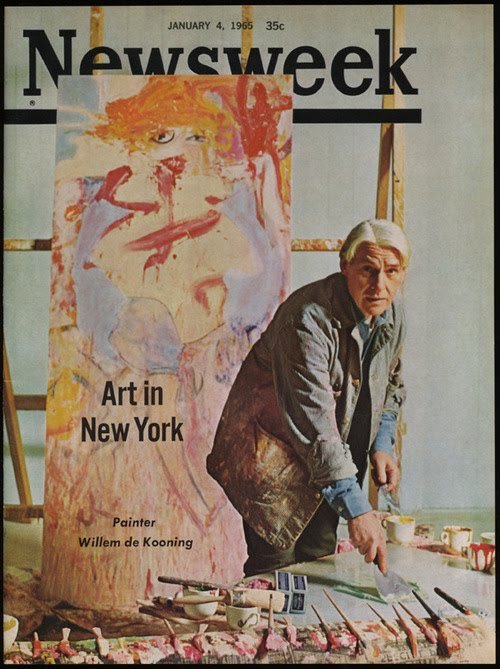
For decades in art circles it was either a rumour or a joke, but now it is confirmed as a fact. The Central Intelligence Agency used American modern art – including the works of such artists as Jackson Pollock, Robert Motherwell, Willem de Kooning and Mark Rothko – as a weapon in the Cold War. In the manner of a Renaissance prince – except that it acted secretly – the CIA fostered and promoted American Abstract Expressionist painting around the world for more than 20 years. Originally published in 1995 at The Independent and Voltairenet.org The connection is improbable. This was a period, in the 1950s and 1960s, when the great majority of Americans disliked or even despised modern art – President Truman summed up the popular view when he said: “If that’s art, then I’m a Hottentot.” As for the artists themselves, many were ex-communists barely acceptable in the...
fred-image
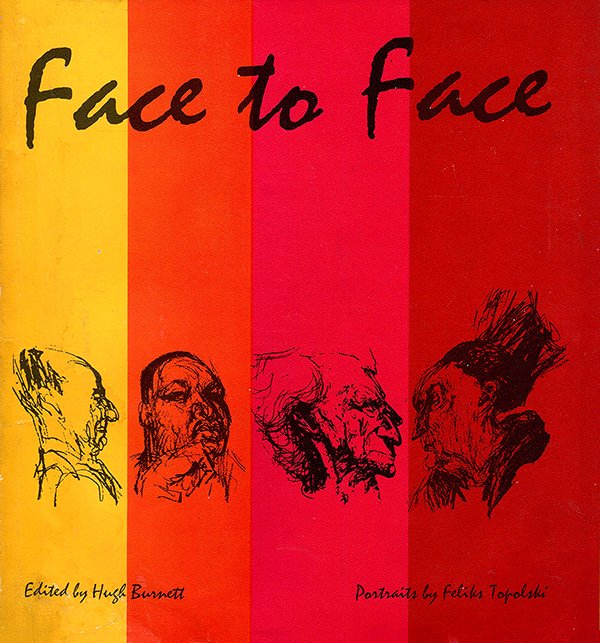
By Maria Popova October 8, 2020 In the mid-1950s, as the icy terror of the Cold War was cloaking the embering rubble of two World Wars, the BBC producer and cartoonist Hugh Burnett envisioned an unexampled program to serve both as a cross-cultural bridge and a mirror beaming back to a dimmed and discomposed humanity the noblest and most beautiful ideas of its noblest and most beautiful minds. Originally published at brainpickings Face to Face — a series of intimate conversations with people of genius, influence, and exceptional largeness of spirit, interviewed by the British broadcaster and politician John Freeman — began as short-wave radio broadcasts to listeners in the Far East and soon became a BBC television program. Television was then a young medium, aglow as any young medium with the promise of its potential and blind to its peril — something reflected with chilling clarity in Burnett’s own...
CrystalOpalescent_2020_1200_100
“Crystal Opalescent” The discourse about, or for, peace has mostly disappeared over the last 2-3 decades. It applies to research (and its non-governmental funding possibilities), to politics in general and to the media.  In foreign and security politics, the intellectual level is now such that it does not even seem strange to decision-makers that they never obtain peace advice or consult peace experts. The fantasy-assumption is that if only there is enough military’ security’ means applied to enough societal problems, peace will automatically come about.  I can’t remember having heard a parliamentarian or minister mention or conceptualise peace beyond the level of the state dinner speech – that is, devoid of theoretical and factual content as well as of meaning.  Originally published as an editorial on the Transcend Media Service, TMS. The mainstream media have no one who can focus on peace – not to mention, do peace journalism with...
Screenshot
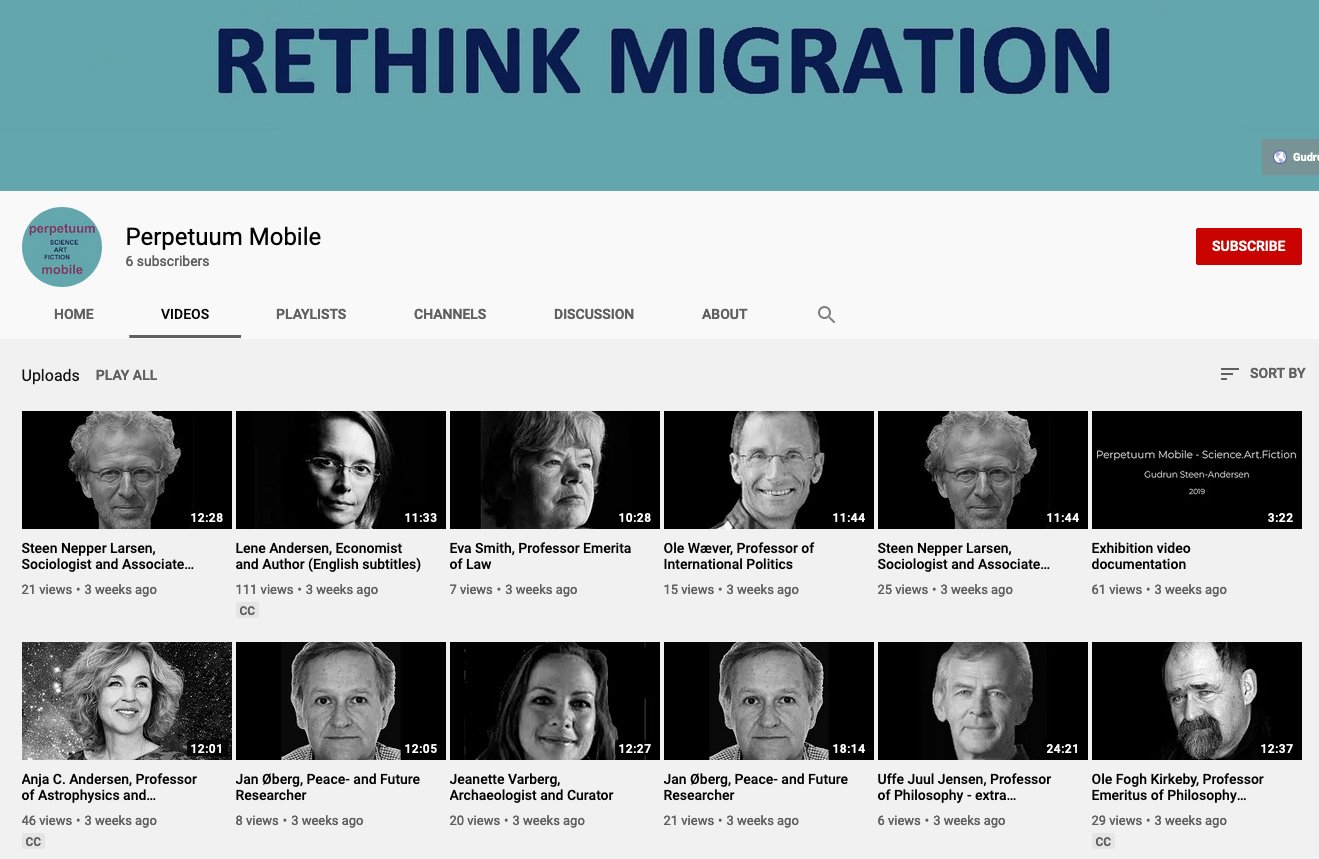
Last year, the Danish artist Gudrun Steen-Andersen created a multimedia installation under the theme: “Perpetuum Mobile – What Would Happen If Migration Was Free Worldwide?” Naturally, it is a thought experiment – not the least in these times of multi-crisis where nationalism, xenophobia, populism and the building of walls seem to have emerged as just another – political – virus way before the Coronavirus. The Danish-language version was made in 2019 and in March this year, we repeated – more or less, that is – the video lectures in English. It was about the time when the Coronavirus had just begun its race to the top of the global agenda. You’ll find them all the videos here or click on this: Steen-Andersen’s heuristic intention – somewhat in the tradition of the great future-thinker Robert Jungk’s future workshop – was realized through her own amazing installation and by invitation to a...
jonathanpower
“In the beginning there was a river. The river became a road and the road branched out to the whole world. And because the road was once a river it was always hungry.” This must be one of the best opening lines ever penned by a novelist. It’s the work of the Nigerian novelist, Ben Okri, who won English literature’s premier annual award, the Booker prize, for his book, The Famished Road. It’s an exceptional novel. The words are often thrown up in the air and then, catching the sun’s rays, light up like emeralds, rubies, diamonds, gold and silver as they tumble down onto the page. When I met Ben Okri on saturday at Denmark’s annual literary festival at the Louisiana Museum for Modern Art I wanted to ask him how is it that Nigeria has become a veritable factory of good novelists. Besides the Nobel Prize winner for...
18932770_401
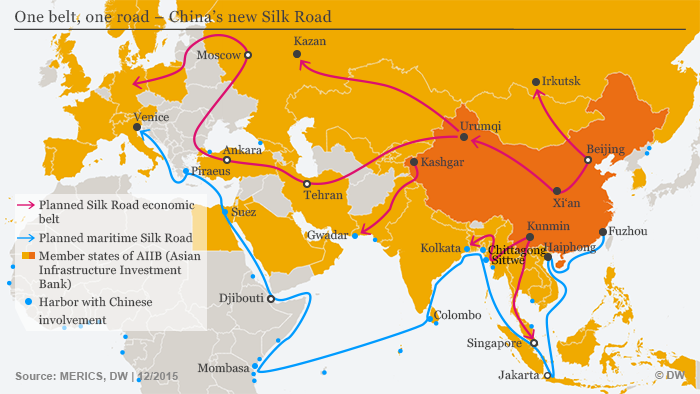
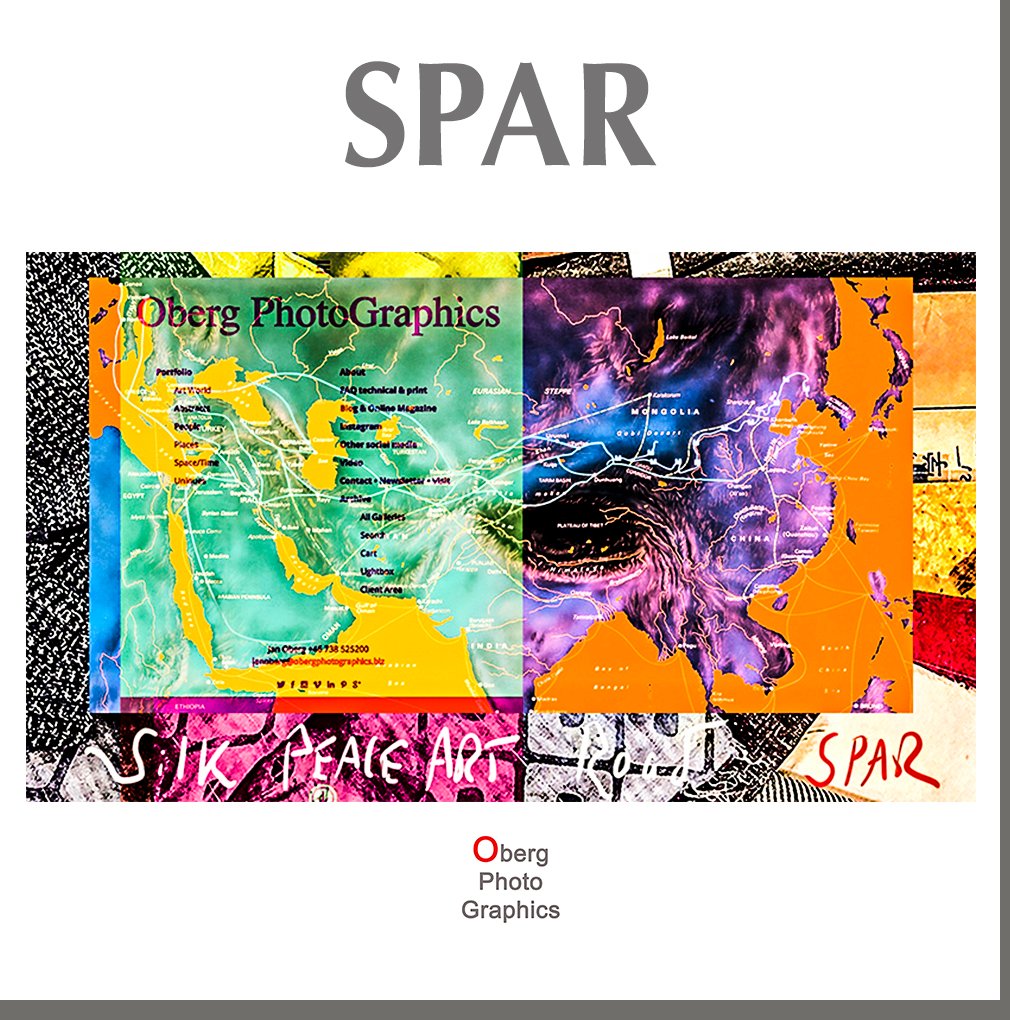
(May 11- 24 November). Oberg’s project is called SPAR – Silk Peace Art Road. It focuses on the new China-initiated Silk Road BRI – culture, people, ways of living and high-tech. (BRI = Belt and Road Initiative). He will take pictures at different places, gather objects and utilize his archive photos from Shanghai to Venice – China, Myanmar, Kazakhstan, Iran, Somalia, Syria, Venice, etc. And he will seek cooperation with local artists and art institutions as part of a peace cultural dialogue along the road. This will result in three-dimensional installation of 4-5 meters in Venice which – with multimedia but mostly photography – will focus on the progress of the Orient and the decline of the Occident – a vision about a possible, better and more peaceful future. – ”In times of fake, negativity and fear, the Silk Road project (Belt and Road Initiative, BRI), is the most constructive...
InaDehace_Insta
Ina Curic has been with TFF since 2006 – an Associate, a Board member and also TFF’s project coordinator when we worked in Burundi. After a few years away from the bigger world issues of the world, Ina Curic is now back as author of children’s books – bedtime stories for children and waking-up stories for parents, in one. In this short video* she tells you about the idea behind the books – which has a lot to do with peace and environmental education. She is also a mother of two and a very playful personality who loves to experiment and make people laugh and feel happy around her. Given all the world crisis we face as humanity, the message Ina Curic conveys is existentially important and gives hope to big and small alike. We recommend that you visit her homepage and download her first free ebook here and find...
SPARInstaLogoNOTextShadowLogo
  . This exciting opportunity stimulated the development of a bigger idea that combines Oberg’s work for peace and art photography with a focus on the Chinese-initiated Silk Belt and Road Initiative, the largest and most visionary in today’s world in terms of linking people and cultures into cooperation rather than confrontation. In various ways the project – with the Road as metaphor – stretches from Shanghai over Myanmar, Kazakhstan, Georgia, Iran and Syria to Venice and seeks to promote cooperation and peace in the process. The “Silk PeaceArt Road” project is made public at this very early development stage where no funding is secured to encourage you to share co-operative ideas, contacts you may have in China and along the Silk Road or to potential partners, artists, sponsors, art institutions, etc. The project integrates peace work and art photography and it is the first cooperative endeavour by TFF and...
Categories

Year

Author / Contributor

Region