Africa

Showing 1-10 of 105 stories

Sort by
Categories

Year

Author / Contributor

Region

The-big-picture-is-different-from-what-is-universally-believed-about-aid-to-Africa-1024-x-768
American economist Professor, Jeffrey Sachs exposes how America, its Western allies, the CIA and the defence industry have rigged the system to keep Africa from being prosperous. It is a stunning expose and rebuke to the present world order and why it must change. Jeffrey David Sachs is an American economist, academic, public policy analyst and former director of The Earth Institute at Columbia University, where he holds the title of University Professor. He is also a renowned leader in sustainable development, a senior UN advisor and a bestselling author. TFF’s work with global structural change, abolition of militarism and our long-term engagement with Somalia and Burundi has always emphasised one or more of the dimensions Sachs highlights so brilliantly – with both knowledge, eloquence and passion. Please share widely!
Obama_Biden_and_Clinton_in_the_Oval_Office
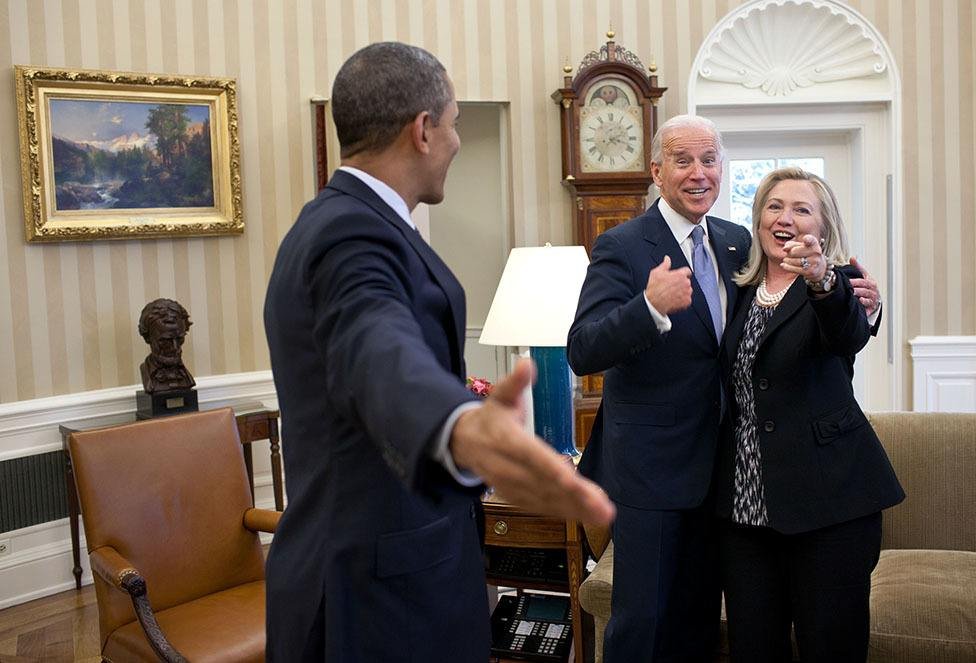
Photograph Source: Pete Souza, White House Official Photograph – CC BY 2.0 Eric Draitser September 15, 2020 The scorching desert sun streams through narrow slats in the tiny window. A mouse scurries across the cracked concrete floor, the scuttling of its tiny feet drowned out by the sound of distant voices speaking in Arabic. Their chatter is in a western Libyan dialect distinctive from the eastern dialect favored in Benghazi. Somewhere off in the distance, beyond the shimmering desert horizon, is Tripoli, the jewel of Africa now reduced to perpetual war. But here, in this cell in a dank old warehouse in Bani Walid, there are no smugglers, no rapists, no thieves or murderers. There are simply Africans captured by traffickers as they made their way from Nigeria, Cameroon, Chad, Eritrea, or other disparate parts of the continent seeking a life free of war and poverty, the rotten fruit of Anglo-American...

africom-usa-kenya
June 15, 2020 Nick Turse 27 Feb 2020 –Last month, about a dozen al-Shabab fighters infiltrated the perimeter of a military base in Manda Bay, Kenya. One of them took aim with a rocket-propelled grenade, firing at a U.S. surveillance plane and touching off an hourslong firefight. When it was all over, the two American pilots of that plane and a U.S. soldier were dead, two other U.S. military personnel were wounded, six surveillance aircraft and helicopters were destroyed, and parts of the airfield were in flames. Originally posted on Transcend Media Service on March 2, 2020 Where there are U.S. bases, there is the potential for such attacks, because bases are not just launching pads for offensive military operations, but targets for them too. Since 9/11, the U.S. military has built a sprawling network of outposts in more than a dozen African countries. The Intercept has obtained U.S. military documents...
jonathanpower
Africa is suffering a double whammy after many years of success. The Coronavirus, while not taking down great numbers of people like in Europe, Asia and the Americas, has had a severe impact by curbing its exports in the face of the formers’ severe economic depression. For example, flowers grown in Kenya and Ethiopia have been particularly hit. Kenya’s flower industry employs up to 70,000 people. Ethiopia’s horticulture provides 180,000 jobs. Kenya’s overnight exports of cut flowers to Europe have been worth almost 770,000 US dollars a year, up from 134 million in 2000. Now sales are on their way to rock-bottom. At the same time parts of East Africa have been hit by plagues of locusts, the likes of which have not been seen for over 70 years. They eat everything that comes their way. For the first time in a decade in Africa, many people are going hungry...
jonathanpower
“In the beginning there was a river. The river became a road and the road branched out to the whole world. And because the road was once a river it was always hungry.” This must be one of the best opening lines ever penned by a novelist. It’s the work of the Nigerian novelist, Ben Okri, who won English literature’s premier annual award, the Booker prize, for his book, The Famished Road. It’s an exceptional novel. The words are often thrown up in the air and then, catching the sun’s rays, light up like emeralds, rubies, diamonds, gold and silver as they tumble down onto the page. When I met Ben Okri on saturday at Denmark’s annual literary festival at the Louisiana Museum for Modern Art I wanted to ask him how is it that Nigeria has become a veritable factory of good novelists. Besides the Nobel Prize winner for...
image001
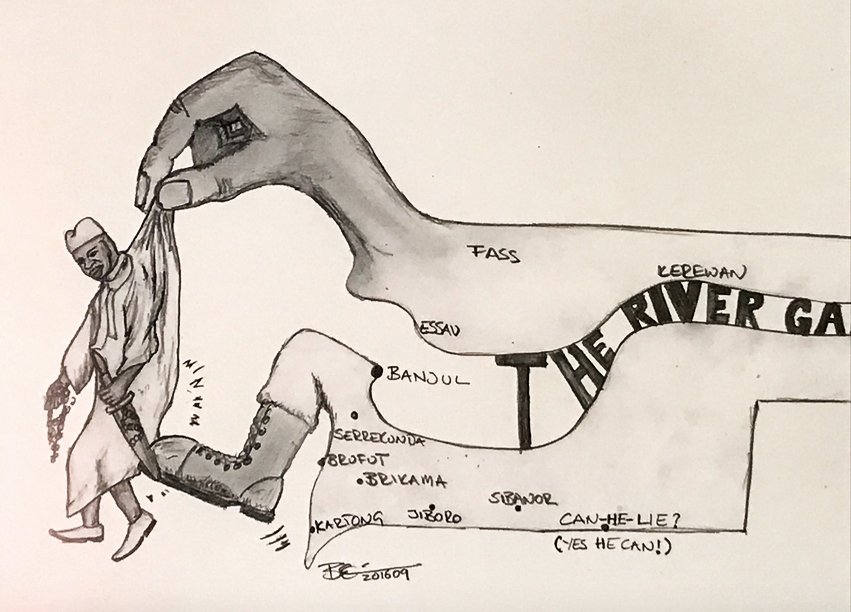
Gambia – or properly The Gambia – a small country in West Africa with about 2 million inhabitants, was peaceful since its internal independent rule was established in 1963. There were good relations with its only neighbour, Senegal. For a long time there was no military force in the country. One could then expect that there would be no militant coups, as in so many other African countries. However, in 1981 a “Revolutionary Council” took power. The revolutionaries were soon ousted by troops from Senegal who reinstated the president.  Now obviously Gambia needed an army “to establish stability” and an army was established. The outcome was that in 1994 a group of soldiers, led by lieutenant Yahya Jammeh, took power. He became the leader of the country, and was elected and re-elected president in 1996, 2001, 2006 and 2011. At least in the early years of his reign, he was...
jonathanpower
It’s time overdue that the misleading myths on immigration are thrown into the trashcan. They are causing untold damage. The fact is that President Donald Trump’s own government research shows that Mexican migration has dropped sharply in recent years. In Britain, the Brexit debate which began with a whipped up crisis about immigration has now moved to a level where it’s tearing the country apart.  In France and Belgium immigrants are falsely blamed for Islamic terrorism. In Sweden and Denmark the myth-makers have pushed traditionally left of centre electorates rightwards. A new book on the subject, “Blaming Immigrants”, by University of Columbia professor, Neeraj Kaushal, says it all. It pulls together most of the research so far done. Immigration is one of the most divisive issues of our times. Yet the increase in immigration globally is largely in line with the growth in world population. It was 3% in 1990...
jonathanpower
Nigeria is a veritable factory of sophisticated novelists. It was no surprise that Ben Okri won the British Booker Prize that goes annually to the best novelist of the year. Considering that high-class novel writing in English only began in Nigeria in 1958 with Chinua Achebe’s famous work, “Things Fall Apart”, now a classic, it has come a long way in a short time. Will Nigeria move at a similar speed with its economy and banish poverty as it once promised to? Read Ben Okri’s vivid capture of poverty in his novel, The Famished Road, where the words are illuminated as if they had been thrown up in the air, then descend, sparkling like diamonds and rubies: “Everywhere there was the crudity of wounds, the stark huts, the rusted zinc abodes, and the rubbish in the streets, children in rags, and the little girls naked on the sand playing with...
jonathanpower
The Algerian philosopher and revolutionary writer, Frantz Fanon, wrote, “Africa is shaped like a gun, and Congo is its trigger. If that explosive trigger bursts, the whole of Africa will explode”.  The Democratic Republic of Congo, Africa’s largest country, is now caught up in the aftermath of its first proper election since independence from Belgium in 1960. Towards the end of last year one could say, after years of non-stop wars and massive carnage, the country was 90% bereft of fighting. The authoritarian regime of President Joseph Kabila was still in power but at last it had been pressured to call an election by the African Union, the Western aid-givers, some of the big Western businesses that mine in the mineral-rich country and, not least, the Catholic Church. At first the election held on December 30th seemed to be peaceful and reasonably well organized, but then as the ballots were counted...
jonathanpower
The general election has been postponed yet again. Will this country, the largest and potentially the richest in Africa, ever escape from its continuous dictatorship, and its propensity to civil war? It’s not so long ago that Susan Rice, then the US’s Ambassador to the United Nations, was talking about the Congo as the site of “Africa’s First World War”. Has the UN at long last really pacified this country that has been continuously in a state of unrest since the Belgian colonisers, after effectively looting the country, fled in 1960, turning the country over to a hastily improvised African government? Today we can say that the fighting that has consumed the Congo is within sight of being over, apart from some localized violence in Kivus and Kasai provinces. But, given the history of the most turbulent of all African countries, we should say, let’s wait and see. Nevertheless, it...
jonathanpower
  Zimbabwe messed up its land reform. Now South Africa has decided to give a great push to its slow moving land reform. We’ll see if it can avoid Zimbabwe’s mistakes. President Donald Trump tweeted that he’d asked his secretary of state to look into “farm seizures and expropriations and the large scale killing of white farmers” in South Africa. That sounds more like what happened in Zimbabwe 25 years ago than what is going to happen in South Africa today, albeit the killings were not on a “large-scale”. Shortly after independence I remember interviewing the minister of finance in Zimbabwe and asked him why the land reform that had been promised as an urgent priority was not underway. He fudged his answer. Later I learned why. White farmers’ land was confiscated and handed over to fellow ministers, top officials and well-to-do government supporters, not to the poor peasantry. Some...