
Oslo is dead! Long live Oslo! The UK House of Commons Supports Diplomatic Recognition of Palestine

Prefatory NoteThe post below is a modified version, especially the ending, of a piece published online two days ago in AlJazeera English. While appreciating the importance of the European moves to endorse Palestinian statehood, it seeks a more definitive repudiation of the Oslo Approach.
It calls for an end to the U.S. role as exclusive intermediary and the presumed outcome of a peace process being two states without indicating the character of the Palestinian state. So far, the two-state mantra has been cut back to allow Israel to retain at least the unlawful settlement blocs and to insist on arrangements that uphold their security against unforeseen threats, while granting not a word of acknowledgement to Palestinian security concerns.
My own strong belief is that unless the two peoples are treated with full equality in seeking a solution, the result will not be sustainable or just even in the unlikely event that some sort of agreement is reached.

Oslo is dead! Long live Oslo! The UK House of Commons Supports Diplomatic Recognition of Palestine

On October 13 the House of Commons by an overwhelming vote of 274-12 urged the British government to extend diplomatic recognition to Palestine.

At first glance, it would seem a rather meaningless gesture. It is a non-binding resolution, and Prime Minister David Cameron has already declared that this expression of parliamentary opinion will have no effect whatever on existing government policy.

So far Britain along with the states in Western Europe adhere to Israel’s stubborn insistence, echoed by Washington, that Palestinian statehood can only be established through a solution to the conflict negotiated by the parties.

Even if the British vote was binding, why should it be seen as a dramatic move in Palestine’s favor? After all, Palestine has already been accorded recognition by 134 states since Yasir Arafat declared the existence of a Palestinian state within 1967 borders back in 1988.

Such downgrading of the significance of what took place is also part of the Israel tactical response. Its ambassador in London now declining even to comment on the decision after earlier indicating extreme disapproval with the evident hope of discouraging affirmative votes.

Before the vote Israeli leaders used their levers of strong influence to discourage the vote. Netanyahu even insisted that such a step would seriously diminish prospects for resumed negotiations and would seriously harm peace prospects. After losing out, the Israeli tone changed, now calling the vote meaningless and devoid of importance.

In actuality, the UK initiative is an important symbolic victory for the Palestinians. Until recently when the elected Swedish government indicated its intention to recognize Palestine as a state at some future undesignated time, no Western European government had broken ranks on the Oslo approach as interpreted by Israel and the United States.

It is this approach that has put a straightjacket on diplomacy, requiring any progress toward a solution to be exclusively through direct negotiations for a Palestinian in which the U.S. acts as the one and only intermediary.

At stake, then, is not only the momentum building for European countries to extend recognition to Palestine, but also a belated admission that this Oslo approach after more than 20 years of futility should no longer be respected as the consensus foundation of Israel-Palestine conflict resolution.

The UK action needs to be joined with the recent diplomacy of the Palestinian Authority, first the Fatah/Hamas agreement of April to form a unity government, and even more so, the resolution to be submitted to the Security Council on behalf of the Palestinian Authority that calls for Israeli withdrawal to 1967 borders, including East Jerusalem, no later than November 2016.

It is expected that the U.S. will veto this resolution if it is unable to mount enough pressure to prevent nine SC members from voting affirmatively. Such an initiative by Ramallah further signals that the PA is no longer willing to play the waiting game that has given Israel ample time for settlement expansion and ethnic cleansing in East Jerusalem past points of no return.

In Mahmoud Abbas’ speech of September 26th to the General Assembly he clearly indicated that he was refusing to cooperate any longer with these diplomatic maneuvers facilitated by the Oslo framework. Responding to Palestinian pressures from below, Abbas left no doubt that he would not pretend that he had ‘a partner for peace,’ thereby turning the tables on Tel Aviv.

He signaled this clearly when he described Israel’s 50-day military operation against Gaza this past summer as “a genocidal war.” The G-word was bound to elicit an angry Israeli response, which Netanyahu provided a few days later in the same UN venue, calling Abbas’ speech “shameless.”

There still remains a lingering and unfortunate ambiguity in these developments suggesting we have not yet truly arrived at a post-Oslo phase of diplomacy.

The UK resolution accepted an amendment stating that its purpose was “as a contribution to securing a negotiated two-state solution.” The former British Foreign Secretary, Jack Straw, elaborated on this, suggesting that was being done was to exert additional pressure on the parties to get on with negotiating a two-state outcome.

This tail wagging the dog is a regression, sustaining the illusion that Israel, whatever the context, is at all willing at this stage to allow an independent sovereign Palestinian state to be established within 1967 borders, even if these are slightly modified. In effect, “Oslo is dead! Long live Oslo!”

Since the latest Gaza war there have been two developments of lasting significance: first, the inter-governmental diplomacy is slowly moving away from the Oslo approach, and Western Europe is beginning to fill the diplomatic vacuum created by the April collapse of the Kerry round of talks between Israel and the Palestinian Authority.

And secondly, civil society nonviolent militancy and political leadership is beginning to occupy center stage in Palestinian hopes and dreams, particularly taking the form of the growing BDS campaign, but also visible in the refusal of Oakland, California workers to unload an Israeli cargo ship.

This latter fulcrum of resistance within Palestine and without raises serious leadership and representation questions—who now speaks with authority and authenticity on behalf of the Palestinian people? How can this question be answered given the statist manner in which the world is organized?

Let me put my own understanding of this issue more directly: I find that the voices of Omar Barghouti and Ali Abunimah to be more authoritative and authentic than are those of the diplomats from Ramallah who a few years ago showed themselves ready to give the store away in the Palestine Papers and on other occasions.

They couldn’t manage such a transaction since Israel apparently felt it already owned the store and was not ready to show gratitude even for a political outcome heavily slanted in their favor.
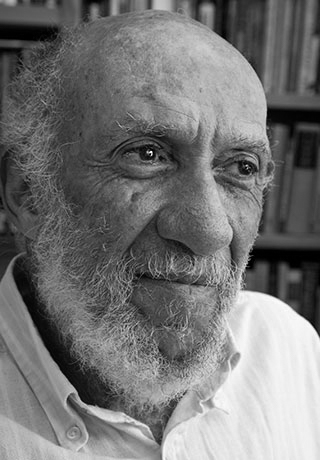

Professor Falk became an adviser to TFF when it was established in 1985.

Share

Leave a Reply

Your email address will not be published. Required fields are marked *

Related Posts

Gandhi, Arun. Lord Richard Attenborough. Kasturba: a lifeNew Delhi: Penguin Books Ltd., 2000.315 pp, 295 Indian Rs, US $22.51 January 29, 2002 Arun Gandhi, grandson to Mohandas and Kasturba, has written a thorough account of Kasturba’s life. Arun begins with a description of Kasturba’s childhood in Porbandar in the late1800s, before she met Mohandas. By having chosen to embark on difficult research into his grandmother’s life, including her first years which are not well-documented, Arun ensures that the reader receives an intimate and life-long portrait of this amazing woman. Kasturba is presented as a lively woman &endash; obedient, yet with a mind of her own. As the relationship between Kasturba and Mohandas developed, Arun maintains that Kasturba’s influence over Mohandas in her own quiet way also grew, to which some of Mohandas’ writings also attest.  Arun paints a vivid picture of the beginnings of Mohandas’ non-violence movement in South Africa, a...
In response to an urgent Appeal from all the living Nobel Peace Prize Laureates, the General Assembly of the United Nations, on November 1998, unanimously declared the first decade of the twenty-first century to be The Decade for a Culture of Peace and Nonviolence. While people are naturally concerned about the amount of violence in our world and how it threatens our future, the Nobel Laureates are right to remind us of the potential of nonviolence and our calling to build a culture of peace and nonviolence.  The twentieth century is instructive in the way that the philosophy and practice of nonviolence have begun to flourish and in the way that nonviolent movements have had an exponential growth across the world. Mohandas Gandhi and Martin Luther King, Jr. are the most famous nonviolent leaders but many have built upon the paths they charted as in country after country, tyrannies and...
We know that medical personnel have failed to report to higher authorities wounds that were clearly caused by torture and that they have neglected to take steps to interrupt this torture. In addition, they have turned over prisoners’ medical records to interrogators who could use them to exploit the prisoners’ weaknesses or vulnerabilities. We have not yet learned the extent of medical involvement in delaying and possibly falsifying the death certificates of prisoners who have been killed by torturers. A May 22 article on Abu Ghraib in the New York Times states that “much of the evidence of abuse at the prison came from medical documents” and that records and statements “showed doctors and medics reporting to the area of the prison where the abuse occurred several times to stitch wounds, tend to collapsed prisoners or see patients with bruised or reddened genitals.” http://www.truthout.org/docs_04/080604J.shtml#16 According to the article, two doctors who...

Recent Articles

Gandhi, Arun. Lord Richard Attenborough. Kasturba: a lifeNew Delhi: Penguin Books Ltd., 2000.315 pp, 295 Indian Rs, US $22.51 January 29, 2002 Arun Gandhi, grandson to Mohandas and Kasturba, has written a thorough account of Kasturba’s life. Arun begins with a description of Kasturba’s childhood in Porbandar in the late1800s, before she met Mohandas. By having chosen to embark on difficult research into his grandmother’s life, including her first years which are not well-documented, Arun ensures that the reader receives an intimate and life-long portrait of this amazing woman. Kasturba is presented as a lively woman &endash; obedient, yet with a mind of her own. As the relationship between Kasturba and Mohandas developed, Arun maintains that Kasturba’s influence over Mohandas in her own quiet way also grew, to which some of Mohandas’ writings also attest.  Arun paints a vivid picture of the beginnings of Mohandas’ non-violence movement in South Africa, a...
In response to an urgent Appeal from all the living Nobel Peace Prize Laureates, the General Assembly of the United Nations, on November 1998, unanimously declared the first decade of the twenty-first century to be The Decade for a Culture of Peace and Nonviolence. While people are naturally concerned about the amount of violence in our world and how it threatens our future, the Nobel Laureates are right to remind us of the potential of nonviolence and our calling to build a culture of peace and nonviolence.  The twentieth century is instructive in the way that the philosophy and practice of nonviolence have begun to flourish and in the way that nonviolent movements have had an exponential growth across the world. Mohandas Gandhi and Martin Luther King, Jr. are the most famous nonviolent leaders but many have built upon the paths they charted as in country after country, tyrannies and...
We know that medical personnel have failed to report to higher authorities wounds that were clearly caused by torture and that they have neglected to take steps to interrupt this torture. In addition, they have turned over prisoners’ medical records to interrogators who could use them to exploit the prisoners’ weaknesses or vulnerabilities. We have not yet learned the extent of medical involvement in delaying and possibly falsifying the death certificates of prisoners who have been killed by torturers. A May 22 article on Abu Ghraib in the New York Times states that “much of the evidence of abuse at the prison came from medical documents” and that records and statements “showed doctors and medics reporting to the area of the prison where the abuse occurred several times to stitch wounds, tend to collapsed prisoners or see patients with bruised or reddened genitals.” http://www.truthout.org/docs_04/080604J.shtml#16 According to the article, two doctors who...

TFF on Substack

Discover more from TFF Transnational Foundation & Jan Oberg.

Most Popular

Gandhi, Arun. Lord Richard Attenborough. Kasturba: a lifeNew Delhi: Penguin Books Ltd., 2000.315 pp, 295 Indian Rs, US $22.51 January 29, 2002 Arun Gandhi, grandson to Mohandas and Kasturba, has written a thorough account of Kasturba’s life. Arun begins with a description of Kasturba’s childhood in Porbandar in the late1800s, before she met Mohandas. By having chosen to embark on difficult research into his grandmother’s life, including her first years which are not well-documented, Arun ensures that the reader receives an intimate and life-long portrait of this amazing woman. Kasturba is presented as a lively woman &endash; obedient, yet with a mind of her own. As the relationship between Kasturba and Mohandas developed, Arun maintains that Kasturba’s influence over Mohandas in her own quiet way also grew, to which some of Mohandas’ writings also attest.  Arun paints a vivid picture of the beginnings of Mohandas’ non-violence movement in South Africa, a...
In response to an urgent Appeal from all the living Nobel Peace Prize Laureates, the General Assembly of the United Nations, on November 1998, unanimously declared the first decade of the twenty-first century to be The Decade for a Culture of Peace and Nonviolence. While people are naturally concerned about the amount of violence in our world and how it threatens our future, the Nobel Laureates are right to remind us of the potential of nonviolence and our calling to build a culture of peace and nonviolence.  The twentieth century is instructive in the way that the philosophy and practice of nonviolence have begun to flourish and in the way that nonviolent movements have had an exponential growth across the world. Mohandas Gandhi and Martin Luther King, Jr. are the most famous nonviolent leaders but many have built upon the paths they charted as in country after country, tyrannies and...
We know that medical personnel have failed to report to higher authorities wounds that were clearly caused by torture and that they have neglected to take steps to interrupt this torture. In addition, they have turned over prisoners’ medical records to interrogators who could use them to exploit the prisoners’ weaknesses or vulnerabilities. We have not yet learned the extent of medical involvement in delaying and possibly falsifying the death certificates of prisoners who have been killed by torturers. A May 22 article on Abu Ghraib in the New York Times states that “much of the evidence of abuse at the prison came from medical documents” and that records and statements “showed doctors and medics reporting to the area of the prison where the abuse occurred several times to stitch wounds, tend to collapsed prisoners or see patients with bruised or reddened genitals.” http://www.truthout.org/docs_04/080604J.shtml#16 According to the article, two doctors who...
Read More
Imagen-thumbnail-The-Transnational-1
Gandhi, Arun. Lord Richard Attenborough. Kasturba: a lifeNew Delhi: Penguin Books Ltd., 2000.315 pp, 295 Indian Rs, US $22.51 January 29, 2002 Arun Gandhi, grandson to Mohandas and Kasturba, has written a thorough account of Kasturba’s life. Arun begins with a description of Kasturba’s childhood in Porbandar in the late1800s, before she met Mohandas. By having chosen to embark on difficult research into his grandmother’s life, including her first years which are not well-documented, Arun ensures that the reader receives an intimate and life-long portrait of this amazing woman. Kasturba is presented as a lively woman &endash; obedient, yet with a mind of her own. As the relationship between Kasturba and Mohandas developed, Arun maintains that Kasturba’s influence over Mohandas in her own quiet way also grew, to which some of Mohandas’ writings also attest.  Arun paints a vivid picture of the beginnings of Mohandas’ non-violence movement in South Africa, a...
Imagen-thumbnail-The-Transnational-1
In response to an urgent Appeal from all the living Nobel Peace Prize Laureates, the General Assembly of the United Nations, on November 1998, unanimously declared the first decade of the twenty-first century to be The Decade for a Culture of Peace and Nonviolence. While people are naturally concerned about the amount of violence in our world and how it threatens our future, the Nobel Laureates are right to remind us of the potential of nonviolence and our calling to build a culture of peace and nonviolence.  The twentieth century is instructive in the way that the philosophy and practice of nonviolence have begun to flourish and in the way that nonviolent movements have had an exponential growth across the world. Mohandas Gandhi and Martin Luther King, Jr. are the most famous nonviolent leaders but many have built upon the paths they charted as in country after country, tyrannies and...
Imagen-thumbnail-The-Transnational-1
We know that medical personnel have failed to report to higher authorities wounds that were clearly caused by torture and that they have neglected to take steps to interrupt this torture. In addition, they have turned over prisoners’ medical records to interrogators who could use them to exploit the prisoners’ weaknesses or vulnerabilities. We have not yet learned the extent of medical involvement in delaying and possibly falsifying the death certificates of prisoners who have been killed by torturers. A May 22 article on Abu Ghraib in the New York Times states that “much of the evidence of abuse at the prison came from medical documents” and that records and statements “showed doctors and medics reporting to the area of the prison where the abuse occurred several times to stitch wounds, tend to collapsed prisoners or see patients with bruised or reddened genitals.” http://www.truthout.org/docs_04/080604J.shtml#16 According to the article, two doctors who...
Imagen-thumbnail-The-Transnational-1
Jan Øberg behandler i artiklen en lang række faktorer, som ligger til grund for den måde vores samfund er organiseret på – og derfor også for konflikter. Artiklen introducerer således sammenhængen mellem familien, foreninger, regeringer, NGO’ er, nation, stat, nationalstat og alliancer for på denne måde bedre at kunne forstå konflikter og i sidste ende blive klogere mht. at løse disse. Øberg, der er fortaler for global bevidsthed, hvilket skal ses i lyset af den øgede globalisering, skelner mellem kulturkamp og kulturdialog. Endelig behandles begrebet magt og magtesløshed: giver magt ret til at udøve magt – fordi man mener at have ret? Litteraturliste og arbejdsspørgsmål efter artiklen. Ordene vi bruger om verden I satellitperspektiv kan man godt tale om den menneskelige familie eller menneskeheden. Udtrykket understreger, at der eksisterer – eller burde eksistere – et fællesskab fordi vi alle er mennesker og sammen bebor denne klode og ingen anden. Og...
Imagen-thumbnail-The-Transnational-1
Kapitel 2: Forskellige sider af Europa og USA…fortsat 2.5 Militære relationer I forbifarten har vi allerede sagt nogle ting om USA’s militære situation. Kig lige en gang til på afsnit 2.3. Nu skal vi uddybe det militære forhold mellem USA og EU. Der er en række ligheder mellem visse europæiske landes og USA’s militær. Næsten alle er med på en eller anden måde i NATO, direkte som medlem – selv Island, der ikke har et forsvar – eller indirekte i Partnerskab for Fred. USA og Canada er med i OSCE (på dansk OSSE), Organisationen for Sikkerhed og Samarbejde i Europa, der tæller over 50 lande. USA samt England og Frankrig er kernevåbenstater og de har styrker til intervention langt borte fra hjemlandet, om end USA’s er tifold større. Alle har også en omfattende våbeneksport og bruger den som et middel til at tjene penge og få loyale venner på, det...
Imagen-thumbnail-The-Transnational-1
Background Christian Harleman and Jan Oberg conducted a fact-finding mission to Burundi between November 26 and December 6, 2003. (See websites about the country here). The first TFF mission took place in March 1999. Unfortunately, since then it has not been practically possible to implement the co-operation with Burundi’s Ministry of Education and Burundian NGOs that was planned at the time. The 2003 mission had three purposes. First, to do fact-finding in general about the situation and, in particular, the progress under the Arusha Peace Process. Second, to explore the possibilities for co-operation between the government and relevant NGOs on the one hand and TFF on the other, in order to develop and deepen the existing competence in fields such as conflict-understanding, reconciliation and peace-building. Finally, third, to find out whether it would be possible, in co-operation with the Swedish Rescue Services Agency (Statens Räddningsverk), to establish a health care unit that...

