March 2022

Showing 1-10 of 4016 stories

Sort by
Categories

Year

Author / Contributor

Region

GlTi
The NATO-Russia Conflict in Ukraine Prevents Progress at the China-EU Summit It’s amazing how the entire NATO/EU can watch the war in Ukraine and not reflect on issues -and learn lessons – like these: • Prioritising weapons over all other security tools create neither security nor sustainable peace; they create hubris, anti-intellectualism and militarism.• Alliances can only thrive if they appoint enemies.• Military deterrence doesn’t work but stimulates escalation. With confrontational policies and offensive weapons, there can never be common security, stability and peace.• Applying one set of rules for ”us” – e.g. the international rules-based order in contravention of the UN-based international law – and another for ”them” is moral fraud.• Creating hard borders with polarisation is unwise compared to sharing soft borders with neutrality and cooperation. Lacking empathy and a sense of history makes for counterproductive, self-destructive decisions.• And to make peace is about analysing the conflicts –...
Cohen
Cold War Against Russia – Without Debate A prophetic conversation from 2006 with professor Stephen F. Cohen (1938-2020) Read also, carefully Cold War Against Russia – Without Debate (2014)By Katrina vanden Heuvel & Stephen F. Cohen The Obama administration’s decision to isolate Russia, in a new version of “containment,” has met with virtually unanimous support from the political and media establishment. And then ask yourself why Western mainstream media and politicians start their history on February 24, 2022, and insist that everything is the fault of Russia and Putin, the latter having gone mad on February 23. My conclusion is based on this and lots of conflicts being reported in these media the last 20+ years: • You are being deceived. • There is a purpose behind that. • It serves Western self-righteousness and to cover up the Himalayan Western mistake to a) break all promises to Russia (Gorbachev at...
Invasion-Children
Julie Hollar March 29, 2022 A lot less, particularly when they’re victims of the US As US news media covered the first shocking weeks of the Russian invasion of Ukraine, some media observers—like FAIR founder Jeff Cohen (Common Dreams, 2/28/22)—have noted their impressions of how coverage differed from wars past, particularly in terms of a new focus on the impact on civilians. To quantify and deepen these observations, FAIR studied the first week of coverage of the Ukraine war (2/24–3/2/22) on ABC World News Tonight, CBS Evening News and NBC Nightly News. We used the Nexis news database to count both sources (whose voices get to be heard?) and segments (what angles are covered?) about Ukraine during the study period. Comparing this coverage to that of other conflicts reveals both a familiar reliance on US officials to frame events, as well as a newfound ability to cover the impact on civilians – when those civilians...
maidan
Maidan protests in 2014 in Kiev. GENYA SAVILOV / AFP – Getty Images Bryce Greene March 29, 2022 The history of U.S. involvement in Ukraine is rarely analyzed by corporate media. The desire to open Ukraine to finance capital, the 2014 U.S. backed coup, and the drive to expand NATO all played a role in creating the current crisis. As tensions began to rise over Ukraine, US media produced a stream of articles attempting to explain the situation with headlines like “Ukraine Explained” (New York Times, 12/8/21 ) and “What You Need to Know About Tensions Between Ukraine and Russia” (Washington Post, 11/26/21 ). Sidebars would have notes that tried to provide context for the current headlines. But to truly understand this crisis, you would need to know much more than what these articles offered. These “explainer” pieces are emblematic of Ukraine coverage in the rest of corporate media, which almost universally gave a pro-Western...
Unknown-3-1
Russia says half its gold assets were frozen – is this for real or a slick play by Moscow? Photo Credit: The Cradle Pepe Escobar March 29, 2022 The Russia-led Eurasia Economic Union and China just agreed to design the mechanism for an independent financial and monetary system that would bypass dollar transactions. Originally posted on The Cradle on March 15, 2022 here It was a long time coming, but finally some key lineaments of the multipolar world’s new foundations are being revealed. After a recent video conference meeting, the Eurasian Economic Union (EAEU) and China agreed to design the mechanism for an independent international monetary and financial system. The EAEU consists of Russia, Kazakhstan, Kyrgyzstan, Belarus and Armenia, is establishing free trade deals with other Eurasian nations, and is progressively interconnecting with the Chinese Belt and Road Initiative (BRI). For all practical purposes, the idea comes from Sergei Glazyev, Russia’s...
Screen-Shot-2021-06-15-at-21.39.18
A Danish version of this on Oberg’s blog Self-righteous spinal hatred, the inner Russophobic swine dog as well as lawlessness in response to Russia’s invasion of Ukraine will harm the Western world itself and hasten its decline and fall The term “inner swine dog” means, according to the English dictionary, “Malicious, hateful drive, which hides behind a person’s apparently friendly and tolerant exterior”. This dog, which can belong to both elites and the masses, has been let loose in recent weeks among both high and low along the political spectrum. There no longer seems to be any limit to what can be said about Russians and Russia – even without a comparative perspective – and what can be done to isolate the country and its people economically, culturally, socially, financially and in the media. All with reference to Russia’s – foolishly over-reacting – invasion of Ukraine. The word ‘Putin’ explains...
wesdftfgwerrf
Image Credit: Creative Commons. Dave Majumdar March 18, 2022 The ultimate what-if? As strange as it seems, in 1954 when the United States and the Soviet Union were settling into a pattern of Cold War hostilities, the Kremlin actually proposed to join the NATO alliance on March 31 of that year.  The Soviets made the pitch for NATO membership after the Kremlin’s proposal for a pan-European collective security treaty at the Berlin Conference of Foreign Ministers in February 1954 was shot down by Western powers. While the Soviets expected to be rejected – and they were – Moscow considered it to be a win-win proposition. Originally published at The National Interest “Most likely, the organizers of the North Atlantic bloc will react negatively to this step of the Soviet government and will advance many different objections. In that event the governments of the three powers will have exposed themselves, once...
pic-tff-ukraine
Aaron Maté March 18, 2022 After backing a far-right coup in 2014, the US has fueled a proxy war in Eastern Ukraine that has left 14,000 dead. Russia’s invasion is an illegal and catastrophic response. “The United States aids Ukraine and her people,” Adam Schiff declared in January 2020, “so that we can fight Russia over there, and we don’t have to fight Russia here.” Schiff made this statement during the opening of Donald Trump’s first impeachment trial, where the Democratic Party’s bid to ensure unimpeded US weapons sales to Ukraine was presented, and widely accepted, as a valiant defense of US democracy and national security. Originally published at mate.substack.com Two years later, the US use of Ukraine to “fight Russia over there” has reached its logical end-game: illegally, murderously, and catastrophically, Russia has invaded Ukraine to end the fight. The Russian invasion of Ukraine is a violation of the UN Charter. Without UN authorization, states...

Kremlin Moscow at Sunset Panorama Twilight Russia
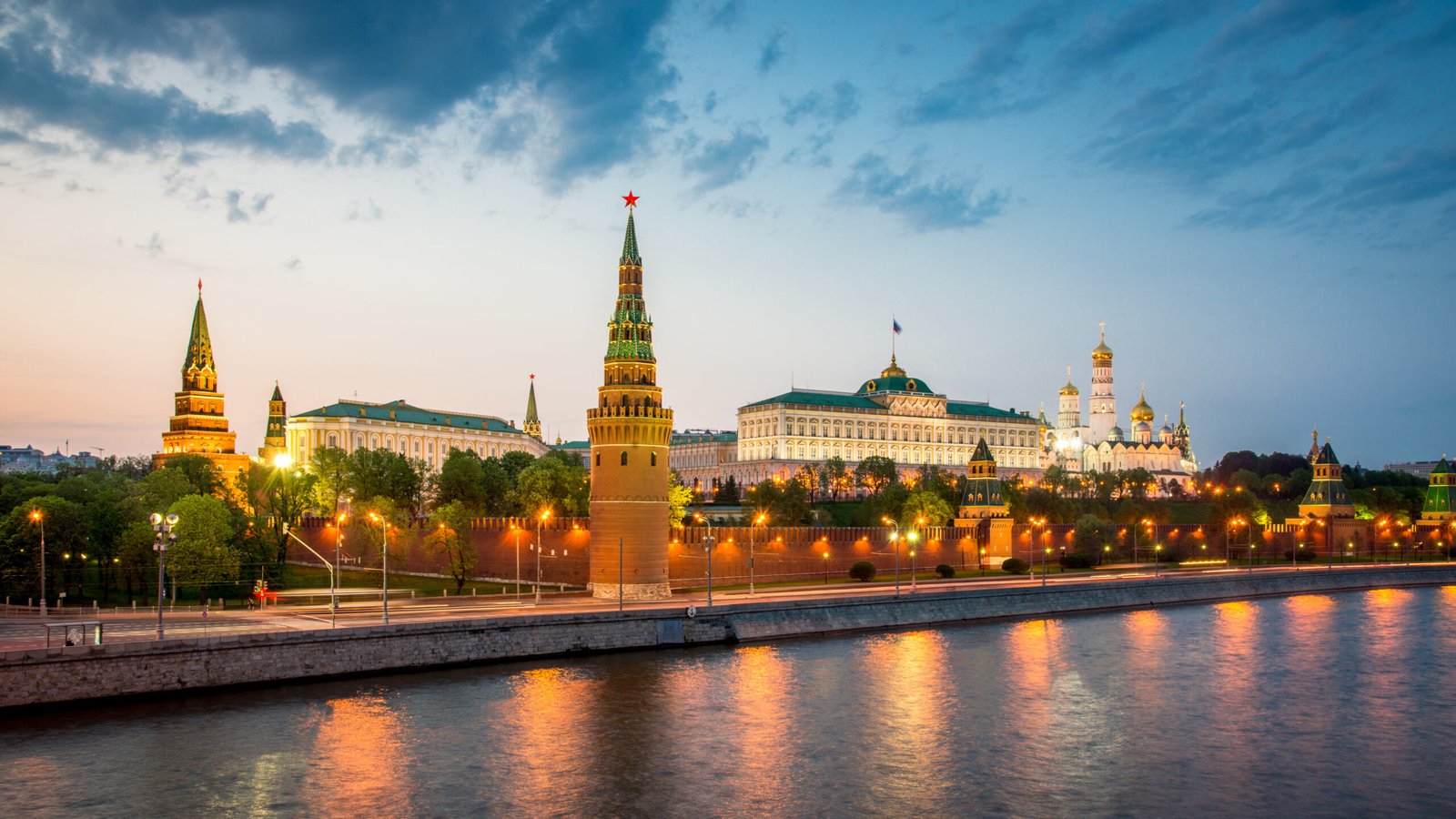
A few quotes first… • “A report that comprehensively examines nonviolent, cost-imposing options that the United States and its allies could pursue across economic, political, and military areas to stress—overextend and unbalance – Russia’s economy and armed forces and the regime’s political standing at home and abroad.” • “Today’s Russia suffers from many vulnerabilities—oil and gas prices well below peak that have caused a drop in living standards, economic sanctions that have furthered that decline, an aging and soon-to-be-declining population, and increasing authoritarianism under Vladimir Putin’s now-continued rule. Such vulnerabilities are coupled with deep-seated (if exaggerated) anxieties about the possibility of Western-inspired regime change, loss of great power status, and even military attack.” • “Providing lethal aid to Ukraine would exploit Russia’s greatest point of external vulnerability. But any increase in U.S. military arms and advice to Ukraine would need to be carefully calibrated to increase the costs to Russia...
NATO-Expansion-1024x605-1
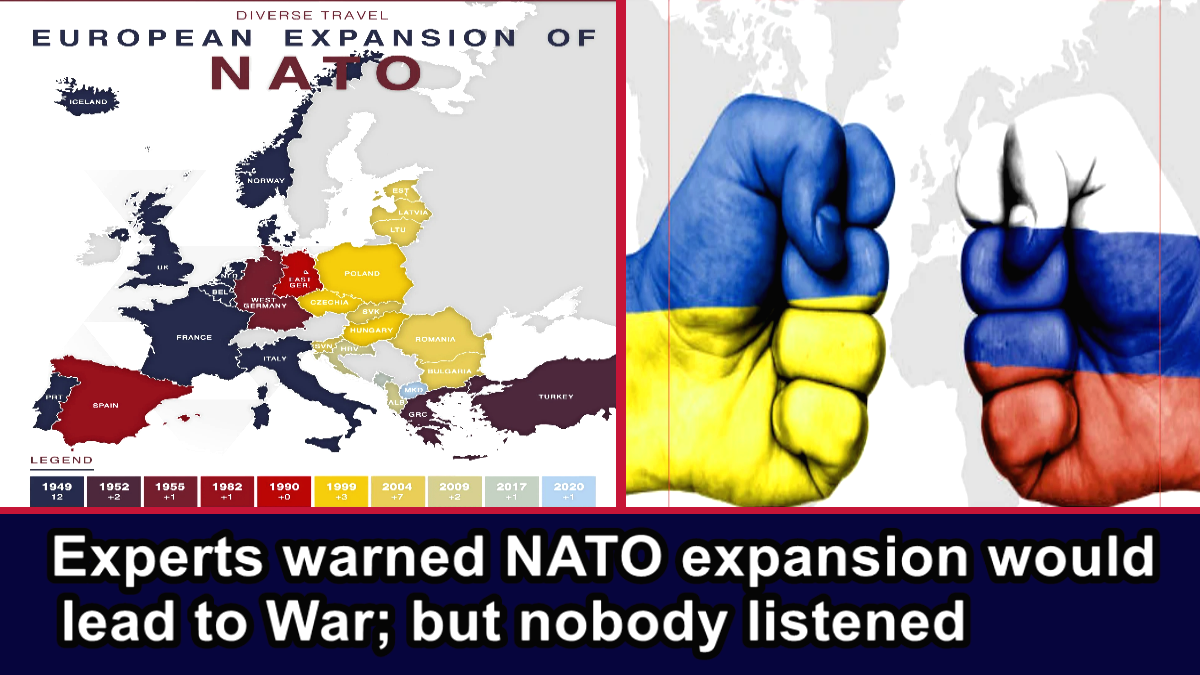
Wikimedia map of NATO expansion since 1949 created by Patrickneil.  Bryce Greene March 18, 2022 Originally posted on FAIR.org on March 4, 2022 Many governments and media figures are rightly condemning Russian President Vladimir Putin’s attack on Ukraine as an act of aggression and a violation of international law. But in his first speech about the invasion, on February 24, US President Joe Biden also called the invasion “unprovoked.” It’s a word that has been echoed repeatedly across the media ecosystem. “Putin’s forces entered Ukraine’s second-largest city on the fourth day of the unprovoked invasion,” Axios (2/27/22) reported; “Russia’s unprovoked invasion of Ukraine entered its second week Friday,” said CNBC (3/4/22). Vox (3/1/22) wrote of “Putin’s decision to launch an unprovoked and unnecessary war with the second-largest country in Europe.” The “unprovoked” descriptor obscures a long history of provocative behavior from the United States in regards to Ukraine. This history is important to understanding how we got here, and what...
5e6cb56f-d22b-49f7-95fc-a84f0ee5f3cd
03/1254616.shtml” target=”_blank” rel=”noreferrer noopener”>Read the interview here.
nato-war
Gordon M Hahn March 9, 2022 One of the ideational-cultural causes of the NATO-Russian crisis is what one author has called American hubris. This is a neo-imperial attitude engendered in the U.S. as a result of America’s post-Cold War status, now waning, as the lone superpower. Originally posted on Gordon Hahn’s homepage on March 3rd, 2022 A classic example of such hubris is the American view that Russia has no ‘right’ to a sphere of influence. The deception attached to this is that there is no threat to Russia from NATO expansion, a policy that will deprive Russia of a sphere of influence along its western borders. Of course, possession of a sphere of influence – which the U.S. actually claims globally – is not a right that one is given by God or fate, but it is won by the exercise of power and effective diplomacy. Ambition to a...