September 2021

Showing 1-10 of 4016 stories

Sort by
Categories

Year

Author / Contributor

Region

1a795db03cd9bb5ae20cbcd064053cc5.2-1-super.1-1
Jeffrey D. Sachs September 29, 2021 For decades, the American political class has intervened relentlessly and recklessly in countries whose people they hold in contempt. And once again they are being aided by America’s credulous mass media, which is uniformly blaming the Taliban victory on Afghanistan’s incorrigible corruption. Originally posted on Project Syndicate on August 17, 2021 NEW YORK – The magnitude of the United States’ failure in Afghanistan is breathtaking. It is not a failure of Democrats or Republicans, but an abiding failure of American political culture, reflected in US policymakers’ lack of interest in understanding different societies. And it is all too typical. Almost every modern US military intervention in the developing world has come to rot. It’s hard to think of an exception since the Korean War. In the 1960s and first half of the 1970s, the US fought in Indochina – Vietnam, Laos, and Cambodia –...
afghanistan-026-1
Neta C. Crawford Listen to this article here September 24, 2021 The U.S. invaded Afghanistan in late 2001 to destroy al-Qaida, remove the Taliban from power and remake the nation. On Aug. 30, 2021, the U.S. completed a pullout of troops from Afghanistan, providing an uncertain punctuation mark to two decades of conflict. For the past 11 years I have closely followed the post-9/11 conflicts for the Costs of War Project, an initiative that brings together more than 50 scholars, physicians and legal and human rights experts to provide an account of the human, economic, budgetary and political costs and consequences of the Iraq and Afghanistan wars. Originally published by The Conversation Of course, by themselves figures can never give a complete picture of what happened and what it means, but they can help put this war in perspective. The 20 numbers highlighted below, some drawn from figures released on Sept. 1, 2021,...
2D3CC331-64D5-45DE-B53D-A361772DAC1C
Listen to this article here With the end of the failed ‘forever war’ in Afghanistan, the US military-industrial complex needs to find another struggle to further enrich itself, and China now fits that bill Alex Lo September 24, 2021 “In the councils of government, we must guard against the acquisition of unwarranted influence, whether sought or unsought, by the military-industrial complex. The potential for the disastrous rise of misplaced power exists and will persist.” – President Dwight D. Eisenhower, farewell address, 1961 The “potential” of the military-industrial complex for mischief that Eisenhower warned against in his famous speech is now actual; indeed, it has been for some time now. Much of the “war on terror”, including the occupations of Iraq and Afghanistan, have been a gravy train for private contractors and arms makers. “The Forever War” may not have made America and Americans safer, but it has made the military-industrial complex...
us-china-kopia
Listen to this on Spotify September 22, 2021 Interview by Andrea Turi for the website of Centro Studi Eurasia e Mediterraneo on whose pages the Italian translation has been published: Charles “Chas” Freeman: “Il mondo sta tornando alla situazione in cui era prima che il Rinascimento europeo e l’Illuminismo, insieme alla rivoluzione industriale, consentissero al mondo atlantico di dominare il resto.” The interview was carried out by email. q. Mr Freeman, good morning, by thanking you for your willingness to answer my questions, I ask you the first question: In 1972, you were part of the US delegation following President Nixon who went to Beijing for the first time. How important was that event for your country, for the People’s Republic of China and for the whole world? It changed the world geopolitically at once. In the longer term, it facilitated the restoration of China to wealth and power, helped bring down the...
Mashood
Massoud leaving Bazarak in the Panjshir after our interview in August 2001, roughly three weeks before his assassination. Photo: Pepe Escobar We may never know the full contours of the whole riddle inside an enigma when it comes to 9/11 and related issues Pepe Escobar September 13, 2021 It’s impossible not to start with the latest tremor in a series of stunning geopolitical earthquakes.  Exactly 20 years after 9/11 and the subsequent onset of the Global War on Terror (GWOT), the Taliban will hold a ceremony in Kabul to celebrate their victory in that misguided Forever War. Four key exponents of Eurasia integration – China, Russia, Iran and Pakistan – as well as Turkey and Qatar, will be officially represented, witnessing the official return of the Islamic Emirate of Afghanistan. As blowbacks go, this one is nothing short of intergalactic. Originally published at Asia Times The plot thickens when we...
Utopia
Listen to this on Spotify 13 september, 2021 Contribution to GTI Forum(Great Transition Initiative) Can Human Solidarity Globalize? To envision a better world of tomorrow calls for great courage because the dominant paradigm reads There Is No Alternative. Or, to quote the Borg from the Star Trek: The Next Generation series, “Resistance is futile!” It is how the imagination of another now (to refer to Yanis Varoufakis’s book) is kept imprisoned. The aim is to silence and discourage all thoughtful, rebellious, and critical minds (and groups). Critique is tolerated if it is not too radical (i.e., does not go deep to the root causes of the present inequalities and suffering) and if it comes mostly from the Western (“more civilized”) part of the world. Originally published at The Great Transition Initiative We, the people from the Global South, however, have much to say about the past, present, and future of this world. And most of...
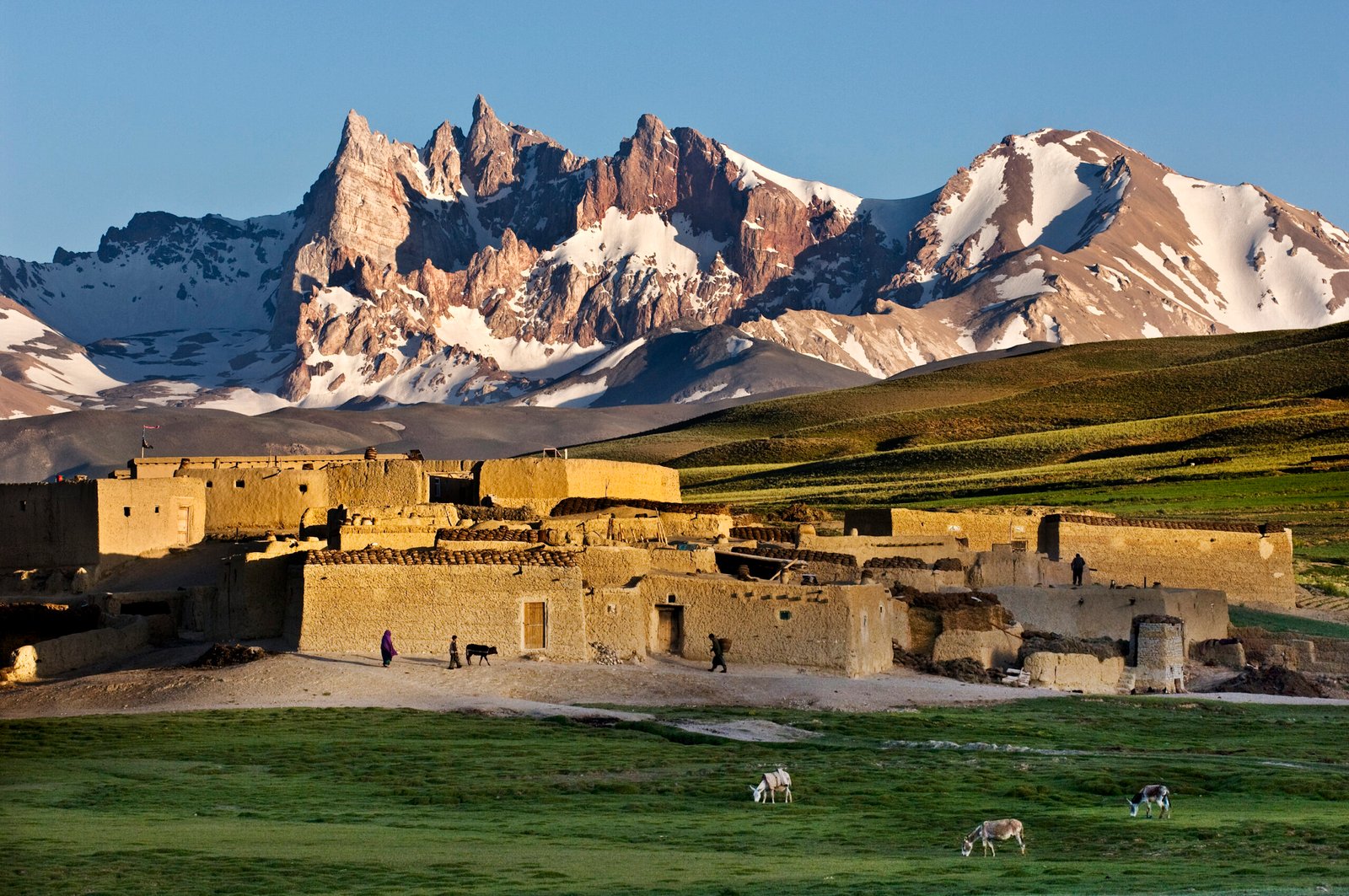
AFGHN-12819, Qala-e-Sabzi, Afghanistan, 2007. Donkeys grazing in fields.
Listen to this article Richard Falk September 14, 2021 Modified responses on Aug. 23rd to questions posed by Zahra Mirzafarjouyan, Mehr News Agency, and originally published on Falk’s homepage. • 1 Why could the Taliban capture Kabul and gain power so rapidly without considerable resistance from people and the army? The U.S. led NATO Afghan intervention and occupation was flawed in mission from its outset in 2001, and indeed in the period before the attack and large-scale, ambitious regime-changing, state-building occupation. In the post-colonial world, the military superiority of Western intervening powers has proved unable to shape the political outcomes of a prolonged struggle for the control of non-Western sovereign spaces, especially if the society is beset by unresolved tribal and ethnic conflicts, as well as by warlordism and drug cartels. In Afghanistan, as elsewhere, this line of observation proved to be once again validated, despite trillions of dollars spent...
911JO
September 11, 2021 Can be read together with this article which contains all the documentation When people ask me what I think of “9/11” my answer has always been: “I have not done any research on it myself but to me the official explanation leaves too many questions unanswered, such as: 1 • Why was the discussion only about who did it and how did they do it but never about why did someone do this? If you look at the fact that the objects of the attacks were the centers of the US/world’s financial, military and political power – and not just a train station or some infrastructure – you’d have a diagnostic indicator. 2 • Why did no US Airforce plane take off from St. Andrews Air Base? The standing mission of it is to keep the air space over Washington clean and shoot down anything that should...
Day_after_Saur_revolution_in_Kabul_773
Hear this on Spotify John Pilger September 9, 2021 More than a generation ago, Afghanistan won its freedom, which the U.S., Britain and their “allies” destroyed. As a tsunami of crocodile tears engulfs Western politicians, history is suppressed. More than a generation ago, Afghanistan won its freedom, which the United States, Britain and their “allies” destroyed. In 1978, a liberation movement led by the People’s Democratic Party of Afghanistan (PDPA) overthrew the dictatorship of Mohammad Dawd, the cousin of King Zahir Shah. It was an immensely popular revolution that took the British and Americans by surprise. Foreign journalists in Kabul, reported The New York Times, were surprised to find that “nearly every Afghan they interviewed said [they were] delighted with the coup.” The Wall Street Journal reported that “150,000 persons … marched to honor the new flag … the participants appeared genuinely enthusiastic.” The Washington Post reported that “Afghan loyalty to the government can...
us-army
U.S. Army NATO, the United States and its vassal-states in Afghanistan Håkan Wiberg †2010 Former TFF Board member and Associate 9 september, 2021 AS FAR BACK as it is possible to trace the history of what is now Afghanistan, it has alternately been invaded — by among others the Median, Persian, Mongol, British and U.S. empires — and served as the base of expanding regional powers. The history of modern Afghanistan begins in 1747, with the coronation of Ahmed Abdali of the Durrani clan. Re-published online at Nordic News Network British expansion in India soon presented Afghanistan with a new threat — which became a reality in 1839 with the first large-scale British invasion. Shortly thereafter came the Russian expansion into Central Asia, leading to the “Great Game” between the two empires for control of the region. Afghanistan was drawn into minor clashes and some major wars with both of...
BulbGlobe
1. The World After the Corona. 2. How Militarism Fuels Climate Change.3. The Military-Industrial-Media-Academic Complex (MIMAC).4. China, the Belt & Road Initiative And the West. 5. The Balkans and the Purpose of NATO.6. Nuclearism, the Threat of Nuclear Weapons and What To Do. Fortunately, they are also open to anyone anywhere in the world. More about this unique, topical series on this link where you must also register to participate in the global discussion. The idea is that you watch the lecture below first and then participate in the discussion about it. You register on the above link. If you read this after the six Zoominars have taken place – just watch the lectures and discussion below. Under each video lecture below, find the discussion that took place with hundreds of people worldwide on Zoom and over 300 on Facebook Live. About the weapons in and of themselves, the existential...
peace-blog-1020
Hear this on Spotify By Rachael Mellor September 7, 2021 Over the years people have found incredible inspiration in the brave words, actions, and leadership of peace heroes – Nelson Mandela, Martin Luther King Jr and Mahatma Gandhi, to name a few. They display courage, moral strength and compassion to gain the right to freedom and safety, regardless of political or religious differences. To achieve peace, we must compete against governmental institutions, law and order, high-level corruption, the global arms trade, injustices, human rights abuses, and persecution – often at risk to our own personal safety. Originally published at Better World Info What Better World Info has to offer Better World Info is a central information hub covering a vast range of peace topics, useful tools and reliable information specifically for peace activists. The site is here to help you, and to serve as a tool to support your project. The...