February 2021

Showing 1-10 of 5204 stories

Sort by
Categories

Year

Author / Contributor

Region

Qianlong-Emperor-and-Lord-Macartney
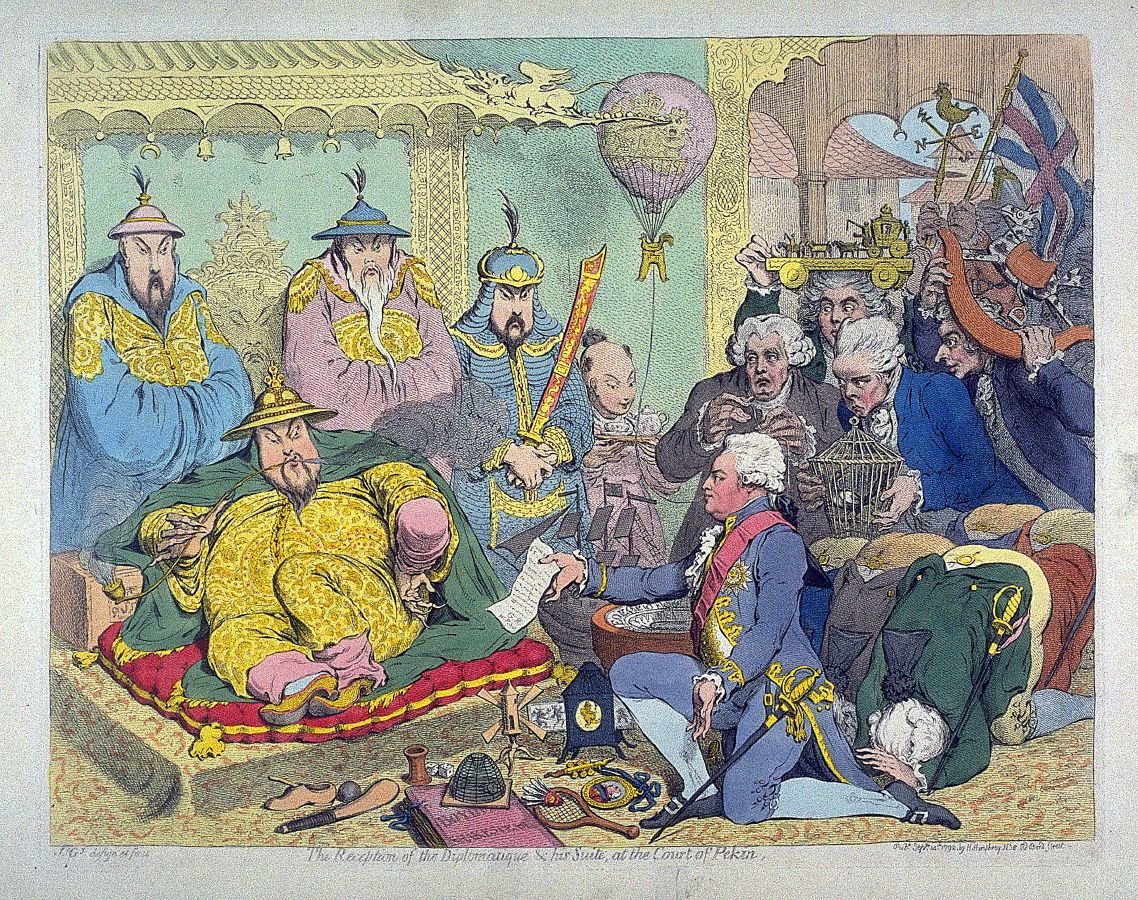
James Carter February 25, 2020 In popular understanding, the Qianlong Emperor’s rejection of Lord Macartney and King George III was an act of hubris, a failure to recognize the military might of Britain and the West, the last prideful act of a waning empire before a “century of humiliation.” But what if our understanding is all wrong? Originally posted on SupChina on September 9, 2020 “Our Celestial Empire possesses all things in prolific abundance and lacks no product within its borders. There was therefore no need to import the manufactures of outside barbarians in exchange for our own produce.” This was the Qianlong Emperor’s response, in part, to British Lord Macartney in September 1793. For a century, the British, like other seafaring Europeans, had been restricted by the “Canton System” that permitted commerce only at the port of Guangzhou (Canton), through official government monopolies, and during a certain season. Industrialists...
coronavirus
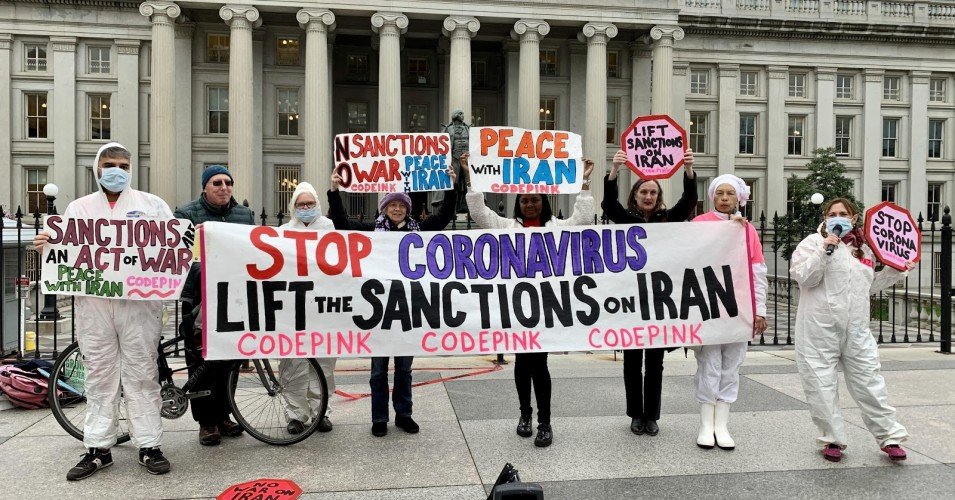
Negar Mortazavi and Sina Toossi February 25, 2020 Iranians’ stories reflect the devastating human costs of US economic sanctions that are often ignored by Washington’s foreign policy elite Originally posted on Global Research on December 8th, 2020 “My young cousin passed away last week,” an Iranian Twitter user recently lamented. “She needed medication for her cancer that doctors said can’t be found.” The tweet tragically went on: “Maybe she’d be alongside her little daughter now if she had this medicine and not under a pile of cold dirt.” These heartbreaking words are from journalist Katayoon Lamezadeh, one of thousands of Iranians who have taken to social media to speak of how sanctions have upended their lives. Their stories reflect the devastating human costs of US economic sanctions that are often ignored by Washington’s foreign policy elite and largely unknown to the American public. The assassination of Iranian scientist Mohsen Fakhrizadeh is the latest in a long-running pressure...
800px-Meeting_of_Jalal_al-Din_Rumi_and_Molla_Shams_al-Din
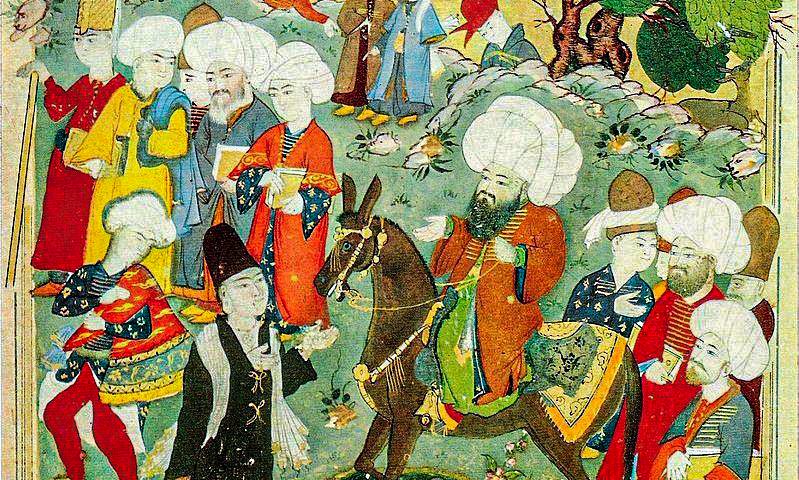
TFF is very proud to have published numerous articles and videos by one of the world’s most knowledgeable scholars on the Middle East in general and Iran in particular, Dr Farhang Jahanpour, Oxford, since he became an Associate in 2006 (and later Board member). It’s been such a delightful co-operation and a great contribution to TFF and our engagement with Iran since 2012. Fortunately, this incredibly prolific writer continues to publish with us here on The Transnational, but we believe that you will also like to know that he has recently set up his own homepage with many more articles – a treasure on Persian culture, history, literature and – well, much more. Since it seems to have been a Western media-political pastime to only publish negative, demonising stuff about Iran and omitting its amazing culture dating back to 7000 BC, it is so important that there is a homepage...
Martin-Luther-King-1515787257
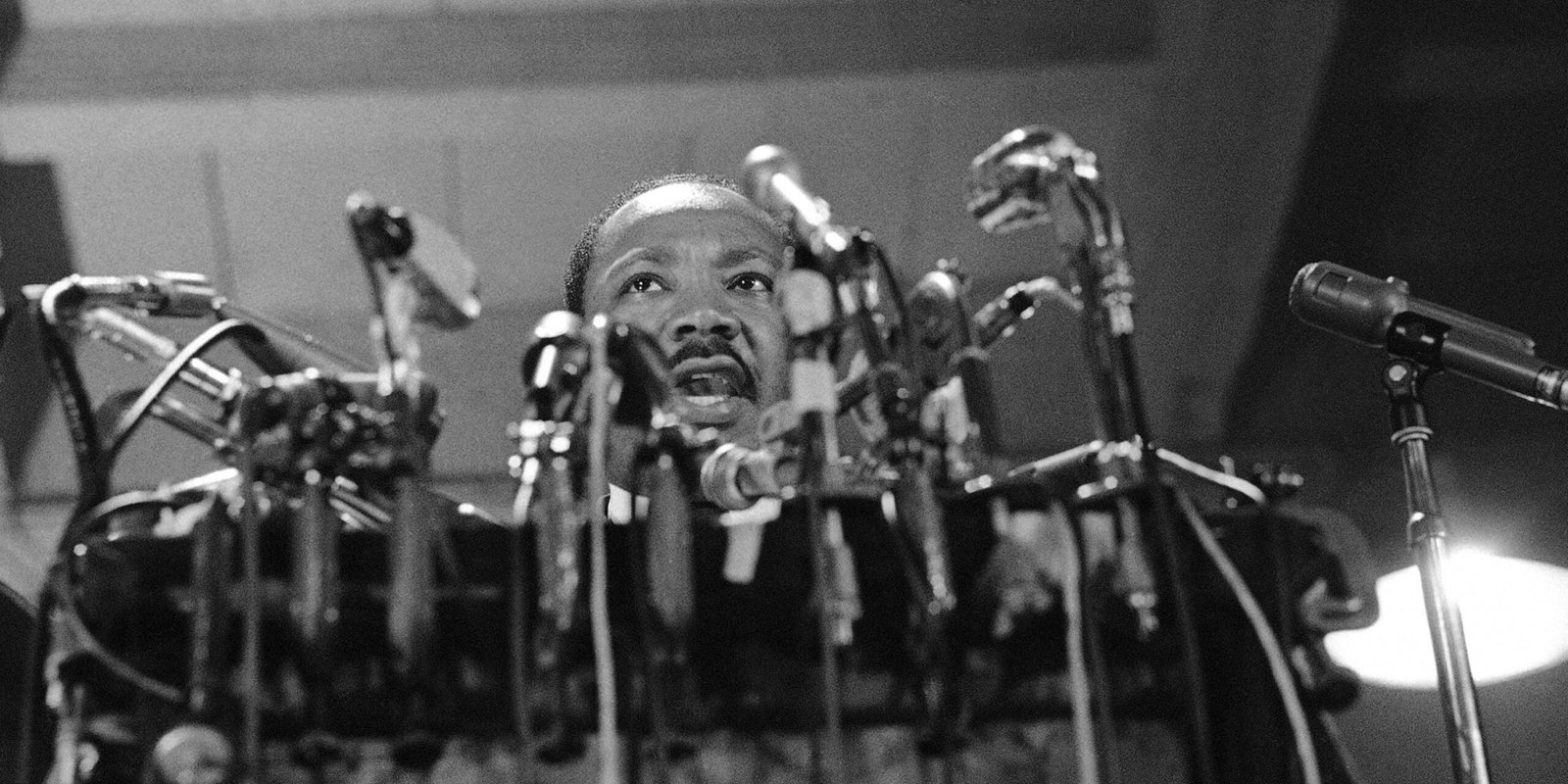
Dr. Martin Luther King, head of the Southern Christian Leadership Conference (SCLC), delivers his speech that opened the National Conference for New Politico Convention in Chicago, Sept. 1, 1967. King, facing a battery of microphones, called for an end to the Vietnam fighting. February 22, 2021 Zaid Jilani Martin Luther King Jr. was much more radical than he is often portrayed. IN 1999, The polling agency Gallup set out to determine the individual American’s most admired in the 20th century. Mother Teresa came in first, with 49 percent of Americans putting her at the top; the Rev. Dr. Martin Luther King Jr. ranked second, with 34 percent placing him on the same list. But, the polling agency would later write, “King was far from universally revered during his lifetime.” Originally published by The Intercept They noted that in 1966, 63 percent of Americans held a negative view of the civil rights leader, while...

d670278af5c6ae4eb9f058f45f1b5bda78e9b55c-698x418-1
18. februar, 2021 TFF er stolt over at være den institution i verden, som flest Nobelpris-nominerede (7) er knyttet til: Scilla Ellworthy, Richard Falk, Johan Galtung, David Krieger, Evelin Lindner, Jan Oberg og David Swanson. Den norske Nobelkomite har mottatt nær 400 nominasjoner for 2021. Å velge den beste er selvsagt en krevende oppgave. Men den ville bli mye enklere om det kunne bli slutt på den uryddige blandingen av juss og politikk som i alle år har preget den norske forvaltningen av prisen. Som forklart i min nyeste bok Medaljens Bakside er oppgaven å drive fredspolitikk med den retning og ramme som Nobel beskrev i sitt testament.Det første og viktigste grepet – som også ville gjøre avgjørelsen mye enklere – er å tolke testamentet, stille det selvsagt nødvendige og grunnleggende spørsmålet: Hva ville Nobel med den “prisen for fredsforkjempere” som han beskrev i sitt testamente i 1895? Oprindeligt publiceret...
Shibuya-Crossing-in-Tokyo-Japan
The Shibuya Crossing in Tokyo – what would Gandhi think and say today? Ayako Uno February 17, 2021 Since 2000, I have been teaching courses such as “History of South Asia” as a part-time lecturer at the International Christian University (ICU), my alma mater which was founded after the WWII in order to raise peacebuilders in war-devastated Japan, and I always introduce Gandhiji in my courses. Gandhiji is well known and respected in Japan as “the Father of the Nation of India” who successfully led the non-violent struggle for independence. So young people in Japan that I teach usually have learned something about Gandhiji before. But when I introduce Gandhiji’s life and thinking, many of the students are surprised to learn that his life-long dream of realizing Swaraj or “self-rule” was shattered by Partition. When I invite the students to read Gandhiji’s writings, such as parts of his Autobiography and...
SchoolsNotBombs
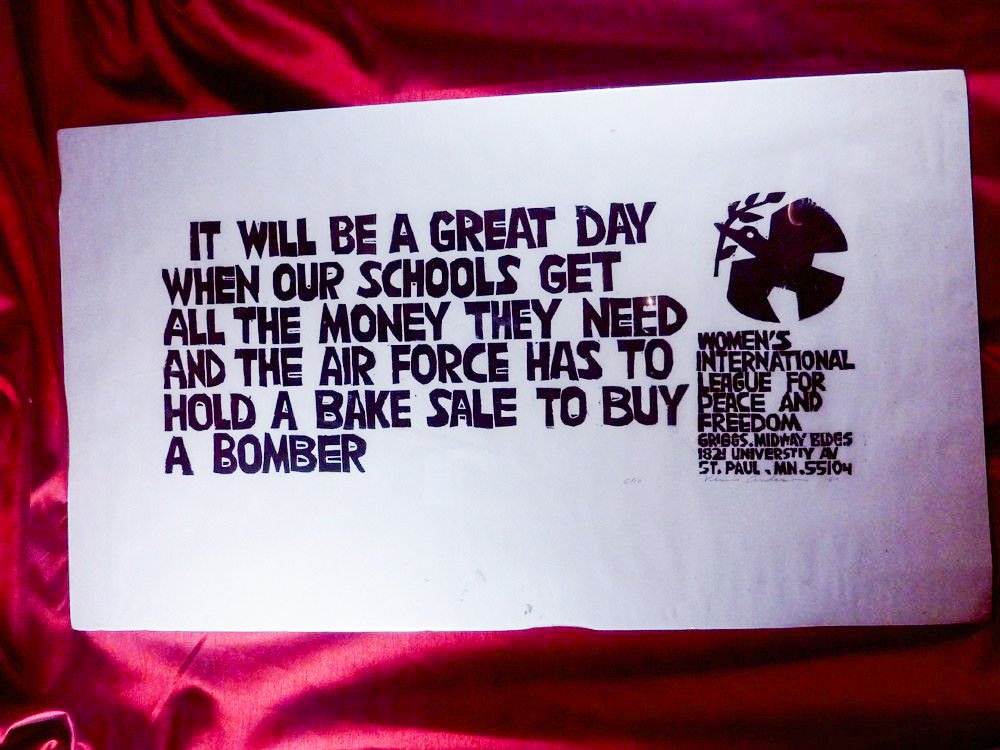
The 1987 Right Livelihood Award Acceptance Speech  Peace appeals to the hearts; studies to the brain. Both are needed, indeed indispensable. But equally indispensable is a valid link between brain and heart. The history of peace studies is, of course, a collective story, and it did not start in the 1950s – it is as old as humankind, as is the history of war studies, the study of war with warlike means. Originally published at Transcend I guess the same applies to what today is called security studies, or the study of peace with warlike means, balance of power, balance of terror, deterrence through credible retaliation etc. Needless to say, that is not what peace studies are about. Peace studies are about peace with peaceful means, and I think it is generally accepted today that this has to be done in a holistic manner and with a global perspective, or...
branding-un
February 15, 2021 By Mona Ali Khalil By all accounts, 2020 has been a terrible year so far — but is it worse than 1920? In 1920, World War I, which killed 16 million people, had just ended. The two-year influenza pandemic that followed killed 50 million more. In 2020, the Covid-19 pandemic has already killed more than one million people and infected more than 40 million with infections surging worldwide. Originally published at Passblue With 20/20 hindsight, the 20th century was a terrible one. It heralded two world wars that together took more than 85 million lives. The collapse of the Ottoman Empire ushered in an era of British and French colonialism that led to deadly decolonization and national liberation battles in Latin America, Africa and Asia. It was a century of genocides — including the Holocaust in Europe — which was the worst and most remembered — as well...
LeaSuter_1200-72dpi
Latest work experiences Co-founding president of the Forum of a Culture of Peace / Forum für Friedenskultur in Switzerland (founded Nov. 2020). UN Association Switzerland (GSUN) – Secretary-General 09.‘18 – nowEstablish and manage a professional secretariat for GSUN, a Swiss non-profit association whose mission is to provide a platform to foster the dialogue between Swiss civil society and International Geneva, to promote the UN values and multilateralism and to discuss the role of Switzerland in global governance. UNA Switzerland is part of the World Federation of UN Associations (WFUNA). • elaborating annual strategic plans and thematic projects• developing funding proposals and financial strategies• developing and implementing communication strategies• developing and maintaining partnerships and networks• working with various event formats increasing engagement and inclusivity• establishing administrative procedures and optimizing processes, including data and knowledge management. PeacePrints – Peace Reporter 01.‘17 – now“Stories of peace from places of war”Produce and publish in-depth...
echo-grid-BefmnpXPZ80-unsplash
Dr. Gary G. Kohls February 9, 2021 A half-century ago, The New York Times accused Martin Luther King Jr. of “slander” for decrying the Vietnam War and The Washington Post detected “unsupported fantasies” in his speech, recalled more favourably by Gary G. Kohls. Originally published on Jan. 19, 2014; slightly edited for the time element. Originally posted on Consortium News on January 19, 2021 Martin Luther King Jr.’s Riverside Church speech was titled “Beyond Vietnam: A Time to Break Silence.” It was delivered exactly one year before his April 4, 1968 assassination in Memphis. In the speech, King declared, “A nation that continues year after year to spend more money on military defense than on programs of social uplift is approaching spiritual death.” The people who heard that speech recognized it as one of the most powerful speeches ever given articulating the immorality of the Vietnam War and its destructive impact...
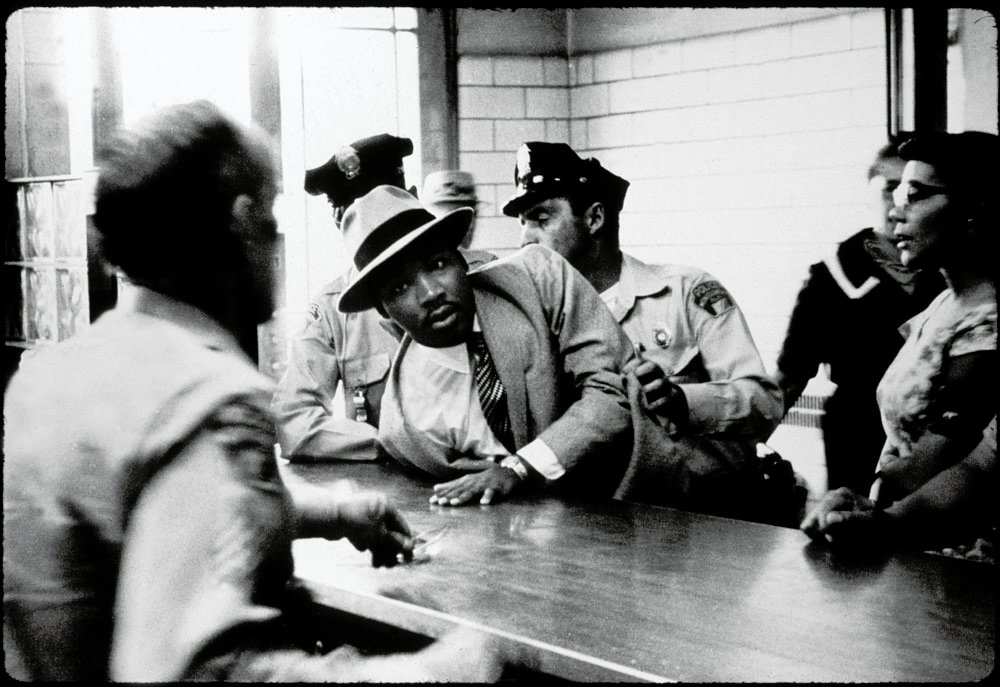
arrest
Kazu Haga February 9, 2021 Nonviolence is not simply the absence of violence, but about taking a proactive stand against violence and injustice, and working to repair the harm. Originally posted on Waging NonViolence on January 16, 2020 The following is an edited version of a chapter from Kazu Haga’s new book, “Healing Resistance: A Radically Different Response to Harm,” published with permission from Parallax Press. In Kingian Nonviolence, a philosophy developed out of the teachings of Martin Luther King Jr., there is a distinction made between nonviolence spelled with a hyphen, and nonviolence spelled without a hyphen. “Non-violence” is essentially two words: “without” “violence.” When spelled this way, it only describes the absence of violence. As long as I am “not being violent,” I am practicing non-violence. And that is the biggest misunderstanding of nonviolence that exists. I live in one of the most diverse neighborhoods in Oakland, with an equal mix of...