January 2018

Showing 1-10 of 4181 stories

Sort by
Categories

Year

Author / Contributor

Region

GeneSharp
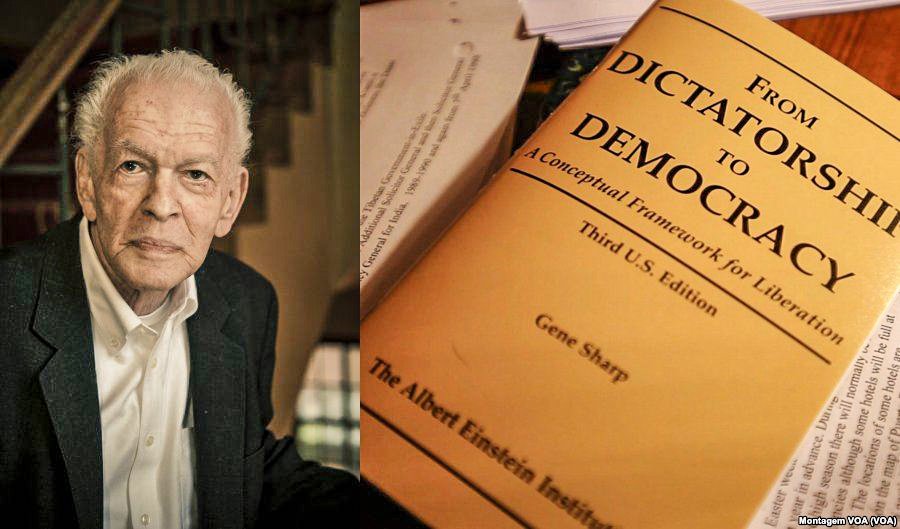
Obituary Just a week after his 90th birthday Gene Sharp passed away. The journal New Statesman once described Gene Sharp as the “Machiavelli of Nonviolence” and Thomas Weber labelled him “the Clausewitz of Nonviolent Action.” Who was this man and what is his contribution to our understanding of the possibilities to use nonviolent actions in large scale societal conflicts? Gene Sharp completed his baccalaureate in 1949, just a few scant years after the close of World War II, and quickly turned his attention to the study of nonviolence. After serving nine months in prison for being a conscientious objector to the Korean War, Sharp worked as secretary for A.J. Muste. He next joined the editorial team of Peace News in London before accepting an invitation from Arne Næss to join him in Oslo with Johan Galtung and others to study the philosophy and practice of Mohandas Gandhi. Throughout this time,...
jonathanpower
    President Donald Trump said it would never happen. Now it is. During the election he said he did not want more interventions – no more Iraqs, no more Afghanistans,  Libyas or Syrias. A year into his presidency the American military is involved in all these places and he’s aching to get boots on the ground in North Korea and perhaps even Iran. At least he’s not thinking about it in Ukraine – that would really set the cat among the pigeons. Last week his secretary of state, Rex Tillerson, said that waging war in Syria is “crucial to our national defence”. This is a big deal but few seem to be talking about it. The pundits and congressmen are either asleep at the switch or taking a holiday. It’s true that Barack Obama initiated this Syrian intervention but he never intended it to be an occupying force but...
samuelsen
  Af Jan Øberg Et tidssvarende og relevant forsvarsforlig ville være et hvor man fordomsfrit og med bred ekspertise havde spurgt: Givet at verden ser ud som den gør – og kan forventes at gøre i de næste 20-30 år – hvilken politik på de relevante militære og civile områder bør Danmark så vælge for at få færrest mulige fjender, bidrage til reduktion af krig og risici herfor hjemme og ude og i det hele taget bidrage til en fredelige verden? Det netop indgåede forsvarsforlig indebærer istedet en kraftig militær oprustning og øget beredskab for at deltage i international krige under USAs ledelse. Det åbner mulighed for at Danmark anskaffer Tomahawk-krydsermissiler og bygger helt på et postuleret, u-argumenteret trusselsbillede. Der køres en tur ad de udlagte skinner uden tanke på endestationen bare nogle få kilometer længere fremme. Og den endestation hedder ikke fred i nogen rimelig intellektuel forstand af bergebet....
056192FA-BCE3-4762-A827-784B44E720C9_w1023_r1_s
By Esfandyar Batmanghelidj Via lobelog.com The most important sentence in the Persian language is arguably “Baba ab dad.” The sentence means “father gave water.” It is the first sentence taught to Iranian children when they are learning to read and write. Beyond its phonetic simplicity, it establishes the sense of obligation to one’s parents that is so indicative of an Iranian childhood. It also establishes an expectation that elders will care for young and that the powerful will care for the powerless. In a sense, “father gave water” is the most succinct articulation of the promise of the social contract in Iran. In the assessment of experts, Iran is “water bankrupt,” a terminology that echoes the country’s economic woes. In a 2016 paper, Kaveh Madani, Amir AghaKouchak, and Ali Mirchi determine that Iran’s water crisis is mostly man-made, though exacerbated by climate change. Drivers of the water crisis are myriad...
Screenshot
  Originally published here and produced by Physics-Astronomy.com
famine
  January 27, 2018 Mass starvation killed more than three million people in Stalin-era Ukraine in the 1930s and more than 18 million in China during Mao Zedong’s Great Leap Forward in the late 1950s and early 1960s. Yet by the start of this century, famines like those were all but eliminated, Alex de Waal says in his new book, Mass Starvation: The History and Future of Famine. The number of people dying in famines around the world has dropped precipitously, particularly over the last thirty to fifty years. Via phys.org Those gains, though, are fragile, and could be starting to be reversed, says de Waal, who is the executive director of the World Peace Foundation and a research professor at the Fletcher School. For his book, he compiled the best available estimates of global famine deaths from 1870 to 2010, and used that data to analyze trends. Tufts Now...
18932770_401
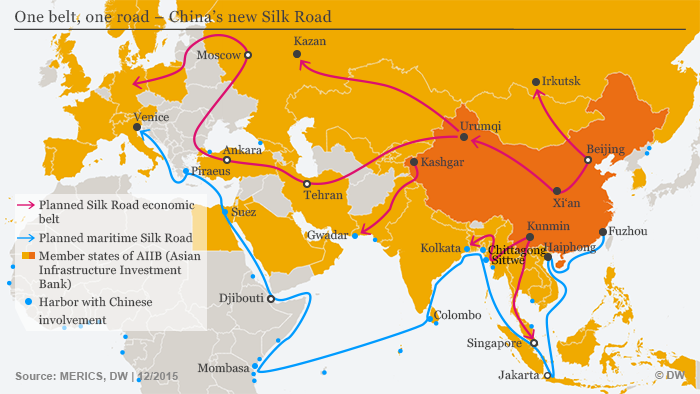
With its New Silk Road mega-project, China is building on old traditions. But hard-core geostrategic interests, not nostalgia, are guiding Beijing’s investments. Miodrag Soric reports from Tbilisi, Georgia. Via dw.com When it comes to the economy, the Chinese government thinks and acts quickly. And the same is true of China’s exports. Currently most products exported to Europe are transported by sea, but Beijing is looking for alternatives, and has its eyes set on new land routes. Four years ago, the Chinese President Xi Jingping announced the mega-initiative “New Silk Road” (One Belt and One Road, or OBOR for short). This project involves various transport corridors from China to the west – for example through Russia and Belarus; or along roads and railways through Central Asia, Azerbaijan, Georgia, and Turkey; or on alternative routes through Pakistan to the Indian Ocean, and from there by ship. Beijing has chosen several routes so it can pick the most...

Screenshot
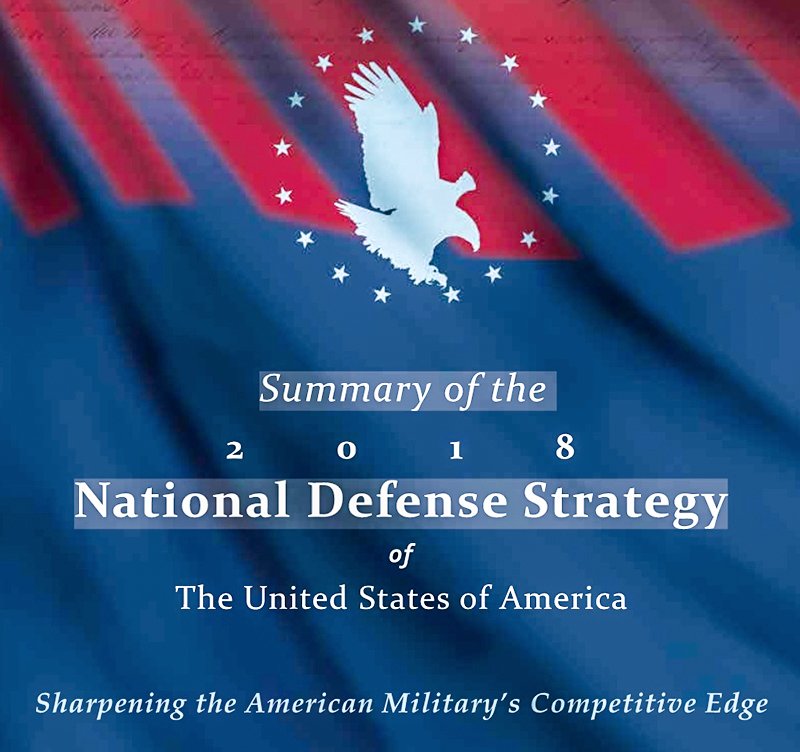
    Excerpts from Summary of the 2018 National Defense Strategy of the United States of America: “For decades the United States has enjoyed uncontested or dominant superiority in every operating domain. We could generally deploy our forces when we wanted, assemble them where we wanted, and operate how we wanted. Today, every domain is contested air, land, sea, space, and cyberspace.” In plain words: An admission of two things, namely that the US considers it right, or natural, to dominate the entire world and do what it pleases. And that it’s relative power is decreasing. • 
”Challenges to the U.S. military advantage represent another shift in the global security environment. Our network of alliances and partnerships remain the backbone of global security. China and Russia are now undermining the international order from within the system by exploiting its benefits while simultaneously undercutting its principles and ‘rules of the road.’...
FarhangOld
By Javad Heirannia, The Tehran Times January 24, 2018   TEHRAN – Professor Farhang Jahanpour, part-time tutor on the Middle East in the Department of Continuing Education at the University of Oxford, tells the Tehran Times that “President Trump’s recent speech on Iran was the most belligerent speech by any U.S. president about Iran since the Iranian revolution.” “As everybody knows, the Joint Comprehensive Plan of Action (JCPOA) was not a bilateral agreement between Iran and the United States,” Jahanpour tells the Tehran Times in an exclusive interview. Following is the full text of the interview:   Q: President Trump has decertified the JCPOA. How important is this decision for the survival of the nuclear agreement? A: President Trump’s recent speech on Iran was the most belligerent speech by any U.S. president about Iran since the Iranian revolution. However, its importance for undermining the nuclear agreement should not be exaggerated....
C-Span
The U.S. foreign policy elite still wants the Middle East for its oil and its strategic location. By Edward Hunt, January 19, 2018. Originally published by Foreign Policy In Focus here • In recent testimony before the Senate Armed Services Committee, four former U.S. diplomats provided remarkably candid commentary on recent U.S. involvement in the Middle East, revealing a number of the most closely guarded secrets of U.S. diplomacy. The four former diplomats emphasized the importance of the region’s oil, spoke critically about the weaknesses of U.S. strategy, made a number of crude comments about U.S. partners, displayed little concern about ongoing violence, and called for more “discipline” throughout the region. One of the former diplomats, James Jeffrey, criticized the Obama administration for withdrawing U.S. forces from Iraq in 2011 rather than going through with a secret deal to maintain a secret network of military bases in the country. Even...
putin
  By Stephen F. Cohen Delivered on the annual Nation cruise, December 2, 2017, introduced by Nation Editor and Publisher Katrina vanden Heuvel.     Jan Oberg comments Listening to professor Cohen gives you hope. Hope that there is something called solid scholarship and the courage to share it publicly in spite of the incredibly, systematic biases about Russia and Vladimir Putin in the Western media and policy circles. It’s a concise presentation, making very clear points in the best of academic traditions. Cohen debunks a series of central domain assumptions which – and there must be a purpose – shape the Western generalized view of Russia/Putin in this era of the Second Cold War. Any student, scholar and concerned citizen should see this before talking about these issues.  
LoudAnd
US National Defence Stratgey In Plain Words: Tragi-Comic! Defence News