
World Order afterthe Lebanon War

There has been much commentary on the significance of the Lebanon War. There is an unresolved debate about whether there was a victorious side in the war, and even what the idea of victory means. There are various suggestions about how to prevent a new war between Israel and Hezbollah, whether by relying mainly on the UN stabilization force or by reviving diplomacy between Israel and its various adversaries. Is it time to talk with Hezbollah and Hamas? What does the inconclusiveness of the war tell us about the benefits and limitations of military superiority in such a conflict? Could Israel have used its military capabilities more effectively, or were deeper structural restraints operative? These are all important issues, deserving of reflection and dialogue, and hopefully encourage a turn away from violence by all sides in their search for peace and security.

Beyond these immediate concerns lies the question of world order, and the extent to which some gaps and weaknesses were disclosed by the Lebanon War and its outcome. In a deep sense this question of the shape of world order has been present at least since the collapse of the Soviet Union in the early 1990s. It was given a temporary spin by the first Bush president, George H.W, Bush, who introduced the phrase `a new world order’ to describe the possibility of using the UN Security Council as an effective instrument of collective security in the aftermath of the Cold War. The Security Council was no longer gridlocked by the pervasive antagonism between East and West, as was shown by the mandate to reverse Iraqi aggression against Kuwait in the first Gulf War. It seemed possible to implement the Charter promise to protect victims of aggression and conquest by enlisting the world community as a whole in an undertaking of collective self-defense.

There were many criticisms of the manner in which the UNSC gave unrestricted discretion to an American-led coalition in 1991 to take over the conduct of the war, determine its goals, and control the dynamics of post-conflict diplomacy. But the undertaking did effectively restore Kuwaiti sovereignty, and in that sense could properly proclaim `mission accomplished.’ But no sooner were the guns silent in Iraq than the idea of a new world order was quietly abandoned by Washington, put back `on the shelf’ as one senior American diplomat described the new mood. On reflection, the US Government seemed reluctant to affirm UN authority to such an extent, or to find itself assigned unwelcome undertakings in the future by a more confident Security Council.

In any event, subsequent developments during the 1990s moved the United States away from a reliance on the UN to address world order challenges. The failure of peacekeeping in Somalia (1993), the non-response to genocide in Rwanda (1994), and the apparent ineptitude of the UN in Bosnia, especially the dismal spectacle of UN peacekeepers standing by as virtual spectators during a series of events, culminating in what most of the world has regarded as the massacre of some 6,000 Muslim males at Srebrenica in 1995, a perception that continues to be contested be some responsible critics.

To blame the UN for these world order setbacks is to miss the central point that the UN can only do as much as it is authorized to do by its major members, above all the United States. These developments that did so much to undermine the UN took place during the presidency of Bill Clinton, a moderate, supposedly internationally minetworked world civil society acting in unison. And still others emphasized the revolutionary relevance of climate change, bringing about extreme weather in the form of tsunamis, hurricanes, polar melting, droughts, and disease, threatening human catastrophe that could be averted only if effective global governance were established as a matter of urgency.

All of these developments have greatly complicated our understanding of the nature of world order in the 21st century, but we have yet to absorb the implications of the 9/11 attacks on the United States, and the American decision to declare a `global war on terror’ in response. The Lebanon War (as well as the Iraq War) reinforces what I would call the unlearned lessons of 9/11.

The most important of these is the change in the nature of power and security: even the most traditionally powerful state is now vulnerable to a devastating attack by a determined and skilled non-state actor, and unlike an enemy state, this adversary is itself basically invulnerable to a debilitating counter-attack by military means. Such an actor occupies no territory, and offers no targets, and has no leadership that can be persuaded to surrender. The failure to heed the lesson of 9/11 resulted in relying on a war strategy to address the adversary instead of adapting the response to the non-state nature of the threat. What was appropriate after 9/11 was not a generalized war, but a set of particularized responses associated with greatly improved international law enforcement possibly supplemented in exceptional situations by special forces operations undertaken with the consent of either the territorial government or the UN. Such a police approach, to be successful, would need to be combined with concerted efforts to address whatever legitimate grievances had played some part in motivating such extreme violence.

What does the Lebanon War add to this picture? It reinforces in a more vivid fashion this new ratio of power with respect to combat between state power and a non-state adversary. The military machine of the state can inflict virtually unlimited destruction and cause great suffering to civilian society, and yet it cannot consistently destroy the capacity of its non-state adversary to strike back.

Israel had repeatedly defeated and deterred Arab states that had challenged its security in a number of wars. Its military might and skill had been successfully used in the past to achieve a series of political victories in a series of wars that expanded its territory, raised its prestige, intimidated its neighbors, while creating a reputation of invincibility. But in this different world order, relying on military muscle against a seemingly weakly armed opponent will not yield a victory, even for Israel. Instead, militarism now exposes the vulnerability of supposed military powerhouses to the increasingly effective tactics of non-state political adversaries. Of course, both sides learn within their respective paradigms. Israel adapts future war plans to overcome failure in Lebanon, while Hezbollah tries to anticipate these adjustments in planning to mount an even more devastating resistance in the course of the next flair-up.

In the face of experiences in Iraq and Lebanon, the frustrated states, addicted as they seem to be to military solutions for political problems, are likely to go back to their drawing boards, devising new weapons and tactics, but convinced that in the future it will be possible to restore the relevance of superior military power as measured by wealth and technological capacity. This will be a costly mistake. It overlooks the extent to which war is becoming dysfunctional in the 21st century, wasting incredible amounts of resources that could be put to much better uses in raising living standards and creating a more stable, cooperative world.

If military power is not the answer, what is? It has never been more important to find sustainable solutions to the deep, unresolved conflicts of the Middle East. The problems of Israel could be most reliably addressed by a fair political compromise that acknowledges Palestinian rights, restores Syrian territory, and produces a full withdrawal from Lebanese territory.

The United States could similarly gain security and confidence by disengaging from wars that have no foundation in law or morality, and joining with other countries to protect the societies of the world from extremist violence, constructing arrangements for improved international cooperation and for global governance. It is instructive to take account of the greatest achievement of Europe since 1945, which is not, as generally believed, the high level of economic integration, but rather the truly remarkable establishment of a culture of peace that has made the outbreak of war within the boundaries of the EU virtually unthinkable.

An appreciation of the Lebanon War from the perspective of world order may encourage this perception that the viability of the war system was based on being able to limit the playing field of international conflict to sovereign states exercising governmental control within recognized international boundaries. Even this role for war has been earlier deeply challenged by the advent of weaponry of mass destruction, especially nuclear weapons, the existence of which continues to threaten humanity in a variety of ways.

But with the rise of non-state actors as international players, modalities of war are more and more likely to lead to the persistence of deadly conflict rather than to victory. The United States currently spends more on its military capabilities than the rest of the world combined, and yet it has never in its history felt as vulnerable to attack or as unable to translate battlefield outcomes into desired political results.

All in all, the Lebanon War is likely to be remembered not for the birth pains of ‘a new Middle East’ (Condoleezza Rice), but as the death throes of a system of world order that accepted war as the inevitable basis of stability and change in relations among sovereign states.
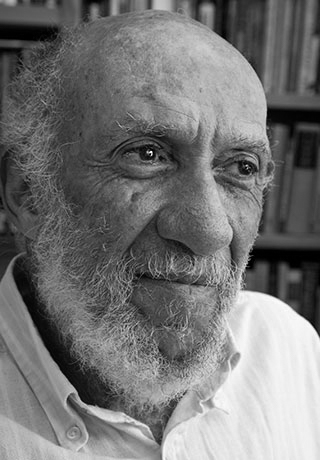

Professor Falk became an adviser to TFF when it was established in 1985.

Share

Leave a Reply

Your email address will not be published. Required fields are marked *

Related Posts

Peace is promoted by constructive proposals and dialogue Four preceding PressInfos have expressed concern over — and criticised — the ongoing, militarisation of the EU. Some will say: but there are no alternatives. We believe that there are always alternatives, that democracies are characterised by alternatives and choice, and that openly discussed alternatives will improve the quality and legitimacy of society’s decision–making. In addition, it is an intellectual and moral challenge to not only criticise but also be constructive. If we only tell people that we think they are wrong, they are not likely to listen. However, if we say: what are your views on this set of ideas and steps? — we may sometimes engage them in dialogue and sow a seed. Most people in power circles live their daily lives in in a time frame and a social space where certain ideas, viewpoints and concepts are just not...
Photos © TFF 2000 Read PressInfo 90 “Lift the Sanctions and Bring More Aid to Yugoslavia” See Pictures from Belgrade © TFF 2000 Please reprint, copy, archive, quote or re-post this item, but please retain the source.
Av FRANK SØHOLM GREVIL 16 augusti 2004  Vi er nu nået til tredje akt i det absurde teaterstykke, der i analogi med de store skueprocesser i Moskva 1936-38 er blevet døbt ‘Grevil-sagen’. Første akt bestod i min anonyme fremlæggelse af egenhændigt nedklassificerede rapporter i Berlingske Tidende i februar og marts. Andet akt udgjordes af min fremtræden med navn og billede i Information i april samt den efterfølgende mediestorm, som uden min direkte medvirken kostede en forsvarsminister taburetten samt en sigtelse for brud på tavshedspligten. Tredje akt bliver en retssag, hvor jeg står tiltalt for at have overtrådt straffelovens bestemmelser om uberettiget videregivelse eller udnyttelse af fortrolige oplysninger. Statsanklageren har ovenikøbet valgt at påberåbe sig særligt skærpende omstændigheder. Da jeg aldrig har modtaget betaling for at stille rapporterne til rådighed eller lade mig interviewe, må det skærpende bestå i, at “videregivelsen eller udnyttelsen er sket under sådanne omstændigheder, at det påfører...

Recent Articles

Jan Oberg May 15, 2026 Go to this Fox News page and scroll the whole way down: President Donald Trump tells the world that his meeting with President Xi Jinping yielded a lot of very concrete political and economic results – of course, only where the Chinese side, according to him, agreed with him. He does not mention the Taiwan issue, but Secretary of State, Marco Rubio, says that it did not feature prominently in their talks and that the US policy on Taiwan has not changed. Then go to China Daily – or Global Times – and you will see that for the Chinese it is framework, principles, structure of cooperation etc. that matters – all embedded in the overall idea of “constructive bilateral relationship of strategic stability.” Nowhere is any concrete agreement or deal – all that Trump refers to – mentioned. At the general level, this gives you insights into the very different social...
Lena Petrova of “World Affairs In Context” with more than half a million subscribers on YouTube wanted to explore what a peace researcher like me has to say about, among other things, the First and the Second Cold War and why eethics has disappeared from politics. I am particularly happy about this conversation that also yielded an amazing number of very appreciative comments on YouTube. No doubt, people are longing for alternatives, including peace perspectives.
The MIMAC – Military-Industrial-Media-Academic Complex – drives the world’s rampant militarism and wars without end. Here is a short reflection of how it works against all interests of humanity. #5 deals with why there is no real enemy or threat images/analysis. It’s all ex-post constructions. And, btw, theTFF Peace Pulse is now on Rumble.

TFF on Substack

Discover more from TFF Transnational Foundation & Jan Oberg.

Most Popular

Jan Oberg May 15, 2026 Go to this Fox News page and scroll the whole way down: President Donald Trump tells the world that his meeting with President Xi Jinping yielded a lot of very concrete political and economic results – of course, only where the Chinese side, according to him, agreed with him. He does not mention the Taiwan issue, but Secretary of State, Marco Rubio, says that it did not feature prominently in their talks and that the US policy on Taiwan has not changed. Then go to China Daily – or Global Times – and you will see that for the Chinese it is framework, principles, structure of cooperation etc. that matters – all embedded in the overall idea of “constructive bilateral relationship of strategic stability.” Nowhere is any concrete agreement or deal – all that Trump refers to – mentioned. At the general level, this gives you insights into the very different social...
Lena Petrova of “World Affairs In Context” with more than half a million subscribers on YouTube wanted to explore what a peace researcher like me has to say about, among other things, the First and the Second Cold War and why eethics has disappeared from politics. I am particularly happy about this conversation that also yielded an amazing number of very appreciative comments on YouTube. No doubt, people are longing for alternatives, including peace perspectives.
The MIMAC – Military-Industrial-Media-Academic Complex – drives the world’s rampant militarism and wars without end. Here is a short reflection of how it works against all interests of humanity. #5 deals with why there is no real enemy or threat images/analysis. It’s all ex-post constructions. And, btw, theTFF Peace Pulse is now on Rumble.
Read More
Screenshot-2026-05-15-103534
Jan Oberg May 15, 2026 Go to this Fox News page and scroll the whole way down: President Donald Trump tells the world that his meeting with President Xi Jinping yielded a lot of very concrete political and economic results – of course, only where the Chinese side, according to him, agreed with him. He does not mention the Taiwan issue, but Secretary of State, Marco Rubio, says that it did not feature prominently in their talks and that the US policy on Taiwan has not changed. Then go to China Daily – or Global Times – and you will see that for the Chinese it is framework, principles, structure of cooperation etc. that matters – all embedded in the overall idea of “constructive bilateral relationship of strategic stability.” Nowhere is any concrete agreement or deal – all that Trump refers to – mentioned. At the general level, this gives you insights into the very different social...
Screenshot-2026-05-12-104023
Lena Petrova of “World Affairs In Context” with more than half a million subscribers on YouTube wanted to explore what a peace researcher like me has to say about, among other things, the First and the Second Cold War and why eethics has disappeared from politics. I am particularly happy about this conversation that also yielded an amazing number of very appreciative comments on YouTube. No doubt, people are longing for alternatives, including peace perspectives.
Screenshot-2026-04-13-154551 (2)
The MIMAC – Military-Industrial-Media-Academic Complex – drives the world’s rampant militarism and wars without end. Here is a short reflection of how it works against all interests of humanity. #5 deals with why there is no real enemy or threat images/analysis. It’s all ex-post constructions. And, btw, theTFF Peace Pulse is now on Rumble.
Screenshot-2026-04-13-154551 (1)
Jan Oberg, TFF director April 28, 2026 In this third TFF Peace Pulse, I make the important distinction between the violence and the conflict that violence is a symptom of. If you want peace, focus on the underlying conflict because that is the key to resolution, peacemaking, and a better future for the parties. The West is obsessed with violence, just look around you – and 90+ per cent of the public debate is about military issues and other violence – totally wasted for peace. These Peace Pulses will only be published here a few times. You will also not find them on YouTube and Vimeo because both platforms have blocked TFF and me; you know, peace is dangerous these days. Most TFF’s videos since 2007 are now on Rumble.
Screenshot-2026-04-13-154551
In contrast to most, we’ll bring alternatives, solutions, hope and strategies for a better future. Times are dangerous, yes, but that only intensifies the need for constructive thinking and action! Jan Oberg, TFF director April 13, 2026 The new TFF Peace Pulse uses video messages in a new way: Max 3-5-minute-long comments, ideas or perhaps mini-lectures, all about peace – positive peace. We launch them today on April 13, 2026 with a carefully crafted visual aesthetic fitting the content. We hope to publish them regularly from now on. We launch Peace Pulse (PP) – for a number of reasons. The world is in chaos, and there are countless reasons to feel concerned, frustrated, even angry. The atmosphere is saturated with doom and gloom, with negative energy and rear‑mirror thinking, while vision, imagination, alternatives, strategies and genuine future‑mindedness remain in short supply. And without them, we simply can’t save the world. Looking at problems from a hundred angles will...
IMG_5165 (1)
PART II — Publishing Peace in a System That Prioritises Militarism Jan Oberg, TFF director April 10, 2026 How TFF Maintains a Daily Voice in a Digital World Built for Noise This article is part of the series “TFF at 40″ and it invites you to learn about Four Decades of Publishing Peace. It takes a look at how a small, people‑financed peace foundation has communicated across four generations of technology — from wax stencils and fax machines to mass email and Substack — and why TFF continues to publish every single day in a system that rewards noise, conflict, and militarism. ◆ What it means to publish peace every single day in a digital system built for 24/7 news and other noise, confrontation, and militarism. How TFF’s independence, continuity, and global readership defy algorithms, donor cycles, and Western media censorhip — and why the Majority World keeps listening. When the...

