
We shouldn’t have to beg Mark Zuckerberg to respect democracy

By Dean Baker

Last month George Soros had a New York Times column arguing that Mark Zuckerberg should not be running Facebook. (Does the NYT reserve space on its opinion page for billionaires?) The gist of Soros’ piece is that Zuckerberg has made a deal with Trump. He will allow all manner of outrageous lies to be spread on Facebook to benefit Trump’s re-election campaign. In exchange, Trump will defend Zuckerberg from efforts to regulate Facebook.

Originally posted in Counterpunch.org on February 18, 2020, here

Soros is of course right. Zuckerberg has said that Facebook will not attempt to verify the accuracy of the political ads that it runs. This is a green light for any sleazebag to push the most outrageous claims that they want in order to further the election of their favoured candidate.

This will almost certainly benefit Donald Trump’s re-election since the one area where he can legitimately take credit is in pushing outlandish lies. No one has pushed more lies more effectively than Donald Trump. The free rein promised by Zuckerberg is a re-election campaign contribution of enormous value.

While Soros is right on the substance of the issue, he is wrong to focus on the personality of Mark Zuckerberg. It would be good if we had a responsible forward-thinking person, who cared about the future of democracy, running Facebook, but that is not the normal course of things in a capitalist economy.

Businesses are run to make money. And, the bottom line here is that Facebook stands to make much more money spreading outlandish lies that help Trump’s campaign, than screening ads for their veracity.

In this context, we should not be surprised that Facebook is taking the lie-spreading route. The problem is not that Zuckerberg is acting like a normal businessperson, the problem is that we made the lie-spreading route profitable.

In this respect, it is worth pointing out that we don’t have the same problem with other media outlets. We don’t have to beg CNN, the New York Times, and other major news outlets to not take ads that they know to be false. They won’t do it, perhaps in part out of principle, but also because they could be sued for libel if they spread claims that were false and damaging.

For example, if I wanted to take out an ad asserting that Donald Trump is a rapist (which is likely true), most major news outlets would refuse to run it. Donald Trump could not only sue me for libel, he could also sue any news outlet that carried the ad. If I could not show that the claim was true, the news outlet that published the ad could be forced to pay substantial damages. For this reason, traditional news outlets do try to screen political ads for accuracy, and will not run an ad that they know to be false.

Facebook does not feel the same need to protect against libel because a law passed by Congress exempts it from the same sort of liability faced by traditional media outlets. Section 230 of the 1996 Communications Decency Act, protects Internet intermediaries from the liability rules that apply to traditional media outlets.

The logic that was used to justify this provision is that Internet intermediaries should be treated the same way as common carriers, like a phone company or the mail service. A common carrier does not have control over the content it carries, nor does it profit from specific content, except insofar as it increases demand for its service.

This was arguably an accurate description of Internet intermediaries in the early years of the web. For example, we would not have expected AOL to be responsible for whatever people chose to post in its chatrooms. But the web in general, and Facebook in particular, have evolved hugely in the years since Section 230 was put into law.

Facebook has complete control over the content. It allows people to pay to have their posts sent to as many people as they choose. It allows them to target the recipients, based on location, age, education, gender, and any number of other characteristics.

It is very hard to see how an outlet like CNN or the NYT can be held responsible for spreading libellous material, but Facebook should be exempt.

Whether or not Section 230 made sense in 1996, it clearly does not in era of Facebook. In effect, it gives Facebook, and other Internet outlets, a special privilege that is not available to their broadcast or print competitors.

Of course, Zuckerberg will claim that it is not possible for Facebook to monitor the hundreds of millions of items that get posted every day. But the standard need not be that Facebook prevents libellous material from being posted. Rather, Facebook can be required to remove libellous material after it has been called to its attention. Furthermore, since Facebook’s system allows it to know exactly who has opened a post, it can be required to send a correction to anyone who originally received the libellous material.

Zuckerberg has also argued that they cannot be responsible for preventing false material from being spread through Facebook because they shouldn’t be in the position of determining what is true. Determining truth may seem hard for Zuckerberg, but this is precisely what every traditional media outlet does all the time, both when deciding on editorial content and when making decisions about accepting ads.

If Zuckerberg’s team is that much less competent than those at traditional media outlets they can look to hire competent people away from these other outlets.

There really is nothing terribly complicated about Facebook’s situation, nor any grand questions of freedom of speech and freedom of the press that don’t come up all the time with traditional media. The basic story is that Facebook is now gaming a provision of a quarter-century-old law to pretend it is a common carrier when that is clearly not the case.

If Facebook wants to be treated like a common carrier, then it should become one. That would mean not profiting from ads and boosted posts. It would also mean not selling personal information from its users. If it wants to be a common carrier then it can simply allow people to post as they please and not try to profit from the content or personal information.

However, this is obviously not Facebook in its current form. Facebook is no more a common carrier than any major media outlet. As such it has to be subject to the same rules as other media outlets. That will require much more spending to police its network for false and libellous information, which will mean that Facebook will be much less profitable and Mark Zuckerberg will be much less rich.

But that is Mr Zuckerberg’s problem. We should not be in the position of begging Zuckerberg to do the right thing as the CEO of Facebook or hoping that a more socially responsible person takes over the company.

The law must be adjusted to take away Facebook’s special status. It is a media outlet and it is long past time that it be treated like one.

If you enjoyed this article…

[paypal-donation]
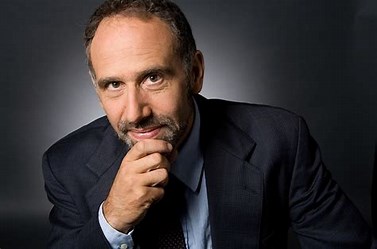
Dean Baker is senior economist at the Center for Economic and Policy Research in Washington, DC. He is frequently cited in economics reporting in major media outlets, including the New York Times, Washington Post, CNN, CNBC, and National Public Radio. He writes a weekly column for the Guardian Unlimited (UK), the Huffington Post, TruthOut, and his blog, Beat the Press, features commentary on economic reporting. His analyses have appeared in many major publications, including the Atlantic Monthly, the Washington Post, the London Financial Times, and the New York Daily News. He received his Ph.D in economics from the University of Michigan.

Recommended reading

Mark Zuckerberg apologized. Now he has to fix Facebook for real

Mark Zuckerberg takes on his Facebook Frankenstein Monster

Stephen Gottlieb: Zuckerberg, Facebook and the responsibility of publishers

Share

Leave a Reply

Your email address will not be published. Required fields are marked *

Related Posts

Officially, the drones were not identified. By simply thinking critically – which journalists and selected experts no longer do – there may be a good reason for that. And this article will never be mentioned in Denmark… Drones over Denmark. No damage. No trace. No answers. Yet the headlines scream “Russian threat,” and Prime Minister Mette Frederiksen speaks with a certainty that defies logic: “We don’t know they were Russian—but we know Russia is the biggest threat to Europe.” It could be nobody else – unless you make an interest analysis which I did two days ago. This is not security policy. It’s theatre. And the audience is being played. Let’s rewind. These drones—unphotographed, untracked, unclaimed—appear and vanish like ghosts. Airports shut down. Panic spreads. Military budgets swell. And the narrative hardens: Russia is behind it. But what if that’s not just wrong but deliberately misleading? Here’s a hypothesis for...
Drones over Nordic airports. No damage. No trace. No answers. Most assume Russia—but what if that’s not so? Why is there so much we are not told? This article explores the strategic ambiguity behind recent drone incursions and asks: Who else might benefit from sending drones into NATO airspace? From Ukraine’s surprising drone supremacy to Russia’s possible signalling, the silence itself may be the loudest message. These are the kinds of questions decent, intelligent investigative journalists and commentators could easily research. Why don’t they? Did you, dear reader, know or think of this? That the most powerful weapon in today’s conflicts might be the one that leaves no trace – and no answers. Just enough fear to justify the next move? Recently, drones have repeatedly appeared over Nordic airports and near some military facilities. They cause no damage – for which reason the designation “hybrid attack” is misleading but serves a purpose. These...
Below are TFF-related media mentions, comments, videos and social media posts published elsewhere but not on this homepage. We happen to catch and list only a fraction. Regarding video comments and debates, we recommend that you go to the TFF Video Channel on Substack where many of them are reproduced. Jan Oberg is a contributor to China Daily – 52 million daily clicks – and Global Times, CGTN and CCTV (the national television), China Investment, Xinhua News Agency and several others. Articles and videos on these media very often multiply into countless Chinese (and Western media) that re-post them from these main media. Thanks to The China Academy, his analyses, interviews and comments are frequently posted on YouTube channels such as Thinkers Forum and Wave Media. These videos are often re-posted on Bilibili (China’s YouTube), the China Content Center on TikTok, and on the Chinese edition of TikTok, Douyin.com. This means reaching hundreds of millions of viewers worldwide over a year. While there are too many to catch on all these...

Recent Articles

PressInfo # 141, December 21, 2001It’s time to prepare reconciliation between Albanians and Serbs PressInfo # 140, December 14, 2001Ibrahim Rugova’s decade-long leadership in Kosovo/a PressInfo # 139, 11. december, 2001En god nyhet: Jugoslaviens Sannings- och försoningskommission PressInfo # 139, 11. december, 2001Gode nyheder: Jugoslaviens Sandheds- og Forsoningskommission PressInfo # 139, December 11, 2001Good news: Yugoslavia’s Truth and Reconciliation Commission PressInfo # 138, November 8, 2001TFF co-founder PhD with thesis about young people with roots in other cultures PressInfo # 138, November 8, 2001TFF:s medstiftare doktor på avhandling om unga med ursprung i andra kulturer PressInfo # 137, October 17, 2001A new Marshall Plan: Advancing human security and controlling terrorism PressInfo # 136, October 15, 2001The UN and Annan really deserve it PressInfo # 135, October 10, 2001Preventing a terrorist mushroom cloud PressInfo # 134, 17 oktober, 2001Sverige og 11. september PressInfo # 134, October 9, 2001Sweden and September 11...
Peace is promoted by constructive proposals and dialogue Four preceding PressInfos have expressed concern over — and criticised — the ongoing, militarisation of the EU. Some will say: but there are no alternatives. We believe that there are always alternatives, that democracies are characterised by alternatives and choice, and that openly discussed alternatives will improve the quality and legitimacy of society’s decision–making. In addition, it is an intellectual and moral challenge to not only criticise but also be constructive. If we only tell people that we think they are wrong, they are not likely to listen. However, if we say: what are your views on this set of ideas and steps? — we may sometimes engage them in dialogue and sow a seed. Most people in power circles live their daily lives in in a time frame and a social space where certain ideas, viewpoints and concepts are just not...
Photos © TFF 2000 Read PressInfo 90 “Lift the Sanctions and Bring More Aid to Yugoslavia” See Pictures from Belgrade © TFF 2000 Please reprint, copy, archive, quote or re-post this item, but please retain the source.

TFF on Substack

Discover more from TFF Transnational Foundation & Jan Oberg.

Most Popular

PressInfo # 141, December 21, 2001It’s time to prepare reconciliation between Albanians and Serbs PressInfo # 140, December 14, 2001Ibrahim Rugova’s decade-long leadership in Kosovo/a PressInfo # 139, 11. december, 2001En god nyhet: Jugoslaviens Sannings- och försoningskommission PressInfo # 139, 11. december, 2001Gode nyheder: Jugoslaviens Sandheds- og Forsoningskommission PressInfo # 139, December 11, 2001Good news: Yugoslavia’s Truth and Reconciliation Commission PressInfo # 138, November 8, 2001TFF co-founder PhD with thesis about young people with roots in other cultures PressInfo # 138, November 8, 2001TFF:s medstiftare doktor på avhandling om unga med ursprung i andra kulturer PressInfo # 137, October 17, 2001A new Marshall Plan: Advancing human security and controlling terrorism PressInfo # 136, October 15, 2001The UN and Annan really deserve it PressInfo # 135, October 10, 2001Preventing a terrorist mushroom cloud PressInfo # 134, 17 oktober, 2001Sverige og 11. september PressInfo # 134, October 9, 2001Sweden and September 11...
Peace is promoted by constructive proposals and dialogue Four preceding PressInfos have expressed concern over — and criticised — the ongoing, militarisation of the EU. Some will say: but there are no alternatives. We believe that there are always alternatives, that democracies are characterised by alternatives and choice, and that openly discussed alternatives will improve the quality and legitimacy of society’s decision–making. In addition, it is an intellectual and moral challenge to not only criticise but also be constructive. If we only tell people that we think they are wrong, they are not likely to listen. However, if we say: what are your views on this set of ideas and steps? — we may sometimes engage them in dialogue and sow a seed. Most people in power circles live their daily lives in in a time frame and a social space where certain ideas, viewpoints and concepts are just not...
Photos © TFF 2000 Read PressInfo 90 “Lift the Sanctions and Bring More Aid to Yugoslavia” See Pictures from Belgrade © TFF 2000 Please reprint, copy, archive, quote or re-post this item, but please retain the source.
Read More
Imagen-thumbnail-The-Transnational-1
PressInfo # 141, December 21, 2001It’s time to prepare reconciliation between Albanians and Serbs PressInfo # 140, December 14, 2001Ibrahim Rugova’s decade-long leadership in Kosovo/a PressInfo # 139, 11. december, 2001En god nyhet: Jugoslaviens Sannings- och försoningskommission PressInfo # 139, 11. december, 2001Gode nyheder: Jugoslaviens Sandheds- og Forsoningskommission PressInfo # 139, December 11, 2001Good news: Yugoslavia’s Truth and Reconciliation Commission PressInfo # 138, November 8, 2001TFF co-founder PhD with thesis about young people with roots in other cultures PressInfo # 138, November 8, 2001TFF:s medstiftare doktor på avhandling om unga med ursprung i andra kulturer PressInfo # 137, October 17, 2001A new Marshall Plan: Advancing human security and controlling terrorism PressInfo # 136, October 15, 2001The UN and Annan really deserve it PressInfo # 135, October 10, 2001Preventing a terrorist mushroom cloud PressInfo # 134, 17 oktober, 2001Sverige og 11. september PressInfo # 134, October 9, 2001Sweden and September 11...
Imagen-thumbnail-The-Transnational-1
Peace is promoted by constructive proposals and dialogue Four preceding PressInfos have expressed concern over — and criticised — the ongoing, militarisation of the EU. Some will say: but there are no alternatives. We believe that there are always alternatives, that democracies are characterised by alternatives and choice, and that openly discussed alternatives will improve the quality and legitimacy of society’s decision–making. In addition, it is an intellectual and moral challenge to not only criticise but also be constructive. If we only tell people that we think they are wrong, they are not likely to listen. However, if we say: what are your views on this set of ideas and steps? — we may sometimes engage them in dialogue and sow a seed. Most people in power circles live their daily lives in in a time frame and a social space where certain ideas, viewpoints and concepts are just not...
Imagen-thumbnail-The-Transnational-1
Photos © TFF 2000 Read PressInfo 90 “Lift the Sanctions and Bring More Aid to Yugoslavia” See Pictures from Belgrade © TFF 2000 Please reprint, copy, archive, quote or re-post this item, but please retain the source.
Imagen-thumbnail-The-Transnational-1
Av FRANK SØHOLM GREVIL 16 augusti 2004  Vi er nu nået til tredje akt i det absurde teaterstykke, der i analogi med de store skueprocesser i Moskva 1936-38 er blevet døbt ‘Grevil-sagen’. Første akt bestod i min anonyme fremlæggelse af egenhændigt nedklassificerede rapporter i Berlingske Tidende i februar og marts. Andet akt udgjordes af min fremtræden med navn og billede i Information i april samt den efterfølgende mediestorm, som uden min direkte medvirken kostede en forsvarsminister taburetten samt en sigtelse for brud på tavshedspligten. Tredje akt bliver en retssag, hvor jeg står tiltalt for at have overtrådt straffelovens bestemmelser om uberettiget videregivelse eller udnyttelse af fortrolige oplysninger. Statsanklageren har ovenikøbet valgt at påberåbe sig særligt skærpende omstændigheder. Da jeg aldrig har modtaget betaling for at stille rapporterne til rådighed eller lade mig interviewe, må det skærpende bestå i, at “videregivelsen eller udnyttelsen er sket under sådanne omstændigheder, at det påfører...
Imagen-thumbnail-The-Transnational-1
Af Svenska Irakkommittén mot de Ekonomiska Sanktionerna (SIES) 13 september 2002 FN:s ekonomiska sanktioner mot Irak har nu pågått i tolv år och drabbat det irakiska folket med svåra lidanden. Enligt FN:s egna siffror har mer än 1,5 miljoner människor, varav ca 600 000 barn, dött som en direkt följd av sanktionerna. Dessutom har ett lågintensivt bombkrig mot landet pågått under dessa år. Av all denna förödelse- orsakad huvudsakligen av amerikansk och brittisk politik- har Saddam Husseins brutala och diktatoriska regim snarast stärkts än försvagats. Nu förbereder USA under president Bushs ledning ett storskaligt bombkrig mot Irak som kommer att innebära ett ännu större lidande för civilbefolkningen. Ett sådant krig kommer dessutom att ytterligare undergräva freden och säkerheten i världen. Att upprätta en demokratisk regim i Irak är det irakiska folkets angelägenhet och får enligt folkrätten inte ske med krigshandlingar utifrån. Folkrätten och FN:s stadgar måste respekteras. Vi vädjar till...