
The Middle East: A complex re-alignment

By Conn M. Hallinan

November 27, 2019

The fallout from the September attack on Saudi Arabia’s Aramco oil facilities is continuing to reverberate throughout the Middle East, sidelining old enmities – sometimes for new ones – and re-drawing traditional alliances. While Turkey’s recent invasion of northern Syria is grabbing the headlines, the bigger story may be that major regional players are contemplating some historic re-alignments.

Originally posted on Counterpunch on November 8, 2019, here

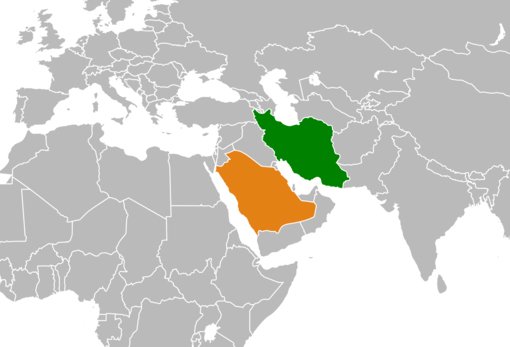
After years of bitter rivalry, the Saudis and the Iranians are considering how they can dial down their mutual animosity. The formerly powerful Gulf Cooperation Council (GCC) of the Persian Gulf monarchs is atomizing because Saudi Arabia is losing its grip. And Washington’s former domination of the region appears to be in decline.

Some of these developments are long-standing, pre-dating the cruise missile and drone assault that knocked out 50 per cent of Saudi Arabia’s oil production. But the double shock – Turkey’s lunge into Syria and the September missile attack – is accelerating these changes.

Pakistani Prime Minister, Imran Khan, recently flew to Iran and then on to Saudi Arabia to lobby for détente between Teheran and Riyadh and to head off any possibility of hostilities between the two countries. “What should never happen is a war,” Khan said, “because this will not just affect the whole region…this will cause poverty in the world. Oil prices will go up.”

According to Khan, both sides have agreed to talk, although the Yemen War is a stumbling block. But there are straws in the wind on that front, too. A partial ceasefire seems to be holding, and there are back-channel talks going on between the Houthis and the Saudis.

The Saudi intervention in Yemen’s civil war was supposed to last three months, but it has dragged on for over four years. The United Arab Emirates (UAE) was to supply the ground troops and the Saudis the airpower. But the Saudi-UAE alliance has made little progress against the battle-hardened Houthis, who have been strengthened by defections from the regular Yemeni army.

Air wars without supporting ground troops are almost always a failure, and they are very expensive. The drain on the Saudi treasury is significant, and the country’s wealth is not bottomless.

Crown Prince Mohammed bin Salman is trying to shift the Saudi economy from its over-reliance on petroleum, but he needs outside money to do that and he is not getting it. The Yemen War – which, according to the United Nations is the worst humanitarian disaster on the planet – and the Prince’s involvement with the murder and dismemberment of Saudi journalist Jamal Khashoggi, has spooked many investors.

Without outside investment, the Saudi’s have to use their oil revenues, but the price per barrel is below what the Kingdom needs to fulfil its budget goals, and world demand is falling off. The Chinese economy is slowing – the trade war with the US has had an impact – and European growth is sluggish. There is a whiff of recession in the air, and that’s bad news for oil producers.

Riyadh is also losing allies. The UAE is negotiating with the Houthis and withdrawing their troops, in part because the Abu Dhabi has different goals in Yemen than Saudi Arabia, and because in any dustup with Iran, the UAE would be ground zero. US generals are fond of calling the UAE “little Sparta” because of its well-trained army, but the operational word for Abu Dhabi is “little”: the Emirate’s army can muster 20,000 troops, Iran can field more than 800,000 soldiers.

Saudi Arabia’s goals in Yemen are to support the government-in-exile of President Rabho Mansour Hadi, control its southern border and challenge Iran’s support of the Houthis. The UAE, on the other hand, is less concerned with the Houthis but quite focused on backing the anti-Hadi Southern Transitional Council, which is trying to re-create south Yemen as a separate country. North and south Yemen were merged in 1990, largely as a result of Saudi pressure, and it has never been a comfortable marriage.

Riyadh has also lost its grip on the Gulf Cooperation Council. Oman, Kuwait, and Qatar continue to trade with Iran in spite of efforts by the Saudis to isolate Teheran.

Rapidly changing and bewildering political sociometry
– added by The Transnational from CIDOB Barcelona’s twitter account

The UAE and Saudi Arabia recently hosted Russian President Vladimir Putin, who pressed for the 22-member Arab League to re-admit Syria. GCC member Bahrain has already re-established diplomatic relations with Damascus. Putin is pushing for a multilateral security umbrella for the Middle East, which includes China.

“While Russia is a reliable ally, the US is not,” Middle East scholar Mark Katz told the South Asia Journal. And while many in the region have no love for Syria’s Assad, “they respect Vladimir Putin for sticking by Russia’s ally.”

The Arab League – with the exception of Qatar – denounced the Turkish invasion and called for a withdrawal of Ankara’s troops. Qatar is currently being blockaded by Saudi Arabia and the UAE for pursuing an independent foreign policy and backing a different horse in the Libyan civil war. Turkey is Qatar’s main ally.

Russia’s 10-point agreement with Turkey on Syria has generally gone down well with Arab League members, largely because the Turks agreed to respect Damascus’s sovereignty and eventually withdraw all troops. Of course, “eventually” is a shifty word, especially because Turkey’s goals are hardly clear.

Turkish President Recep Tayyip Erdogan wants to drive the Syrian Kurds away from the Turkish border and move millions of Syrian refugees into a strip of land some 19 miles deep and 275 miles wide. The Kurds may move out, but the Russian and Syrian military – filling in the vacuum left by President Trump’s withdrawal of American forces – have blocked the Turks from holding more than the border and one deep enclave, certainly not one big enough to house millions of refugees.

Erdogan’s invasion is popular at home – nationalism plays well with the Turkish population and most Turks are unhappy with the Syrian refugees – but for how long? The Turkish economy is in trouble and invasions cost a lot of money. Ankara is using proxies for much of the fighting, but without lots of Turkish support, those proxies are no match for the Kurds – let alone the Syrian and Russian military.

That would mainly mean airpower, and Turkish airpower is restrained by the threat of Syrian anti-aircraft and Russian fighters, not to mention the fact that the Americans still control the airspace. The Russians have deployed their latest fifth-generation stealth fighter, the SU-57, and a number of MiG-29s and SU-27s, not planes the Turks would wish to tangle with. The Russians also have their new mobile S-400 anti-aircraft system, and the Syrians have the older, but still effective, S-300s.

In short, things could get really messy if Turkey decided to push their proxies or their army into areas occupied by Russian or Syrian troops. There are reports of clashes in Syria’s northeast and casualties among the Kurds and Syrian Army, but a serious attempt to push the Russians and the Syrians out seems questionable.

The goal of resettling refugees is unlikely to go anywhere. It will cost some $53 billion to build an infrastructure and move two million refugees into Syria, money that Turkey doesn’t have. The European Union has made it clear it won’t offer a nickel, and the UN can’t step in because the invasion is a violation of international law.

When those facts sink in, Erdogan might find that Turkish nationalism will not be enough to support his Syrian adventure if it turns into an occupation.

The Middle East that is emerging from the current crisis may be very different than the one that existed before those cruise missiles and drones tipped over the chessboard.

The Yemen War might finally end. Iran may, at least partly, break out of the political and economic blockade that Saudi Arabia, the US and Israel has imposed on it. Syria’s civil war will recede.  

And the Americans, who have dominated the Middle East since 1945, will become simply one of several international players in the region, along with China, Russia, India and the European Union.

Conn M. Hallinan is a columnist for Foreign Policy In Focus, “A Think Tank Without Walls, and an independent journalist. He holds a PhD in Anthropology from the University of California, Berkeley. He oversaw the journalism program at the University of California at Santa Cruz for 23 years and won the UCSC Alumni Association’s Distinguished Teaching Award, as well as UCSC’s Innovations in Teaching Award, and Excellence in Teaching Award.  He was also a college provost at UCSC, and retired in 2004.
He is a winner of a Project Censored “Real News Award” and lives in Berkeley, California. Conn Hallinan can be read at dispatchesfromtheedgeblog.wordpress.com

No data was found

Share

Leave a Reply

Your email address will not be published. Required fields are marked *

Related Posts

Officially, the drones were not identified. By simply thinking critically – which journalists and selected experts no longer do – there may be a good reason for that. And this article will never be mentioned in Denmark… Drones over Denmark. No damage. No trace. No answers. Yet the headlines scream “Russian threat,” and Prime Minister Mette Frederiksen speaks with a certainty that defies logic: “We don’t know they were Russian—but we know Russia is the biggest threat to Europe.” It could be nobody else – unless you make an interest analysis which I did two days ago. This is not security policy. It’s theatre. And the audience is being played. Let’s rewind. These drones—unphotographed, untracked, unclaimed—appear and vanish like ghosts. Airports shut down. Panic spreads. Military budgets swell. And the narrative hardens: Russia is behind it. But what if that’s not just wrong but deliberately misleading? Here’s a hypothesis for...
Drones over Nordic airports. No damage. No trace. No answers. Most assume Russia—but what if that’s not so? Why is there so much we are not told? This article explores the strategic ambiguity behind recent drone incursions and asks: Who else might benefit from sending drones into NATO airspace? From Ukraine’s surprising drone supremacy to Russia’s possible signalling, the silence itself may be the loudest message. These are the kinds of questions decent, intelligent investigative journalists and commentators could easily research. Why don’t they? Did you, dear reader, know or think of this? That the most powerful weapon in today’s conflicts might be the one that leaves no trace – and no answers. Just enough fear to justify the next move? Recently, drones have repeatedly appeared over Nordic airports and near some military facilities. They cause no damage – for which reason the designation “hybrid attack” is misleading but serves a purpose. These...
America’s Strategic Assault on Art, Academia, and the Imagination That Sustains Peace The United States once stood as a beacon of cultural audacity—a place where dissent could be beautiful, and beauty and innovation could challenge the present order of things. Its museums, universities, and artists helped inspire a worldwide imagination rooted in creative freedom and innovation. But today, under the Trump regime’s second term, those dynamic qualities are being systematically dismantled. Just read this. As Trump goes after the arts, many museums remain silent | CNN As CNN reports, the administration has launched an aggressive campaign to “eradicate improper ideology” from federally funded museums. Exhibitions involving race, gender, and identity are being censored or cancelled. Amy Sherald’s reimagining of the Statue of Liberty as a Black, trans woman was pulled from the Smithsonian after curators objected to its symbolism. Sherald warned that “history shows us what happens when governments demand loyalty...

Recent Articles

Former UN Under-Secretary-General with special responsibility for peacekeeping operations TFF associate August 20, 2003 YRINGHAM, Mass.- Ralph Bunche was born in Detroit 100 years ago today (August 7, 2003). His passionate determination to get results did not extend to seeking credit for them, so his work is better remembered than he is. Of all his many accomplishments – civil rights pioneer, Nobel Peace Prize laureate, chief drafter of two chapters of the United Nations charter, negotiator of the armistices that ended the first Arab-Israeli war – Bunche said he was proudest of developing what came to be known as peacekeeping. Setting up the United Nations Truce Supervision Organization in Palestine in 1948, Bunche formulated the principles that have governed peacekeeping operations ever since. In the 1956 Suez crisis, working with Secretary General Dag Hammarskjold and Lester Pearson of Canada, he organized the first peacekeeping force, the United Nations Emergency Force...
– nästan 11 månader Till Sofia nästan 11 månader # 1  Till Sofias huvudsida Till alla Privata Foto-Serier
Till Sofias huvudsida

TFF on Substack

Discover more from TFF Transnational Foundation & Jan Oberg.

Most Popular

Former UN Under-Secretary-General with special responsibility for peacekeeping operations TFF associate August 20, 2003 YRINGHAM, Mass.- Ralph Bunche was born in Detroit 100 years ago today (August 7, 2003). His passionate determination to get results did not extend to seeking credit for them, so his work is better remembered than he is. Of all his many accomplishments – civil rights pioneer, Nobel Peace Prize laureate, chief drafter of two chapters of the United Nations charter, negotiator of the armistices that ended the first Arab-Israeli war – Bunche said he was proudest of developing what came to be known as peacekeeping. Setting up the United Nations Truce Supervision Organization in Palestine in 1948, Bunche formulated the principles that have governed peacekeeping operations ever since. In the 1956 Suez crisis, working with Secretary General Dag Hammarskjold and Lester Pearson of Canada, he organized the first peacekeeping force, the United Nations Emergency Force...
– nästan 11 månader Till Sofia nästan 11 månader # 1  Till Sofias huvudsida Till alla Privata Foto-Serier
Till Sofias huvudsida
Read More
Imagen-thumbnail-The-Transnational-1
Former UN Under-Secretary-General with special responsibility for peacekeeping operations TFF associate August 20, 2003 YRINGHAM, Mass.- Ralph Bunche was born in Detroit 100 years ago today (August 7, 2003). His passionate determination to get results did not extend to seeking credit for them, so his work is better remembered than he is. Of all his many accomplishments – civil rights pioneer, Nobel Peace Prize laureate, chief drafter of two chapters of the United Nations charter, negotiator of the armistices that ended the first Arab-Israeli war – Bunche said he was proudest of developing what came to be known as peacekeeping. Setting up the United Nations Truce Supervision Organization in Palestine in 1948, Bunche formulated the principles that have governed peacekeeping operations ever since. In the 1956 Suez crisis, working with Secretary General Dag Hammarskjold and Lester Pearson of Canada, he organized the first peacekeeping force, the United Nations Emergency Force...
– nästan 11 månader Till Sofia nästan 11 månader # 1  Till Sofias huvudsida Till alla Privata Foto-Serier
Till Sofias huvudsida
BlackNobel
OK, Trump did not get it. But he got a full endorsement of a possible future US regime change in Venezuela. And that is what Ms Machado has advocated. On October 10, 2025, the Norwegian Nobel Committee awarded its Peace Prize to Venezuelan opposition figure María Corina Machado. The citation praised her “tireless work promoting democratic rights.” But Ms Machado has openly called for U.S. military intervention in Venezuela, stating on CBS: “The only way to stop the suppression is by force—U.S. force.” She or her party has received funding from the National Endowment for Democracy (NED), a U.S. government-backed body known as a CIA front organisation and for supporting regime-change operations worldwide. And in 2018, she sent a letter to Israeli Prime Minister Benjamin Netanyahu, asking him to use “force and influence” to help dismantle Venezuela’s government—citing alleged ties to terrorism, Iran and narcotrafficking. This year’s NATO Norwegian prize...
Screenshot-2025-10-08-163458
PRESS RELEASE – 6 OCTOBER 2025 LAY DOWN YOUR ARMSPEACE PRIZE FOR 2025 is awarded Francesca Albanese The United Nations Special Rapporteur on the occupied Palestinian territories – as the person who, in accordance with Alfred Nobel’s will, has “done the most or the best work for fraternity between nations and for the abolition or reduction of standing armies as well as for the holding and promotion of peace congresses.” Francesca Albanese has forcefully and unwaveringly worked against Israel’s full-scale war on the occupied Palestinian territories, in particular Israel´s ongoing genocide against the Palestinian people. She has confronted Israel’s systematic war crimes and crimes against humanity in a truly global outreach. Further, she has brought governments, international organisations and people’s groups together to underline the responsibility of the world at large to act and to stop arming, enabling, and profiting from Israel’s ongoing criminal actions. But first of all, Albanese...
Copilot_20251003_003414
Officially, the drones were not identified. By simply thinking critically – which journalists and selected experts no longer do – there may be a good reason for that. And this article will never be mentioned in Denmark… Drones over Denmark. No damage. No trace. No answers. Yet the headlines scream “Russian threat,” and Prime Minister Mette Frederiksen speaks with a certainty that defies logic: “We don’t know they were Russian—but we know Russia is the biggest threat to Europe.” It could be nobody else – unless you make an interest analysis which I did two days ago. This is not security policy. It’s theatre. And the audience is being played. Let’s rewind. These drones—unphotographed, untracked, unclaimed—appear and vanish like ghosts. Airports shut down. Panic spreads. Military budgets swell. And the narrative hardens: Russia is behind it. But what if that’s not just wrong but deliberately misleading? Here’s a hypothesis for...