
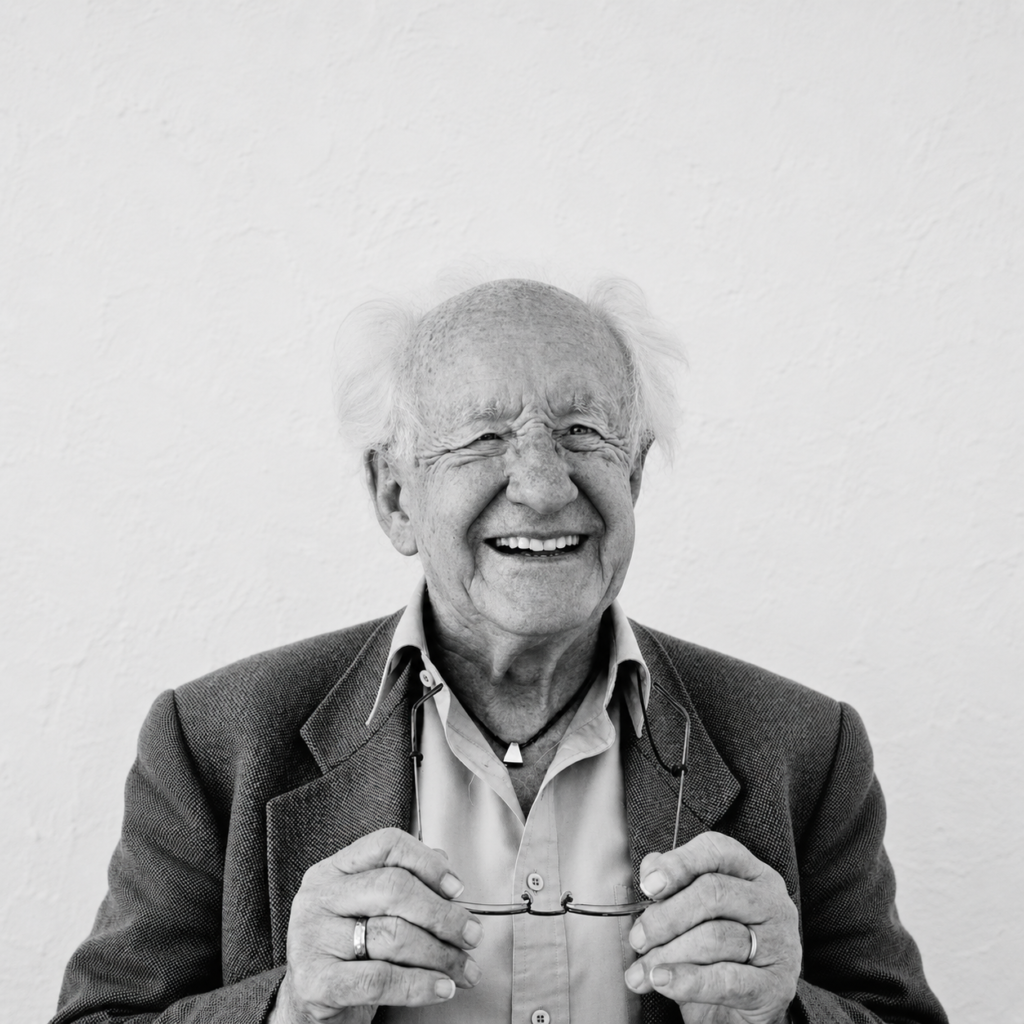

The history of Peace: The Past and the Future?

Review of The Glorious Art of Peace by John Gittings, NYC: Oxford University Press, 2012. Info about this book and a video with Gittings here.

Editor’s note
This is Galtung’s draft which has been submitted to International Affairs.

What a wonderful idea, the history of peace! Something most people want to learn about, the art of peace! Like the history of health, food and love, as opposed to the history of wars, illness and hunger, of generals, kings and empires. This is the history of something that can inspire people, statesmen-women among them, to do better. This is a more adequate textbook for schools than the usual list of kings (and queens, like “divorced-beheaded-died-divorced-beheaded-survived”).

Gittings’ historiography covers seven periods: “ancient peace” based on Greece and China; the “morality of peace” of the middle ages, from Jesus to the Crusades; the “humanist approach” of the early modern renaissance with a focus on Erasmus; then the “peace consciousness” of the enlightenment; the “alternatives to war” of the League of Nations, peaceful settlement of disputes, and nonviolence (Tolstoy, Gandhi); the “misappropriation of peace” from the UN to the Cold War; “giving peace a chance” from the Cold War to Iraq. The focus is on modernity with five of seven periods, and on the West, with laudable excursions into China and India-Russia for their impact on the West. Missing: the small non-West peace, like American Indian (Sioux confederation), Polynesian (ho’o pono pono), Zulu (ubuntu). Missing: the big non-West mega-peace between the biggest countries in the world, China and India. But Gittings covers a rich lot “from the Iliad to Iraq”.

Gittings’ methodology is empirical with events, countries and persons, and fascinating quotes and art photos; relating them causally and by similarities; always interestingly. Missing: theoretical explorations based on, say, conditioning by nature (geography, nutrition); by culture, like dualism for Greeks, yin/yang for Chinese; by structure, like caste/class verticality vs equity. But Gittings offers a lot of raw material for the theoretically minded.

The major impression from the book is the history of anti-war carried by persons and sometimes by groups; in other words, negative peace against violence. Of positive peace, like building equity and harmony, dissolving traumas and conflicts, there is close to nothing.

But Gittings is not to be faulted for this; rather, the civilizations he explored are. And this is, of course, the reason that we have peace studies as something different from war and anti-war studies. Besides, other fields on inquiry are not much better. Health studies focus on pathologies and their therapy much more than on positive health; and only recently did psychology start shifting the point of gravity from mental disorders toward positive psychology. Maybe the glorious art of peace is more in the history of the future?

Gittings’ kind reference to me as a “pioneer” in the field may serve as an invitation to add some words to his vision of the future.

His analysis of the decline of patriotism and the willingness to die for the causes of states is superb. The states, complete with ultima ratio regis, flags, monuments, anthems, national days, constitutions, armies and enemies, are now declining in salience, maybe except for the largest, like China-India-Russia-USA. Colonial wars declined with colonialism, inter-state wars now decline with the states; an occasion for the naive to celebrate the triumph of peace.

There is much to learn from the history of health at this point. The “glorious” decline of contagious diseases, with micro-organisms as killers, was not the end of disease. The structural diseases of the body (such as tumors with one tissue growing at the expense of others, and cardio-vascular diseases blocking the access of oxygen) and of the mind (like depressions, not knowing in and out), became the new concerns of the art of health. In the same vein, states used bullets and bombs–and fire and fission–as killers, and we are now witnessing an epidemic shift toward structural violence among and within states.

Look at the top elites in the Indo-European social formation. The aristocrats-kshatriyahs killed with bullets on battlefields. The merchants-vaisyahs with exploitation–one class or region growing at the expense of others–killing many more with money, on the market battlefield. And the clergy/intellectuals-brahmins with cultural repression and alienation on battlefields called debates, limiting the circulation of information–the oxygen of societies–to the culture of the dominant. The focus is on competition and struggle, on winners and losers, not on equal exchange, dialogues, synergies, transcendence. The killers today are less military than commercial, political and cultural elites with nothing “soft” in their power. Many more are killed these ways, physically and-or spiritually, than by the direct violence of the military. But the art of peace may be similar, based on equity in cooperation, on empathy for harmony, on reconciliation of the traumas of the past, and resolution of conflicts.

Which is not to say that direct violence cannot reappear with sub- and super-state actors, with nations refusing to be overshadowed by some dominant nation, and by nations and regions acquiring regional days, flags, anthems, etc. The Mother of Regions, the EU, has all of that; others may be copying and, like the EU, combining internal peace with external wars. Maybe a United Regions, without vetoes of course, and with a parliament elected by fair and free elections and referenda could do better than the League of Nations and the United Nations?

We need all the insights collected in Gittings’ impressive book and more, enriching our culture with more capacity to cooperate, empathize, reconcile and resolve conflict. Violence and war are often symptoms of underlying, unresolved traumas and conflicts. Identify them, solve them! Incompatibilities are challenges to make changes that accommodate compatibility. An art, yes; and it can be learned. Glorious, for sure. Moreover it is feasible, when we add Gittings’ optimism.

Article originally published here.
Share

Leave a Reply

Your email address will not be published. Required fields are marked *

Related Posts

Jan Oberg, TFF director April 28, 2026 In this third TFF Peace Pulse, I make the important distinction between the violence and the conflict that violence is a symptom of. If you want peace, focus on the underlying conflict because that is the key to resolution, peacemaking, and a better future for the parties. The West is obsessed with violence, just look around you – and 90+ per cent of the public debate is about military issues and other violence – totally wasted for peace. These Peace Pulses will only be published here a few times. You will also not find them on YouTube and Vimeo because both platforms have blocked TFF and me; you know, peace is dangerous these days. Most TFF’s videos since 2007 are now on Rumble.
In contrast to most, we’ll bring alternatives, solutions, hope and strategies for a better future. Times are dangerous, yes, but that only intensifies the need for constructive thinking and action! Jan Oberg, TFF director April 13, 2026 The new TFF Peace Pulse uses video messages in a new way: Max 3-5-minute-long comments, ideas or perhaps mini-lectures, all about peace – positive peace. We launch them today on April 13, 2026 with a carefully crafted visual aesthetic fitting the content. We hope to publish them regularly from now on. We launch Peace Pulse (PP) – for a number of reasons. The world is in chaos, and there are countless reasons to feel concerned, frustrated, even angry. The atmosphere is saturated with doom and gloom, with negative energy and rear‑mirror thinking, while vision, imagination, alternatives, strategies and genuine future‑mindedness remain in short supply. And without them, we simply can’t save the world. Looking at problems from a hundred angles will...
PART II — Publishing Peace in a System That Prioritises Militarism Jan Oberg, TFF director April 10, 2026 How TFF Maintains a Daily Voice in a Digital World Built for Noise This article is part of the series “TFF at 40″ and it invites you to learn about Four Decades of Publishing Peace. It takes a look at how a small, people‑financed peace foundation has communicated across four generations of technology — from wax stencils and fax machines to mass email and Substack — and why TFF continues to publish every single day in a system that rewards noise, conflict, and militarism. ◆ What it means to publish peace every single day in a digital system built for 24/7 news and other noise, confrontation, and militarism. How TFF’s independence, continuity, and global readership defy algorithms, donor cycles, and Western media censorhip — and why the Majority World keeps listening. When the...

Recent Articles

Jan Oberg May 15, 2026 Go to this Fox News page and scroll the whole way down: President Donald Trump tells the world that his meeting with President Xi Jinping yielded a lot of very concrete political and economic results – of course, only where the Chinese side, according to him, agreed with him. He does not mention the Taiwan issue, but Secretary of State, Marco Rubio, says that it did not feature prominently in their talks and that the US policy on Taiwan has not changed. Then go to China Daily – or Global Times – and you will see that for the Chinese it is framework, principles, structure of cooperation etc. that matters – all embedded in the overall idea of “constructive bilateral relationship of strategic stability.” Nowhere is any concrete agreement or deal – all that Trump refers to – mentioned. At the general level, this gives you insights into the very different social...
Lena Petrova of “World Affairs In Context” with more than half a million subscribers on YouTube wanted to explore what a peace researcher like me has to say about, among other things, the First and the Second Cold War and why eethics has disappeared from politics. I am particularly happy about this conversation that also yielded an amazing number of very appreciative comments on YouTube. No doubt, people are longing for alternatives, including peace perspectives.
The MIMAC – Military-Industrial-Media-Academic Complex – drives the world’s rampant militarism and wars without end. Here is a short reflection of how it works against all interests of humanity. #5 deals with why there is no real enemy or threat images/analysis. It’s all ex-post constructions. And, btw, theTFF Peace Pulse is now on Rumble.

TFF on Substack

Discover more from TFF Transnational Foundation & Jan Oberg.

Most Popular

Jan Oberg May 15, 2026 Go to this Fox News page and scroll the whole way down: President Donald Trump tells the world that his meeting with President Xi Jinping yielded a lot of very concrete political and economic results – of course, only where the Chinese side, according to him, agreed with him. He does not mention the Taiwan issue, but Secretary of State, Marco Rubio, says that it did not feature prominently in their talks and that the US policy on Taiwan has not changed. Then go to China Daily – or Global Times – and you will see that for the Chinese it is framework, principles, structure of cooperation etc. that matters – all embedded in the overall idea of “constructive bilateral relationship of strategic stability.” Nowhere is any concrete agreement or deal – all that Trump refers to – mentioned. At the general level, this gives you insights into the very different social...
Lena Petrova of “World Affairs In Context” with more than half a million subscribers on YouTube wanted to explore what a peace researcher like me has to say about, among other things, the First and the Second Cold War and why eethics has disappeared from politics. I am particularly happy about this conversation that also yielded an amazing number of very appreciative comments on YouTube. No doubt, people are longing for alternatives, including peace perspectives.
The MIMAC – Military-Industrial-Media-Academic Complex – drives the world’s rampant militarism and wars without end. Here is a short reflection of how it works against all interests of humanity. #5 deals with why there is no real enemy or threat images/analysis. It’s all ex-post constructions. And, btw, theTFF Peace Pulse is now on Rumble.
Read More
Screenshot-2026-05-15-103534
Jan Oberg May 15, 2026 Go to this Fox News page and scroll the whole way down: President Donald Trump tells the world that his meeting with President Xi Jinping yielded a lot of very concrete political and economic results – of course, only where the Chinese side, according to him, agreed with him. He does not mention the Taiwan issue, but Secretary of State, Marco Rubio, says that it did not feature prominently in their talks and that the US policy on Taiwan has not changed. Then go to China Daily – or Global Times – and you will see that for the Chinese it is framework, principles, structure of cooperation etc. that matters – all embedded in the overall idea of “constructive bilateral relationship of strategic stability.” Nowhere is any concrete agreement or deal – all that Trump refers to – mentioned. At the general level, this gives you insights into the very different social...
Screenshot-2026-05-12-104023
Lena Petrova of “World Affairs In Context” with more than half a million subscribers on YouTube wanted to explore what a peace researcher like me has to say about, among other things, the First and the Second Cold War and why eethics has disappeared from politics. I am particularly happy about this conversation that also yielded an amazing number of very appreciative comments on YouTube. No doubt, people are longing for alternatives, including peace perspectives.
Screenshot-2026-04-13-154551 (2)
The MIMAC – Military-Industrial-Media-Academic Complex – drives the world’s rampant militarism and wars without end. Here is a short reflection of how it works against all interests of humanity. #5 deals with why there is no real enemy or threat images/analysis. It’s all ex-post constructions. And, btw, theTFF Peace Pulse is now on Rumble.
Screenshot-2026-04-13-154551 (1)
Jan Oberg, TFF director April 28, 2026 In this third TFF Peace Pulse, I make the important distinction between the violence and the conflict that violence is a symptom of. If you want peace, focus on the underlying conflict because that is the key to resolution, peacemaking, and a better future for the parties. The West is obsessed with violence, just look around you – and 90+ per cent of the public debate is about military issues and other violence – totally wasted for peace. These Peace Pulses will only be published here a few times. You will also not find them on YouTube and Vimeo because both platforms have blocked TFF and me; you know, peace is dangerous these days. Most TFF’s videos since 2007 are now on Rumble.
Screenshot-2026-04-13-154551
In contrast to most, we’ll bring alternatives, solutions, hope and strategies for a better future. Times are dangerous, yes, but that only intensifies the need for constructive thinking and action! Jan Oberg, TFF director April 13, 2026 The new TFF Peace Pulse uses video messages in a new way: Max 3-5-minute-long comments, ideas or perhaps mini-lectures, all about peace – positive peace. We launch them today on April 13, 2026 with a carefully crafted visual aesthetic fitting the content. We hope to publish them regularly from now on. We launch Peace Pulse (PP) – for a number of reasons. The world is in chaos, and there are countless reasons to feel concerned, frustrated, even angry. The atmosphere is saturated with doom and gloom, with negative energy and rear‑mirror thinking, while vision, imagination, alternatives, strategies and genuine future‑mindedness remain in short supply. And without them, we simply can’t save the world. Looking at problems from a hundred angles will...
IMG_5165 (1)
PART II — Publishing Peace in a System That Prioritises Militarism Jan Oberg, TFF director April 10, 2026 How TFF Maintains a Daily Voice in a Digital World Built for Noise This article is part of the series “TFF at 40″ and it invites you to learn about Four Decades of Publishing Peace. It takes a look at how a small, people‑financed peace foundation has communicated across four generations of technology — from wax stencils and fax machines to mass email and Substack — and why TFF continues to publish every single day in a system that rewards noise, conflict, and militarism. ◆ What it means to publish peace every single day in a digital system built for 24/7 news and other noise, confrontation, and militarism. How TFF’s independence, continuity, and global readership defy algorithms, donor cycles, and Western media censorhip — and why the Majority World keeps listening. When the...


