
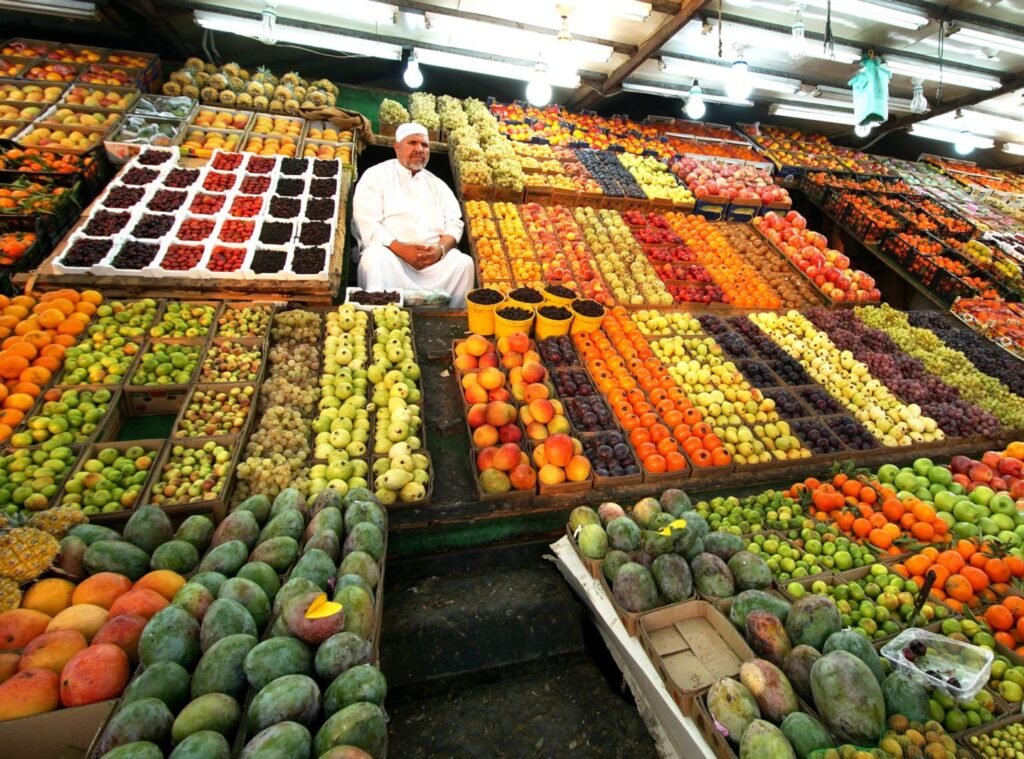
Real defence spending ensures good food for all

There is no security without food security. Geoff Tansey argues that meeting the real security needs of humanity necessitates the progressive redistribution of military budgets toward ending hunger and achieving sustainable development.

Geoff Tansey

December 13, 2020

As Covid-19 exacerbates inequalities nationally and globally, more and more people are becoming food insecure in both richer and poorer countries. According to the UN’s 2020 report on the State of Food Security and Nutrition in the World almost 690 million people went hungry in 2019. And the number of hungry people has been rising since 2014, well before the pandemic hit. COVID-19 could push over 130 million more people into chronic hunger, it says. That means one in every nine humans going hungry most of the time.

Originally posted on Rethinking Security
on November 5th, 2020 here

This matters for both human security and physical security. Last month saw the 75th anniversary of the founding of the UN Food and Agriculture Organisation and the World Food Programme awarded the Nobel Peace Prize “for its efforts to combat hunger, for its contribution to bettering conditions for peace in conflict-affected areas and for acting as a driving force in efforts to prevent the use of hunger as a weapon of war and conflict”.

The second of the Sustainable Development Goals, a range of objectives adopted by the UN in 2015, is for zero hunger by 2030 and to promote sustainable agriculture. Yet the heads of the five UN agencies behind the report warn that “five years after the world committed to end hunger, food insecurity and all forms of malnutrition, we are still off track to achieve this objective by 2030.”

The price of food security

Ceres2030, a research group headed by Cornell University, the International Food Policy Research Institute (IFPRI), and the International Institute for Sustainable Development (IISD), estimate that to reach the zero hunger goal by 2030 some $33bn/year is needed, with $14bn from donors and the rest from affected countries.

Seems a lot? Not really. Especially when the world’s governments spent almost £2 trillion on the military in 2019, according to the Stockholm International Peace Research Institute. In the UK the departmental budget for Environment, Farming and Rural Affairs for 2020 is some £4.3bn, while that for Defence is £39.2bn.

Sign up for TFF PressInfo – updates, comments and useful links.
It is free, about weekly and safe for you

It seems blatantly obvious that defending people’s fundamental needs cannot be achieved through devoting such huge amounts of resources to military spending. It cannot defeat the COVID-19 virus. It cannot deal with the other great long-term, slower-acting threats to human security – climate change, biodiversity loss and growing inequality. It is also clear that arms spending and exports help fuel conflicts that in turn increase food insecurity.

Food security and conflict

As the UN’s 2017 report on the State of Food Security and Nutrition noted: “Exacerbated by climate-related shocks, conflicts seriously affect food security and are a cause of much of the recent increase in food insecurity. Conflict is a key driver of situations of severe food crisis and recently re-emerged famines, while hunger and undernutrition are significantly worse where conflicts are prolonged and institutional capacities weak.” Violent conflict is also the main driver of population displacement.

The Nobel Peace Prize announcement also noted, “The link between hunger and armed conflict is a vicious circle: war and conflict can cause food insecurity and hunger, just as hunger and food insecurity can cause latent conflicts to flare up and trigger the use of violence. We will never achieve the goal of zero hunger unless we also put an end to war and armed conflict.”

To reach the SDGs, not just in food but across the board, we need new approaches. There are calls for fundamental change to our food systems after we get through the current pandemic – for example, see IPES paper COVID-19 and the Crisis in Food Systems. Now is the time to seize the opportunity to progressively redirect spending from that which cannot defend humanity from these threats, military spending, to that which can.

Cooperation in complex systems

Everyone, everywhere needs food – produced in fair and resilient food systems that respect people, animals and planet, as we say in the Food Ethics Council. And everyone has multiple identities, mother, father, son, daughter, belief system, a community, a nationality, etc. But the core identity that we all need is to see ourselves as Earthlings, spread across different cultures and continents but with common needs, even if expressed differently. These are clearly shown in the various farming systems and cuisines that have developed around the world. We have to get beyond a focus on competition to realise that the mark of any successful social species is the ability to cooperate. Successful social species have to cooperate to survive as they make complex systems.

To do this, we need to put our resources to work in the right direction. This then is the time to seek a worldwide commitment from every country to progressively redirect its military spending away from mechanisms and machines with which to better kill each other into life enhancing and environment sustaining activities. By doing so we will achieve the sustainable development goals, conquer hunger, poverty and make a fairer, healthy and sustainable world for this and future generations.

Food security in the UK

Defending us Earthlings, in whichever country we live, rich or poor, against the real existential threats to our food security requires unprecedented cooperation between countries and peoples. In the UK, as I write, the issue of avoiding children going hungry in school holidays is hitting the headlines, with a variety of short-term immediate solutions being discussed. But this is symptomatic of a much deeper problem of growing levels of food insecurity and poverty, as were highlighted by the Food Foundation, footballer Marcus Rashford and others and as we found in the independent Fabian Commission on Food and Poverty, which I chaired.

This challenge, compounded by the need to restructure farming systems and dietary patterns along more ecologically sound, healthy and sustainable lines, is about beginning to understand what true defence spending means for people’s security in the 21st century. For the UK there is an opportunity for government to engage in such a rethink as it embarks on an Integrated Review of Security, Defence, Development and Foreign Policy. This “will define the government’s vision for the UK’s role in the world over the next decade”. The review provides a real opportunity to lead in redefining what defence and security mean and progressively redirect domestic resources to address the existential threats to people’s well-being, which sadly have been highlighted by the pandemic.

On April 16, 1953, US President Dwight D. Eisenhower said, “Every gun that is made, every warship launched, every rocket fired signifies in the final sense, a theft from those who hunger and are not fed, those who are cold and are not clothed. This world in arms is not spending money alone. It is spending the sweat of its laborers, the genius of its scientists, the hopes of its children. This is not a way of life at all in any true sense.”

It is time to stop that theft. Time to bring together a wide range of constituencies campaigning for this, such as The Global Campaign on Military SpendingTipping Point North SouthStop Fuelling War, with businesses and NGOs across a wide range of fields to develop positive programmes, such as the Business Plan for Peace, to enable humanity to truly defend itself from hunger and food insecurity, climate change, biodiversity loss and inequality. 

Please help TFF remain truly independent and highly productive by contributing if you benefited from this article

[paypal-donation]
Geoff Tansey curates the Food Systems Academy, a free, on-line, open education resource to transform our food systems. He is also a member of the Food Ethics Council and chaired the independent Fabian Commission on Food and Poverty, which reported in 2015.

Share

Leave a Reply

Your email address will not be published. Required fields are marked *

Related Posts

PRESS RELEASE – 6 OCTOBER 2025 LAY DOWN YOUR ARMSPEACE PRIZE FOR 2025 is awarded Francesca Albanese The United Nations Special Rapporteur on the occupied Palestinian territories – as the person who, in accordance with Alfred Nobel’s will, has “done the most or the best work for fraternity between nations and for the abolition or reduction of standing armies as well as for the holding and promotion of peace congresses.” Francesca Albanese has forcefully and unwaveringly worked against Israel’s full-scale war on the occupied Palestinian territories, in particular Israel´s ongoing genocide against the Palestinian people. She has confronted Israel’s systematic war crimes and crimes against humanity in a truly global outreach. Further, she has brought governments, international organisations and people’s groups together to underline the responsibility of the world at large to act and to stop arming, enabling, and profiting from Israel’s ongoing criminal actions. But first of all, Albanese...
Officially, the drones were not identified. By simply thinking critically – which journalists and selected experts no longer do – there may be a good reason for that. And this article will never be mentioned in Denmark… Drones over Denmark. No damage. No trace. No answers. Yet the headlines scream “Russian threat,” and Prime Minister Mette Frederiksen speaks with a certainty that defies logic: “We don’t know they were Russian—but we know Russia is the biggest threat to Europe.” It could be nobody else – unless you make an interest analysis which I did two days ago. This is not security policy. It’s theatre. And the audience is being played. Let’s rewind. These drones—unphotographed, untracked, unclaimed—appear and vanish like ghosts. Airports shut down. Panic spreads. Military budgets swell. And the narrative hardens: Russia is behind it. But what if that’s not just wrong but deliberately misleading? Here’s a hypothesis for...
Drones over Nordic airports. No damage. No trace. No answers. Most assume Russia—but what if that’s not so? Why is there so much we are not told? This article explores the strategic ambiguity behind recent drone incursions and asks: Who else might benefit from sending drones into NATO airspace? From Ukraine’s surprising drone supremacy to Russia’s possible signalling, the silence itself may be the loudest message. These are the kinds of questions decent, intelligent investigative journalists and commentators could easily research. Why don’t they? Did you, dear reader, know or think of this? That the most powerful weapon in today’s conflicts might be the one that leaves no trace – and no answers. Just enough fear to justify the next move? Recently, drones have repeatedly appeared over Nordic airports and near some military facilities. They cause no damage – for which reason the designation “hybrid attack” is misleading but serves a purpose. These...

Recent Articles

PressInfo # 141, December 21, 2001It’s time to prepare reconciliation between Albanians and Serbs PressInfo # 140, December 14, 2001Ibrahim Rugova’s decade-long leadership in Kosovo/a PressInfo # 139, 11. december, 2001En god nyhet: Jugoslaviens Sannings- och försoningskommission PressInfo # 139, 11. december, 2001Gode nyheder: Jugoslaviens Sandheds- og Forsoningskommission PressInfo # 139, December 11, 2001Good news: Yugoslavia’s Truth and Reconciliation Commission PressInfo # 138, November 8, 2001TFF co-founder PhD with thesis about young people with roots in other cultures PressInfo # 138, November 8, 2001TFF:s medstiftare doktor på avhandling om unga med ursprung i andra kulturer PressInfo # 137, October 17, 2001A new Marshall Plan: Advancing human security and controlling terrorism PressInfo # 136, October 15, 2001The UN and Annan really deserve it PressInfo # 135, October 10, 2001Preventing a terrorist mushroom cloud PressInfo # 134, 17 oktober, 2001Sverige og 11. september PressInfo # 134, October 9, 2001Sweden and September 11...
Peace is promoted by constructive proposals and dialogue Four preceding PressInfos have expressed concern over — and criticised — the ongoing, militarisation of the EU. Some will say: but there are no alternatives. We believe that there are always alternatives, that democracies are characterised by alternatives and choice, and that openly discussed alternatives will improve the quality and legitimacy of society’s decision–making. In addition, it is an intellectual and moral challenge to not only criticise but also be constructive. If we only tell people that we think they are wrong, they are not likely to listen. However, if we say: what are your views on this set of ideas and steps? — we may sometimes engage them in dialogue and sow a seed. Most people in power circles live their daily lives in in a time frame and a social space where certain ideas, viewpoints and concepts are just not...
Photos © TFF 2000 Read PressInfo 90 “Lift the Sanctions and Bring More Aid to Yugoslavia” See Pictures from Belgrade © TFF 2000 Please reprint, copy, archive, quote or re-post this item, but please retain the source.

TFF on Substack

Discover more from TFF Transnational Foundation & Jan Oberg.

Most Popular

PressInfo # 141, December 21, 2001It’s time to prepare reconciliation between Albanians and Serbs PressInfo # 140, December 14, 2001Ibrahim Rugova’s decade-long leadership in Kosovo/a PressInfo # 139, 11. december, 2001En god nyhet: Jugoslaviens Sannings- och försoningskommission PressInfo # 139, 11. december, 2001Gode nyheder: Jugoslaviens Sandheds- og Forsoningskommission PressInfo # 139, December 11, 2001Good news: Yugoslavia’s Truth and Reconciliation Commission PressInfo # 138, November 8, 2001TFF co-founder PhD with thesis about young people with roots in other cultures PressInfo # 138, November 8, 2001TFF:s medstiftare doktor på avhandling om unga med ursprung i andra kulturer PressInfo # 137, October 17, 2001A new Marshall Plan: Advancing human security and controlling terrorism PressInfo # 136, October 15, 2001The UN and Annan really deserve it PressInfo # 135, October 10, 2001Preventing a terrorist mushroom cloud PressInfo # 134, 17 oktober, 2001Sverige og 11. september PressInfo # 134, October 9, 2001Sweden and September 11...
Peace is promoted by constructive proposals and dialogue Four preceding PressInfos have expressed concern over — and criticised — the ongoing, militarisation of the EU. Some will say: but there are no alternatives. We believe that there are always alternatives, that democracies are characterised by alternatives and choice, and that openly discussed alternatives will improve the quality and legitimacy of society’s decision–making. In addition, it is an intellectual and moral challenge to not only criticise but also be constructive. If we only tell people that we think they are wrong, they are not likely to listen. However, if we say: what are your views on this set of ideas and steps? — we may sometimes engage them in dialogue and sow a seed. Most people in power circles live their daily lives in in a time frame and a social space where certain ideas, viewpoints and concepts are just not...
Photos © TFF 2000 Read PressInfo 90 “Lift the Sanctions and Bring More Aid to Yugoslavia” See Pictures from Belgrade © TFF 2000 Please reprint, copy, archive, quote or re-post this item, but please retain the source.
Read More
Imagen-thumbnail-The-Transnational-1
PressInfo # 141, December 21, 2001It’s time to prepare reconciliation between Albanians and Serbs PressInfo # 140, December 14, 2001Ibrahim Rugova’s decade-long leadership in Kosovo/a PressInfo # 139, 11. december, 2001En god nyhet: Jugoslaviens Sannings- och försoningskommission PressInfo # 139, 11. december, 2001Gode nyheder: Jugoslaviens Sandheds- og Forsoningskommission PressInfo # 139, December 11, 2001Good news: Yugoslavia’s Truth and Reconciliation Commission PressInfo # 138, November 8, 2001TFF co-founder PhD with thesis about young people with roots in other cultures PressInfo # 138, November 8, 2001TFF:s medstiftare doktor på avhandling om unga med ursprung i andra kulturer PressInfo # 137, October 17, 2001A new Marshall Plan: Advancing human security and controlling terrorism PressInfo # 136, October 15, 2001The UN and Annan really deserve it PressInfo # 135, October 10, 2001Preventing a terrorist mushroom cloud PressInfo # 134, 17 oktober, 2001Sverige og 11. september PressInfo # 134, October 9, 2001Sweden and September 11...
Imagen-thumbnail-The-Transnational-1
Peace is promoted by constructive proposals and dialogue Four preceding PressInfos have expressed concern over — and criticised — the ongoing, militarisation of the EU. Some will say: but there are no alternatives. We believe that there are always alternatives, that democracies are characterised by alternatives and choice, and that openly discussed alternatives will improve the quality and legitimacy of society’s decision–making. In addition, it is an intellectual and moral challenge to not only criticise but also be constructive. If we only tell people that we think they are wrong, they are not likely to listen. However, if we say: what are your views on this set of ideas and steps? — we may sometimes engage them in dialogue and sow a seed. Most people in power circles live their daily lives in in a time frame and a social space where certain ideas, viewpoints and concepts are just not...
Imagen-thumbnail-The-Transnational-1
Photos © TFF 2000 Read PressInfo 90 “Lift the Sanctions and Bring More Aid to Yugoslavia” See Pictures from Belgrade © TFF 2000 Please reprint, copy, archive, quote or re-post this item, but please retain the source.
Imagen-thumbnail-The-Transnational-1
Av FRANK SØHOLM GREVIL 16 augusti 2004  Vi er nu nået til tredje akt i det absurde teaterstykke, der i analogi med de store skueprocesser i Moskva 1936-38 er blevet døbt ‘Grevil-sagen’. Første akt bestod i min anonyme fremlæggelse af egenhændigt nedklassificerede rapporter i Berlingske Tidende i februar og marts. Andet akt udgjordes af min fremtræden med navn og billede i Information i april samt den efterfølgende mediestorm, som uden min direkte medvirken kostede en forsvarsminister taburetten samt en sigtelse for brud på tavshedspligten. Tredje akt bliver en retssag, hvor jeg står tiltalt for at have overtrådt straffelovens bestemmelser om uberettiget videregivelse eller udnyttelse af fortrolige oplysninger. Statsanklageren har ovenikøbet valgt at påberåbe sig særligt skærpende omstændigheder. Da jeg aldrig har modtaget betaling for at stille rapporterne til rådighed eller lade mig interviewe, må det skærpende bestå i, at “videregivelsen eller udnyttelsen er sket under sådanne omstændigheder, at det påfører...
Imagen-thumbnail-The-Transnational-1
Af Svenska Irakkommittén mot de Ekonomiska Sanktionerna (SIES) 13 september 2002 FN:s ekonomiska sanktioner mot Irak har nu pågått i tolv år och drabbat det irakiska folket med svåra lidanden. Enligt FN:s egna siffror har mer än 1,5 miljoner människor, varav ca 600 000 barn, dött som en direkt följd av sanktionerna. Dessutom har ett lågintensivt bombkrig mot landet pågått under dessa år. Av all denna förödelse- orsakad huvudsakligen av amerikansk och brittisk politik- har Saddam Husseins brutala och diktatoriska regim snarast stärkts än försvagats. Nu förbereder USA under president Bushs ledning ett storskaligt bombkrig mot Irak som kommer att innebära ett ännu större lidande för civilbefolkningen. Ett sådant krig kommer dessutom att ytterligare undergräva freden och säkerheten i världen. Att upprätta en demokratisk regim i Irak är det irakiska folkets angelägenhet och får enligt folkrätten inte ske med krigshandlingar utifrån. Folkrätten och FN:s stadgar måste respekteras. Vi vädjar till...