
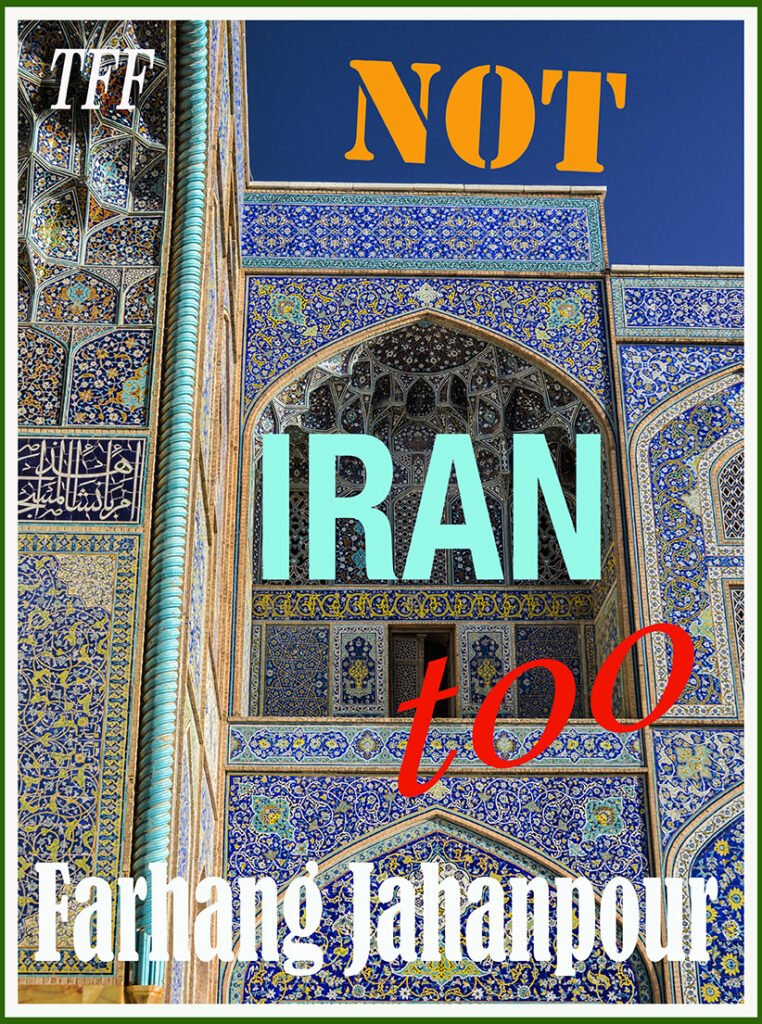
Part 1.
Preface – Background and forthcoming book on Iran
September 1, 2018
Background
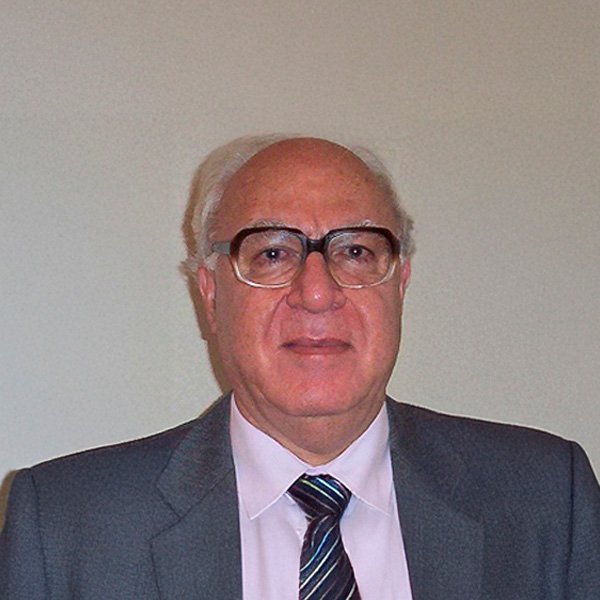
I am a British national of Iranian origin. I was born in Shiraz, near Persepolis, the capital of Pars Province in Iran, which gave its name to Persia and to two ancient Persian Empires, the Achaemenid and the Sassanian. Shiraz is famous as an Iranian cultural centre, being the birthplace of two of Iran’s greatest poets, Hafiz and Sa’di, and many philosophers, saints and scholars.
My former tutor at the University of Cambridge, the late Professor A. J. Arberry, who was one of the greatest experts on Iran and Islam wrote a fascinating book on “Shiraz, the Iranian City of Saints and Poets”.
I studied Persian literature at Shiraz University, and as I graduated with the highest grades in my year, I was given a scholarship to continue my studies in Britain. After receiving a B.A. Degree in English literature from Leeds University and an M.A. Degree in American literature from Hull University, I received my PhD Degree in Oriental Studies from the University of Cambridge, and I also taught Persian language and literature at Cambridge for five years.
In 1970, I was invited to teach at the University of Isfahan, the capital of Iran under the Safavid Empire and another magnificent Iranian city. I served first as an Associate Professor and, later on, as Distinguished Professor and Dean of the Faculty of Foreign Languages. I founded the first Faculty of Foreign Languages and the first Department of American Studies in Iran. I also spent a year as a Senior Fulbright Research Scholar at Harvard.
In 1978, on the eve of the Iranian revolution, I returned to England and spent over twenty years at the BBC Monitoring Service as chief Persian monitor, and later on as Editor for the Middle East and North Africa.
Meanwhile, since 1985, I have also been teaching courses on Middle Eastern history and politics as a part-time tutor at the Department of Continuing Education at the University of Oxford.
During my years at the BBC, I and my colleagues were deeply involved in covering many momentous events, including the Iranian revolution, the eight-year long Iran-Iraq war, the Iraqi invasion of Kuwait and the so-called First Gulf War, followed by crippling US sanctions on Iraq that killed hundreds of thousands of innocent Iraqis, and subsequently the invasion of Iraq in 2003 which killed upwards of a million people and destroyed the country.
I was also involved in covering the Soviet invasion of Afghanistan, followed by the rise of the Mujahedin and the Taliban, supported by the West, to push Soviet forces out of Afghanistan; the collapse of the Soviet Union, which gave rise to intense rivalries over the control of Central Asia and the Middle East.
Since leaving the BBC, I have closely followed the so-called “Arab Spring”, the Western attacks on Libya and the killing of Colonel Qadhafi, the ongoing tragedies in Syria, Iraq, Yemen, etc., and the rise of ISIS and other terrorist groups.

The East and the West – and the Middle East
As someone who is familiar with both the East and the West, and as someone who has spent most of his life in Britain, a country that I love and admire enormously, I have great respect for both Eastern and Western cultures and civilisations.
These two civilisations have coexisted over millennia, have borrowed a great deal from each other and have enriched one another in the course of their encounters.
Zoroastrianism, Judaism, Christianity and Islam, which exerted the greatest influence on the lives of millions of people for many centuries, originated in the Middle East.
Since the rise of the Renaissance and the Age of Enlightenment followed by amazing scientific and technological developments, the West has had the greatest influence on the world, including the Middle East.
The West has introduced what one can call the new religion of humanism, with its main principles of freedom, democracy, respect for human rights, equality of all citizens before the law, gender equality, scientific outlook and rational philosophies.
It is therefore with a great deal of pain and sadness that I have watched the events of the past few decades.
Instead of cooperating for the development of humanity and borrowing the best qualities from one another, thus creating a new universal culture of tolerance and enlightenment, these two ancient cultures have been tearing each other apart.
As Graham Greene wrote in Our Man in Havana
You should dream more.
Reality in our century is not something to be faced.

During the past few decades, rivers of blood have flowed in practically all Middle Eastern countries, and despite all this bloodshed and barbarity, the West has not achieved very much either.
It has failed to establish freedom and democracy in the Middle East, and in the process, it has also destroyed what had formed the basis of some of the oldest civilizations in the world, leaving behind many failed states, hostile to the West, and with a legacy of enmity and mutual suspicion that will take decades to remedy.
In the process of militarisation, invasion and massacres, the West has also lost its own soul and its ideals and aspirations have also been diminished.
I have been struck by the disparity between the words and the deeds of Western leaders, as well as the huge gulf that exists between the majority of the population that are on the whole kind, peace-loving and decent, and the governments that have been pursuing power and their so-called “geopolitical interests” with great brutality, often to the detriment of their own citizens.
Not only has the corporate media remained silent about the violent policies pursued by governments, but in most cases, it has even acted as an apologist and a publicist for those crimes.
The result has been that most members of the public have remained almost totally ignorant of the malevolent activities of their governments.

As someone who has spent so many years in the media, I have learned that often it is not the overt distortion of truth that is so harmful, but the constant repetition of little lies, omitting what is unpleasant and only covering what serves the interests of those in power that has led to the current gulf between the people and their rulers.
As George Orwell wrote:
“Political language — and with variations this is true of all political parties, from Conservatives to Anarchists — is designed to make lies sound truthful and murder respectable, and to give an appearance of solidity to pure wind.”
No wonder that in most countries people have grown suspicious not only of their rulers, but also of their media, the intelligentsia and most traditional organizations.
This feeling of alienation has given rise to a feeling of helplessness in the citizens, often drawing them to some extremist parties and ideologies, as we have seen in the rise of Trump, in Brexit and the success of right-wing parties in a number of European countries, dividing societies as never before.
In the age of mass communication, people are gaining access to some new sources of information that never existed before. However, the trouble with social media is that it is so diverse, unregulated, voluminous, often contradictory and in some cases totally fabricated that people do not know how much of it to accept and which way to turn.
Why write a book?
Having seen the attempts at invasion and regime change in so many countries, and studying what the current US Administration is doing in the Middle East, especially its open advocacy of regime change in Iran, I have decided to write a book about a topic that I know well, and that I have observed closely for many decades.
I lived through the inception of the Iranian revolution as I left Iran shortly before the last Pahlavi king, Mohammad Reza Shah, left Iran and Ayatollah Khomeini returned in triumph and, to everyone’s amazement, formed the Islamic Republic.
It was the first revolution to succeed in the name of Islam against what seemed like a modern, progressive, and immensely powerful pro-Western government.
The Iranian revolution started as a mass movement against age-old domestic oppression and foreign influence and exploitation. The initial slogans of the Iranian revolution were “Freedom, Independence, Social Justice”.
People wanted to put an end to arbitrary rule and lack of political freedom. They wanted to achieve independence from foreign domination and exploitation, which had reduced Iran almost to the status of a colony. They also wished to establish an economic system that distributed the enormous wealth of the country more equitably and that would establish a greater measure of social justice.
Sadly, none of those goals were achieved, and instead people even lost the degree of social freedom that they enjoyed under the Shah.

Initially, Ayatollah Khomeini established an intolerant and revolutionary society, even with the aim of exporting his revolution. Many Muslim scholars believe that his doctrine of “Velayat-e Faqih” or “the Guardianship of the Jurisconsult” (or senior clergy) was contrary to Islamic principles, and certainly unprecedented in Islamic history.
Since those early years, Iranian society has undergone many profound changes. At the moment, Iranian society is a predominantly young, educated and mainly a secular society that is looking for change.
In all recent elections, which normally attract many more voters than is the case in the West, the voters have sided with reformist politicians, and have demanded greater freedom at home and closer contact and collaboration with the outside world.
It was as the result of those demands that the moderate Iranian President Hassan Rouhani extended the hand of friendship to the West, and the American President Barack Obama responded with a more conciliatory tone, putting an end to decades of attempts at regime change.
The result was the landmark nuclear deal – JCPOA in 2015 – that put drastic limits on Iran’s peaceful nuclear programme and blocked all the paths to Iran’s acquisition of nuclear weapons.
The International Atomic Energy Agency (IAEA) that is in charge of inspecting Iran’s nuclear activities, in 11 separate reports since the signing of the agreement has confirmed Iran’s total compliance with the terms of the agreement.
The nuclear deal was not a bilateral deal between Iran and the United States, but an agreement reached as the result of two years of intense negotiations between Iran and all the five permanent members of the Security Council, plus Germany, given the full force of law by the Security Council Resolution 2233 and endorsed by the European Union.
Nevertheless, in clear violation of the commitments of the former US government and against the advice of practically the entire world with the exception of Israel, Saudi Arabia and the tiny UAE, President Trump withdrew the United States from the agreement.
He did so after having chosen Saudi Arabia and Israel as his first points of call after being elected president and selling tens of billions of dollars of weapons to the Persian Gulf sheikhdoms.
More recently, the White House has indicated that President Trump will convene a summit meeting with the leaders of the six Persian Gulf littoral states, plus Egypt and Jordan, in Washington in mid-October to counter what it calls Iran’s expansion in the region.
Members of his administration have openly talked about the need to bring about regime change in Iran.

In the same way that an Iraqi dissident called Ahmed Chalabi, the founder of the Iraqi National Congress, served as the mouthpiece for the opposition in an attempt to give legitimacy to the illegal invasion of Iraq, this time a former terrorist organisation called the Mojahedin-e Khalq (MEK) that has changed its name to the National Council of Resistance of Iran has been chosen to play that role.
This terrorist organisation was one of the main armed insurgents against the Shah’s government and was involved in the assassination of many political and military officials, as well as in the killing of a number of US military advisors serving in Iran.
It served as Ayatollah Khomeini’s foot-soldiers and was very active in military attacks against the police and military forces during the revolution, but after the revolution it fell out with the clerical regime over the distribution of the spoils.
After being kicked out of Iran, they joined Saddam Hussein’s forces in their attacks on Iran, and after the US invasion of Iraq, they have been housed in a compound in Albania, being supported by the US government.
As the result of pressure from some neoconservatives, the MEK was taken off the terrorist list and they organise annual conferences for their members in Paris at which many American officials, including National Security Advisor John Bolton, Secretary of State Mike Pompeo and President Trump’s lawyer and former mayor of New York Rudi Giuliani speak, receiving huge fees, and promising regime change in Iran.
It is clear that these people are not interested in establishing democracy and human rights in Iran, because they are very friendly with some Middle Eastern regimes that have a much worse human rights record than that of Iran.
They wish to turn Iran into another US client regime, exploiting Iran’s vast oil and gas reserves at the expense of the Iranian people, probably with the loss of hundreds of thousands or even millions of lives.
It is not in anyone’s interest to have another violent regime change in Iran based on lies and misinformation.
Despite some reports that have been published about US plans for Iran, the Western public has remained relatively indifferent to the impending disaster.
This is why I have decided to write this book to warn all peace-loving people of the disastrous scale of another regime change, this time in Iran.
The chapter on regime change – the 11th in the book and here published for the first time at The Transnational – provides the details of some of the other attempts at regime change in the Middle East, accompanied by false propaganda and enormous violence.
The problem with US policies towards Iran is that the current US government lacks any coherent strategy apart from trying to topple the current regime. As the saying goes, “If you do not know where you are going every road will take you there.”
However, the road that the Trump administration is following will lead to a disaster beyond anyone’s imagination.
Iran has more than twice the size and population of Iraq, with a segment of the population still devoted to the current government, and they will fight to the end to prevent its collapse.
It is very difficult to persuade the neocons and all those who are intensely hostile towards Iran to the point of irrationality, but the hope is that many others who do not wish to be misled by the same group of vile warmongers will wake up before it is too late and will try to prevent this act of folly.
As Mike Lofgren wrote in The Deep State (pp. 252-253),
“The tangled, millennia-old story of Syria and Iraq or Afghanistan, or the complex ethnic hatreds of the Balkans vanish before a few sonorous phrases like ‘regime change,’ ‘responsibility to protect,’ or ‘humanitarian intervention.’ This mind-set leads to predictable disasters from which the political establishment never learns the appropriate lessons.”
We should not allow this to be repeated in the case of Iran.
Share and use these hastags
#NotIranToo
#BuildTrustWithIran
#CooperateWithIranNow

Photos
All in this series from today’s Iran by Jan Oberg, the above all from Shiraz where the author was born.
You can see many more from Iran here and purchase limited, signed editions of some of them here.
© Oberg PhotoGraphics


One Response
Thanks