
Peter Peverelli: In the Dragon's Shadow – A book review

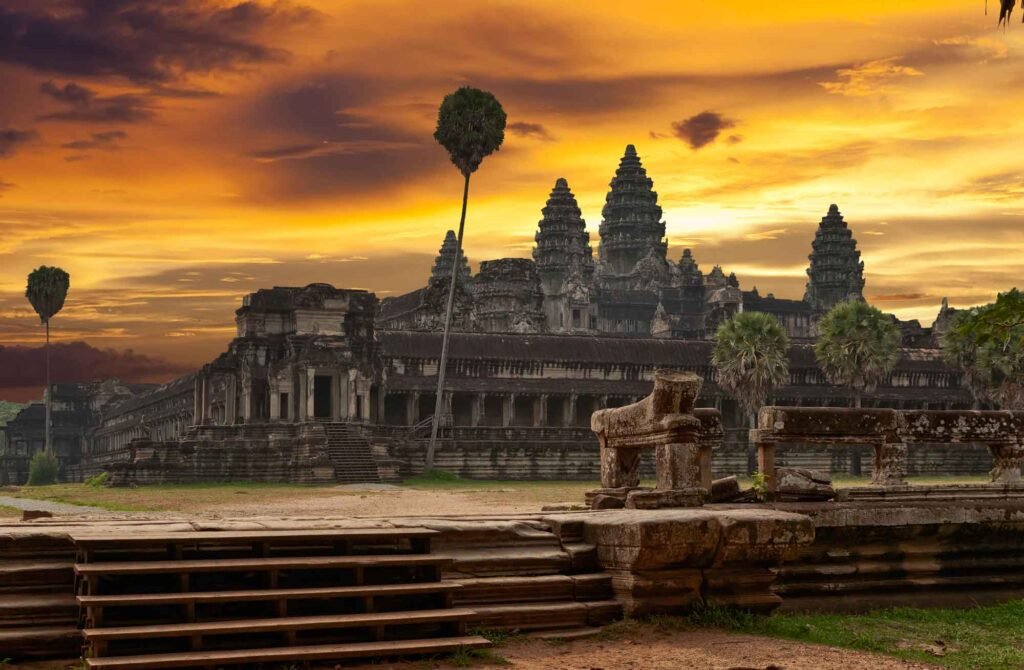
Source: www.cambodia-roads.fr

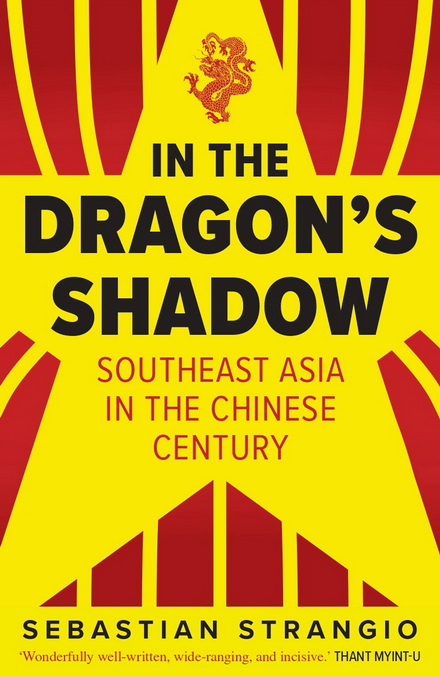
Sebastian Strangio,
In the Dragon’s Shadow – Southeast Asia in the Chinese Century,
Yale University Press, New Haven & London, 2022.

Peter Peverelli
TFF Associate

This text is a combination of a book review and a report of a visit to Cambodia in January 2023. Both texts were published earlier in Dutch on Chinasquare.

It seems justified to compare the value of the ASEAN countries to China with that of South America to the US. Turned around, one could expect that the ASEAN countries regard China as a Big Brother that you cannot ignore, even if you want to. This book confirms that expectation, but also shows that any ASEAN member can build a win-win relationship with China in its own specific way. The author, an academic who has been stationed as a journalist in various ASEAN countries for years, builds his arguments on a solid historical foundation, combined with a rich variety of anecdotes.

History

All ASEAN member states have a long-term relationship with China. In the nineteenth century and for some regions even earlier, groups of Chinese emigrated to SE Asia in search of a better life than in their mostly poor home regions. Chinese traders also settled in the regions from which they sources their goods. This is how Chinese settlements arose all over the region. Western colonialism further encouraged this. Dutch, English or French, all welcomed the waves of Chinese entrepreneurs coming to the region. At the time Malaysia became an independent state, Chinese even made up almost half of the population.

Conflicts

Conflicts between the Chinese and the indigenous population have taken place since the earliest Chinese settlers. All over the region, Chinese people amassed wealth through their trade and generally by working hard to transcend their status as second-class citizens, which you soon gained as an immigrant. This regularly led to conflicts with the indigenous population. Even the European colonists were at time disturbed by the way affluent Chinese displayed their wealth.

Discrimination

After the decolonisation, the new states such as Indonesia, Malaysia or Burma actively created policies to give the natives more political influence at the expense of those Chinese ‘foreigners’ – e.g., the Chinese were often forced to take on local names to replace their original Chinese names. After the establishment of the PRC, ethnic Chinese were soon suspected of communist sympathies. Indeed, for a while in Malaysia, a communist guerrilla was active that consisted mainly of ethnic Chinese. Chinese schools and magazines were regularly banned. Some of the Chinese left, to China or to the former colonizer. Others preferred to assimilate.
New China

As China flourished economically after the start of economic reforms in the 1980s, ASEAN governments’ interest in ties with China increased. Certainly when China rushed past most of them, no country could afford not to enter into a trade relationship with China. The main problem was that economic influence was inextricably linked to political influence. ASEAN was not only economically interesting for China, but also a new pillar of support for international policy, known as the Belt and Road Initiative. In addition, there was also great interest among the rapidly growing group of Chinese private entrepreneurs to invest in ASEAN countries.

New Chinese

This Chinese investment in local industry and infrastructure was welcomed, but it came with a new influx of (semi-)permanent Chinese settlers. For the local population, it was difficult to see them as separate from the older cohorts of ethnic Chinese. As a result, the ethnic conflicts were further complicated. Notorious is the street with Chinese gambling palaces on the Burmese side of the border, led by new and old Chinese and mainly frequented by wealthy Chinese who are not allowed to gamble at home. The profits of such enterprises hardly benefited the local population. Moreover, in some places crime was rampant. The Chinese reaped the profits, while the locals carried the burden. Burma frequently allow Chinese police officers pursue Chinese criminals, rather than doing it themselves.

Tug-of-war

The ASEAN countries are now constantly torn between China’s call to share in its wealth and the West, especially the US, with its abstract concepts of freedom and democracy. The author shows that it is an unequal struggle. China is close by, both regionally and culturally. The West is far away, and the colonial past is far from forgotten. The latter also applies to the senseless war in Indochina that the US fought for decades.

Neutral

The author tells all this in a neutral way. China is not portrayed as a Big Brother in the classical sense. He constantly points to the consistency of China’s non-intervention policy. Nor does he describe China as the great benefactor. The best quote from one of his many interviews with local politicians is that “China is a friend, but not one you blindly trust.” The U.S. never actually attained the status of true friend and has more the role of someone you can refer to during negotiations with China; a secondary choice that is always available. The author does point out that the West would do well not to label China as an enemy in attempts to maintain a foothold in ASEAN states.

Contagious

This author writes with an enjoyable style. His enthusiasm for the region is contagious. It is clear that he has great knowledge of the region, and speaks a number of the local languages, without becoming pedantic. He gives his own opinions carefully and leaves room for the opinions of all parties. He regularly inserts anecdotes of his own adventures. One that got stuck in my mind was an illegal border crossing on the back of a motorcycle. I am not sure if you would have had the courage to follow suit. Anyone, even people with some knowledge of the region, can learn from this book. And because of the extensive notes and index, it is also a manual that you will consult regularly. This is a must for anyone with an interest in China and SE Asia.

Visit to Cambodia in January 2023

Memories

In my youth, Cambodia regularly made the news, but that was usually unpleasant news. After shaking off the French protectorate in 1953, the country has experienced several decades of war and civil war, culminating in the Khmer Rouge government. That also was a low in the opinion of most Cambodians about China, which initially supported the Khmer Rouge. However, we have had interesting conversations with Cambodians of different origins during our 21-day stay. The way they talked about China confirmed what Strangio pointed out in his book In the Dragon’s Shadow. I will share my experience in this short report.

First impressions

Already during the drive from the airport to the hotel, it becomes clear how strong China’s presence in Cambodia is. Many announcements are trilingual: Khmer (the official language of Cambodia), English and Chinese. Many restaurants, bars, shops, hairdressers, etc., have Chinese names. The menus in the better restaurants are also trilingual. Names of some office buildings or hotels are even only in Chinese. Most notably, however, the names of many government organizations are bilingual: Khmer and Chinese. Once upon a time, it was Khmer and French. Traces of this can also still be seen. The impression that Cambodia has now become a de facto Chinese protectorate quickly emerges.

China is a good ally

In the historical museums, China is mentioned as the nation with the earliest description of this region. Chinese explorers in the third century spoke of Fu Nan, the then name of a region that included present-day Cambodia, South Vietnam, and Thailand. Much later, in the 12th century, China helped the Khmer Empire in the war with Champa, a country that later became part of Vietnam. This is immortalized in a wall in the temple complex of Angkor Wat. That aid wasn’t entirely selflessness. China itself regularly waged war in that region, and the Khmer were a welcome ally. After the victory, many Chinese soldiers settled in the Khmer empire.

China as a false ally

A visit to Silk Island, a community on an island in the Mekong River that specializes in the production and processing of silk, became an interesting experience due to the explanation of a resident who, because he speaks good English, had declared himself a village guide. They had learned the knowledge of silk production from China, and in his explanation, he regularly compared the local process with the Chinese one. The explanation extended to the time of the Khmer Rouge because silk production had virtually come to a standstill in those years. China initially supported the Khmer Rouge because Norodom Sihanouk worked with them. Pol Pot, however, only used Sihanouk as a stepping stone to power and when he held that power, Sihanouk disappeared to the background. The guide told that most Cambodians are royalists and therefore blamed China for letting down their king. Only later, it turned out that Pol Pot had also put China on the wrong track.

China as big brother

However, the story of the village guide continued. After the fall of Pol Pot, the relationship with China returned to the way it used to be. It is precisely this village that desperately needs technical support from Chinese experts, and the patronage of Chinese visitors is also welcome. Chinese tourists came in large numbers before Covid and were eager buyers in the village shop where silk products are sold. In the words of the guide, Cambodia needs China. It may not always be a relationship of close friends, but it is one based on recognizing a common interest.

Confirming Strangio

With this, my impressions in Cambodia confirm the stories recorded by Sebastian Strangio in his book In the Dragon’s Shadow. China is a friend. Maybe not one you blindly trust, but still a friend. A friend may make a mistake, but then gets a chance to correct it. The friendship between China and Cambodia is a wonderful example of an Asian symbiotic relationship that is not directly understood by Western perceptions of friendship. While we were visiting Phnom Penh and Siem Reap, Cambodia was preparing for the celebration of Chinese New Year, despite the fact that their own New Year falls in April. Who cares, everybody loves a party.


Share

Leave a Reply

Your email address will not be published. Required fields are marked *

Related Posts

Officially, the drones were not identified. By simply thinking critically – which journalists and selected experts no longer do – there may be a good reason for that. And this article will never be mentioned in Denmark… Drones over Denmark. No damage. No trace. No answers. Yet the headlines scream “Russian threat,” and Prime Minister Mette Frederiksen speaks with a certainty that defies logic: “We don’t know they were Russian—but we know Russia is the biggest threat to Europe.” It could be nobody else – unless you make an interest analysis which I did two days ago. This is not security policy. It’s theatre. And the audience is being played. Let’s rewind. These drones—unphotographed, untracked, unclaimed—appear and vanish like ghosts. Airports shut down. Panic spreads. Military budgets swell. And the narrative hardens: Russia is behind it. But what if that’s not just wrong but deliberately misleading? Here’s a hypothesis for...
And why the world, especially the EU, must now declare itself independent of the United States. UN’s 80th anniversary This year, the United Nations celebrates the 80th anniversary of its founding. The UN was formed after the scourge of the Second World War, in which 70 to 85 million people were killed and many countries were destroyed. That war came on the heels of the First World War, which also killed between 15 and 22 million people. After the Second World War, especially after the use of nuclear weapons by the United States, which marked a turning point in the history of warfare that could result in the end of civilisation as we know it, humanity decided to move away from the era of empires and big power politics and usher in a new era of peace, freedom and cooperation. These were the principles enshrined in the UN Charter. The United States...
Drones over Nordic airports. No damage. No trace. No answers. Most assume Russia—but what if that’s not so? Why is there so much we are not told? This article explores the strategic ambiguity behind recent drone incursions and asks: Who else might benefit from sending drones into NATO airspace? From Ukraine’s surprising drone supremacy to Russia’s possible signalling, the silence itself may be the loudest message. These are the kinds of questions decent, intelligent investigative journalists and commentators could easily research. Why don’t they? Did you, dear reader, know or think of this? That the most powerful weapon in today’s conflicts might be the one that leaves no trace – and no answers. Just enough fear to justify the next move? Recently, drones have repeatedly appeared over Nordic airports and near some military facilities. They cause no damage – for which reason the designation “hybrid attack” is misleading but serves a purpose. These...

Recent Articles

We know that medical personnel have failed to report to higher authorities wounds that were clearly caused by torture and that they have neglected to take steps to interrupt this torture. In addition, they have turned over prisoners’ medical records to interrogators who could use them to exploit the prisoners’ weaknesses or vulnerabilities. We have not yet learned the extent of medical involvement in delaying and possibly falsifying the death certificates of prisoners who have been killed by torturers. A May 22 article on Abu Ghraib in the New York Times states that “much of the evidence of abuse at the prison came from medical documents” and that records and statements “showed doctors and medics reporting to the area of the prison where the abuse occurred several times to stitch wounds, tend to collapsed prisoners or see patients with bruised or reddened genitals.” http://www.truthout.org/docs_04/080604J.shtml#16 According to the article, two doctors who...
Jan Øberg behandler i artiklen en lang række faktorer, som ligger til grund for den måde vores samfund er organiseret på – og derfor også for konflikter. Artiklen introducerer således sammenhængen mellem familien, foreninger, regeringer, NGO’ er, nation, stat, nationalstat og alliancer for på denne måde bedre at kunne forstå konflikter og i sidste ende blive klogere mht. at løse disse. Øberg, der er fortaler for global bevidsthed, hvilket skal ses i lyset af den øgede globalisering, skelner mellem kulturkamp og kulturdialog. Endelig behandles begrebet magt og magtesløshed: giver magt ret til at udøve magt – fordi man mener at have ret? Litteraturliste og arbejdsspørgsmål efter artiklen. Ordene vi bruger om verden I satellitperspektiv kan man godt tale om den menneskelige familie eller menneskeheden. Udtrykket understreger, at der eksisterer – eller burde eksistere – et fællesskab fordi vi alle er mennesker og sammen bebor denne klode og ingen anden. Og...
Kapitel 2: Forskellige sider af Europa og USA…fortsat 2.5 Militære relationer I forbifarten har vi allerede sagt nogle ting om USA’s militære situation. Kig lige en gang til på afsnit 2.3. Nu skal vi uddybe det militære forhold mellem USA og EU. Der er en række ligheder mellem visse europæiske landes og USA’s militær. Næsten alle er med på en eller anden måde i NATO, direkte som medlem – selv Island, der ikke har et forsvar – eller indirekte i Partnerskab for Fred. USA og Canada er med i OSCE (på dansk OSSE), Organisationen for Sikkerhed og Samarbejde i Europa, der tæller over 50 lande. USA samt England og Frankrig er kernevåbenstater og de har styrker til intervention langt borte fra hjemlandet, om end USA’s er tifold større. Alle har også en omfattende våbeneksport og bruger den som et middel til at tjene penge og få loyale venner på, det...

TFF on Substack

Discover more from TFF Transnational Foundation & Jan Oberg.

Most Popular

We know that medical personnel have failed to report to higher authorities wounds that were clearly caused by torture and that they have neglected to take steps to interrupt this torture. In addition, they have turned over prisoners’ medical records to interrogators who could use them to exploit the prisoners’ weaknesses or vulnerabilities. We have not yet learned the extent of medical involvement in delaying and possibly falsifying the death certificates of prisoners who have been killed by torturers. A May 22 article on Abu Ghraib in the New York Times states that “much of the evidence of abuse at the prison came from medical documents” and that records and statements “showed doctors and medics reporting to the area of the prison where the abuse occurred several times to stitch wounds, tend to collapsed prisoners or see patients with bruised or reddened genitals.” http://www.truthout.org/docs_04/080604J.shtml#16 According to the article, two doctors who...
Jan Øberg behandler i artiklen en lang række faktorer, som ligger til grund for den måde vores samfund er organiseret på – og derfor også for konflikter. Artiklen introducerer således sammenhængen mellem familien, foreninger, regeringer, NGO’ er, nation, stat, nationalstat og alliancer for på denne måde bedre at kunne forstå konflikter og i sidste ende blive klogere mht. at løse disse. Øberg, der er fortaler for global bevidsthed, hvilket skal ses i lyset af den øgede globalisering, skelner mellem kulturkamp og kulturdialog. Endelig behandles begrebet magt og magtesløshed: giver magt ret til at udøve magt – fordi man mener at have ret? Litteraturliste og arbejdsspørgsmål efter artiklen. Ordene vi bruger om verden I satellitperspektiv kan man godt tale om den menneskelige familie eller menneskeheden. Udtrykket understreger, at der eksisterer – eller burde eksistere – et fællesskab fordi vi alle er mennesker og sammen bebor denne klode og ingen anden. Og...
Kapitel 2: Forskellige sider af Europa og USA…fortsat 2.5 Militære relationer I forbifarten har vi allerede sagt nogle ting om USA’s militære situation. Kig lige en gang til på afsnit 2.3. Nu skal vi uddybe det militære forhold mellem USA og EU. Der er en række ligheder mellem visse europæiske landes og USA’s militær. Næsten alle er med på en eller anden måde i NATO, direkte som medlem – selv Island, der ikke har et forsvar – eller indirekte i Partnerskab for Fred. USA og Canada er med i OSCE (på dansk OSSE), Organisationen for Sikkerhed og Samarbejde i Europa, der tæller over 50 lande. USA samt England og Frankrig er kernevåbenstater og de har styrker til intervention langt borte fra hjemlandet, om end USA’s er tifold større. Alle har også en omfattende våbeneksport og bruger den som et middel til at tjene penge og få loyale venner på, det...
Read More
Imagen-thumbnail-The-Transnational-1
We know that medical personnel have failed to report to higher authorities wounds that were clearly caused by torture and that they have neglected to take steps to interrupt this torture. In addition, they have turned over prisoners’ medical records to interrogators who could use them to exploit the prisoners’ weaknesses or vulnerabilities. We have not yet learned the extent of medical involvement in delaying and possibly falsifying the death certificates of prisoners who have been killed by torturers. A May 22 article on Abu Ghraib in the New York Times states that “much of the evidence of abuse at the prison came from medical documents” and that records and statements “showed doctors and medics reporting to the area of the prison where the abuse occurred several times to stitch wounds, tend to collapsed prisoners or see patients with bruised or reddened genitals.” http://www.truthout.org/docs_04/080604J.shtml#16 According to the article, two doctors who...
Imagen-thumbnail-The-Transnational-1
Jan Øberg behandler i artiklen en lang række faktorer, som ligger til grund for den måde vores samfund er organiseret på – og derfor også for konflikter. Artiklen introducerer således sammenhængen mellem familien, foreninger, regeringer, NGO’ er, nation, stat, nationalstat og alliancer for på denne måde bedre at kunne forstå konflikter og i sidste ende blive klogere mht. at løse disse. Øberg, der er fortaler for global bevidsthed, hvilket skal ses i lyset af den øgede globalisering, skelner mellem kulturkamp og kulturdialog. Endelig behandles begrebet magt og magtesløshed: giver magt ret til at udøve magt – fordi man mener at have ret? Litteraturliste og arbejdsspørgsmål efter artiklen. Ordene vi bruger om verden I satellitperspektiv kan man godt tale om den menneskelige familie eller menneskeheden. Udtrykket understreger, at der eksisterer – eller burde eksistere – et fællesskab fordi vi alle er mennesker og sammen bebor denne klode og ingen anden. Og...
Imagen-thumbnail-The-Transnational-1
Kapitel 2: Forskellige sider af Europa og USA…fortsat 2.5 Militære relationer I forbifarten har vi allerede sagt nogle ting om USA’s militære situation. Kig lige en gang til på afsnit 2.3. Nu skal vi uddybe det militære forhold mellem USA og EU. Der er en række ligheder mellem visse europæiske landes og USA’s militær. Næsten alle er med på en eller anden måde i NATO, direkte som medlem – selv Island, der ikke har et forsvar – eller indirekte i Partnerskab for Fred. USA og Canada er med i OSCE (på dansk OSSE), Organisationen for Sikkerhed og Samarbejde i Europa, der tæller over 50 lande. USA samt England og Frankrig er kernevåbenstater og de har styrker til intervention langt borte fra hjemlandet, om end USA’s er tifold større. Alle har også en omfattende våbeneksport og bruger den som et middel til at tjene penge og få loyale venner på, det...
Imagen-thumbnail-The-Transnational-1
Background Christian Harleman and Jan Oberg conducted a fact-finding mission to Burundi between November 26 and December 6, 2003. (See websites about the country here). The first TFF mission took place in March 1999. Unfortunately, since then it has not been practically possible to implement the co-operation with Burundi’s Ministry of Education and Burundian NGOs that was planned at the time. The 2003 mission had three purposes. First, to do fact-finding in general about the situation and, in particular, the progress under the Arusha Peace Process. Second, to explore the possibilities for co-operation between the government and relevant NGOs on the one hand and TFF on the other, in order to develop and deepen the existing competence in fields such as conflict-understanding, reconciliation and peace-building. Finally, third, to find out whether it would be possible, in co-operation with the Swedish Rescue Services Agency (Statens Räddningsverk), to establish a health care unit that...
Imagen-thumbnail-The-Transnational-1
Former UN Under-Secretary-General with special responsibility for peacekeeping operations TFF associate August 20, 2003 YRINGHAM, Mass.- Ralph Bunche was born in Detroit 100 years ago today (August 7, 2003). His passionate determination to get results did not extend to seeking credit for them, so his work is better remembered than he is. Of all his many accomplishments – civil rights pioneer, Nobel Peace Prize laureate, chief drafter of two chapters of the United Nations charter, negotiator of the armistices that ended the first Arab-Israeli war – Bunche said he was proudest of developing what came to be known as peacekeeping. Setting up the United Nations Truce Supervision Organization in Palestine in 1948, Bunche formulated the principles that have governed peacekeeping operations ever since. In the 1956 Suez crisis, working with Secretary General Dag Hammarskjold and Lester Pearson of Canada, he organized the first peacekeeping force, the United Nations Emergency Force...
– nästan 11 månader Till Sofia nästan 11 månader # 1  Till Sofias huvudsida Till alla Privata Foto-Serier