
Israel’s Exceptionalism Is Untenable

Source: Getty Images

Michael Young*

August 20, 2024

On August 5, Israel’s Finance Minister Bezalel Smotrich declared that starving 2 million Palestinians in Gaza “to death” might be the “right and moral” thing to do until Israeli hostages held in Gaza are released, but that the “world won’t let us.”

It took several days for countries to react to Smotrich’s effort to transform a genocidal impulse into a morally justified action. The U.S. State Department spokesman said his government was “appalled by these comments and reiterate[s] that this rhetoric is harmful and disturbing.” Under the circumstances, the rebuke was rather tame. Calling for the mass starvation of an entire civilian population should qualify as more than just “harmful and disturbing.”

But perhaps the State Department was unwilling to go too far in condemning a senior minister in the government of a man, Benjamin Netanyahu, who was recently given over 50 standing ovations by members of Congress. Ironically, one of those who came across as more sensible in his reaction to Smotrich’s depraved remarks was Hezbollah’s secretary general, Hassan Nasrallah, who, in a speech shortly before condemnation of Smotrich was ramped up in the West, expressed surprise that no one had yet taken Smotrich to task. 

Initially published in Diwan, Carnegie Middle East Center on August 14, 2024.

At the heart of the Gaza conflict is the matter of Israel’s morality. For those who support Israel, there is no question the country is morally superior to its enemies. This has been one reason why Western elites have continued to look the other way on Israel’s horrific campaign in Gaza, even as its impact has been visible for months thanks to Arab satellite television channels and social media outlets that governments have been unable to control. The pollyannaish bias was set early on by German Chancellor Olaf Scholz, who stated in October 2023 that “Israel is a democratic state guided by very humanitarian principles, so we can be certain that the Israeli army will respect the rules that arise from international law in everything it does.” 

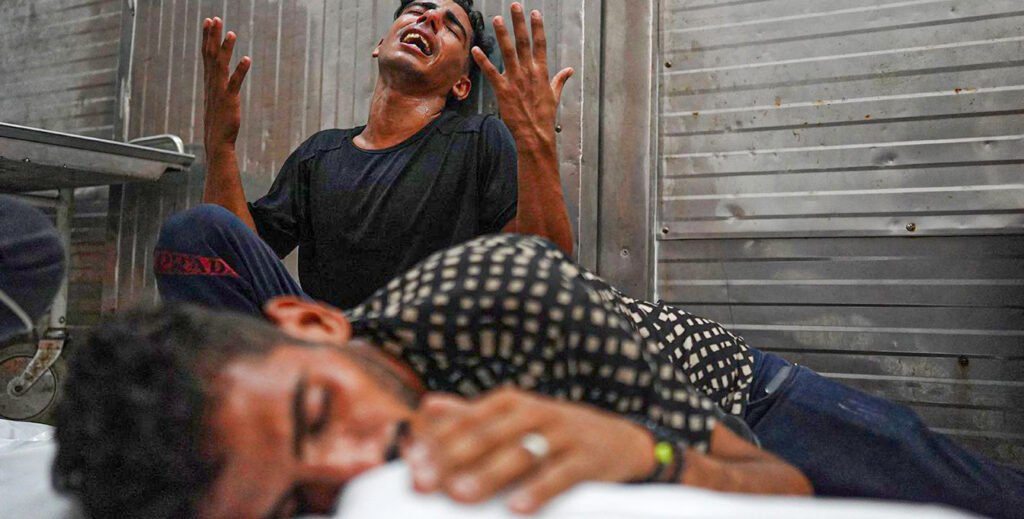
Scholz would come to regret his words as reports mounted almost immediately of Israel’s efforts to engage in the ethnic cleansing of the Palestinian population in Gaza; as its forces destroyed hospitals, schools, homes, and infrastructure; as it withheld food and medicine to the Palestinians under siege; as it allowed multiple diseases to spread, including scabies and polio; and, more generally, as it shamelessly and indiscriminately engaged in mass murder.    

Yet this did not prevent members of the U.S. Congress from applauding and guffawing when Netanyahu came before them and denounced fellow American citizens as “useful idiots” of Iran because they were engaging in their constitutional right to protest Israeli actions. Not one of those who celebrated his words—at least none that I’ve seen—rebuked Smotrich for his yearning that Israel starve all Palestinians in Gaza to free its hostages.

The issue of morality is important for two main reasons. First, it allows the United States to justify its continued supply of weapons to Israel, which have been used in most if not all of Israel’s multiple massacres in Gaza, most recently that at the Tabaain school in Gaza City, in which over 100 people were killed, many of them children. The Israelis, as is their habit, claimed that Hamas members were operating from the school, which Hamas denied. When the Israeli military posted photographs of the alleged Hamas militants killed, a Palestinian professor involved in human rights work, who knew several of the men, published a post on X denying any such affiliation.

The second reason is that for as long as Israel is perceived as a moral actor in the West, when everyone can plainly see the contrary, the rift will grow between Western countries and those around the world who will sense that a double standard is being applied. And this may have major geopolitical repercussions, as many of these states, especially in the Global South, will see no compelling reason to accept Western narratives about the need to defend democracy and human rights. Already, we have seen such rejection over Ukraine, and Gaza has carried the displeasure with U.S. hypocrisy further, a situation that China has exploited very skilfully.

This attitude toward Israeli morality is tied to a mainly Western perception that Israel was founded by the victims of what is perhaps the greatest crime in history, the Holocaust, or Shoah. Someone who touched on this in a superb essay last March in the London Review of Books is the Indian author Pankaj Mishra. Mishra traces how the Israeli establishment over time came “to produce and disseminate a very particular version of the Shoah that could be used to legitimise a militant and expansionist Zionism. Yet it’s the Shoah that has also fed a belief among many supporters of Israel that the country is somehow immune from moral reckoning. Mishra quotes the Israeli columnist Boaz Evron, who described how the “tactic of conflating Palestinians with Nazis and shouting that another Shoah is imminent” was “liberating ordinary Israelis from ‘any moral restrictions, since one who is in danger of annihilation sees himself exempted from any moral considerations which might restrict his efforts to save himself.’”

The observation should not detract from the fact that there is an increasing number of Jews, many of them demonstrating alongside Netanyahu’s “useful idiots,” for whom the essence of their religion is to retain a moral compass in the midst of battle.

Mishra’s conclusion is a powerful one: By engaging in vast crimes in Gaza, “Israel today is dynamiting the edifice of global norms built after 1945.” That is why “[t]he profound rupture we feel today between the past and the present is a rupture in the moral history of the world since the ground zero of 1945—the history in which the Shoah has been for many years the central event and universal reference.” In light of this, “it seems that only those jolted into consciousness by the calamity of Gaza can rescue the Shoah from Netanyahu, [President Joe] Biden, Scholz and [former British prime minister Rishi] Sunak and re-universalise its moral significance.”

Mishra’s views have dawned on many people in the world, but have apparently not penetrated the formidable mental fortress of the United States’ political establishment and its appendages. American politicians who marinate in the language of moral righteousness have ignored, consciously or not, the direction in which Netanyahu is taking Israel and the United States, as he pursues Israel’s destruction of Gaza, undermines a ceasefire agreement, and seeks to widen the war by provoking an armed confrontation between America and Iran—a fantasy Israel’s friends in Washington have enthusiastically relayed to the general public. If this is not aiding and abetting a militant and expansionist form of Zionism, then what is?

More generally, what is the moral worth of an Israeli political establishment, apparently supported by a majority in society, that believes that Israel can indefinitely control millions of Palestinians under illegal occupation, deny them self-determination, keep them economically backward, prevent them from enjoying the most basic rights, and expel them frequently from their villages so that Jewish extremists can steal their property? Is this a defensible plan? Does it in any way entitle Israel to portray itself as a moral paragon?

Mishra is right that as this outrage continues, the tragic value of the Shoah, its universal reference, will dissipate. The past suffering of the Jews will be overwhelmed by memories of Israel’s immorality today, much as Israel’s carnage in Gaza has made many forget October 7. But beyond that, Western elites should be aware of how this affects their own power and influence. If they are serious about defending liberal values in a changing world, Israel cannot be exempted.

The author

Michael Young is a senior editor at the Malcolm H. Kerr Carnegie Middle East Center in Beirut and editor of Diwan, Carnegie’s Middle East blog. More about him and the Center here.


Share

Leave a Reply

Your email address will not be published. Required fields are marked *

Related Posts

Drones over Nordic airports. No damage. No trace. No answers. Most assume Russia—but what if that’s not so? Why is there so much we are not told? This article explores the strategic ambiguity behind recent drone incursions and asks: Who else might benefit from sending drones into NATO airspace? From Ukraine’s surprising drone supremacy to Russia’s possible signalling, the silence itself may be the loudest message. These are the kinds of questions decent, intelligent investigative journalists and commentators could easily research. Why don’t they? Did you, dear reader, know or think of this? That the most powerful weapon in today’s conflicts might be the one that leaves no trace – and no answers. Just enough fear to justify the next move? Recently, drones have repeatedly appeared over Nordic airports and near some military facilities. They cause no damage – for which reason the designation “hybrid attack” is misleading but serves a purpose. These...
“The future belongs to those who imagine it — not those who declare it doomed.” Silence is unusual for us. But even a foundation devoted to peace and ideas needs a pit stop now and then — a moment to refuel, re‑engineer, and prepare for the road ahead. Because the road ahead matters. On January 1, 2026, TFF turns 40. Four decades of independent research, education, and advocacy for the UN Charter norm that “peace shall be established by peaceful means.” And we are not celebrating with nostalgia — we are rebuilding for the future: We are bringing in new Associates, engaging in conferences across continents, and preparing to do what so few dare: offer solutions instead of despair. Because let’s be honest: describing the world as doomed is easy. It is also lazy, unprofessional, and unethical. Imagine a doctor telling a patient: “You’re dying, I can’t see what can...
This is the third appeal from TFF. The first and the second here. On August 22, 2025, the UN officially declared famine in Gaza. The world’s top authority on food security called for help and said starvation will spread further within the Strip unless fighting stops and much more aid is allowed in. More than half a million people in the Gaza Strip are facing catastrophic hunger conditions, while more than a million more are in a food emergency phase, the report states. This man-made catastrophic famine could have been prevented by a steady flow of humanitarian aid into the enclave, relief chief Tom Fletcher pointed out. “Yet food stacks up at borders because of systematic obstruction by Israel,” Mr. Fletcher said. “It is a famine within a few 100 meters of food in a fertile land.” The UN’s top aid official underscored that the famine in Gaza is “caused by cruelty, justified...

Recent Articles

PressInfo # 141, December 21, 2001It’s time to prepare reconciliation between Albanians and Serbs PressInfo # 140, December 14, 2001Ibrahim Rugova’s decade-long leadership in Kosovo/a PressInfo # 139, 11. december, 2001En god nyhet: Jugoslaviens Sannings- och försoningskommission PressInfo # 139, 11. december, 2001Gode nyheder: Jugoslaviens Sandheds- og Forsoningskommission PressInfo # 139, December 11, 2001Good news: Yugoslavia’s Truth and Reconciliation Commission PressInfo # 138, November 8, 2001TFF co-founder PhD with thesis about young people with roots in other cultures PressInfo # 138, November 8, 2001TFF:s medstiftare doktor på avhandling om unga med ursprung i andra kulturer PressInfo # 137, October 17, 2001A new Marshall Plan: Advancing human security and controlling terrorism PressInfo # 136, October 15, 2001The UN and Annan really deserve it PressInfo # 135, October 10, 2001Preventing a terrorist mushroom cloud PressInfo # 134, 17 oktober, 2001Sverige og 11. september PressInfo # 134, October 9, 2001Sweden and September 11...
Peace is promoted by constructive proposals and dialogue Four preceding PressInfos have expressed concern over — and criticised — the ongoing, militarisation of the EU. Some will say: but there are no alternatives. We believe that there are always alternatives, that democracies are characterised by alternatives and choice, and that openly discussed alternatives will improve the quality and legitimacy of society’s decision–making. In addition, it is an intellectual and moral challenge to not only criticise but also be constructive. If we only tell people that we think they are wrong, they are not likely to listen. However, if we say: what are your views on this set of ideas and steps? — we may sometimes engage them in dialogue and sow a seed. Most people in power circles live their daily lives in in a time frame and a social space where certain ideas, viewpoints and concepts are just not...
Photos © TFF 2000 Read PressInfo 90 “Lift the Sanctions and Bring More Aid to Yugoslavia” See Pictures from Belgrade © TFF 2000 Please reprint, copy, archive, quote or re-post this item, but please retain the source.

TFF on Substack

Discover more from TFF Transnational Foundation & Jan Oberg.

Most Popular

PressInfo # 141, December 21, 2001It’s time to prepare reconciliation between Albanians and Serbs PressInfo # 140, December 14, 2001Ibrahim Rugova’s decade-long leadership in Kosovo/a PressInfo # 139, 11. december, 2001En god nyhet: Jugoslaviens Sannings- och försoningskommission PressInfo # 139, 11. december, 2001Gode nyheder: Jugoslaviens Sandheds- og Forsoningskommission PressInfo # 139, December 11, 2001Good news: Yugoslavia’s Truth and Reconciliation Commission PressInfo # 138, November 8, 2001TFF co-founder PhD with thesis about young people with roots in other cultures PressInfo # 138, November 8, 2001TFF:s medstiftare doktor på avhandling om unga med ursprung i andra kulturer PressInfo # 137, October 17, 2001A new Marshall Plan: Advancing human security and controlling terrorism PressInfo # 136, October 15, 2001The UN and Annan really deserve it PressInfo # 135, October 10, 2001Preventing a terrorist mushroom cloud PressInfo # 134, 17 oktober, 2001Sverige og 11. september PressInfo # 134, October 9, 2001Sweden and September 11...
Peace is promoted by constructive proposals and dialogue Four preceding PressInfos have expressed concern over — and criticised — the ongoing, militarisation of the EU. Some will say: but there are no alternatives. We believe that there are always alternatives, that democracies are characterised by alternatives and choice, and that openly discussed alternatives will improve the quality and legitimacy of society’s decision–making. In addition, it is an intellectual and moral challenge to not only criticise but also be constructive. If we only tell people that we think they are wrong, they are not likely to listen. However, if we say: what are your views on this set of ideas and steps? — we may sometimes engage them in dialogue and sow a seed. Most people in power circles live their daily lives in in a time frame and a social space where certain ideas, viewpoints and concepts are just not...
Photos © TFF 2000 Read PressInfo 90 “Lift the Sanctions and Bring More Aid to Yugoslavia” See Pictures from Belgrade © TFF 2000 Please reprint, copy, archive, quote or re-post this item, but please retain the source.
Read More
Imagen-thumbnail-The-Transnational-1
PressInfo # 141, December 21, 2001It’s time to prepare reconciliation between Albanians and Serbs PressInfo # 140, December 14, 2001Ibrahim Rugova’s decade-long leadership in Kosovo/a PressInfo # 139, 11. december, 2001En god nyhet: Jugoslaviens Sannings- och försoningskommission PressInfo # 139, 11. december, 2001Gode nyheder: Jugoslaviens Sandheds- og Forsoningskommission PressInfo # 139, December 11, 2001Good news: Yugoslavia’s Truth and Reconciliation Commission PressInfo # 138, November 8, 2001TFF co-founder PhD with thesis about young people with roots in other cultures PressInfo # 138, November 8, 2001TFF:s medstiftare doktor på avhandling om unga med ursprung i andra kulturer PressInfo # 137, October 17, 2001A new Marshall Plan: Advancing human security and controlling terrorism PressInfo # 136, October 15, 2001The UN and Annan really deserve it PressInfo # 135, October 10, 2001Preventing a terrorist mushroom cloud PressInfo # 134, 17 oktober, 2001Sverige og 11. september PressInfo # 134, October 9, 2001Sweden and September 11...
Imagen-thumbnail-The-Transnational-1
Peace is promoted by constructive proposals and dialogue Four preceding PressInfos have expressed concern over — and criticised — the ongoing, militarisation of the EU. Some will say: but there are no alternatives. We believe that there are always alternatives, that democracies are characterised by alternatives and choice, and that openly discussed alternatives will improve the quality and legitimacy of society’s decision–making. In addition, it is an intellectual and moral challenge to not only criticise but also be constructive. If we only tell people that we think they are wrong, they are not likely to listen. However, if we say: what are your views on this set of ideas and steps? — we may sometimes engage them in dialogue and sow a seed. Most people in power circles live their daily lives in in a time frame and a social space where certain ideas, viewpoints and concepts are just not...
Imagen-thumbnail-The-Transnational-1
Photos © TFF 2000 Read PressInfo 90 “Lift the Sanctions and Bring More Aid to Yugoslavia” See Pictures from Belgrade © TFF 2000 Please reprint, copy, archive, quote or re-post this item, but please retain the source.
Imagen-thumbnail-The-Transnational-1
Av FRANK SØHOLM GREVIL 16 augusti 2004  Vi er nu nået til tredje akt i det absurde teaterstykke, der i analogi med de store skueprocesser i Moskva 1936-38 er blevet døbt ‘Grevil-sagen’. Første akt bestod i min anonyme fremlæggelse af egenhændigt nedklassificerede rapporter i Berlingske Tidende i februar og marts. Andet akt udgjordes af min fremtræden med navn og billede i Information i april samt den efterfølgende mediestorm, som uden min direkte medvirken kostede en forsvarsminister taburetten samt en sigtelse for brud på tavshedspligten. Tredje akt bliver en retssag, hvor jeg står tiltalt for at have overtrådt straffelovens bestemmelser om uberettiget videregivelse eller udnyttelse af fortrolige oplysninger. Statsanklageren har ovenikøbet valgt at påberåbe sig særligt skærpende omstændigheder. Da jeg aldrig har modtaget betaling for at stille rapporterne til rådighed eller lade mig interviewe, må det skærpende bestå i, at “videregivelsen eller udnyttelsen er sket under sådanne omstændigheder, at det påfører...
Imagen-thumbnail-The-Transnational-1
Af Svenska Irakkommittén mot de Ekonomiska Sanktionerna (SIES) 13 september 2002 FN:s ekonomiska sanktioner mot Irak har nu pågått i tolv år och drabbat det irakiska folket med svåra lidanden. Enligt FN:s egna siffror har mer än 1,5 miljoner människor, varav ca 600 000 barn, dött som en direkt följd av sanktionerna. Dessutom har ett lågintensivt bombkrig mot landet pågått under dessa år. Av all denna förödelse- orsakad huvudsakligen av amerikansk och brittisk politik- har Saddam Husseins brutala och diktatoriska regim snarast stärkts än försvagats. Nu förbereder USA under president Bushs ledning ett storskaligt bombkrig mot Irak som kommer att innebära ett ännu större lidande för civilbefolkningen. Ett sådant krig kommer dessutom att ytterligare undergräva freden och säkerheten i världen. Att upprätta en demokratisk regim i Irak är det irakiska folkets angelägenhet och får enligt folkrätten inte ske med krigshandlingar utifrån. Folkrätten och FN:s stadgar måste respekteras. Vi vädjar till...
