Isolationism or Imperialism: You Really Can’t Imagine a Third Possibility?

Of the United Nations’ 18 major human rights treaties, the United States is party to 5, fewer than any other nation on earth, except Bhutan (4), and tied with Malaysia, Myanmar, and South Sudan, a country torn by warfare since its creation in 2011.

The United States is the only nation on earth that has not ratified the Convention on the Rights of the Child. It is the only country to have pulled out of the Paris Climate Agreement. It is by many measures a top destroyer of the natural environment, yet has been a leader in sabotaging climate protection negotiations for decades.

Seven countries and the European Union reached an agreement on Iran and nuclear energy, but the United States uniquely withdrew. President Donald Trump is threatening to withdraw, and Congress is threatening to allow it, from critical nuclear disarmament treaties reached by Ronald Reagan and Mikhail Gorbachev.

The United States not only stands outside the International Criminal Court, but openly threatens sanctions against it and against nations that support it.

The United States leads opposition to democratization of the United Nations and easily holds the record for use of the veto in the Security Council during the past 50 years, having vetoed U.N. condemnation of South African apartheid, Israel’s wars and occupations, chemical and biological weapons, nuclear weapons proliferation and first use and use against non-nuclear nations, U.S. wars in Nicaragua and Grenada and Panama, the U.S. embargo on Cuba, Rwandan genocide, the deployment of weapons in outerspace, etc.

Contrary to popular opinion, the United States is not a leading provider of aid to the suffering of the world, not as a percentage of gross national income or per capita or even as an absolute number of dollars.

Unlike other countries, the United States counts as 40 percent of its so-called aid, weapons for foreign militaries. Its aid as a whole is directed around its military goals, and its immigration policies have long been shaped around skin color, and lately around religion, not around human need — except perhaps inversely, focusing on locking up and building walls to punish the most desperate.

Keeping the above context, discussed at greater length here, in mind, let’s add to it one other set of facts. Unarmed civilian protectors and nonviolent peaceworkers from groups like Nonviolent Peaceforce have been proving for many years that people can accomplish more without guns than with them.

Thorough studies of violent and nonviolent campaigns over the past century have well established that principally nonviolent efforts are more likely to succeed and those successes virtually guaranteed to be far longer lasting. A consensus has developed even within military establishments that much of what militaries do is counterproductive on its own terms, so much so that “there is no military solution” has practically become a required mantra to be pointlessly but accurately repeated by those attempting military solutions.

The tools of diplomacy, cooperation, aid, nonviolent investment, the rule of law, skilled conflict resolution, disarmament, and peaceful conversion have become extremely well-developed and understood, if hardly ever thought of or employed or widely communicated.

Now, keeping all of that in mind, does anything strike you as odd about exclamations that withdrawing U.S. troops from a war is a form of “isolationism”?

Is there anything peculiar about the scores of people steadily emailing me to condemn a planned protest of NATO as, you guessed it, “isolationism”?

Five years ago, there was a debate over whether to bomb Syria flat, and those opposed to doing so were accused of “isolationism.” Now the idea of pulling troops out of Syria or Afghanistan or ceasing to help bomb and starve the people of Yemen is subjected to the same rhetorical assault. That Trump promises to keep the occupation of Iraq going is understood as reassuring “engagement with the world” by people who demanded an end to the occupation of Iraq when George W. Bush was president, and who pretended to celebrate its ending when Barack Obama pretended to end it.

This is simple-minded thinking in the extreme, notwithstanding its claims to be just the opposite. “I’m against war but we can’t be simplistic about it and just end one of them willy-nilly, abandoning our allies.” This is the type of language used to support imperialism in the great debate between isolationism and imperialism, a debate wholly dependent on the ridiculous pretense that these two choices constitute the full range of possible human behaviors.

A lot of people no longer fall for such sophistry when it comes to domestic politics. “Should we ignore drug users or lock them up?” The obvious answer of “No, we shouldn’t do either of those things,” actually occurs to a good many people unprompted. “Should we allow shoplifting or imprison shoplifters for the rest of their lives?”

This is a question so patently stupid that it will actually elicit from some people asked it the creative response: “Why not end poverty instead? It’s not like we don’t have plenty of money to do that!”

But what about this question: “Should we keep the U.S. military engaged in each of these wars or ignore and abandon and forget about and forsake the people there?” Ah, now we have a patently stupid question that has been repeated so many, many times that it’s hard to hear the stupidity of it.
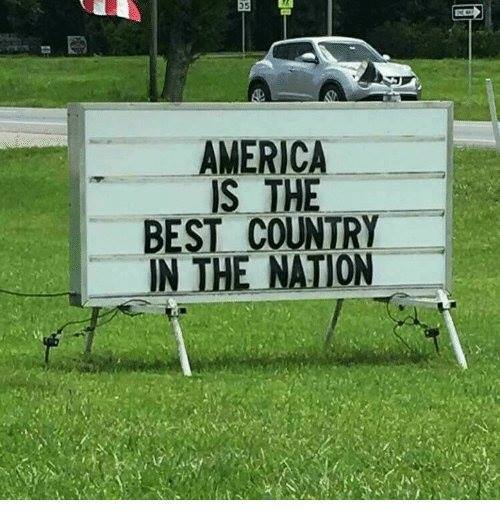
Each year that a war gets worse while continuing somehow fails to constitute outrageous proof that it should not have been continued. The past year of the war on Afghanistan has been one of the deadliest, yet it is the fear that things might go badly after U.S. troops leave that is supposed to concern us.

And we are supposed to be powerless to do anything about it other than increase the bombings or avert our eyes to focus on blaming peaceniks.

Here’s another idea that I think has been proposed so infrequently in part because most people either find it unthinkable or find it too obvious to bother saying: What if we were to try an approach of real anti-isolationism?

What if the United States were to:

– sign and ratify and abide by the major laws of the world,
– support the world’s systems of justice,
– cooperate in disarmament (including the nuclear weapons ban treaty),
– collaborate on climate protection,
– provide humanitarian aid on an unprecedented scale (albeit miniscule in comparison with military spending),
– jumpstart a reverse arms race,
– democratize the United Nations,
– participate in truth and reconciliation hearings,
– invest in unarmed peacekeeping,
– cease arming and training brutal dictatorships, and
– actually back democracy abroad and by its own example?

The son of the last dictator the United States imposed on Iran is waiting hopefully in Bethesda, Maryland, for the next U.S. overthrow of the Iranian government, while Iran has not picked out a future King of America.

What if the United States ceased worrying about rogue nations and focused on ceasing to be one?

But, you may object, none of that fantasy is going to happen this week, while meanwhile the Kurds are going to be massacred without their U.S. military friends.

Back here in the real world, in which the United States and its allies are going to go on flooding the Middle East with weapons and using war as foreign policy, each war must be continued until . . . well, until a fantasy becomes possible, or Jesus comes back from wherever he’s been, or the Democrats take the throne but don’t act like, you know, the Democrats have always acted, or something!

Of course, we all know what the something is going to be: climate collapse, the Middle East becoming uninhabitable for humans, and extreme weather disasters in much of the rest of the globe.

And the response to this shocking if completely predictable and predicted development will be violence or nonviolence, depending on what we have been conditioned to suppose is normal or “natural” or “inevitable.”

Given that what is at stake here is human survival, given that the U.S. presidency has been gradually endowed with imperial powers such that the fate of thousands of people can be determined by a tweet, are we really obliged to limit our short-term thinking to (a) “support the troops” by keeping them in a desert exchanging bullets with the locals, or (b) “abandon” people?

Why not demand of the U.S. government and/or other nations purporting to care about humanity:
– immediate announcement of an end to the weapons trade,
– the opening of diplomatic talks with all relevant parties,
– the commencement of a major aid program, and
support for a major new program of unarmed peacekeeping through a coalition of the decent or if possible through a United Nations in which the United States foreswears the veto?

Such an alternative to the imperialism-or-isolationism trap is no more difficult to think of or to act on than treating drug addiction or crime or poverty as reason to help people rather than to punish them.

The opposite of bombing people is not ignoring them. The opposite of bombing people is embracing them.

By the standards of the U.S. communications corporations, Switzerland must be the most isolationist land because it doesn’t join in bombing anyone.

The fact that it supports the rule of law and global cooperation, and hosts gatherings of nations seeking to work together is simply not relevant.

How about in the new year at least we try a little new thinking?

Share

Leave a Reply

Your email address will not be published. Required fields are marked *

Related Posts

Till Sofias huvudsida
Associate Editor at Russia in Global Affairs in Moscow. Board member at International Institute for Peace (IPP) in Vienna. 
Board member at Center for Nationalism Studies (CNS) in Sarajevo.
 Editorial Board member at Contemporary World Economy in Moscow.
 EMPLOYMENT University of South-Eastern Norway
 – Professor, April 2020 – ongoing. Russia in Global Affairs
 – Associate Editor Nov 2018 – ongoing. Higher School of Economics, Moscow, Russia – Professor Aug 2018 – April 2020. Higher School of Economics, Moscow, Russia
 – Visiting Scholar, Aug 2017 – Aug 2018. Western Sydney University, Sydney, Australia – Adjunct Research Fellow Aug 2016 – Aug 2019. 
 Macquarie University (PICT), Sydney, Australia
 – Lecturer/Scholarly Teaching Fellow, Feb 2011 –Dec 2017
. EDUCATION Amsterdam Vrije Universiteit, Amsterdam, Netherlands – 
PhD Politics and International Relations (Doctor of Social Sciences) 2010-2014. 

 Macquarie University, Sydney, Australia – 
PhD Politics and International Relations (Doctor of Philosophy) 2010-2014. Macquarie University, Sydney, Australia 
- Master of International...
“>Sino–Indian Agreement 1954, are: • mutual respect for each other’s territorial integrity and sovereignty, • mutual non-aggression, • mutual non-interference in each other’s internal affairs, • equality and co-operation for mutual benefit, and • peaceful co-existence Read more about it here. These principles, also called Panchsheel, are fundamental to Chinese foreign policy and embedded in the preamble of the country’s constitution. Here is an excerpt of the invitation letter: “The commemorative events, to be held under the theme “From the Five Principles of Peaceful Coexistence to Building a Community with a Shared Future for Mankind” will begin with a commemorative conference, followed by a luncheon and sub-forums. His Excellency Xi Jinping, President of the People’s Republic of China, will attend and deliver an important speech at the commemorative conference, and his Excellency Li Qiang, premier of the State Council, will moderate the conference. His Excellency Wang Yi, member of the...

Recent Articles

Jan Øberg behandler i artiklen en lang række faktorer, som ligger til grund for den måde vores samfund er organiseret på – og derfor også for konflikter. Artiklen introducerer således sammenhængen mellem familien, foreninger, regeringer, NGO’ er, nation, stat, nationalstat og alliancer for på denne måde bedre at kunne forstå konflikter og i sidste ende blive klogere mht. at løse disse. Øberg, der er fortaler for global bevidsthed, hvilket skal ses i lyset af den øgede globalisering, skelner mellem kulturkamp og kulturdialog. Endelig behandles begrebet magt og magtesløshed: giver magt ret til at udøve magt – fordi man mener at have ret? Litteraturliste og arbejdsspørgsmål efter artiklen. Ordene vi bruger om verden I satellitperspektiv kan man godt tale om den menneskelige familie eller menneskeheden. Udtrykket understreger, at der eksisterer – eller burde eksistere – et fællesskab fordi vi alle er mennesker og sammen bebor denne klode og ingen anden. Og...
Kapitel 2: Forskellige sider af Europa og USA…fortsat 2.5 Militære relationer I forbifarten har vi allerede sagt nogle ting om USA’s militære situation. Kig lige en gang til på afsnit 2.3. Nu skal vi uddybe det militære forhold mellem USA og EU. Der er en række ligheder mellem visse europæiske landes og USA’s militær. Næsten alle er med på en eller anden måde i NATO, direkte som medlem – selv Island, der ikke har et forsvar – eller indirekte i Partnerskab for Fred. USA og Canada er med i OSCE (på dansk OSSE), Organisationen for Sikkerhed og Samarbejde i Europa, der tæller over 50 lande. USA samt England og Frankrig er kernevåbenstater og de har styrker til intervention langt borte fra hjemlandet, om end USA’s er tifold større. Alle har også en omfattende våbeneksport og bruger den som et middel til at tjene penge og få loyale venner på, det...
Background Christian Harleman and Jan Oberg conducted a fact-finding mission to Burundi between November 26 and December 6, 2003. (See websites about the country here). The first TFF mission took place in March 1999. Unfortunately, since then it has not been practically possible to implement the co-operation with Burundi’s Ministry of Education and Burundian NGOs that was planned at the time. The 2003 mission had three purposes. First, to do fact-finding in general about the situation and, in particular, the progress under the Arusha Peace Process. Second, to explore the possibilities for co-operation between the government and relevant NGOs on the one hand and TFF on the other, in order to develop and deepen the existing competence in fields such as conflict-understanding, reconciliation and peace-building. Finally, third, to find out whether it would be possible, in co-operation with the Swedish Rescue Services Agency (Statens Räddningsverk), to establish a health care unit that...

TFF on Substack

Discover more from TFF Transnational Foundation & Jan Oberg.

Most Popular

Jan Øberg behandler i artiklen en lang række faktorer, som ligger til grund for den måde vores samfund er organiseret på – og derfor også for konflikter. Artiklen introducerer således sammenhængen mellem familien, foreninger, regeringer, NGO’ er, nation, stat, nationalstat og alliancer for på denne måde bedre at kunne forstå konflikter og i sidste ende blive klogere mht. at løse disse. Øberg, der er fortaler for global bevidsthed, hvilket skal ses i lyset af den øgede globalisering, skelner mellem kulturkamp og kulturdialog. Endelig behandles begrebet magt og magtesløshed: giver magt ret til at udøve magt – fordi man mener at have ret? Litteraturliste og arbejdsspørgsmål efter artiklen. Ordene vi bruger om verden I satellitperspektiv kan man godt tale om den menneskelige familie eller menneskeheden. Udtrykket understreger, at der eksisterer – eller burde eksistere – et fællesskab fordi vi alle er mennesker og sammen bebor denne klode og ingen anden. Og...
Kapitel 2: Forskellige sider af Europa og USA…fortsat 2.5 Militære relationer I forbifarten har vi allerede sagt nogle ting om USA’s militære situation. Kig lige en gang til på afsnit 2.3. Nu skal vi uddybe det militære forhold mellem USA og EU. Der er en række ligheder mellem visse europæiske landes og USA’s militær. Næsten alle er med på en eller anden måde i NATO, direkte som medlem – selv Island, der ikke har et forsvar – eller indirekte i Partnerskab for Fred. USA og Canada er med i OSCE (på dansk OSSE), Organisationen for Sikkerhed og Samarbejde i Europa, der tæller over 50 lande. USA samt England og Frankrig er kernevåbenstater og de har styrker til intervention langt borte fra hjemlandet, om end USA’s er tifold større. Alle har også en omfattende våbeneksport og bruger den som et middel til at tjene penge og få loyale venner på, det...
Background Christian Harleman and Jan Oberg conducted a fact-finding mission to Burundi between November 26 and December 6, 2003. (See websites about the country here). The first TFF mission took place in March 1999. Unfortunately, since then it has not been practically possible to implement the co-operation with Burundi’s Ministry of Education and Burundian NGOs that was planned at the time. The 2003 mission had three purposes. First, to do fact-finding in general about the situation and, in particular, the progress under the Arusha Peace Process. Second, to explore the possibilities for co-operation between the government and relevant NGOs on the one hand and TFF on the other, in order to develop and deepen the existing competence in fields such as conflict-understanding, reconciliation and peace-building. Finally, third, to find out whether it would be possible, in co-operation with the Swedish Rescue Services Agency (Statens Räddningsverk), to establish a health care unit that...
Read More
Imagen-thumbnail-The-Transnational-1
Jan Øberg behandler i artiklen en lang række faktorer, som ligger til grund for den måde vores samfund er organiseret på – og derfor også for konflikter. Artiklen introducerer således sammenhængen mellem familien, foreninger, regeringer, NGO’ er, nation, stat, nationalstat og alliancer for på denne måde bedre at kunne forstå konflikter og i sidste ende blive klogere mht. at løse disse. Øberg, der er fortaler for global bevidsthed, hvilket skal ses i lyset af den øgede globalisering, skelner mellem kulturkamp og kulturdialog. Endelig behandles begrebet magt og magtesløshed: giver magt ret til at udøve magt – fordi man mener at have ret? Litteraturliste og arbejdsspørgsmål efter artiklen. Ordene vi bruger om verden I satellitperspektiv kan man godt tale om den menneskelige familie eller menneskeheden. Udtrykket understreger, at der eksisterer – eller burde eksistere – et fællesskab fordi vi alle er mennesker og sammen bebor denne klode og ingen anden. Og...
Imagen-thumbnail-The-Transnational-1
Kapitel 2: Forskellige sider af Europa og USA…fortsat 2.5 Militære relationer I forbifarten har vi allerede sagt nogle ting om USA’s militære situation. Kig lige en gang til på afsnit 2.3. Nu skal vi uddybe det militære forhold mellem USA og EU. Der er en række ligheder mellem visse europæiske landes og USA’s militær. Næsten alle er med på en eller anden måde i NATO, direkte som medlem – selv Island, der ikke har et forsvar – eller indirekte i Partnerskab for Fred. USA og Canada er med i OSCE (på dansk OSSE), Organisationen for Sikkerhed og Samarbejde i Europa, der tæller over 50 lande. USA samt England og Frankrig er kernevåbenstater og de har styrker til intervention langt borte fra hjemlandet, om end USA’s er tifold større. Alle har også en omfattende våbeneksport og bruger den som et middel til at tjene penge og få loyale venner på, det...
Imagen-thumbnail-The-Transnational-1
Background Christian Harleman and Jan Oberg conducted a fact-finding mission to Burundi between November 26 and December 6, 2003. (See websites about the country here). The first TFF mission took place in March 1999. Unfortunately, since then it has not been practically possible to implement the co-operation with Burundi’s Ministry of Education and Burundian NGOs that was planned at the time. The 2003 mission had three purposes. First, to do fact-finding in general about the situation and, in particular, the progress under the Arusha Peace Process. Second, to explore the possibilities for co-operation between the government and relevant NGOs on the one hand and TFF on the other, in order to develop and deepen the existing competence in fields such as conflict-understanding, reconciliation and peace-building. Finally, third, to find out whether it would be possible, in co-operation with the Swedish Rescue Services Agency (Statens Räddningsverk), to establish a health care unit that...
Imagen-thumbnail-The-Transnational-1
Former UN Under-Secretary-General with special responsibility for peacekeeping operations TFF associate August 20, 2003 YRINGHAM, Mass.- Ralph Bunche was born in Detroit 100 years ago today (August 7, 2003). His passionate determination to get results did not extend to seeking credit for them, so his work is better remembered than he is. Of all his many accomplishments – civil rights pioneer, Nobel Peace Prize laureate, chief drafter of two chapters of the United Nations charter, negotiator of the armistices that ended the first Arab-Israeli war – Bunche said he was proudest of developing what came to be known as peacekeeping. Setting up the United Nations Truce Supervision Organization in Palestine in 1948, Bunche formulated the principles that have governed peacekeeping operations ever since. In the 1956 Suez crisis, working with Secretary General Dag Hammarskjold and Lester Pearson of Canada, he organized the first peacekeeping force, the United Nations Emergency Force...
– nästan 11 månader Till Sofia nästan 11 månader # 1  Till Sofias huvudsida Till alla Privata Foto-Serier
Till Sofias huvudsida