
Global Justice in the 21st Century

I make no claim to approach this book with an open mind. Making a fuller disclosure, I acknowledge with some pride that I have endorsed Justice for Some even before it was published, and my blurb appears on its back cover.

Beyond this, two months ago I took part in a book launch at George Mason University where Noura Erakat is on the faculty. My effort in this review is not to make a calm appraisal of the book’s strengths and weaknesses, but rather to celebrate it as a major scholarly contribution to the critical literature devoted to resolving the Israel/Palestine struggle in line with the dictates of justice rather than by a continuing reliance on muscular weight of subjugation as augmented by geopolitics.

And, accordingly, to seize this opportunity to urge a careful reading of Justice for Some by all those interested in the Palestinian struggle as well as those curious about the way law works for and against human well-being as revealed by its use in a sequence of historical and societal circumstances.

Originally published at richardfalk.wordpress.com

Erakat focuses on the deformations of militarism and geopolitics that have been inflicted on the Palestinian people as a whole, making readers aware of how ‘law’ and injustice have all too often collaborated through the decades. Erakat brilliantly offers readers this illuminating critical jurisprudential exposition, but she does not stop there.

Justice for Somealso partakes of a constructivist methodology in the following sense. While Israel has cleverly deployed law to oppress the Palestinian people, Erakat’s text also explains to readers how law can and is being used on behalf of justice, serving the cause of Palestinian empowerment as integral to the ongoing emancipatory struggle of the Palestinian people.

In a sense my own partisanship on behalf of the Palestinian struggle parallels that of Erakat who makes evident from the Preface that her intention is to depict Palestinian territorial and national victimization as transparently as possible through the optic of law and human rights and to deplore the Israeli use of legal regimes, procedures, and tactics to carry forward the Zionist project at the cruel expense of the Palestinians.

Negating the mainstream academic canon

Justice for Some represents an important trend in scholarship, which seeks to combine academic objectivity with undisguised ethical and political engagement. Such a combination of goals might seem appropriate when dealing with a struggle as poignant as Israel/Palestine, but it has not been so treated in mainstream scholarship.

The academic canon on scholarly writing continues to favour the posture of neutrality or supposed objectivity as to policy implications, which is but a professional mask worn by naïve or cynical academicians unwilling to own up to their own subjectivities of perspective.

Worse than this, the Zionist influence over scholarly and media discourse on this subject-matter is so great that forthright writing of the sort contained in Erakat’s book is censored, self-censored, and attacked as ‘biased.’

For the mainstream, Erakat’s originality and the persuasiveness of her analysis is ignored if she is lucky, and if not, demeaned. Such authors are often attacked as representatives of the so-called ‘New Anti-Semitism,’ that is, a label used to discredit writing and writers critical of Israel’s policies and practices by maliciously merging criticism with hatred of Jews.

This deformed equation offers us a definition of hate speech that amounts to a death sentence for freedom of expression.

It is a national disgrace that American legislative bodies at the state and federal level are swallowing this kool aid!

Law is politics” – and Israel has been better at using it

It is difficult to convey Erakat’s jurisprudential originality without extensive discussion, but I will try. Much springs from her bold assertion “I argue that law is politics.” (4)

By this she means, put crudely, ‘the force of law’ depends on ‘the law of force,’ that is legal rights without the capability to implement the law to some degree is without effect or its insidious effect is to give legal cover to inhumane behavior.  

Or as Erakat puts it metaphorically, politics provides the wind that a sail needs for the boat to move forward.

At the same time Erakat when discussing Palestinian rights and tactics is insistent that the advocacy of ‘force’ does not imply a reliance on or a call for violence. Her tactical affirmation of nonviolence becomes explicit when she discusses approvingly the political relevance of the BDS campaign as well as in her endorsement of various efforts to discredit Israel at the United Nations and elsewhere.

Overall, Erakat reasons persuasively that Israel has been more adept than the Palestinians in making effective use of law, partly because the wind is at their back due to their linkages to geopolitics, especially the United States, but also because Israeli legal experts have done their ‘legal work’ better than have the Palestinians. Erakat’s book can be read as a stimulus to Palestinians to make better use of what she calls ‘principled legal opportunism.’ (page 19)

In a larger sense, Israel due to geopolitical backing and discourse control has succeeded in having its most flagrant international crimes including the excessive use of force, collective punishment, and state terror ‘legalized’ under rubrics of ‘security’ and ‘self-defense,’ open-ended legal prerogatives inherent in the very notion of a sovereign state.

In contrast, Palestinians exercising an entirely justifiable right of resistance even if exercised against military targets is internationally criminalized and Palestinian behavior is characterized as ‘acts of terror.’

Some examples of international law defiance

Israel’s most sinister ‘legal’ trick has been to defy international law repeatedly and flagrantly without suffering any adverse consequences. This dynamic of defying the law can be illustrated by Israel’s dismissal of the World Court Advisory Opinion of 2004 despite the agreement of 14 of the 15 judges (does it surprise anyone, that the lone dissenter was the American judge?) that building the separation wall on occupied Palestinian territory violated the basic norms of international humanitarian law, including the Geneva Conventions (1977).

Erakat also deserves praise by maintaining a scholarly tone while not mincing her words or becoming entrapped in the often fuzzy language of law. The question of language is crucial to her understanding of the disjunctions between law and justice that have deprived the Palestinian people, and their nation, of the basic rights for more than a century. Erakat is straightforward in a manner of very few international law scholars that the issues at stake arise can be only properly evaluated if fully contextualized historically and ideologically.  

Following Anthony Anghie, and several others, Erakat deems it essential to expose the roots of modern international law as reflective of a legal framing that served to legitimate European colonialism and its practices. She provocatively extends this generalization to Israel, identifying it as the last ‘settler colonial’ state to be established.

I would add that Israel was established despite the powerful anti-colonial current of history that has flowed in one direction since 1945.

Erakat is equally prepared to identify the Israeli prolonged occupation of Palestine following the 1967 War as having become ‘annexation.’ She also affirms the view that Israel’s manner of controlling the Palestinian people through political fragmentation and the instrumentalities of law is a form of ‘apartheid.’

In critical and constructivist approaches the avoidance of legal euphemisms is central to the central undertaking of liberating legal mechanisms from the machinations of states.

What truth-telling language does is to see through the legal masquerade so as to illuminate the moral issues at stake. This linguistic surgery is a prerequisite to elucidating the relationship of law to justice and injustice not only with respect to Palestine, but in relation to particular issues, whether involving international migrants, abused minorities, or peoples denied self-determination.

What can be learned from “Justice for Some”

Justice for Some helped me realize that this core sense of law as an inevitably politicized instrument of control and resistance can be at odds with the idea that I emphasized earlier in my own legal writing, that the true meaning of legal norms can only be discerned by their proper interpretation.

I argued against the Vietnam War on this basis, contending that the American role entailed uses of force in violation of the UN Charter and international law governing uses of force, and that this argument was legally superior to the justifications being set forth by the U.S. Government and its apologists.

This regulative (or hermeneutic) paradigm reflects the rhetoric of international law and the way lawyers habitually address controversy, including the modes of legal reasoning used by judges in tribunals, whether domestic or international, to explain and justify their decisions. It is especially applicable to the use of international law in statecraft to validate or invalidate contested behavior, indirectly reflecting both the intensity of the political winds filling the sails of the ship of state, but also the sophistication and motivations of whoever is doing the lawyering, and for whom.

Against the background of this understanding, what Erakat seeks and achieves is less about the emancipatory interpretation of legal norms and more about allowing us to grasp the manipulative nexus that underlies international legal discourse, and shapes political patterns of control and resistance.

The regulative paradigm is complementary and backgrounded as Erakat’s overriding purpose is to develop a comprehensive rationale for a political and normative paradigm that fits the reality of the Palestinian and similar struggles for basic rights, especially that of self-determination, better than do traditional approaches.

These paradigms do not necessarily contradict one another, but rest on differing functions of law and lawyers in various contexts, and from a jurisprudential perspective can be looked upon as complementary.

Erakat’s undertaking is less concerned with understanding the way the world is, than how it ought to be governed, and how law and lawyering can (or cannot) make this happen.

In this sense, the defining spirit of Noura Erakat’s book calls to mind that famous remark of Karl Marx: “Philosophers have hitherto only interpreted the world in various ways; the point is to change it.” (Theses on Feuerbach).
Originally published at richardfalk.wordpress.com

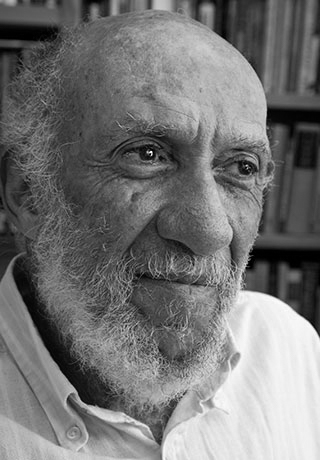
Professor Falk became an adviser to TFF when it was established in 1985.

Share

Leave a Reply

Your email address will not be published. Required fields are marked *

Related Posts

Officially, the drones were not identified. By simply thinking critically – which journalists and selected experts no longer do – there may be a good reason for that. And this article will never be mentioned in Denmark… Drones over Denmark. No damage. No trace. No answers. Yet the headlines scream “Russian threat,” and Prime Minister Mette Frederiksen speaks with a certainty that defies logic: “We don’t know they were Russian—but we know Russia is the biggest threat to Europe.” It could be nobody else – unless you make an interest analysis which I did two days ago. This is not security policy. It’s theatre. And the audience is being played. Let’s rewind. These drones—unphotographed, untracked, unclaimed—appear and vanish like ghosts. Airports shut down. Panic spreads. Military budgets swell. And the narrative hardens: Russia is behind it. But what if that’s not just wrong but deliberately misleading? Here’s a hypothesis for...
And why the world, especially the EU, must now declare itself independent of the United States. UN’s 80th anniversary This year, the United Nations celebrates the 80th anniversary of its founding. The UN was formed after the scourge of the Second World War, in which 70 to 85 million people were killed and many countries were destroyed. That war came on the heels of the First World War, which also killed between 15 and 22 million people. After the Second World War, especially after the use of nuclear weapons by the United States, which marked a turning point in the history of warfare that could result in the end of civilisation as we know it, humanity decided to move away from the era of empires and big power politics and usher in a new era of peace, freedom and cooperation. These were the principles enshrined in the UN Charter. The United States...
Drones over Nordic airports. No damage. No trace. No answers. Most assume Russia—but what if that’s not so? Why is there so much we are not told? This article explores the strategic ambiguity behind recent drone incursions and asks: Who else might benefit from sending drones into NATO airspace? From Ukraine’s surprising drone supremacy to Russia’s possible signalling, the silence itself may be the loudest message. These are the kinds of questions decent, intelligent investigative journalists and commentators could easily research. Why don’t they? Did you, dear reader, know or think of this? That the most powerful weapon in today’s conflicts might be the one that leaves no trace – and no answers. Just enough fear to justify the next move? Recently, drones have repeatedly appeared over Nordic airports and near some military facilities. They cause no damage – for which reason the designation “hybrid attack” is misleading but serves a purpose. These...

Recent Articles

PressInfo # 141, December 21, 2001It’s time to prepare reconciliation between Albanians and Serbs PressInfo # 140, December 14, 2001Ibrahim Rugova’s decade-long leadership in Kosovo/a PressInfo # 139, 11. december, 2001En god nyhet: Jugoslaviens Sannings- och försoningskommission PressInfo # 139, 11. december, 2001Gode nyheder: Jugoslaviens Sandheds- og Forsoningskommission PressInfo # 139, December 11, 2001Good news: Yugoslavia’s Truth and Reconciliation Commission PressInfo # 138, November 8, 2001TFF co-founder PhD with thesis about young people with roots in other cultures PressInfo # 138, November 8, 2001TFF:s medstiftare doktor på avhandling om unga med ursprung i andra kulturer PressInfo # 137, October 17, 2001A new Marshall Plan: Advancing human security and controlling terrorism PressInfo # 136, October 15, 2001The UN and Annan really deserve it PressInfo # 135, October 10, 2001Preventing a terrorist mushroom cloud PressInfo # 134, 17 oktober, 2001Sverige og 11. september PressInfo # 134, October 9, 2001Sweden and September 11...
Peace is promoted by constructive proposals and dialogue Four preceding PressInfos have expressed concern over — and criticised — the ongoing, militarisation of the EU. Some will say: but there are no alternatives. We believe that there are always alternatives, that democracies are characterised by alternatives and choice, and that openly discussed alternatives will improve the quality and legitimacy of society’s decision–making. In addition, it is an intellectual and moral challenge to not only criticise but also be constructive. If we only tell people that we think they are wrong, they are not likely to listen. However, if we say: what are your views on this set of ideas and steps? — we may sometimes engage them in dialogue and sow a seed. Most people in power circles live their daily lives in in a time frame and a social space where certain ideas, viewpoints and concepts are just not...
Photos © TFF 2000 Read PressInfo 90 “Lift the Sanctions and Bring More Aid to Yugoslavia” See Pictures from Belgrade © TFF 2000 Please reprint, copy, archive, quote or re-post this item, but please retain the source.

TFF on Substack

Discover more from TFF Transnational Foundation & Jan Oberg.

Most Popular

PressInfo # 141, December 21, 2001It’s time to prepare reconciliation between Albanians and Serbs PressInfo # 140, December 14, 2001Ibrahim Rugova’s decade-long leadership in Kosovo/a PressInfo # 139, 11. december, 2001En god nyhet: Jugoslaviens Sannings- och försoningskommission PressInfo # 139, 11. december, 2001Gode nyheder: Jugoslaviens Sandheds- og Forsoningskommission PressInfo # 139, December 11, 2001Good news: Yugoslavia’s Truth and Reconciliation Commission PressInfo # 138, November 8, 2001TFF co-founder PhD with thesis about young people with roots in other cultures PressInfo # 138, November 8, 2001TFF:s medstiftare doktor på avhandling om unga med ursprung i andra kulturer PressInfo # 137, October 17, 2001A new Marshall Plan: Advancing human security and controlling terrorism PressInfo # 136, October 15, 2001The UN and Annan really deserve it PressInfo # 135, October 10, 2001Preventing a terrorist mushroom cloud PressInfo # 134, 17 oktober, 2001Sverige og 11. september PressInfo # 134, October 9, 2001Sweden and September 11...
Peace is promoted by constructive proposals and dialogue Four preceding PressInfos have expressed concern over — and criticised — the ongoing, militarisation of the EU. Some will say: but there are no alternatives. We believe that there are always alternatives, that democracies are characterised by alternatives and choice, and that openly discussed alternatives will improve the quality and legitimacy of society’s decision–making. In addition, it is an intellectual and moral challenge to not only criticise but also be constructive. If we only tell people that we think they are wrong, they are not likely to listen. However, if we say: what are your views on this set of ideas and steps? — we may sometimes engage them in dialogue and sow a seed. Most people in power circles live their daily lives in in a time frame and a social space where certain ideas, viewpoints and concepts are just not...
Photos © TFF 2000 Read PressInfo 90 “Lift the Sanctions and Bring More Aid to Yugoslavia” See Pictures from Belgrade © TFF 2000 Please reprint, copy, archive, quote or re-post this item, but please retain the source.
Read More
Imagen-thumbnail-The-Transnational-1
PressInfo # 141, December 21, 2001It’s time to prepare reconciliation between Albanians and Serbs PressInfo # 140, December 14, 2001Ibrahim Rugova’s decade-long leadership in Kosovo/a PressInfo # 139, 11. december, 2001En god nyhet: Jugoslaviens Sannings- och försoningskommission PressInfo # 139, 11. december, 2001Gode nyheder: Jugoslaviens Sandheds- og Forsoningskommission PressInfo # 139, December 11, 2001Good news: Yugoslavia’s Truth and Reconciliation Commission PressInfo # 138, November 8, 2001TFF co-founder PhD with thesis about young people with roots in other cultures PressInfo # 138, November 8, 2001TFF:s medstiftare doktor på avhandling om unga med ursprung i andra kulturer PressInfo # 137, October 17, 2001A new Marshall Plan: Advancing human security and controlling terrorism PressInfo # 136, October 15, 2001The UN and Annan really deserve it PressInfo # 135, October 10, 2001Preventing a terrorist mushroom cloud PressInfo # 134, 17 oktober, 2001Sverige og 11. september PressInfo # 134, October 9, 2001Sweden and September 11...
Imagen-thumbnail-The-Transnational-1
Peace is promoted by constructive proposals and dialogue Four preceding PressInfos have expressed concern over — and criticised — the ongoing, militarisation of the EU. Some will say: but there are no alternatives. We believe that there are always alternatives, that democracies are characterised by alternatives and choice, and that openly discussed alternatives will improve the quality and legitimacy of society’s decision–making. In addition, it is an intellectual and moral challenge to not only criticise but also be constructive. If we only tell people that we think they are wrong, they are not likely to listen. However, if we say: what are your views on this set of ideas and steps? — we may sometimes engage them in dialogue and sow a seed. Most people in power circles live their daily lives in in a time frame and a social space where certain ideas, viewpoints and concepts are just not...
Imagen-thumbnail-The-Transnational-1
Photos © TFF 2000 Read PressInfo 90 “Lift the Sanctions and Bring More Aid to Yugoslavia” See Pictures from Belgrade © TFF 2000 Please reprint, copy, archive, quote or re-post this item, but please retain the source.
Imagen-thumbnail-The-Transnational-1
Av FRANK SØHOLM GREVIL 16 augusti 2004  Vi er nu nået til tredje akt i det absurde teaterstykke, der i analogi med de store skueprocesser i Moskva 1936-38 er blevet døbt ‘Grevil-sagen’. Første akt bestod i min anonyme fremlæggelse af egenhændigt nedklassificerede rapporter i Berlingske Tidende i februar og marts. Andet akt udgjordes af min fremtræden med navn og billede i Information i april samt den efterfølgende mediestorm, som uden min direkte medvirken kostede en forsvarsminister taburetten samt en sigtelse for brud på tavshedspligten. Tredje akt bliver en retssag, hvor jeg står tiltalt for at have overtrådt straffelovens bestemmelser om uberettiget videregivelse eller udnyttelse af fortrolige oplysninger. Statsanklageren har ovenikøbet valgt at påberåbe sig særligt skærpende omstændigheder. Da jeg aldrig har modtaget betaling for at stille rapporterne til rådighed eller lade mig interviewe, må det skærpende bestå i, at “videregivelsen eller udnyttelsen er sket under sådanne omstændigheder, at det påfører...
Imagen-thumbnail-The-Transnational-1
Af Svenska Irakkommittén mot de Ekonomiska Sanktionerna (SIES) 13 september 2002 FN:s ekonomiska sanktioner mot Irak har nu pågått i tolv år och drabbat det irakiska folket med svåra lidanden. Enligt FN:s egna siffror har mer än 1,5 miljoner människor, varav ca 600 000 barn, dött som en direkt följd av sanktionerna. Dessutom har ett lågintensivt bombkrig mot landet pågått under dessa år. Av all denna förödelse- orsakad huvudsakligen av amerikansk och brittisk politik- har Saddam Husseins brutala och diktatoriska regim snarast stärkts än försvagats. Nu förbereder USA under president Bushs ledning ett storskaligt bombkrig mot Irak som kommer att innebära ett ännu större lidande för civilbefolkningen. Ett sådant krig kommer dessutom att ytterligare undergräva freden och säkerheten i världen. Att upprätta en demokratisk regim i Irak är det irakiska folkets angelägenhet och får enligt folkrätten inte ske med krigshandlingar utifrån. Folkrätten och FN:s stadgar måste respekteras. Vi vädjar till...
