Associate Editor at Russia in Global Affairs in Moscow.
Board member at International Institute for Peace (IPP) in Vienna.
Board member at Center for Nationalism Studies (CNS) in Sarajevo.
Editorial Board member at Contemporary World Economy in Moscow.
EMPLOYMENT
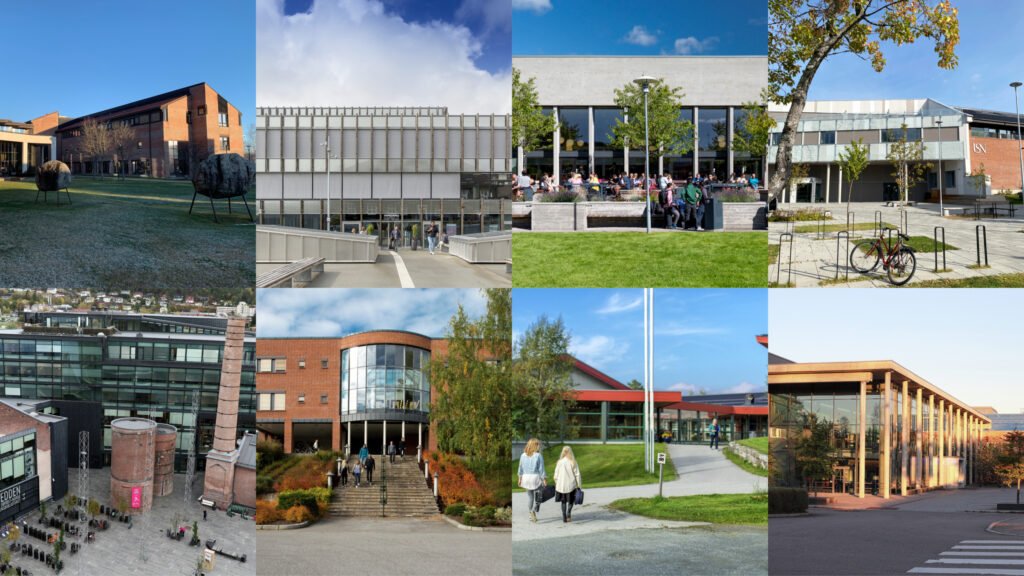
University of South-Eastern Norway – Professor, April 2020 – ongoing.
Russia in Global Affairs – Associate Editor Nov 2018 – ongoing.
Higher School of Economics, Moscow, Russia – Professor Aug 2018 – April 2020.
Higher School of Economics, Moscow, Russia – Visiting Scholar, Aug 2017 – Aug 2018.
Western Sydney University, Sydney, Australia – Adjunct Research Fellow Aug 2016 – Aug 2019.
Macquarie University (PICT), Sydney, Australia – Lecturer/Scholarly Teaching Fellow, Feb 2011 –Dec 2017 .
EDUCATION
Amsterdam Vrije Universiteit, Amsterdam, Netherlands – PhD Politics and International Relations (Doctor of Social Sciences) 2010-2014.
Macquarie University, Sydney, Australia – PhD Politics and International Relations (Doctor of Philosophy) 2010-2014.
Macquarie University, Sydney, Australia - Master of International Relations 2009.
St. Petersburg State University, St. Petersburg, Russia – Graduate Certificate: Russian Language and History 2006.
University of Sydney, Sydney, Australia – Master of Business 2003-2004.
University of Wollongong, Wollongong, Australia – Bachelor of Commerce 1999-2001 .
PUBLICATIONS
Books
Diesen, G. 2024. The Crisis in Liberalism: The Unresolved Challenges from the 19th Century (pending).
Diesen, G., 2024. The Ukraine War and the Eurasian World Order. Clarity Press, Atlanta. (Translated into Dutch, German, Spanish, French, Russian, Italian, Bulgarian and Chinese).
Diesen, G., 2023. The Think Tank Racket. Clarity Press, Atlanta.
Diesen, G., 2022. Russophobia: Propaganda in International Politics. Palgrave, London.
Diesen, G., 2021. Europe as the Western Peninsula of Greater Eurasia: Geoeconomic Regions in a Multipolar World, Rowman & Littlefield, London. (Translated to Italian).
Diesen, G and Lukin, A., 2021. The Return of Eurasia, (eds) Palgrave Macmillan, London.
Diesen, G., 2021. Russian Conservatism: Managing Change under Permanent Revolution, Rowman & Littlefield, London.
Diesen, G., 2021. Great Power Competition in the Fourth Industrial Revolution: The Geoeconomics of Technological Sovereignty, Bloomsbury, London. (Translated to Chinese).
Diesen, G. and Lukin, A., 2020. Russia in a Changing World, (eds), Palgrave Macmillan, London.
Diesen, G., 2018. The Decay of Western Civilisation and Resurgence of Russia: Between Gemeinschaft and Gesellschaft, Routledge, London.
Diesen, G., 2017. Russia’s Geoeconomic Strategy for Greater Eurasia, Routledge, London. (Translated to German).
Diesen, G., 2015. EU and NATO Relations with Russia: After the Collapse of the Soviet Union, Routledge, London.
Book chapters
Diesen, G., 2023. ‘Technological Sovereignty and World Order’, edited volume by the Hungarian Central Bank (forthcoming).
Diesen, G., 2023. ‘The Arctic in the Greater Eurasian Partnership’, (pending publication / The SEPA-project: Human Security, Innovative Models of Co-management, and Participation in Arctic Regions).
Diesen, G., 2023. ‘The Geoeconomics of Technological Sovereignty in the Fourth Industrial Revolution’ (MGIMO).
Diesen, G., 2023. ‘Irrational Politics: The domestic component of Russiagate’, in Russiagate Revisited, Springer, London.
Diesen, G., (2021). “Cooperation and Competition Among Tech Hubs Across Greater Eurasia in the Fourth Industrial Revolution”, in M Patai and M Horvath (eds), Age of Eurasia, Prospektus, Budapest.
Diesen, G., 2020. ‘The Geoeconomics of the Eurasian Economic Union’, in A Aseeva and J Gorski (eds.), The Law and Policy of New Eurasian Regionalization Economic Integration, Trade, and Investment in the Post-Soviet and Greater Eurasian Space, Brill, Leiden.
Diesen, G., 2020. ‘Russia and COVID-19: Domestic Relief and Geoeconomic Reforms’, in C Hawksley and N Georgeou (eds.) State Responses to COVID-19, HADRI, Sydney.
Diesen, G., 2020. ‘Neutral Power Russia?’, in H Reginbogin and P Lottaz (eds.) Permanent Neutrality, Lexington Books, Washington D.C.
Diesen, G., 2019. ‘Narrowing the widening political gap’, in L Grigoryev (ed.) Global Governance in Transformation: Challenges for International Cooperation, Springer, London.
Diesen, G., 2016. ‘Russia’s Pivot to Asia: Constructing a Eurasian State in a Multipolar World’, in D Gopal and D Ahlawat (eds.) Indo-Pacific: Emerging Powers, Evolving Regions and Challenges to Global Governance, Aakar, New Delhi.
Journal articles
Zhyrun, I. and Diesen, G., 2024. NATO as an Agent of Socialisation in Ukraine (manuscript submitted).
Diesen, G., 2023. Geoeconomic Power EUrope: The Rise and Decline of the European Union, Contemporary World Economy, 1(1): 33-51.
Diesen, G., 2021. Europe as the Western Peninsula of Greater Eurasia, Journal of Eurasian Studies, 12(1): 19-27.
Diesen, G., 2020. Russia as an International Conservative Power: The Rise of Right-Wing Populists and their Affinity towards Russia, Journal of Contemporary European Studies, 28(2): 182-196.
Diesen, G., 2019. The Disorderly Transition to a Multipolar World, New Perspectives, 27(3): 25-29.
Diesen, G., 2019. The Geoeconomics of Russia’s Greater Eurasia Initiative, Asian Politics & Policy, 11(4): 566-585.
Diesen, G., 2018. The Geoeconomics of the Territorial Dispute between Russia and Japan, Asian Survey, 58(3): 582–605.
Diesen, G. and Keane, C., 2018. The offensive posture of NATO’s missile defense system, Communist and Post-Communist Studies, 51(2): 92-103.
Diesen, G., 2018. The ‘New Cold War’ and its Impact on Chinese Geoeconomics, Valdai Discussion Club, 21 November.
Diesen, G., 2017. The Global Resurgence of Economic Nationalism, Valdai Discussion Club [republished in Russia in Global Affairs], 21 December.
Diesen, G., 2017. The EU, Russia and the Manichean Trap, Cambridge Review of International Affairs, 19(3): 1-18.
Diesen, G., 2017. Russia, China and ‘Balance of Dependence’ in Greater Eurasia, Valdai Discussion Club [republished in Russia in Global Affairs], 31 March.
Diesen, G. and Keane, C., 2017. The Two-Tiered Division of Ukraine: Historical Narratives in Nation- and Region-Building, Journal of Balkan and Near Eastern Studies, 19(3): 313-329.
Gatev, I. and Diesen G., 2016. Eurasian Encounters: The Eurasian Economic Union and the Shanghai Cooperation Organisation, European Politics and Society, 17(1): 133-150.
Diesen, G. and Keane, C., 2016. Constraining Missile Defence, Defense and Security Analysis, 32(2): 129-143.
Keane, C., and Diesen, G. 2015. Divided We Stand: The US foreign policy bureaucracy and nation-building in Afghanistan, International Peacekeeping, 22(3): 205-229.
Diesen, G., 2015. Inter-democratic security institutions and the security dilemma: A neoclassical realist model of the EU and NATO after the end of the Soviet Union, East European Quarterly, 41(2-3): 137-161.
Diesen, G., 2015. Coercing ‘European Integration’? Assessing the posture of the CSDP, Polis, No.6, 81-102.
Diesen, G., and Wood, S., 2012. Russia’s Proposal for a New European Security System: Confirming Diverse Perspectives, Australian Journal of International Affairs, 66(4): 450-467.
Think Tank Papers
Diesen, G., 2023. Russia’s Future Depends on Technological Sovereignty, Russian International Affairs Council (RIAC), 05.12.2023.
Diesen, G., 2023. Is There Room for Cooperation in the Arctic?, Valdai, 08.09.2023.
Diesen, G., 2023. Globalisation Under a Eurasian Westphalian World Order, Valdai, 16.03.2023.
Diesen, G., 2022. New Trajectories of Transportation Corridors in Eurasia, Valdai, 11.10.2022.
Diesen, G., 2022. Eurasian Institutions Following the European Crisis, Valdai, 08.08.2022.
Diesen, G., 2022. Digital Giants Under a De-Centralised Format for Globalisation, Valdai, 11.03.2022.
Diesen, G., 2021. Restraining the Excesses of Liberalism, Valdai, 21.10.2021.
Diesen, G., 2021. Common Eurasian Home: Towards a Conservative Political Economy, Valdai, 19.03.2021.
Diesen, G., 2020. The International Economic System After COVID-19, Valdai, 2020.
Diesen, G., 2018. China’s Geoeconomics and the ‘New Cold War’, Valdai, 21.11.2018.
Diesen, G., 2017. The Global Resurgence of Economic Nationalism, Valdai, 21.12.2017.
Diesen, G., 2017. Russia, China and ‘Balance of Dependence’ in Greater Eurasia, Valdai, 31.03.2017.