
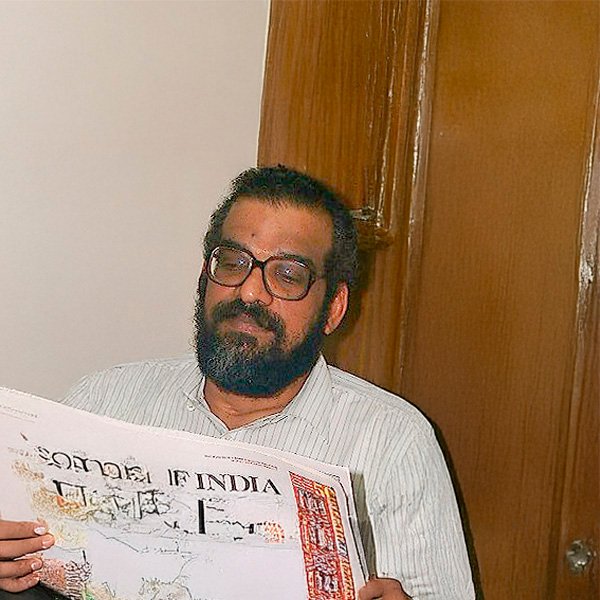
Falling in line: An Indian editor works at Chinese media

Working as a journalist in China’s newspapers can be an eye-opening and engaging experience, revealing unsuspected potential and unforeseen possibilities. Such work, more often than not, is with the state media. To make the most of the situation, it is necessary to leave behind a lifetime’s misconceptions and prejudices.

My life as an expatriate journalist in Beijing began with China Daily (CD) – the country’s oldest English daily brought out by a department of the Information Ministry. The Editor in Chief (EiC) is said to enjoy the rank of Vice Premier, with all the powers of that office, barring the one that allows issue of visas.

In his first circle of power are deputy editors in chief, though the designation could be anything. Title, authority, power, functions, responsibility are not necessarily matched as we know them to be in India, in the world of Anglo-American journalism, or in the continent. Beneath this layer are a large number of assistants to the EiC and the day and night editors. A notch above, but below the first rung, are editors who keep an eye on the day/night editors and the assistants.

These ubiquitous assistants are the eyes and ears of the EiC, and, perhaps, of the government, the party and the state, too. Some view them as competent editors and tested journalists who should not be trifled with merely because of their unflattering designation and unassuming disposition. Others see these assistants, at best, as factotums; and, at worst, as sheepdogs, who keep the flock, including expats (also called ‘foreign experts’), from ‘straying’; or, falling prey to journalistic practices for which CD has little use.

The assistants keep track of everything anddon’t miss a trick. They have at their command loyalist expats who do their every bidding, against their own countrymen. Servitude to these assistants is the surest way to survive and succeed – as “successful” expats, including from India, learned early on. These expats jealously guard their position by keeping out their other countrymen, unless these newcomers are willing to become as, if not more, abject as them in their “performance”. The expat’s journalistic competence does not decide his or her place/role in CD.

Yet this paper pays the best package and looks after its staff very well. If you are free of notions of journalism acquired elsewhere, carry out every wish of the Chinese bosses (Assistants to the EiC) as your command and feel pleased and privileged to perform like a flea – then you can collect a tidy sum and live it up. Nobody will tell you to your face that you suck; that you are a sly and sleazy lowlife; and that your ‘success’ (as a survivor) is because you, as the factotum’s pup, are a trusty doormat.

Inevitably, the journalist who values independence, integrity and self-esteem moves out of CD. S/he heads to Xinhua, the Chinese news agency, which is a state within the state. In today’s global conditions, Xinhua,the most powerful, successful and profitable news agency, is home to “economic refugees” from the West, who lost their jobs in leading media organisations particularly in the US and the UK.

The expat journalist barely stands out in Xinhua because this agency’s universe is huge and it pays less than CD. Yet Xinhua is the acme for the Chinese, and the expat here is a contented soul with the job not straining his self-respect. Xinhua’s brand of journalism may be alien, but s/he gladly does a job (editing text/copy, which does not call for his kind of journalistic values or judgment) to the institution’s satisfaction.

The expat has no complaint against Xinhua’s culture (as an organisation, not as a media/journalism entity). The hours are shorter, there’s more leave, a paid annual holiday, good cafeterias and, as a US journalist said, no pressure to “perform like a flea”. Xinhua may be an institution of state, but unlike other media biggies, it is a rule-maker. It lays down the line, not just abides by it.

The other magnet for expats is the English daily Global Times, from Party-run People’s Daily stable, which has for long been publishing the Chinese language Global Times. The pay is a shade lower than in CD, from where many expats moved to GT. They feel the pay cut is well worth the shift.

Often praised as the Fox News of China, Global Times is young, and has a robust journalistic air about it.The editors are visible, accessible, hands-on and in close daily working contact with the staff.It may be subject to the same limitations as CD and other Chinese media outlets, but it does not let the restrictions and opacity kill the buzz about the place.

I had a terrific time in GT. Most expats tend to assume censorship and restrictions even where they don’t exist. Expats told me that the signed editorial comment space was strictly for the Chinese to articulate what the bosses order. That may be true nine out of 10 times, but there’s the one-tenth chance at which you can take a shot. I did and was surprised that they welcomed my piece – on a topic at the centre of Chinese politics. I had pulled no punches, but the editors who keep an eagle eye against transgressions, said I was not critical enough – the subject called for sharper criticism.

Expats are so keen on their byline and, at the same time, wanting to please that most of them end up writing superficial, touristy and ‘lifestyle’ pieces. Rare is the expat who has not written about negotiating his way in China. They write about how they use chopsticks, make hand-pulled noodles, bargain over baubles and buy foodstuff, fruits and vegetables as if these are adventures unknown to humans.

The few who venture beyond such pathetic pieces are respected in GT. For instance, I wrote on the Bhopal gas leak judgment (after 26 years) not doing justice to the victims in contrast to how the US made BP pay billions for the oil spill in the Gulf of Mexico.

The comment questioned India’s claim to be a global power when it could not protect the interests of its people or raise their concerns at the world’s high tables such as the G-8. I had bracketed China in the same league for letting down developing countries and, at times, its own people on the world stage. When the piece did not come back immediately with the editor’s okay, I went in to ask whether the reference to China was holding it up.

On the contrary, he said, you have not hit China hard enough for its failure to speak up for the Bhopal victims and against US multinationals. Therefore, he was wondering whether my piece would “suffice in itself” or he should write another side piece on China’s lapses in this regard.

GT is the new kid on the block. Launched in April 2009, it has caused a stir and nudged a stodgy CD to re-invent itself. When GT announced a metro pull-out, CD came out with one a few days earlier.

Now there are journalists moving from GT to CD. This change in the air can only bring good – more vibrancy to the state media.

For all the media restrictions in China, there remain unexplored possibilities and spaces. The boundaries can be pushed a bit further, and tested.You never know how far you can go unless you try.

Share

Leave a Reply

Your email address will not be published. Required fields are marked *

Related Posts

Jan Øberg behandler i artiklen en lang række faktorer, som ligger til grund for den måde vores samfund er organiseret på – og derfor også for konflikter. Artiklen introducerer således sammenhængen mellem familien, foreninger, regeringer, NGO’ er, nation, stat, nationalstat og alliancer for på denne måde bedre at kunne forstå konflikter og i sidste ende blive klogere mht. at løse disse. Øberg, der er fortaler for global bevidsthed, hvilket skal ses i lyset af den øgede globalisering, skelner mellem kulturkamp og kulturdialog. Endelig behandles begrebet magt og magtesløshed: giver magt ret til at udøve magt – fordi man mener at have ret? Litteraturliste og arbejdsspørgsmål efter artiklen. Ordene vi bruger om verden I satellitperspektiv kan man godt tale om den menneskelige familie eller menneskeheden. Udtrykket understreger, at der eksisterer – eller burde eksistere – et fællesskab fordi vi alle er mennesker og sammen bebor denne klode og ingen anden. Og...
Kapitel 2: Forskellige sider af Europa og USA…fortsat 2.5 Militære relationer I forbifarten har vi allerede sagt nogle ting om USA’s militære situation. Kig lige en gang til på afsnit 2.3. Nu skal vi uddybe det militære forhold mellem USA og EU. Der er en række ligheder mellem visse europæiske landes og USA’s militær. Næsten alle er med på en eller anden måde i NATO, direkte som medlem – selv Island, der ikke har et forsvar – eller indirekte i Partnerskab for Fred. USA og Canada er med i OSCE (på dansk OSSE), Organisationen for Sikkerhed og Samarbejde i Europa, der tæller over 50 lande. USA samt England og Frankrig er kernevåbenstater og de har styrker til intervention langt borte fra hjemlandet, om end USA’s er tifold større. Alle har også en omfattende våbeneksport og bruger den som et middel til at tjene penge og få loyale venner på, det...
Background Christian Harleman and Jan Oberg conducted a fact-finding mission to Burundi between November 26 and December 6, 2003. (See websites about the country here). The first TFF mission took place in March 1999. Unfortunately, since then it has not been practically possible to implement the co-operation with Burundi’s Ministry of Education and Burundian NGOs that was planned at the time. The 2003 mission had three purposes. First, to do fact-finding in general about the situation and, in particular, the progress under the Arusha Peace Process. Second, to explore the possibilities for co-operation between the government and relevant NGOs on the one hand and TFF on the other, in order to develop and deepen the existing competence in fields such as conflict-understanding, reconciliation and peace-building. Finally, third, to find out whether it would be possible, in co-operation with the Swedish Rescue Services Agency (Statens Räddningsverk), to establish a health care unit that...

Recent Articles

Jan Øberg behandler i artiklen en lang række faktorer, som ligger til grund for den måde vores samfund er organiseret på – og derfor også for konflikter. Artiklen introducerer således sammenhængen mellem familien, foreninger, regeringer, NGO’ er, nation, stat, nationalstat og alliancer for på denne måde bedre at kunne forstå konflikter og i sidste ende blive klogere mht. at løse disse. Øberg, der er fortaler for global bevidsthed, hvilket skal ses i lyset af den øgede globalisering, skelner mellem kulturkamp og kulturdialog. Endelig behandles begrebet magt og magtesløshed: giver magt ret til at udøve magt – fordi man mener at have ret? Litteraturliste og arbejdsspørgsmål efter artiklen. Ordene vi bruger om verden I satellitperspektiv kan man godt tale om den menneskelige familie eller menneskeheden. Udtrykket understreger, at der eksisterer – eller burde eksistere – et fællesskab fordi vi alle er mennesker og sammen bebor denne klode og ingen anden. Og...
Kapitel 2: Forskellige sider af Europa og USA…fortsat 2.5 Militære relationer I forbifarten har vi allerede sagt nogle ting om USA’s militære situation. Kig lige en gang til på afsnit 2.3. Nu skal vi uddybe det militære forhold mellem USA og EU. Der er en række ligheder mellem visse europæiske landes og USA’s militær. Næsten alle er med på en eller anden måde i NATO, direkte som medlem – selv Island, der ikke har et forsvar – eller indirekte i Partnerskab for Fred. USA og Canada er med i OSCE (på dansk OSSE), Organisationen for Sikkerhed og Samarbejde i Europa, der tæller over 50 lande. USA samt England og Frankrig er kernevåbenstater og de har styrker til intervention langt borte fra hjemlandet, om end USA’s er tifold større. Alle har også en omfattende våbeneksport og bruger den som et middel til at tjene penge og få loyale venner på, det...
Background Christian Harleman and Jan Oberg conducted a fact-finding mission to Burundi between November 26 and December 6, 2003. (See websites about the country here). The first TFF mission took place in March 1999. Unfortunately, since then it has not been practically possible to implement the co-operation with Burundi’s Ministry of Education and Burundian NGOs that was planned at the time. The 2003 mission had three purposes. First, to do fact-finding in general about the situation and, in particular, the progress under the Arusha Peace Process. Second, to explore the possibilities for co-operation between the government and relevant NGOs on the one hand and TFF on the other, in order to develop and deepen the existing competence in fields such as conflict-understanding, reconciliation and peace-building. Finally, third, to find out whether it would be possible, in co-operation with the Swedish Rescue Services Agency (Statens Räddningsverk), to establish a health care unit that...

TFF on Substack

Discover more from TFF Transnational Foundation & Jan Oberg.

Most Popular

Jan Øberg behandler i artiklen en lang række faktorer, som ligger til grund for den måde vores samfund er organiseret på – og derfor også for konflikter. Artiklen introducerer således sammenhængen mellem familien, foreninger, regeringer, NGO’ er, nation, stat, nationalstat og alliancer for på denne måde bedre at kunne forstå konflikter og i sidste ende blive klogere mht. at løse disse. Øberg, der er fortaler for global bevidsthed, hvilket skal ses i lyset af den øgede globalisering, skelner mellem kulturkamp og kulturdialog. Endelig behandles begrebet magt og magtesløshed: giver magt ret til at udøve magt – fordi man mener at have ret? Litteraturliste og arbejdsspørgsmål efter artiklen. Ordene vi bruger om verden I satellitperspektiv kan man godt tale om den menneskelige familie eller menneskeheden. Udtrykket understreger, at der eksisterer – eller burde eksistere – et fællesskab fordi vi alle er mennesker og sammen bebor denne klode og ingen anden. Og...
Kapitel 2: Forskellige sider af Europa og USA…fortsat 2.5 Militære relationer I forbifarten har vi allerede sagt nogle ting om USA’s militære situation. Kig lige en gang til på afsnit 2.3. Nu skal vi uddybe det militære forhold mellem USA og EU. Der er en række ligheder mellem visse europæiske landes og USA’s militær. Næsten alle er med på en eller anden måde i NATO, direkte som medlem – selv Island, der ikke har et forsvar – eller indirekte i Partnerskab for Fred. USA og Canada er med i OSCE (på dansk OSSE), Organisationen for Sikkerhed og Samarbejde i Europa, der tæller over 50 lande. USA samt England og Frankrig er kernevåbenstater og de har styrker til intervention langt borte fra hjemlandet, om end USA’s er tifold større. Alle har også en omfattende våbeneksport og bruger den som et middel til at tjene penge og få loyale venner på, det...
Background Christian Harleman and Jan Oberg conducted a fact-finding mission to Burundi between November 26 and December 6, 2003. (See websites about the country here). The first TFF mission took place in March 1999. Unfortunately, since then it has not been practically possible to implement the co-operation with Burundi’s Ministry of Education and Burundian NGOs that was planned at the time. The 2003 mission had three purposes. First, to do fact-finding in general about the situation and, in particular, the progress under the Arusha Peace Process. Second, to explore the possibilities for co-operation between the government and relevant NGOs on the one hand and TFF on the other, in order to develop and deepen the existing competence in fields such as conflict-understanding, reconciliation and peace-building. Finally, third, to find out whether it would be possible, in co-operation with the Swedish Rescue Services Agency (Statens Räddningsverk), to establish a health care unit that...
Read More
Imagen-thumbnail-The-Transnational-1
Jan Øberg behandler i artiklen en lang række faktorer, som ligger til grund for den måde vores samfund er organiseret på – og derfor også for konflikter. Artiklen introducerer således sammenhængen mellem familien, foreninger, regeringer, NGO’ er, nation, stat, nationalstat og alliancer for på denne måde bedre at kunne forstå konflikter og i sidste ende blive klogere mht. at løse disse. Øberg, der er fortaler for global bevidsthed, hvilket skal ses i lyset af den øgede globalisering, skelner mellem kulturkamp og kulturdialog. Endelig behandles begrebet magt og magtesløshed: giver magt ret til at udøve magt – fordi man mener at have ret? Litteraturliste og arbejdsspørgsmål efter artiklen. Ordene vi bruger om verden I satellitperspektiv kan man godt tale om den menneskelige familie eller menneskeheden. Udtrykket understreger, at der eksisterer – eller burde eksistere – et fællesskab fordi vi alle er mennesker og sammen bebor denne klode og ingen anden. Og...
Imagen-thumbnail-The-Transnational-1
Kapitel 2: Forskellige sider af Europa og USA…fortsat 2.5 Militære relationer I forbifarten har vi allerede sagt nogle ting om USA’s militære situation. Kig lige en gang til på afsnit 2.3. Nu skal vi uddybe det militære forhold mellem USA og EU. Der er en række ligheder mellem visse europæiske landes og USA’s militær. Næsten alle er med på en eller anden måde i NATO, direkte som medlem – selv Island, der ikke har et forsvar – eller indirekte i Partnerskab for Fred. USA og Canada er med i OSCE (på dansk OSSE), Organisationen for Sikkerhed og Samarbejde i Europa, der tæller over 50 lande. USA samt England og Frankrig er kernevåbenstater og de har styrker til intervention langt borte fra hjemlandet, om end USA’s er tifold større. Alle har også en omfattende våbeneksport og bruger den som et middel til at tjene penge og få loyale venner på, det...
Imagen-thumbnail-The-Transnational-1
Background Christian Harleman and Jan Oberg conducted a fact-finding mission to Burundi between November 26 and December 6, 2003. (See websites about the country here). The first TFF mission took place in March 1999. Unfortunately, since then it has not been practically possible to implement the co-operation with Burundi’s Ministry of Education and Burundian NGOs that was planned at the time. The 2003 mission had three purposes. First, to do fact-finding in general about the situation and, in particular, the progress under the Arusha Peace Process. Second, to explore the possibilities for co-operation between the government and relevant NGOs on the one hand and TFF on the other, in order to develop and deepen the existing competence in fields such as conflict-understanding, reconciliation and peace-building. Finally, third, to find out whether it would be possible, in co-operation with the Swedish Rescue Services Agency (Statens Räddningsverk), to establish a health care unit that...
Imagen-thumbnail-The-Transnational-1
Former UN Under-Secretary-General with special responsibility for peacekeeping operations TFF associate August 20, 2003 YRINGHAM, Mass.- Ralph Bunche was born in Detroit 100 years ago today (August 7, 2003). His passionate determination to get results did not extend to seeking credit for them, so his work is better remembered than he is. Of all his many accomplishments – civil rights pioneer, Nobel Peace Prize laureate, chief drafter of two chapters of the United Nations charter, negotiator of the armistices that ended the first Arab-Israeli war – Bunche said he was proudest of developing what came to be known as peacekeeping. Setting up the United Nations Truce Supervision Organization in Palestine in 1948, Bunche formulated the principles that have governed peacekeeping operations ever since. In the 1956 Suez crisis, working with Secretary General Dag Hammarskjold and Lester Pearson of Canada, he organized the first peacekeeping force, the United Nations Emergency Force...
– nästan 11 månader Till Sofia nästan 11 månader # 1  Till Sofias huvudsida Till alla Privata Foto-Serier
Till Sofias huvudsida