
Everybody knows JCPOA was not bilateral agreement between Iran and U.S.
By Javad Heirannia, The Tehran Times
January 24, 2018


TEHRAN – Professor Farhang Jahanpour, part-time tutor on the Middle East in the Department of Continuing Education at the University of Oxford, tells the Tehran Times that “President Trump’s recent speech on Iran was the most belligerent speech by any U.S. president about Iran since the Iranian revolution.”

“As everybody knows, the Joint Comprehensive Plan of Action (JCPOA) was not a bilateral agreement between Iran and the United States,” Jahanpour tells the Tehran Times in an exclusive interview.

Following is the full text of the interview:


Q: President Trump has decertified the JCPOA. How important is this decision for the survival of the nuclear agreement?

A: President Trump’s recent speech on Iran was the most belligerent speech by any U.S. president about Iran since the Iranian revolution. However, its importance for undermining the nuclear agreement should not be exaggerated. As everybody knows, the Joint Comprehensive Plan of Action (JCPOA) was not a bilateral agreement between Iran and the United States. It was an international agreement between Iran and five permanent members of the Security Council, plus Germany, supported by the European Union and given the force of law by the Security Council Resolution 2231.

Therefore, one member of the agreement cannot unilaterally destroy it. As the EU High Representative for Foreign Affairs Federica Mogherini has rightly said: “The U.S. president has many powers, but this is not one of them.”

It should be pointed out that certification is not a part of the agreement, but an internal U.S. issue. That certification has no international validity. Trump has given a long list of contentious issues about Iran’s alleged malign influences in the region, but none of those issues has anything to do with the nuclear agreement. So Trump’s decertification of the deal will not kill it.

In the short time that he has been in power, Trump has reversed some of President Obama’s major domestic and international achievements.
Domestically, Trump has fallen out with American intelligence organizations, comparing them to the Nazis. He has attacked most of the media as “being the greatest enemy of the people” and producing fake news.

He has attacked “the so-called judges” for trying to block his unconstitutional executive order banning Muslim refugees or immigrants from seven Muslim-majority countries.

He scrapped the critical health care subsidies to hit Obamacare, while the bill that he sent to Congress was not approved.

In foreign policy, he has taken America out of the Paris Climate Accord, which is an agreement within the United Nations Framework Convention on Climate Change, which 195 members have signed and 168 members have already ratified.

He has taken the United States out of the Trans-Pacific Partnership, and on 11 October he announced that the U.S. would drop out of the North American Free Trade Agreement.

The United States and Israel announced that they would withdraw from UNESCO because of its alleged anti-Israeli bias.

However, despite all those major decisions, the sky has not fallen down and international agreements are continuing without the United States. All that he has achieved so far has been to isolate America in the international community.


Q: What were the reasons for his decertification of Iran’s compliance with the nuclear deal? What signal did he want to deliver by doing so?

A: Of course, the decertification of Iran’s compliance with the agreement does not make any sense, since Trump had twice certified it before, and nothing had changed during the intervening period. In fact, as recently as 14 September 2017, Trump waived certain sanctions against Iran as required under the terms of the deal.

During the campaign Trump often criticized the agreement as the worst agreement in history and promised that he would tear it up. In his inaugural address to the UN General Assembly, he called it as “an embarrassment to the United States.” So, by taking this step he wants to reassure his base that he is implementing at least one of his promises.

This decision comes at a time when his administration is in disarray, and when some of the leading figures in his own Republican Party have strongly criticised him. One of the most influential Republicans, the chairman of the Senate Foreign Relations Committee Bob Corker, in an interview with the New York Times said that Trump’s volatility could spark World War III. He added: “He would have to concern anyone who cares about our nation.”

He went on to say: “Look, except for a few people, the vast majority of our caucus understands what we’re dealing with here,” Corker continued. “Of course, they understand the volatility that we’re dealing with and the tremendous amount of work that it takes by people around him to keep him in the middle of the road.” This is very strong criticism by a senator who has to approve Trump’s foreign policy initiatives.

Internationally, the threat of terrorism in the Middle East has not yet ended, the U.S.-supported Saudi Arabia’s disastrous war against Yemen is still continuing killing and wounding scores of people in that poverty-stricken country every day, and above all Trump’s threat of “fire and fury the like of which the world has never seen” against North Korea and the promise that he would totally destroy that country have not worked and that dangerous standoff still continues. Therefore, I believe that his policy over Iran is a way of diverting attention from his growing failures.


Q: Has his policy received much domestic or international support? 

A: Many prominent U.S. officials, such as former presidential candidate Hillary Clinton, former Secretary of State John Kerry who negotiated the agreement, as well as some leading figures in his own administration, including Secretary of State, Secretary of Defense, and chairman of the Joint Chiefs of Staff have said that Iran had been compliant with the agreement and Trump should have certified it.

On the international arena, in addition to Russia and China that have strongly condemned Trump’s decision, some of America’s closest allies in Europe too have spoken openly against him.

As the former German ambassador to the United States Wolfgang Ischinger said, Trump’s decision “will show total disrespect for America’s allies.”

Shortly after Trump’s speech, in a joint statement the leaders of Britain, France, and Germany expressed alarm at Trump’s decision and reaffirmed their total commitment to the Iran deal. “Preserving the J.C.P.O.A. is in our shared national security interest,” Prime Minister Theresa May, President Emmanuel Macron, and Chancellor Angela Merkel said.

“The nuclear deal was the culmination of thirteen years of diplomacy and was a major step towards ensuring that Iran’s nuclear program is not diverted for military purposes.” They noted that the deal was “unanimously endorsed” by the U.N. Security Council, and appealed to the Administration and Congress to “consider the implications to the security of the United States and its allies before taking any steps that might undermine the J.C.P.O.A.”

This level of open opposition to the policies of U.S. president by his closest allies is unprecedented.


Q: It is believed that President Macron has said that it would be necessary to include some articles pertinent to human rights and missile issues within JCPOA. Is this a diversion from common European stance towards the agreement? 

A: No, this is a misreading of what President Macron said. Some of the deal’s critics have seized on Macron’s willingness to supplement the agreement by addressing ballistic missiles and extending the duration of some constraints on Iran’s nuclear program.

However, like leaders of all other P5+1 states, Macron has repeatedly emphasised the primary importance of preserving the JCPOA, but he has said that if there are other issues that the United States is concerned about, they could be discussed separately in a similar forum as 5+1.

That was in no way an endorsement of Trump’s policy. The JCPOA is not re-negotiable.


Q: In your view, how should Iran respond to that provocation? 

A: I believe that the Iranian response has been wise, measures and dignified. President Rouhani was absolutely correct to say: “Today the United States is more than ever isolated in its opposition to the nuclear deal and in its plots against the Iranian people. What was heard today was nothing but the repetition of baseless accusations and swear words that they have repeated for years.”

He said of Trump: “He has not studied international law. Can a president annul a multilateral international treaty on his own? Apparently he does not know that this agreement is not a bilateral agreement solely between Iran and the United States.”

The latest fuss shows that the nuclear agreement was very well negotiated by Iran in order to prevent a subsequent president being able to destroy it. Therefore, Iran should continue with the JCPOA by strengthening ties with Europe and other allies, regardless of Trump’s decision.


Professor Farhang Jahanpour is a former lecturer at the University of Cambridge and a Senior Research Fellow at Harvard. He is a tutor at the Department of Continuing Education and a member of Kellogg College at the University of Oxford and member of the TFF Board.
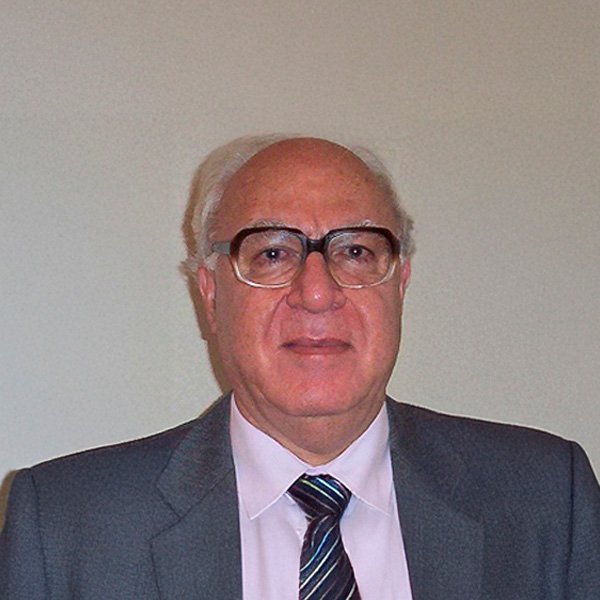

Former Professor and Dean of the Faculty of Languages, University of Isfahan; former lecturer at Cambridge, Harvard and Oxford universities; retired Editor for Middle East and North Africa, BBC Monitoring.

Share

Leave a Reply

Your email address will not be published. Required fields are marked *

Related Posts

Officially, the drones were not identified. By simply thinking critically – which journalists and selected experts no longer do – there may be a good reason for that. And this article will never be mentioned in Denmark… Drones over Denmark. No damage. No trace. No answers. Yet the headlines scream “Russian threat,” and Prime Minister Mette Frederiksen speaks with a certainty that defies logic: “We don’t know they were Russian—but we know Russia is the biggest threat to Europe.” It could be nobody else – unless you make an interest analysis which I did two days ago. This is not security policy. It’s theatre. And the audience is being played. Let’s rewind. These drones—unphotographed, untracked, unclaimed—appear and vanish like ghosts. Airports shut down. Panic spreads. Military budgets swell. And the narrative hardens: Russia is behind it. But what if that’s not just wrong but deliberately misleading? Here’s a hypothesis for...
And why the world, especially the EU, must now declare itself independent of the United States. UN’s 80th anniversary This year, the United Nations celebrates the 80th anniversary of its founding. The UN was formed after the scourge of the Second World War, in which 70 to 85 million people were killed and many countries were destroyed. That war came on the heels of the First World War, which also killed between 15 and 22 million people. After the Second World War, especially after the use of nuclear weapons by the United States, which marked a turning point in the history of warfare that could result in the end of civilisation as we know it, humanity decided to move away from the era of empires and big power politics and usher in a new era of peace, freedom and cooperation. These were the principles enshrined in the UN Charter. The United States...
Drones over Nordic airports. No damage. No trace. No answers. Most assume Russia—but what if that’s not so? Why is there so much we are not told? This article explores the strategic ambiguity behind recent drone incursions and asks: Who else might benefit from sending drones into NATO airspace? From Ukraine’s surprising drone supremacy to Russia’s possible signalling, the silence itself may be the loudest message. These are the kinds of questions decent, intelligent investigative journalists and commentators could easily research. Why don’t they? Did you, dear reader, know or think of this? That the most powerful weapon in today’s conflicts might be the one that leaves no trace – and no answers. Just enough fear to justify the next move? Recently, drones have repeatedly appeared over Nordic airports and near some military facilities. They cause no damage – for which reason the designation “hybrid attack” is misleading but serves a purpose. These...

Recent Articles

PressInfo # 141, December 21, 2001It’s time to prepare reconciliation between Albanians and Serbs PressInfo # 140, December 14, 2001Ibrahim Rugova’s decade-long leadership in Kosovo/a PressInfo # 139, 11. december, 2001En god nyhet: Jugoslaviens Sannings- och försoningskommission PressInfo # 139, 11. december, 2001Gode nyheder: Jugoslaviens Sandheds- og Forsoningskommission PressInfo # 139, December 11, 2001Good news: Yugoslavia’s Truth and Reconciliation Commission PressInfo # 138, November 8, 2001TFF co-founder PhD with thesis about young people with roots in other cultures PressInfo # 138, November 8, 2001TFF:s medstiftare doktor på avhandling om unga med ursprung i andra kulturer PressInfo # 137, October 17, 2001A new Marshall Plan: Advancing human security and controlling terrorism PressInfo # 136, October 15, 2001The UN and Annan really deserve it PressInfo # 135, October 10, 2001Preventing a terrorist mushroom cloud PressInfo # 134, 17 oktober, 2001Sverige og 11. september PressInfo # 134, October 9, 2001Sweden and September 11...
Peace is promoted by constructive proposals and dialogue Four preceding PressInfos have expressed concern over — and criticised — the ongoing, militarisation of the EU. Some will say: but there are no alternatives. We believe that there are always alternatives, that democracies are characterised by alternatives and choice, and that openly discussed alternatives will improve the quality and legitimacy of society’s decision–making. In addition, it is an intellectual and moral challenge to not only criticise but also be constructive. If we only tell people that we think they are wrong, they are not likely to listen. However, if we say: what are your views on this set of ideas and steps? — we may sometimes engage them in dialogue and sow a seed. Most people in power circles live their daily lives in in a time frame and a social space where certain ideas, viewpoints and concepts are just not...
Photos © TFF 2000 Read PressInfo 90 “Lift the Sanctions and Bring More Aid to Yugoslavia” See Pictures from Belgrade © TFF 2000 Please reprint, copy, archive, quote or re-post this item, but please retain the source.

TFF on Substack

Discover more from TFF Transnational Foundation & Jan Oberg.

Most Popular

PressInfo # 141, December 21, 2001It’s time to prepare reconciliation between Albanians and Serbs PressInfo # 140, December 14, 2001Ibrahim Rugova’s decade-long leadership in Kosovo/a PressInfo # 139, 11. december, 2001En god nyhet: Jugoslaviens Sannings- och försoningskommission PressInfo # 139, 11. december, 2001Gode nyheder: Jugoslaviens Sandheds- og Forsoningskommission PressInfo # 139, December 11, 2001Good news: Yugoslavia’s Truth and Reconciliation Commission PressInfo # 138, November 8, 2001TFF co-founder PhD with thesis about young people with roots in other cultures PressInfo # 138, November 8, 2001TFF:s medstiftare doktor på avhandling om unga med ursprung i andra kulturer PressInfo # 137, October 17, 2001A new Marshall Plan: Advancing human security and controlling terrorism PressInfo # 136, October 15, 2001The UN and Annan really deserve it PressInfo # 135, October 10, 2001Preventing a terrorist mushroom cloud PressInfo # 134, 17 oktober, 2001Sverige og 11. september PressInfo # 134, October 9, 2001Sweden and September 11...
Peace is promoted by constructive proposals and dialogue Four preceding PressInfos have expressed concern over — and criticised — the ongoing, militarisation of the EU. Some will say: but there are no alternatives. We believe that there are always alternatives, that democracies are characterised by alternatives and choice, and that openly discussed alternatives will improve the quality and legitimacy of society’s decision–making. In addition, it is an intellectual and moral challenge to not only criticise but also be constructive. If we only tell people that we think they are wrong, they are not likely to listen. However, if we say: what are your views on this set of ideas and steps? — we may sometimes engage them in dialogue and sow a seed. Most people in power circles live their daily lives in in a time frame and a social space where certain ideas, viewpoints and concepts are just not...
Photos © TFF 2000 Read PressInfo 90 “Lift the Sanctions and Bring More Aid to Yugoslavia” See Pictures from Belgrade © TFF 2000 Please reprint, copy, archive, quote or re-post this item, but please retain the source.
Read More
Imagen-thumbnail-The-Transnational-1
PressInfo # 141, December 21, 2001It’s time to prepare reconciliation between Albanians and Serbs PressInfo # 140, December 14, 2001Ibrahim Rugova’s decade-long leadership in Kosovo/a PressInfo # 139, 11. december, 2001En god nyhet: Jugoslaviens Sannings- och försoningskommission PressInfo # 139, 11. december, 2001Gode nyheder: Jugoslaviens Sandheds- og Forsoningskommission PressInfo # 139, December 11, 2001Good news: Yugoslavia’s Truth and Reconciliation Commission PressInfo # 138, November 8, 2001TFF co-founder PhD with thesis about young people with roots in other cultures PressInfo # 138, November 8, 2001TFF:s medstiftare doktor på avhandling om unga med ursprung i andra kulturer PressInfo # 137, October 17, 2001A new Marshall Plan: Advancing human security and controlling terrorism PressInfo # 136, October 15, 2001The UN and Annan really deserve it PressInfo # 135, October 10, 2001Preventing a terrorist mushroom cloud PressInfo # 134, 17 oktober, 2001Sverige og 11. september PressInfo # 134, October 9, 2001Sweden and September 11...
Imagen-thumbnail-The-Transnational-1
Peace is promoted by constructive proposals and dialogue Four preceding PressInfos have expressed concern over — and criticised — the ongoing, militarisation of the EU. Some will say: but there are no alternatives. We believe that there are always alternatives, that democracies are characterised by alternatives and choice, and that openly discussed alternatives will improve the quality and legitimacy of society’s decision–making. In addition, it is an intellectual and moral challenge to not only criticise but also be constructive. If we only tell people that we think they are wrong, they are not likely to listen. However, if we say: what are your views on this set of ideas and steps? — we may sometimes engage them in dialogue and sow a seed. Most people in power circles live their daily lives in in a time frame and a social space where certain ideas, viewpoints and concepts are just not...
Imagen-thumbnail-The-Transnational-1
Photos © TFF 2000 Read PressInfo 90 “Lift the Sanctions and Bring More Aid to Yugoslavia” See Pictures from Belgrade © TFF 2000 Please reprint, copy, archive, quote or re-post this item, but please retain the source.
Imagen-thumbnail-The-Transnational-1
Av FRANK SØHOLM GREVIL 16 augusti 2004  Vi er nu nået til tredje akt i det absurde teaterstykke, der i analogi med de store skueprocesser i Moskva 1936-38 er blevet døbt ‘Grevil-sagen’. Første akt bestod i min anonyme fremlæggelse af egenhændigt nedklassificerede rapporter i Berlingske Tidende i februar og marts. Andet akt udgjordes af min fremtræden med navn og billede i Information i april samt den efterfølgende mediestorm, som uden min direkte medvirken kostede en forsvarsminister taburetten samt en sigtelse for brud på tavshedspligten. Tredje akt bliver en retssag, hvor jeg står tiltalt for at have overtrådt straffelovens bestemmelser om uberettiget videregivelse eller udnyttelse af fortrolige oplysninger. Statsanklageren har ovenikøbet valgt at påberåbe sig særligt skærpende omstændigheder. Da jeg aldrig har modtaget betaling for at stille rapporterne til rådighed eller lade mig interviewe, må det skærpende bestå i, at “videregivelsen eller udnyttelsen er sket under sådanne omstændigheder, at det påfører...
Imagen-thumbnail-The-Transnational-1
Af Svenska Irakkommittén mot de Ekonomiska Sanktionerna (SIES) 13 september 2002 FN:s ekonomiska sanktioner mot Irak har nu pågått i tolv år och drabbat det irakiska folket med svåra lidanden. Enligt FN:s egna siffror har mer än 1,5 miljoner människor, varav ca 600 000 barn, dött som en direkt följd av sanktionerna. Dessutom har ett lågintensivt bombkrig mot landet pågått under dessa år. Av all denna förödelse- orsakad huvudsakligen av amerikansk och brittisk politik- har Saddam Husseins brutala och diktatoriska regim snarast stärkts än försvagats. Nu förbereder USA under president Bushs ledning ett storskaligt bombkrig mot Irak som kommer att innebära ett ännu större lidande för civilbefolkningen. Ett sådant krig kommer dessutom att ytterligare undergräva freden och säkerheten i världen. Att upprätta en demokratisk regim i Irak är det irakiska folkets angelägenhet och får enligt folkrätten inte ske med krigshandlingar utifrån. Folkrätten och FN:s stadgar måste respekteras. Vi vädjar till...