
PressInfo #230 - Ending the war on Iraq
Generic thumbnail

The American debate on the Iraq War has entered a dramatic new phase. For the first time, a prominent Democrat, Congressman John Murtha, has called for a withdrawal of American forces from the country. Murtha’s words have had a major impact because he was a former supporter of the war, and has had a career distinguished by his consistently pro-military profile.

His argument is based on the inability to complete the American military mission in Iraq, making inexcusable the continued killing and loss of life. He also refers to the adverse effects of the unpopular and flawed occupation of Iraq on the wider goals of opposing global terrorism and to the failure of American reconstruction efforts. Murtha’s critique is widely shared by a majority of Americans at this point, and helps explain the declining popularity of the Bush presidency.

Vietnam – a precursor but different

But there is no sign that these developments, even in the face of a rising crescendo of violent incidents and high casualties, will bring a rapid end to the Iraq War. President Bush keeps reiterating his resolve ‘to stay the course,’ to do whatever is necessary to prevail in Iraq. A Republican-controlled Congress, although increasingly restive about the war, is not yet likely to break with the president, and withhold appropriations or mandate an exit strategy that calls for a definite end to the war. Unlike Vietnam, which looks more and more like a precursor to Iraq, the strategic stakes are high. The efforts to pretend that the outcome of Vietnam was strategically important because of ‘falling dominos’ in the region was never convincing, and the only strong argument for American forces remaining was the alleged prospect of a bloodbath in the aftermath of an American departure, a nightmare scenario that never materialized.

But in Iraq there are major strategic stakes: oil, non-proliferation, the impact on Turkey and Iran, the containment of radical Islam, anti-terrorism, the security of Israel, regional security politics. And so the puzzle posed is how to end the Iraq War without further and too seriously jeopardizing these strategic concerns.

Mainstream thinking leads to terminal disaster

The solutions being proposed in the American political mainstream are not convincing: wait until the Iraq military can bring stability to the country, which seems like waiting for Godot; transfer the foreign security role to NATO in the manner of the Kosovo War, which reduces the American role by no more than a tiny percentage; reduce the American presence, but sustain the mission. These supposed solutions are disguised recipes for prolonging the futility of the war, and invitations for terminal disaster.

It should be remembered that years after the American leadership realized that the Vietnam War was lost, the dying and killing continued, because the US Government insisted that it could find victory by political maneuver after acknowledging privately its inability to pacify the country by military occupation. As we know, when withdrawal finally came in 1975, it was humiliating, with a total exhibition of defeat, epitomized by helicopters lifting former Vietnamese collaborators with the occupation from the roof of the American Embassy. There is no way to transform the military defeat in the occupation phase of the Iraq War into a political victory. No way, and the sooner the illusion of magic rabbit is recognized for what it is the better the prospects for an effective end to the Iraq War before all room for diplomacy disappears.

Earlier in Iraq, the US Government had confused military victory with a political victory. Bush’s famous speech on the American aircraft carrier, USS Abraham Lincoln, of May 1, 2003, with the banner behind his podium reading ‘mission accomplished,’ was the extreme version of this miscalculation.

Again as the Vietnam experience should have made clear, when confronting a nationalist adversary, battlefield victories are difficult, if not impossible to translate into favorable political outcomes. The bloody occupation of Iraq has confirmed this lesson, dramatizing the limits of military superiority in wars associated with foreign occupation, especially of a country previously colonized.

Alternatives: do what seems right – it is not enough to be critical

Understanding what has failed in the past and is unlikely to succeed in the present, is not enough. Without a positive alternative the blame game leads nowhere. In my view such an alternative does exist, although it contains big risks and like every proposed line of future policy in Iraq is enmeshed in uncertainty. We cannot know the risks of alternative lines of policy with any precision, but we can do what seems right under the circumstances, and appears to have the best prospect of stopping the bodies from piling up.

In a key respect, Rumsfeld was right when a couple of years ago he wrote in an internal Pentagon memo that we lack ‘a metric’ for determining whether we are winning or losing the war against terror inside Iraq or in the world as a whole. Such an acknowledgement should suggest humility on all sides, but especially on those who in the face of such doubts, go on with a war that has had such disastrous human and political results. In law, morality, and politics we should all endorse a strong presumption against war as an instrument of policy.

The steps that must be taken

I would propose several steps that together constitute a plan, or at least an approach, that moves toward hope for the future:

 a clear statement by the US Government that it intends to withdraw completely from Iraq and renounces all plans to build permanent military bases;

 a timetable for withdrawal of US forces that calls for the complete phasing out of the American (and coalition) presence within one year;

 a defensive military posture adopted immediately; American forces in Iraq will only attack if attacked from now on;

 private and public encouragement of Iraqi forces to pursue a diplomacy of compromise and reconciliation as an alternative to prolonged civil war;

 diversify the effort at economic and social reconstruction to the extent possible, including seeking a new role for the United Nations acting with full independence of the American occupation;

 encourage regional initiatives that include Turkey, Iran, as well as Arab countries, that explore peacekeeping and political contributions to the post-occupation transition;

 affirm an American and British commitment to the unity of Iraq;

 exert greater pressure to end the Israeli occupation of Palestinian territories, and move toward a solution of the conflict that recognizes the legal rights of the Palestinian people and the necessity of peace based on equality and mutual respect.

Help Iraqi reconciliation: Mobilise the anti-war opinion in the U.S.

In the end, this approach has no chance of becoming operative without a major mobilization of anti-war opinion in the United States, reinforced by the expression of similar sentiments throughout the world, and on the part of regional leaders in the Middle East. Without a great heightening of anti-war activism, the war will drag on until a hasty terminal process is adopted in a spirit of desperation.

What I am advocating is a comprehensive rethinking of American regional goals and behavior, with a fair chance that the results are likely to be more positive than can be realistically anticipated. My reason for guarded optimism is the sense that when the American protective shield is unmistakably removed, Kurds and Shi’ia will find themselves under great pressure to reconcile with Sunni elements in Iraq, or face a continuing insurgency, possibly a full-scale civil war, that they would almost certainly lose. On the Sunni side, as well, the incentive of avoiding such prolonged civil strife would create important pressure to reconcile as Sunnis too would be confronted by dissident nationalisms that can no longer be squashed in the post-Saddam era.

As long as the US occupation persists, the elements in Iraq that are benefited have no reason to compromise in a manner that is acceptable to the Sunnis. Of course, the ethnic composition of Iraq is more complex than this, and the faultlines of conflict are not only identified by reference to Kurds, Shi’ites, and Sunnis, but these divisions have a definite geographic foundation, and have been deepened by the faulty politics of the American occupation.

The situation in Iraq has deteriorated to a point that there is no assured exit strategy that is not beset by dangers, but at least these dangers raise hopes that a different path can be taken. By remaining on the Iraq War path, now so suddenly discredited, all we know is that the bodies will keep piling up!Get free articles & updates

Få gratis artikler og info fra TFF

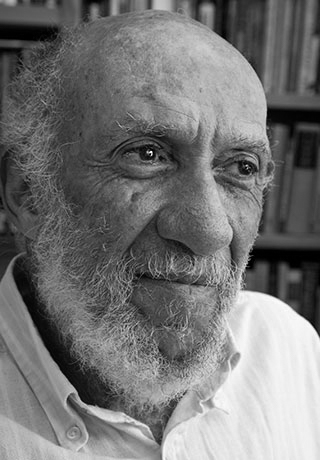
Professor Falk became an adviser to TFF when it was established in 1985.

Share

Leave a Reply

Your email address will not be published. Required fields are marked *

Related Posts

Officially, the drones were not identified. By simply thinking critically – which journalists and selected experts no longer do – there may be a good reason for that. And this article will never be mentioned in Denmark… Drones over Denmark. No damage. No trace. No answers. Yet the headlines scream “Russian threat,” and Prime Minister Mette Frederiksen speaks with a certainty that defies logic: “We don’t know they were Russian—but we know Russia is the biggest threat to Europe.” It could be nobody else – unless you make an interest analysis which I did two days ago. This is not security policy. It’s theatre. And the audience is being played. Let’s rewind. These drones—unphotographed, untracked, unclaimed—appear and vanish like ghosts. Airports shut down. Panic spreads. Military budgets swell. And the narrative hardens: Russia is behind it. But what if that’s not just wrong but deliberately misleading? Here’s a hypothesis for...
And why the world, especially the EU, must now declare itself independent of the United States. UN’s 80th anniversary This year, the United Nations celebrates the 80th anniversary of its founding. The UN was formed after the scourge of the Second World War, in which 70 to 85 million people were killed and many countries were destroyed. That war came on the heels of the First World War, which also killed between 15 and 22 million people. After the Second World War, especially after the use of nuclear weapons by the United States, which marked a turning point in the history of warfare that could result in the end of civilisation as we know it, humanity decided to move away from the era of empires and big power politics and usher in a new era of peace, freedom and cooperation. These were the principles enshrined in the UN Charter. The United States...
Drones over Nordic airports. No damage. No trace. No answers. Most assume Russia—but what if that’s not so? Why is there so much we are not told? This article explores the strategic ambiguity behind recent drone incursions and asks: Who else might benefit from sending drones into NATO airspace? From Ukraine’s surprising drone supremacy to Russia’s possible signalling, the silence itself may be the loudest message. These are the kinds of questions decent, intelligent investigative journalists and commentators could easily research. Why don’t they? Did you, dear reader, know or think of this? That the most powerful weapon in today’s conflicts might be the one that leaves no trace – and no answers. Just enough fear to justify the next move? Recently, drones have repeatedly appeared over Nordic airports and near some military facilities. They cause no damage – for which reason the designation “hybrid attack” is misleading but serves a purpose. These...

Recent Articles

– nästan 11 månader Till Sofia nästan 11 månader # 1  Till Sofias huvudsida Till alla Privata Foto-Serier
Till Sofias huvudsida
OK, Trump did not get it. But he got a full endorsement of a possible future US regime change in Venezuela. And that is what Ms Machado has advocated. On October 10, 2025, the Norwegian Nobel Committee awarded its Peace Prize to Venezuelan opposition figure María Corina Machado. The citation praised her “tireless work promoting democratic rights.” But Ms Machado has openly called for U.S. military intervention in Venezuela, stating on CBS: “The only way to stop the suppression is by force—U.S. force.” She or her party has received funding from the National Endowment for Democracy (NED), a U.S. government-backed body known as a CIA front organisation and for supporting regime-change operations worldwide. And in 2018, she sent a letter to Israeli Prime Minister Benjamin Netanyahu, asking him to use “force and influence” to help dismantle Venezuela’s government—citing alleged ties to terrorism, Iran and narcotrafficking. This year’s NATO Norwegian prize...

TFF on Substack

Discover more from TFF Transnational Foundation & Jan Oberg.

Most Popular

– nästan 11 månader Till Sofia nästan 11 månader # 1  Till Sofias huvudsida Till alla Privata Foto-Serier
Till Sofias huvudsida
OK, Trump did not get it. But he got a full endorsement of a possible future US regime change in Venezuela. And that is what Ms Machado has advocated. On October 10, 2025, the Norwegian Nobel Committee awarded its Peace Prize to Venezuelan opposition figure María Corina Machado. The citation praised her “tireless work promoting democratic rights.” But Ms Machado has openly called for U.S. military intervention in Venezuela, stating on CBS: “The only way to stop the suppression is by force—U.S. force.” She or her party has received funding from the National Endowment for Democracy (NED), a U.S. government-backed body known as a CIA front organisation and for supporting regime-change operations worldwide. And in 2018, she sent a letter to Israeli Prime Minister Benjamin Netanyahu, asking him to use “force and influence” to help dismantle Venezuela’s government—citing alleged ties to terrorism, Iran and narcotrafficking. This year’s NATO Norwegian prize...
Read More
– nästan 11 månader Till Sofia nästan 11 månader # 1  Till Sofias huvudsida Till alla Privata Foto-Serier
Till Sofias huvudsida
BlackNobel
OK, Trump did not get it. But he got a full endorsement of a possible future US regime change in Venezuela. And that is what Ms Machado has advocated. On October 10, 2025, the Norwegian Nobel Committee awarded its Peace Prize to Venezuelan opposition figure María Corina Machado. The citation praised her “tireless work promoting democratic rights.” But Ms Machado has openly called for U.S. military intervention in Venezuela, stating on CBS: “The only way to stop the suppression is by force—U.S. force.” She or her party has received funding from the National Endowment for Democracy (NED), a U.S. government-backed body known as a CIA front organisation and for supporting regime-change operations worldwide. And in 2018, she sent a letter to Israeli Prime Minister Benjamin Netanyahu, asking him to use “force and influence” to help dismantle Venezuela’s government—citing alleged ties to terrorism, Iran and narcotrafficking. This year’s NATO Norwegian prize...
Screenshot-2025-10-08-163458
PRESS RELEASE – 6 OCTOBER 2025 LAY DOWN YOUR ARMSPEACE PRIZE FOR 2025 is awarded Francesca Albanese The United Nations Special Rapporteur on the occupied Palestinian territories – as the person who, in accordance with Alfred Nobel’s will, has “done the most or the best work for fraternity between nations and for the abolition or reduction of standing armies as well as for the holding and promotion of peace congresses.” Francesca Albanese has forcefully and unwaveringly worked against Israel’s full-scale war on the occupied Palestinian territories, in particular Israel´s ongoing genocide against the Palestinian people. She has confronted Israel’s systematic war crimes and crimes against humanity in a truly global outreach. Further, she has brought governments, international organisations and people’s groups together to underline the responsibility of the world at large to act and to stop arming, enabling, and profiting from Israel’s ongoing criminal actions. But first of all, Albanese...
Copilot_20251003_003414
Officially, the drones were not identified. By simply thinking critically – which journalists and selected experts no longer do – there may be a good reason for that. And this article will never be mentioned in Denmark… Drones over Denmark. No damage. No trace. No answers. Yet the headlines scream “Russian threat,” and Prime Minister Mette Frederiksen speaks with a certainty that defies logic: “We don’t know they were Russian—but we know Russia is the biggest threat to Europe.” It could be nobody else – unless you make an interest analysis which I did two days ago. This is not security policy. It’s theatre. And the audience is being played. Let’s rewind. These drones—unphotographed, untracked, unclaimed—appear and vanish like ghosts. Airports shut down. Panic spreads. Military budgets swell. And the narrative hardens: Russia is behind it. But what if that’s not just wrong but deliberately misleading? Here’s a hypothesis for...
Screenshot-2025-09-30-231913-1
And why the world, especially the EU, must now declare itself independent of the United States. UN’s 80th anniversary This year, the United Nations celebrates the 80th anniversary of its founding. The UN was formed after the scourge of the Second World War, in which 70 to 85 million people were killed and many countries were destroyed. That war came on the heels of the First World War, which also killed between 15 and 22 million people. After the Second World War, especially after the use of nuclear weapons by the United States, which marked a turning point in the history of warfare that could result in the end of civilisation as we know it, humanity decided to move away from the era of empires and big power politics and usher in a new era of peace, freedom and cooperation. These were the principles enshrined in the UN Charter. The United States...