
Climate Action, Gandhian Ways

By David Cortright

December 11, 2019

Last month I was invited by the Indian Permanent Mission to the United Nations to give a presentation on the International Day of Nonviolence, which was also the 150th anniversary of Gandhi’s birth. Below is the full text of my remarks, which were delivered at the United Nations headquarters in New York.

Originally posted on Davidcortright.net on November 9, 2019 here

In the remarks, I identified three aspects of Gandhian thought and action that are directly relevant to the challenge of protecting the environment and preventing climate disruption. At the end of my presentation, I added a brief comment on the situation in Kashmir, which seemed necessary to include in an event organized by the Indian government.

image

“Gandhi’s message is highly relevant to today’s global climate crisis. I emphasize here three of his most important themes: simplicity, equity and nonviolence.

Simplicity

Gandhi became the “greatest person in the world” (as many called him) not through power and wealth but through selflessness and humble service to others.

He didn’t have anything. All of his possessions at the end of his life fit into a small box.

He lived simply and rejected materialism. He moved from a large home to live communally in an ashram. He shed his three-piece suit to became a man in loincloth, wearing a simple dhoti and shawl of homespun, even in cold and rainy London.

In 1931, while participating in the round table negotiations with the British government, Gandhi and other Indian delegates were invited to tea with the king. When Gandhi arrived at Buckingham Palace in his usual sparse attire, ‘half-naked’ Churchill once derisively commented, a reporter asked if he was underdressed for the occasion. Gandhi replied, “Don’t worry. His majesty has on enough for both of us.”

In his emphasis on simplicity and non-possession, Gandhi was revealing a profound truth about the roots of our current crisis, and he was pointing toward the pathway to a more sustainable future.

In his early book, Hind Swaraj, he described the quest for material goods and the endless multiplication of wants as “satanic.” If India were to follow the industrialism and economic imperialism of the West, he later warned, it would “strip the world bare like locusts.”

Gandhi’s critique of excessive materialism calls into question today our constant striving and demand for more goods. Are we consuming too much? Have our wants out-stripped our needs?

His critique also calls into question our model of economics. Our modern economic system is predicated upon endless growth, but there are unavoidable limits to the earth’s biological carrying capacity. We cannot keep dumping ever greater amounts of waste products into the atmosphere and the oceans.

The current global effort to stem carbon emissions focuses on the supply side. Produce more efficiently with less energy. Use renewal materials and resources. All good, but it is insufficient. We must also look at the demand side and explore ways to produce less, to consume less.

The global supply chains of today stretch from the high consuming West, to the high producing East, especially India and China. While emission levels have moderated slightly in the West, they are rising in the East, to satisfy the excess wants and manufacture the superfluous goods demanded in the West.

Curbing our demand for products does not mean that we abandon the struggle against poverty. On the contrary, we must continue and accelerate the work of fulfilling the Sustainable Development Goals, as was discussed recently at the UN. But surely we can find a way to continue lifting people out of poverty without further ruining the environment or undermining the life support systems that are necessary to sustain human dignity into the future.

In calling for fewer wants and less consumption, I am not saying we should go about in loincloth or live in an ashram. But we can and must commit ourselves to living more simply and modestly.

Those of us who have achieved middle class status must demand less for ourselves and share more with others, especially the disinherited.

Equity

Gandhi devoted himself to serving the poor. In his famous Talisman, he said we should ask ourselves how our actions will affect the poorest and the weakest. We should act in ways that will help to liberate the hungry and lift up the least of these.

We know that the harmful effects of pollution and climate chaos fall disproportionately upon the poor and powerless. The rich and mighty can move to higher ground or cooler climes, but the impoverished do not have that option.

We should heed the wisdom of Pope Francis on this issue. The Holy Father links the marginalization of the poor to the exploitation of the environment. In his historic encyclical Laudato Si, he calls us to be in solidarity with the miserando, the lowly who are “mired in desperate and degrading poverty, with no way out, while others … [are] vainly showing off their supposed superiority and leaving behind so much waste that, if it were the case everywhere, would destroy the planet.”

Gandhi would agree with that. He thought of excess consumption as thievery. If we take more than is necessary for own needs, he believed, we take it from others. All people must have an equal opportunity, Gandhi said. This does not mean that everyone literally has the same amount, rather that everybody has enough for his or her needs.

Nonviolence

Gandhi’s most important contribution to the world, I believe, is his philosophy and method of nonviolence. He demonstrated the power of disciplined peaceful disobedience, how mass noncooperation with injustice can change the course of history.

His philosophy of nonviolence is based on the principle of ahimsa, non-harm, the refusal to hurt another person, and also the responsibility to stand up for those who are harmed or threatened by others. He said that love and nonviolence are the pathway to spiritual fulfillment and divine truth, and he showed that they can also be means of overcoming oppression and injustice.

We reject violence because it is based on domination and coercion. Peace on the other hand is rooted in cooperation and freedom. Peace and nonviolence are indivisible. Life is sacred, and all living beings are interrelated. We are inescapably bound together in a web of mutuality through the interdependence of all living beings and the natural world.

As we strive to live peacefully with our fellow human beings, we must also be at peace with the earth. With all of our energy and strength, we must take up the responsibility to protect and preserve this precious, vulnerable envelope of air, water and soil that sustains all life and that is increasingly in peril due to our own actions.

Kashmir

As we reflect today upon Gandhi’s teachings on nonviolence, we would be remiss, I believe, if we did not mention the current situation in Kashmir.

Gandhi played a role in Kashmir in 1947, traveling to Srinagar to meet with Maharaja Hari Singh. When discontent and violence ensued after Kashmir acceded to India, Gandhi said, “If anyone can save Kashmir, it is only the Muslims, the Kashmiri Pandits, the Rajputs and the Sikhs who can do so.”

Today there is renewed discontent, and a risk of violence, but this must be avoided, as Gandhi would insist. The only path to a just settlement in Kashmir is through nonviolent democratic means.

Long live the spirit and message of Mahatma Gandhi!”

References

Pope Francis, Laudato Si: On Care for Our Common Home, Encyclical Letter, Hunting, Our Sunday Visitor Publishing Division, 2015, 62-63, 91

Quoted in Ramachandra Guha, Gandhi: The Years That Changed The World, 1914-1948, New York, Alfred A. Knopf, 2018, p, 823
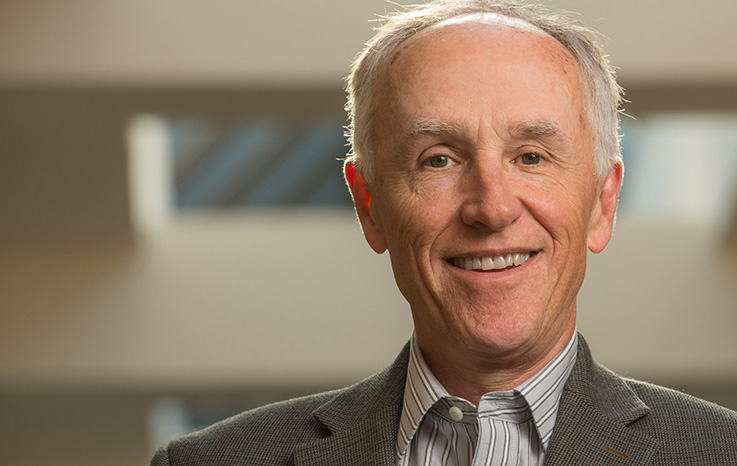
David Cortright teaches peace studies and nonviolent social change at the University of Notre Dame and is the Director of Policy Studies at Notre Dame’s Kroc Institute for International Peace Studies. He researches and writes about peace and security; Iraq, Iran, and Afghanistan; the abolition of nuclear weapons; counter-terrorism; sanctions; and peace ideas and movements.


Share

Leave a Reply

Your email address will not be published. Required fields are marked *

Related Posts

Jan Oberg May 15, 2026 Go to this Fox News page and scroll the whole way down: President Donald Trump tells the world that his meeting with President Xi Jinping yielded a lot of very concrete political and economic results – of course, only where the Chinese side, according to him, agreed with him. He does not mention the Taiwan issue, but Secretary of State, Marco Rubio, says that it did not feature prominently in their talks and that the US policy on Taiwan has not changed. Then go to China Daily – or Global Times – and you will see that for the Chinese it is framework, principles, structure of cooperation etc. that matters – all embedded in the overall idea of “constructive bilateral relationship of strategic stability.” Nowhere is any concrete agreement or deal – all that Trump refers to – mentioned. At the general level, this gives you insights into the very different social...
Lena Petrova of “World Affairs In Context” with more than half a million subscribers on YouTube wanted to explore what a peace researcher like me has to say about, among other things, the First and the Second Cold War and why eethics has disappeared from politics. I am particularly happy about this conversation that also yielded an amazing number of very appreciative comments on YouTube. No doubt, people are longing for alternatives, including peace perspectives.
The MIMAC – Military-Industrial-Media-Academic Complex – drives the world’s rampant militarism and wars without end. Here is a short reflection of how it works against all interests of humanity. #5 deals with why there is no real enemy or threat images/analysis. It’s all ex-post constructions. And, btw, theTFF Peace Pulse is now on Rumble.

Recent Articles

Jan Oberg May 15, 2026 Go to this Fox News page and scroll the whole way down: President Donald Trump tells the world that his meeting with President Xi Jinping yielded a lot of very concrete political and economic results – of course, only where the Chinese side, according to him, agreed with him. He does not mention the Taiwan issue, but Secretary of State, Marco Rubio, says that it did not feature prominently in their talks and that the US policy on Taiwan has not changed. Then go to China Daily – or Global Times – and you will see that for the Chinese it is framework, principles, structure of cooperation etc. that matters – all embedded in the overall idea of “constructive bilateral relationship of strategic stability.” Nowhere is any concrete agreement or deal – all that Trump refers to – mentioned. At the general level, this gives you insights into the very different social...
Lena Petrova of “World Affairs In Context” with more than half a million subscribers on YouTube wanted to explore what a peace researcher like me has to say about, among other things, the First and the Second Cold War and why eethics has disappeared from politics. I am particularly happy about this conversation that also yielded an amazing number of very appreciative comments on YouTube. No doubt, people are longing for alternatives, including peace perspectives.
The MIMAC – Military-Industrial-Media-Academic Complex – drives the world’s rampant militarism and wars without end. Here is a short reflection of how it works against all interests of humanity. #5 deals with why there is no real enemy or threat images/analysis. It’s all ex-post constructions. And, btw, theTFF Peace Pulse is now on Rumble.

TFF on Substack

Discover more from TFF Transnational Foundation & Jan Oberg.

Most Popular

Jan Oberg May 15, 2026 Go to this Fox News page and scroll the whole way down: President Donald Trump tells the world that his meeting with President Xi Jinping yielded a lot of very concrete political and economic results – of course, only where the Chinese side, according to him, agreed with him. He does not mention the Taiwan issue, but Secretary of State, Marco Rubio, says that it did not feature prominently in their talks and that the US policy on Taiwan has not changed. Then go to China Daily – or Global Times – and you will see that for the Chinese it is framework, principles, structure of cooperation etc. that matters – all embedded in the overall idea of “constructive bilateral relationship of strategic stability.” Nowhere is any concrete agreement or deal – all that Trump refers to – mentioned. At the general level, this gives you insights into the very different social...
Lena Petrova of “World Affairs In Context” with more than half a million subscribers on YouTube wanted to explore what a peace researcher like me has to say about, among other things, the First and the Second Cold War and why eethics has disappeared from politics. I am particularly happy about this conversation that also yielded an amazing number of very appreciative comments on YouTube. No doubt, people are longing for alternatives, including peace perspectives.
The MIMAC – Military-Industrial-Media-Academic Complex – drives the world’s rampant militarism and wars without end. Here is a short reflection of how it works against all interests of humanity. #5 deals with why there is no real enemy or threat images/analysis. It’s all ex-post constructions. And, btw, theTFF Peace Pulse is now on Rumble.
Read More
Screenshot-2026-05-15-103534
Jan Oberg May 15, 2026 Go to this Fox News page and scroll the whole way down: President Donald Trump tells the world that his meeting with President Xi Jinping yielded a lot of very concrete political and economic results – of course, only where the Chinese side, according to him, agreed with him. He does not mention the Taiwan issue, but Secretary of State, Marco Rubio, says that it did not feature prominently in their talks and that the US policy on Taiwan has not changed. Then go to China Daily – or Global Times – and you will see that for the Chinese it is framework, principles, structure of cooperation etc. that matters – all embedded in the overall idea of “constructive bilateral relationship of strategic stability.” Nowhere is any concrete agreement or deal – all that Trump refers to – mentioned. At the general level, this gives you insights into the very different social...
Screenshot-2026-05-12-104023
Lena Petrova of “World Affairs In Context” with more than half a million subscribers on YouTube wanted to explore what a peace researcher like me has to say about, among other things, the First and the Second Cold War and why eethics has disappeared from politics. I am particularly happy about this conversation that also yielded an amazing number of very appreciative comments on YouTube. No doubt, people are longing for alternatives, including peace perspectives.
Screenshot-2026-04-13-154551 (2)
The MIMAC – Military-Industrial-Media-Academic Complex – drives the world’s rampant militarism and wars without end. Here is a short reflection of how it works against all interests of humanity. #5 deals with why there is no real enemy or threat images/analysis. It’s all ex-post constructions. And, btw, theTFF Peace Pulse is now on Rumble.
Screenshot-2026-04-13-154551 (1)
Jan Oberg, TFF director April 28, 2026 In this third TFF Peace Pulse, I make the important distinction between the violence and the conflict that violence is a symptom of. If you want peace, focus on the underlying conflict because that is the key to resolution, peacemaking, and a better future for the parties. The West is obsessed with violence, just look around you – and 90+ per cent of the public debate is about military issues and other violence – totally wasted for peace. These Peace Pulses will only be published here a few times. You will also not find them on YouTube and Vimeo because both platforms have blocked TFF and me; you know, peace is dangerous these days. Most TFF’s videos since 2007 are now on Rumble.
Screenshot-2026-04-13-154551
In contrast to most, we’ll bring alternatives, solutions, hope and strategies for a better future. Times are dangerous, yes, but that only intensifies the need for constructive thinking and action! Jan Oberg, TFF director April 13, 2026 The new TFF Peace Pulse uses video messages in a new way: Max 3-5-minute-long comments, ideas or perhaps mini-lectures, all about peace – positive peace. We launch them today on April 13, 2026 with a carefully crafted visual aesthetic fitting the content. We hope to publish them regularly from now on. We launch Peace Pulse (PP) – for a number of reasons. The world is in chaos, and there are countless reasons to feel concerned, frustrated, even angry. The atmosphere is saturated with doom and gloom, with negative energy and rear‑mirror thinking, while vision, imagination, alternatives, strategies and genuine future‑mindedness remain in short supply. And without them, we simply can’t save the world. Looking at problems from a hundred angles will...
IMG_5165 (1)
PART II — Publishing Peace in a System That Prioritises Militarism Jan Oberg, TFF director April 10, 2026 How TFF Maintains a Daily Voice in a Digital World Built for Noise This article is part of the series “TFF at 40″ and it invites you to learn about Four Decades of Publishing Peace. It takes a look at how a small, people‑financed peace foundation has communicated across four generations of technology — from wax stencils and fax machines to mass email and Substack — and why TFF continues to publish every single day in a system that rewards noise, conflict, and militarism. ◆ What it means to publish peace every single day in a digital system built for 24/7 news and other noise, confrontation, and militarism. How TFF’s independence, continuity, and global readership defy algorithms, donor cycles, and Western media censorhip — and why the Majority World keeps listening. When the...
