
Climate Action, Gandhian Ways

By David Cortright

December 11, 2019

Last month I was invited by the Indian Permanent Mission to the United Nations to give a presentation on the International Day of Nonviolence, which was also the 150th anniversary of Gandhi’s birth. Below is the full text of my remarks, which were delivered at the United Nations headquarters in New York.

Originally posted on Davidcortright.net on November 9, 2019 here

In the remarks, I identified three aspects of Gandhian thought and action that are directly relevant to the challenge of protecting the environment and preventing climate disruption. At the end of my presentation, I added a brief comment on the situation in Kashmir, which seemed necessary to include in an event organized by the Indian government.

image

“Gandhi’s message is highly relevant to today’s global climate crisis. I emphasize here three of his most important themes: simplicity, equity and nonviolence.

Simplicity

Gandhi became the “greatest person in the world” (as many called him) not through power and wealth but through selflessness and humble service to others.

He didn’t have anything. All of his possessions at the end of his life fit into a small box.

He lived simply and rejected materialism. He moved from a large home to live communally in an ashram. He shed his three-piece suit to became a man in loincloth, wearing a simple dhoti and shawl of homespun, even in cold and rainy London.

In 1931, while participating in the round table negotiations with the British government, Gandhi and other Indian delegates were invited to tea with the king. When Gandhi arrived at Buckingham Palace in his usual sparse attire, ‘half-naked’ Churchill once derisively commented, a reporter asked if he was underdressed for the occasion. Gandhi replied, “Don’t worry. His majesty has on enough for both of us.”

In his emphasis on simplicity and non-possession, Gandhi was revealing a profound truth about the roots of our current crisis, and he was pointing toward the pathway to a more sustainable future.

In his early book, Hind Swaraj, he described the quest for material goods and the endless multiplication of wants as “satanic.” If India were to follow the industrialism and economic imperialism of the West, he later warned, it would “strip the world bare like locusts.”

Gandhi’s critique of excessive materialism calls into question today our constant striving and demand for more goods. Are we consuming too much? Have our wants out-stripped our needs?

His critique also calls into question our model of economics. Our modern economic system is predicated upon endless growth, but there are unavoidable limits to the earth’s biological carrying capacity. We cannot keep dumping ever greater amounts of waste products into the atmosphere and the oceans.

The current global effort to stem carbon emissions focuses on the supply side. Produce more efficiently with less energy. Use renewal materials and resources. All good, but it is insufficient. We must also look at the demand side and explore ways to produce less, to consume less.

The global supply chains of today stretch from the high consuming West, to the high producing East, especially India and China. While emission levels have moderated slightly in the West, they are rising in the East, to satisfy the excess wants and manufacture the superfluous goods demanded in the West.

Curbing our demand for products does not mean that we abandon the struggle against poverty. On the contrary, we must continue and accelerate the work of fulfilling the Sustainable Development Goals, as was discussed recently at the UN. But surely we can find a way to continue lifting people out of poverty without further ruining the environment or undermining the life support systems that are necessary to sustain human dignity into the future.

In calling for fewer wants and less consumption, I am not saying we should go about in loincloth or live in an ashram. But we can and must commit ourselves to living more simply and modestly.

Those of us who have achieved middle class status must demand less for ourselves and share more with others, especially the disinherited.

Equity

Gandhi devoted himself to serving the poor. In his famous Talisman, he said we should ask ourselves how our actions will affect the poorest and the weakest. We should act in ways that will help to liberate the hungry and lift up the least of these.

We know that the harmful effects of pollution and climate chaos fall disproportionately upon the poor and powerless. The rich and mighty can move to higher ground or cooler climes, but the impoverished do not have that option.

We should heed the wisdom of Pope Francis on this issue. The Holy Father links the marginalization of the poor to the exploitation of the environment. In his historic encyclical Laudato Si, he calls us to be in solidarity with the miserando, the lowly who are “mired in desperate and degrading poverty, with no way out, while others … [are] vainly showing off their supposed superiority and leaving behind so much waste that, if it were the case everywhere, would destroy the planet.”

Gandhi would agree with that. He thought of excess consumption as thievery. If we take more than is necessary for own needs, he believed, we take it from others. All people must have an equal opportunity, Gandhi said. This does not mean that everyone literally has the same amount, rather that everybody has enough for his or her needs.

Nonviolence

Gandhi’s most important contribution to the world, I believe, is his philosophy and method of nonviolence. He demonstrated the power of disciplined peaceful disobedience, how mass noncooperation with injustice can change the course of history.

His philosophy of nonviolence is based on the principle of ahimsa, non-harm, the refusal to hurt another person, and also the responsibility to stand up for those who are harmed or threatened by others. He said that love and nonviolence are the pathway to spiritual fulfillment and divine truth, and he showed that they can also be means of overcoming oppression and injustice.

We reject violence because it is based on domination and coercion. Peace on the other hand is rooted in cooperation and freedom. Peace and nonviolence are indivisible. Life is sacred, and all living beings are interrelated. We are inescapably bound together in a web of mutuality through the interdependence of all living beings and the natural world.

As we strive to live peacefully with our fellow human beings, we must also be at peace with the earth. With all of our energy and strength, we must take up the responsibility to protect and preserve this precious, vulnerable envelope of air, water and soil that sustains all life and that is increasingly in peril due to our own actions.

Kashmir

As we reflect today upon Gandhi’s teachings on nonviolence, we would be remiss, I believe, if we did not mention the current situation in Kashmir.

Gandhi played a role in Kashmir in 1947, traveling to Srinagar to meet with Maharaja Hari Singh. When discontent and violence ensued after Kashmir acceded to India, Gandhi said, “If anyone can save Kashmir, it is only the Muslims, the Kashmiri Pandits, the Rajputs and the Sikhs who can do so.”

Today there is renewed discontent, and a risk of violence, but this must be avoided, as Gandhi would insist. The only path to a just settlement in Kashmir is through nonviolent democratic means.

Long live the spirit and message of Mahatma Gandhi!”

References

Pope Francis, Laudato Si: On Care for Our Common Home, Encyclical Letter, Hunting, Our Sunday Visitor Publishing Division, 2015, 62-63, 91

Quoted in Ramachandra Guha, Gandhi: The Years That Changed The World, 1914-1948, New York, Alfred A. Knopf, 2018, p, 823
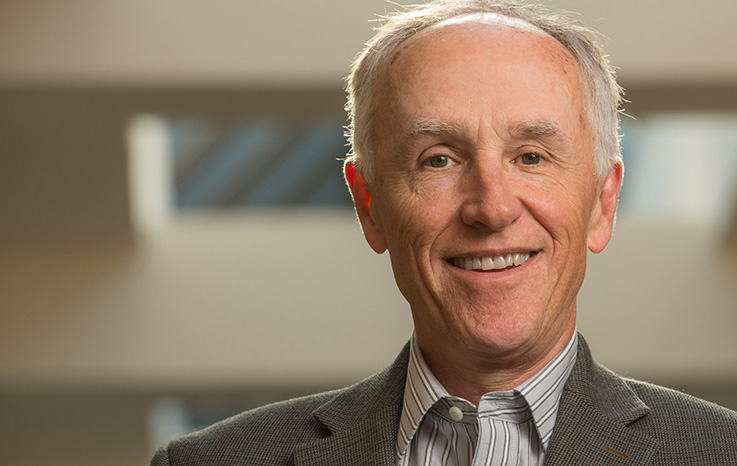
David Cortright teaches peace studies and nonviolent social change at the University of Notre Dame and is the Director of Policy Studies at Notre Dame’s Kroc Institute for International Peace Studies. He researches and writes about peace and security; Iraq, Iran, and Afghanistan; the abolition of nuclear weapons; counter-terrorism; sanctions; and peace ideas and movements.

No data was found

Share

Leave a Reply

Your email address will not be published. Required fields are marked *

Related Posts

OK, Trump did not get it. But he got a full endorsement of a possible future US regime change in Venezuela. And that is what Ms Machado has advocated. On October 10, 2025, the Norwegian Nobel Committee awarded its Peace Prize to Venezuelan opposition figure María Corina Machado. The citation praised her “tireless work promoting democratic rights.” But Ms Machado has openly called for U.S. military intervention in Venezuela, stating on CBS: “The only way to stop the suppression is by force—U.S. force.” She or her party has received funding from the National Endowment for Democracy (NED), a U.S. government-backed body known as a CIA front organisation and for supporting regime-change operations worldwide. And in 2018, she sent a letter to Israeli Prime Minister Benjamin Netanyahu, asking him to use “force and influence” to help dismantle Venezuela’s government—citing alleged ties to terrorism, Iran and narcotrafficking. This year’s NATO Norwegian prize...
PRESS RELEASE – 6 OCTOBER 2025 LAY DOWN YOUR ARMSPEACE PRIZE FOR 2025 is awarded Francesca Albanese The United Nations Special Rapporteur on the occupied Palestinian territories – as the person who, in accordance with Alfred Nobel’s will, has “done the most or the best work for fraternity between nations and for the abolition or reduction of standing armies as well as for the holding and promotion of peace congresses.” Francesca Albanese has forcefully and unwaveringly worked against Israel’s full-scale war on the occupied Palestinian territories, in particular Israel´s ongoing genocide against the Palestinian people. She has confronted Israel’s systematic war crimes and crimes against humanity in a truly global outreach. Further, she has brought governments, international organisations and people’s groups together to underline the responsibility of the world at large to act and to stop arming, enabling, and profiting from Israel’s ongoing criminal actions. But first of all, Albanese...
“The future belongs to those who imagine it — not those who declare it doomed.” Silence is unusual for us. But even a foundation devoted to peace and ideas needs a pit stop now and then — a moment to refuel, re‑engineer, and prepare for the road ahead. Because the road ahead matters. On January 1, 2026, TFF turns 40. Four decades of independent research, education, and advocacy for the UN Charter norm that “peace shall be established by peaceful means.” And we are not celebrating with nostalgia — we are rebuilding for the future: We are bringing in new Associates, engaging in conferences across continents, and preparing to do what so few dare: offer solutions instead of despair. Because let’s be honest: describing the world as doomed is easy. It is also lazy, unprofessional, and unethical. Imagine a doctor telling a patient: “You’re dying, I can’t see what can...

Recent Articles

Gandhi, Arun. Lord Richard Attenborough. Kasturba: a lifeNew Delhi: Penguin Books Ltd., 2000.315 pp, 295 Indian Rs, US $22.51 January 29, 2002 Arun Gandhi, grandson to Mohandas and Kasturba, has written a thorough account of Kasturba’s life. Arun begins with a description of Kasturba’s childhood in Porbandar in the late1800s, before she met Mohandas. By having chosen to embark on difficult research into his grandmother’s life, including her first years which are not well-documented, Arun ensures that the reader receives an intimate and life-long portrait of this amazing woman. Kasturba is presented as a lively woman &endash; obedient, yet with a mind of her own. As the relationship between Kasturba and Mohandas developed, Arun maintains that Kasturba’s influence over Mohandas in her own quiet way also grew, to which some of Mohandas’ writings also attest.  Arun paints a vivid picture of the beginnings of Mohandas’ non-violence movement in South Africa, a...
In response to an urgent Appeal from all the living Nobel Peace Prize Laureates, the General Assembly of the United Nations, on November 1998, unanimously declared the first decade of the twenty-first century to be The Decade for a Culture of Peace and Nonviolence. While people are naturally concerned about the amount of violence in our world and how it threatens our future, the Nobel Laureates are right to remind us of the potential of nonviolence and our calling to build a culture of peace and nonviolence.  The twentieth century is instructive in the way that the philosophy and practice of nonviolence have begun to flourish and in the way that nonviolent movements have had an exponential growth across the world. Mohandas Gandhi and Martin Luther King, Jr. are the most famous nonviolent leaders but many have built upon the paths they charted as in country after country, tyrannies and...
We know that medical personnel have failed to report to higher authorities wounds that were clearly caused by torture and that they have neglected to take steps to interrupt this torture. In addition, they have turned over prisoners’ medical records to interrogators who could use them to exploit the prisoners’ weaknesses or vulnerabilities. We have not yet learned the extent of medical involvement in delaying and possibly falsifying the death certificates of prisoners who have been killed by torturers. A May 22 article on Abu Ghraib in the New York Times states that “much of the evidence of abuse at the prison came from medical documents” and that records and statements “showed doctors and medics reporting to the area of the prison where the abuse occurred several times to stitch wounds, tend to collapsed prisoners or see patients with bruised or reddened genitals.” http://www.truthout.org/docs_04/080604J.shtml#16 According to the article, two doctors who...

TFF on Substack

Discover more from TFF Transnational Foundation & Jan Oberg.

Most Popular

Gandhi, Arun. Lord Richard Attenborough. Kasturba: a lifeNew Delhi: Penguin Books Ltd., 2000.315 pp, 295 Indian Rs, US $22.51 January 29, 2002 Arun Gandhi, grandson to Mohandas and Kasturba, has written a thorough account of Kasturba’s life. Arun begins with a description of Kasturba’s childhood in Porbandar in the late1800s, before she met Mohandas. By having chosen to embark on difficult research into his grandmother’s life, including her first years which are not well-documented, Arun ensures that the reader receives an intimate and life-long portrait of this amazing woman. Kasturba is presented as a lively woman &endash; obedient, yet with a mind of her own. As the relationship between Kasturba and Mohandas developed, Arun maintains that Kasturba’s influence over Mohandas in her own quiet way also grew, to which some of Mohandas’ writings also attest.  Arun paints a vivid picture of the beginnings of Mohandas’ non-violence movement in South Africa, a...
In response to an urgent Appeal from all the living Nobel Peace Prize Laureates, the General Assembly of the United Nations, on November 1998, unanimously declared the first decade of the twenty-first century to be The Decade for a Culture of Peace and Nonviolence. While people are naturally concerned about the amount of violence in our world and how it threatens our future, the Nobel Laureates are right to remind us of the potential of nonviolence and our calling to build a culture of peace and nonviolence.  The twentieth century is instructive in the way that the philosophy and practice of nonviolence have begun to flourish and in the way that nonviolent movements have had an exponential growth across the world. Mohandas Gandhi and Martin Luther King, Jr. are the most famous nonviolent leaders but many have built upon the paths they charted as in country after country, tyrannies and...
We know that medical personnel have failed to report to higher authorities wounds that were clearly caused by torture and that they have neglected to take steps to interrupt this torture. In addition, they have turned over prisoners’ medical records to interrogators who could use them to exploit the prisoners’ weaknesses or vulnerabilities. We have not yet learned the extent of medical involvement in delaying and possibly falsifying the death certificates of prisoners who have been killed by torturers. A May 22 article on Abu Ghraib in the New York Times states that “much of the evidence of abuse at the prison came from medical documents” and that records and statements “showed doctors and medics reporting to the area of the prison where the abuse occurred several times to stitch wounds, tend to collapsed prisoners or see patients with bruised or reddened genitals.” http://www.truthout.org/docs_04/080604J.shtml#16 According to the article, two doctors who...
Read More
Imagen-thumbnail-The-Transnational-1
Gandhi, Arun. Lord Richard Attenborough. Kasturba: a lifeNew Delhi: Penguin Books Ltd., 2000.315 pp, 295 Indian Rs, US $22.51 January 29, 2002 Arun Gandhi, grandson to Mohandas and Kasturba, has written a thorough account of Kasturba’s life. Arun begins with a description of Kasturba’s childhood in Porbandar in the late1800s, before she met Mohandas. By having chosen to embark on difficult research into his grandmother’s life, including her first years which are not well-documented, Arun ensures that the reader receives an intimate and life-long portrait of this amazing woman. Kasturba is presented as a lively woman &endash; obedient, yet with a mind of her own. As the relationship between Kasturba and Mohandas developed, Arun maintains that Kasturba’s influence over Mohandas in her own quiet way also grew, to which some of Mohandas’ writings also attest.  Arun paints a vivid picture of the beginnings of Mohandas’ non-violence movement in South Africa, a...
Imagen-thumbnail-The-Transnational-1
In response to an urgent Appeal from all the living Nobel Peace Prize Laureates, the General Assembly of the United Nations, on November 1998, unanimously declared the first decade of the twenty-first century to be The Decade for a Culture of Peace and Nonviolence. While people are naturally concerned about the amount of violence in our world and how it threatens our future, the Nobel Laureates are right to remind us of the potential of nonviolence and our calling to build a culture of peace and nonviolence.  The twentieth century is instructive in the way that the philosophy and practice of nonviolence have begun to flourish and in the way that nonviolent movements have had an exponential growth across the world. Mohandas Gandhi and Martin Luther King, Jr. are the most famous nonviolent leaders but many have built upon the paths they charted as in country after country, tyrannies and...
Imagen-thumbnail-The-Transnational-1
We know that medical personnel have failed to report to higher authorities wounds that were clearly caused by torture and that they have neglected to take steps to interrupt this torture. In addition, they have turned over prisoners’ medical records to interrogators who could use them to exploit the prisoners’ weaknesses or vulnerabilities. We have not yet learned the extent of medical involvement in delaying and possibly falsifying the death certificates of prisoners who have been killed by torturers. A May 22 article on Abu Ghraib in the New York Times states that “much of the evidence of abuse at the prison came from medical documents” and that records and statements “showed doctors and medics reporting to the area of the prison where the abuse occurred several times to stitch wounds, tend to collapsed prisoners or see patients with bruised or reddened genitals.” http://www.truthout.org/docs_04/080604J.shtml#16 According to the article, two doctors who...
Imagen-thumbnail-The-Transnational-1
Jan Øberg behandler i artiklen en lang række faktorer, som ligger til grund for den måde vores samfund er organiseret på – og derfor også for konflikter. Artiklen introducerer således sammenhængen mellem familien, foreninger, regeringer, NGO’ er, nation, stat, nationalstat og alliancer for på denne måde bedre at kunne forstå konflikter og i sidste ende blive klogere mht. at løse disse. Øberg, der er fortaler for global bevidsthed, hvilket skal ses i lyset af den øgede globalisering, skelner mellem kulturkamp og kulturdialog. Endelig behandles begrebet magt og magtesløshed: giver magt ret til at udøve magt – fordi man mener at have ret? Litteraturliste og arbejdsspørgsmål efter artiklen. Ordene vi bruger om verden I satellitperspektiv kan man godt tale om den menneskelige familie eller menneskeheden. Udtrykket understreger, at der eksisterer – eller burde eksistere – et fællesskab fordi vi alle er mennesker og sammen bebor denne klode og ingen anden. Og...
Imagen-thumbnail-The-Transnational-1
Kapitel 2: Forskellige sider af Europa og USA…fortsat 2.5 Militære relationer I forbifarten har vi allerede sagt nogle ting om USA’s militære situation. Kig lige en gang til på afsnit 2.3. Nu skal vi uddybe det militære forhold mellem USA og EU. Der er en række ligheder mellem visse europæiske landes og USA’s militær. Næsten alle er med på en eller anden måde i NATO, direkte som medlem – selv Island, der ikke har et forsvar – eller indirekte i Partnerskab for Fred. USA og Canada er med i OSCE (på dansk OSSE), Organisationen for Sikkerhed og Samarbejde i Europa, der tæller over 50 lande. USA samt England og Frankrig er kernevåbenstater og de har styrker til intervention langt borte fra hjemlandet, om end USA’s er tifold større. Alle har også en omfattende våbeneksport og bruger den som et middel til at tjene penge og få loyale venner på, det...
Imagen-thumbnail-The-Transnational-1
Background Christian Harleman and Jan Oberg conducted a fact-finding mission to Burundi between November 26 and December 6, 2003. (See websites about the country here). The first TFF mission took place in March 1999. Unfortunately, since then it has not been practically possible to implement the co-operation with Burundi’s Ministry of Education and Burundian NGOs that was planned at the time. The 2003 mission had three purposes. First, to do fact-finding in general about the situation and, in particular, the progress under the Arusha Peace Process. Second, to explore the possibilities for co-operation between the government and relevant NGOs on the one hand and TFF on the other, in order to develop and deepen the existing competence in fields such as conflict-understanding, reconciliation and peace-building. Finally, third, to find out whether it would be possible, in co-operation with the Swedish Rescue Services Agency (Statens Räddningsverk), to establish a health care unit that...