
Challenging the United Nations

Kofi Annan was certainly correct to repudiate President Bush’s contention that unless the Security Council lends support to American warmaking, it will follow the League of Nations down the path to futility. Indeed, the greater danger to the UN is to go along with the US demands or even to respond to the impending war with calculated indifference. It should be remembered that the League failed primarily because of its impotence in the face of aggressive warmaking by Japan, Italy, and Germany during the 1930s that led to the subjugation of such weaker states as Manchuria, Abyssinia (later Ethiopia), and Czechoslovakia. In the end, the UN will rise or fall to the extent that it opposes uses of international force that are in violation of the UN Charter, whether these uses are by large countries or smaller ones.

It is not the moment to commend the UN uncritically for seeming to stand up against the US global juggernaut. It needs to be remembered that the plausibility of mounting this war threat derives from imposing a punitive peace on Iraq after the end of the Gulf War in the form of Security Council Resolution 687. It was part of this “peace” that validated the continuation of harsh sanctions on an Iraqi people already devastated by war, with its water purification system deliberately destroyed. Sanctions in such an atmosphere produced hundreds of thousands of deaths among innocent children over the course of the 1990s, leading successive UN relief administrators of high repute (Denis Halliday, Hans von Sponeck) to resign in Iraq as a protest against UN endorsed policies deemed “genocidal” in their impact.

The UNSC has been in the last several weeks seeking to rein in the US Government without taking a principled stand. It fifteen members unanimously endorsed SC Res. 1441 that has set the stage for the debate about inspections as a prelude to a war against Iraq without ever facing the fundamental question as to whether the Charter authorizes such a recourse to war even if Iraq fails to disarm. After all, Iraq’s sovereignty has been continually violated since 1991, including by unauthorized bombing runs in the “no-fly zones” unilaterally established by the US/UK, and many other countries have developed weapons of mass destruction without becoming the target of coercive disarmament. To deny Iraq the option to defend itself under the pressure of American threats seems to deny a country its most sovereign rights.

True, the Baghdad regime has committed Crimes Against Humanity and Crimes Against Peace, and in an ideal world its leaders would be apprehended, punished, and removed from power, but that does not make the case for war, especially at this time. These past crimes were mainly committed when Iraq was treated by Washington as a strategic ally, and although this does not operate as an excuse, it helps us get a sense of proportion. There is no urgency of the sort that seemed to justify the Kosovo War in 1999 to save the Albanian Kosovars from a growing Serb threat of ethnic cleansing. Beyond this, the scale and tactics of an Iraq War are likely to inflict massive civilian casualties, and produce dangerous instabilities in the region and beyond.

It seems reasonable to expect more from the Security Council than a green or yellow light when it comes to warmaking that cannot be convincingly justified as self-defense in accordance with Article 51 of the Charter. The Security Council all along should have indicated its refusal to authorize war as a solution to the Iraq Crisis, and coupled the renewal of inspections with an explicit reservation relating to the authorization of the use of force. Of course, a principled UNSC stand would have undoubtedly led the US Government to proceed to war without a UN mandate, its earlier predisposition in any event. It should be remembered that when Bush unveiled the preemptive war doctrine in June 2002 at West Point he never even mentioned the UN, the American strategic move being designed from the beginning to be based on “a coalition of the willing and the coerced” managed directly from the White House and Pentagon. The UN detour came about when Republican stalwarts warned Bush that there would be political trouble without a stronger case for casis belli, and encouraged the new president to demand coercive inspection via the UN, and if refused or resisted, to be in possession of a better political basis for war than what would have existed if no effort was made to gain UN backing.

Taking this indirect path to war was always controversial among the Bush inner circle, which never for a moment was prepared to submit their Iraq policy to the discipline of international law or the independent authority of the United Nations. Finally, a compromise was adopted within the US Government: a diktat to the UN to give Washington a green light with respect to the war or the US would go to war on its own and declare the UN “irrelevant.” The UNSC responded timidly with its own opportunistic compromise in the form of 1441, seeking to preserve their relevance by imposing some conditions on the authorization to make war, but never quite saying so. The US Government retained the option, which it is likely to use, that Iraq was warned in 1441 of “serious consequences” in the event of “material breach,” and that this language provides a sufficient mandate. Others will object, but the assumption is that the American public will go along once the war commences, especially if it manages a quick victory with few American casualties.

I think the peoples of the world are entitled to expect more from the UN in such a situation. The reliance on leading governments to resist an abandonment of international law and the Charter guidelines has been shown to be a precarious way to uphold the primary role of the UN as the principal agency of war prevention in the world community. The quality of the Security Council debate, as well as the inadequacy of 1441 as a framework for war/peace decisions, suggests the importance of giving the peoples of the world a more democratic voice on the global stage than what is now provided by governmental representation. Such governments as Spain, Italy, and Britain are defying huge multiparty majorities to gain geopolitical favors by supporting the United States. A genuine Global Peoples Assembly, within or without the UN, would give an entirely different slant to the Iraq debate, and greatly strengthen the political weight of an advocacy of peace. If there is one lesson to be learned from the impending catastrophe of the Iraq War it is the need for global democracy that conceives of the global rule of law as a vital source of restraint for the well being of the peoples of the world, and is prepared to mount a civil struggle on behalf of such a law-governed world.

© TFF & the author 2003
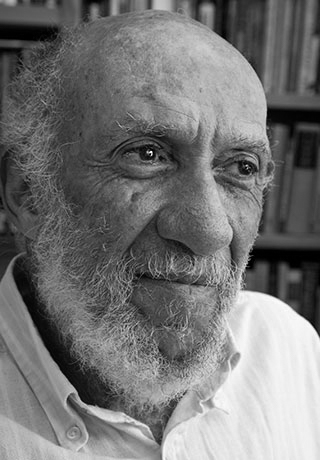
Professor Falk became an adviser to TFF when it was established in 1985.

Share

Leave a Reply

Your email address will not be published. Required fields are marked *

Related Posts

Peace is promoted by constructive proposals and dialogue Four preceding PressInfos have expressed concern over — and criticised — the ongoing, militarisation of the EU. Some will say: but there are no alternatives. We believe that there are always alternatives, that democracies are characterised by alternatives and choice, and that openly discussed alternatives will improve the quality and legitimacy of society’s decision–making. In addition, it is an intellectual and moral challenge to not only criticise but also be constructive. If we only tell people that we think they are wrong, they are not likely to listen. However, if we say: what are your views on this set of ideas and steps? — we may sometimes engage them in dialogue and sow a seed. Most people in power circles live their daily lives in in a time frame and a social space where certain ideas, viewpoints and concepts are just not...
Photos © TFF 2000 Read PressInfo 90 “Lift the Sanctions and Bring More Aid to Yugoslavia” See Pictures from Belgrade © TFF 2000 Please reprint, copy, archive, quote or re-post this item, but please retain the source.
Av FRANK SØHOLM GREVIL 16 augusti 2004  Vi er nu nået til tredje akt i det absurde teaterstykke, der i analogi med de store skueprocesser i Moskva 1936-38 er blevet døbt ‘Grevil-sagen’. Første akt bestod i min anonyme fremlæggelse af egenhændigt nedklassificerede rapporter i Berlingske Tidende i februar og marts. Andet akt udgjordes af min fremtræden med navn og billede i Information i april samt den efterfølgende mediestorm, som uden min direkte medvirken kostede en forsvarsminister taburetten samt en sigtelse for brud på tavshedspligten. Tredje akt bliver en retssag, hvor jeg står tiltalt for at have overtrådt straffelovens bestemmelser om uberettiget videregivelse eller udnyttelse af fortrolige oplysninger. Statsanklageren har ovenikøbet valgt at påberåbe sig særligt skærpende omstændigheder. Da jeg aldrig har modtaget betaling for at stille rapporterne til rådighed eller lade mig interviewe, må det skærpende bestå i, at “videregivelsen eller udnyttelsen er sket under sådanne omstændigheder, at det påfører...

Recent Articles

PressInfo # 141, December 21, 2001It’s time to prepare reconciliation between Albanians and Serbs PressInfo # 140, December 14, 2001Ibrahim Rugova’s decade-long leadership in Kosovo/a PressInfo # 139, 11. december, 2001En god nyhet: Jugoslaviens Sannings- och försoningskommission PressInfo # 139, 11. december, 2001Gode nyheder: Jugoslaviens Sandheds- og Forsoningskommission PressInfo # 139, December 11, 2001Good news: Yugoslavia’s Truth and Reconciliation Commission PressInfo # 138, November 8, 2001TFF co-founder PhD with thesis about young people with roots in other cultures PressInfo # 138, November 8, 2001TFF:s medstiftare doktor på avhandling om unga med ursprung i andra kulturer PressInfo # 137, October 17, 2001A new Marshall Plan: Advancing human security and controlling terrorism PressInfo # 136, October 15, 2001The UN and Annan really deserve it PressInfo # 135, October 10, 2001Preventing a terrorist mushroom cloud PressInfo # 134, 17 oktober, 2001Sverige og 11. september PressInfo # 134, October 9, 2001Sweden and September 11...
Peace is promoted by constructive proposals and dialogue Four preceding PressInfos have expressed concern over — and criticised — the ongoing, militarisation of the EU. Some will say: but there are no alternatives. We believe that there are always alternatives, that democracies are characterised by alternatives and choice, and that openly discussed alternatives will improve the quality and legitimacy of society’s decision–making. In addition, it is an intellectual and moral challenge to not only criticise but also be constructive. If we only tell people that we think they are wrong, they are not likely to listen. However, if we say: what are your views on this set of ideas and steps? — we may sometimes engage them in dialogue and sow a seed. Most people in power circles live their daily lives in in a time frame and a social space where certain ideas, viewpoints and concepts are just not...
Photos © TFF 2000 Read PressInfo 90 “Lift the Sanctions and Bring More Aid to Yugoslavia” See Pictures from Belgrade © TFF 2000 Please reprint, copy, archive, quote or re-post this item, but please retain the source.

TFF on Substack

Discover more from TFF Transnational Foundation & Jan Oberg.

Most Popular

PressInfo # 141, December 21, 2001It’s time to prepare reconciliation between Albanians and Serbs PressInfo # 140, December 14, 2001Ibrahim Rugova’s decade-long leadership in Kosovo/a PressInfo # 139, 11. december, 2001En god nyhet: Jugoslaviens Sannings- och försoningskommission PressInfo # 139, 11. december, 2001Gode nyheder: Jugoslaviens Sandheds- og Forsoningskommission PressInfo # 139, December 11, 2001Good news: Yugoslavia’s Truth and Reconciliation Commission PressInfo # 138, November 8, 2001TFF co-founder PhD with thesis about young people with roots in other cultures PressInfo # 138, November 8, 2001TFF:s medstiftare doktor på avhandling om unga med ursprung i andra kulturer PressInfo # 137, October 17, 2001A new Marshall Plan: Advancing human security and controlling terrorism PressInfo # 136, October 15, 2001The UN and Annan really deserve it PressInfo # 135, October 10, 2001Preventing a terrorist mushroom cloud PressInfo # 134, 17 oktober, 2001Sverige og 11. september PressInfo # 134, October 9, 2001Sweden and September 11...
Peace is promoted by constructive proposals and dialogue Four preceding PressInfos have expressed concern over — and criticised — the ongoing, militarisation of the EU. Some will say: but there are no alternatives. We believe that there are always alternatives, that democracies are characterised by alternatives and choice, and that openly discussed alternatives will improve the quality and legitimacy of society’s decision–making. In addition, it is an intellectual and moral challenge to not only criticise but also be constructive. If we only tell people that we think they are wrong, they are not likely to listen. However, if we say: what are your views on this set of ideas and steps? — we may sometimes engage them in dialogue and sow a seed. Most people in power circles live their daily lives in in a time frame and a social space where certain ideas, viewpoints and concepts are just not...
Photos © TFF 2000 Read PressInfo 90 “Lift the Sanctions and Bring More Aid to Yugoslavia” See Pictures from Belgrade © TFF 2000 Please reprint, copy, archive, quote or re-post this item, but please retain the source.
Read More
Imagen-thumbnail-The-Transnational-1
PressInfo # 141, December 21, 2001It’s time to prepare reconciliation between Albanians and Serbs PressInfo # 140, December 14, 2001Ibrahim Rugova’s decade-long leadership in Kosovo/a PressInfo # 139, 11. december, 2001En god nyhet: Jugoslaviens Sannings- och försoningskommission PressInfo # 139, 11. december, 2001Gode nyheder: Jugoslaviens Sandheds- og Forsoningskommission PressInfo # 139, December 11, 2001Good news: Yugoslavia’s Truth and Reconciliation Commission PressInfo # 138, November 8, 2001TFF co-founder PhD with thesis about young people with roots in other cultures PressInfo # 138, November 8, 2001TFF:s medstiftare doktor på avhandling om unga med ursprung i andra kulturer PressInfo # 137, October 17, 2001A new Marshall Plan: Advancing human security and controlling terrorism PressInfo # 136, October 15, 2001The UN and Annan really deserve it PressInfo # 135, October 10, 2001Preventing a terrorist mushroom cloud PressInfo # 134, 17 oktober, 2001Sverige og 11. september PressInfo # 134, October 9, 2001Sweden and September 11...
Imagen-thumbnail-The-Transnational-1
Peace is promoted by constructive proposals and dialogue Four preceding PressInfos have expressed concern over — and criticised — the ongoing, militarisation of the EU. Some will say: but there are no alternatives. We believe that there are always alternatives, that democracies are characterised by alternatives and choice, and that openly discussed alternatives will improve the quality and legitimacy of society’s decision–making. In addition, it is an intellectual and moral challenge to not only criticise but also be constructive. If we only tell people that we think they are wrong, they are not likely to listen. However, if we say: what are your views on this set of ideas and steps? — we may sometimes engage them in dialogue and sow a seed. Most people in power circles live their daily lives in in a time frame and a social space where certain ideas, viewpoints and concepts are just not...
Imagen-thumbnail-The-Transnational-1
Photos © TFF 2000 Read PressInfo 90 “Lift the Sanctions and Bring More Aid to Yugoslavia” See Pictures from Belgrade © TFF 2000 Please reprint, copy, archive, quote or re-post this item, but please retain the source.
Imagen-thumbnail-The-Transnational-1
Av FRANK SØHOLM GREVIL 16 augusti 2004  Vi er nu nået til tredje akt i det absurde teaterstykke, der i analogi med de store skueprocesser i Moskva 1936-38 er blevet døbt ‘Grevil-sagen’. Første akt bestod i min anonyme fremlæggelse af egenhændigt nedklassificerede rapporter i Berlingske Tidende i februar og marts. Andet akt udgjordes af min fremtræden med navn og billede i Information i april samt den efterfølgende mediestorm, som uden min direkte medvirken kostede en forsvarsminister taburetten samt en sigtelse for brud på tavshedspligten. Tredje akt bliver en retssag, hvor jeg står tiltalt for at have overtrådt straffelovens bestemmelser om uberettiget videregivelse eller udnyttelse af fortrolige oplysninger. Statsanklageren har ovenikøbet valgt at påberåbe sig særligt skærpende omstændigheder. Da jeg aldrig har modtaget betaling for at stille rapporterne til rådighed eller lade mig interviewe, må det skærpende bestå i, at “videregivelsen eller udnyttelsen er sket under sådanne omstændigheder, at det påfører...
Imagen-thumbnail-The-Transnational-1
Af Svenska Irakkommittén mot de Ekonomiska Sanktionerna (SIES) 13 september 2002 FN:s ekonomiska sanktioner mot Irak har nu pågått i tolv år och drabbat det irakiska folket med svåra lidanden. Enligt FN:s egna siffror har mer än 1,5 miljoner människor, varav ca 600 000 barn, dött som en direkt följd av sanktionerna. Dessutom har ett lågintensivt bombkrig mot landet pågått under dessa år. Av all denna förödelse- orsakad huvudsakligen av amerikansk och brittisk politik- har Saddam Husseins brutala och diktatoriska regim snarast stärkts än försvagats. Nu förbereder USA under president Bushs ledning ett storskaligt bombkrig mot Irak som kommer att innebära ett ännu större lidande för civilbefolkningen. Ett sådant krig kommer dessutom att ytterligare undergräva freden och säkerheten i världen. Att upprätta en demokratisk regim i Irak är det irakiska folkets angelägenhet och får enligt folkrätten inte ske med krigshandlingar utifrån. Folkrätten och FN:s stadgar måste respekteras. Vi vädjar till...
