Sociology

Showing 1-10 of 75 stories

Sort by
Categories

Year

Author / Contributor

Region

Screenshot-2025-08-12-181157
Professor Zhang Weiwei is a highly respected Chinese intellectual and professor at Fudan University in Shanghai. He is the director of its China Institute and also runs a series of conversations with many different people around the world. Here is what came out of their meetings there and in Skopje, Macedonia in October 2024: & ◪ As you can see, also at the end of the second one, we both enjoy win-win exchanges like these about world order issues. Zhang Weiwei is known for using videos and social media to reach a large audience in China and worldwide. We suggest you see many more of Zhang Weiwei’s conversations – like recently with Professor Jeffrey Sachs – on the Thinkers’ Forum on YouTube. PS TFF posts hundreds of videos, its own and those of others, in our Video Collections on TFF Substack – including those that appear on YouTube. However, TFF...
Oppo
Photo Jan Oberg China has recently garnered significant attention due to its advancements in various technological fields, such as quantum physics and artificial intelligence. In media discussions and my lectures on China, it is common to encounter objections asserting that the West, particularly the United States, is certainly ahead of China. These assertions appear to be more emotional than factual. However, a more fundamental consideration is whether this question holds any significance. Cultural Perspective One aspect that Westerners often overlook is the cultural variation in understanding the relationship between abstract academic insights and practical applications of those insights. To comprehend the origin and significance of discussions on technological superiority, it is essential to acknowledge cultural and social differences between China and the West. I have explored this topic before in some of my previous articles published on the TFF website. Particularism On the cultural dimension universalist – particularist, China exhibits...
mw960367054-2JDK5jZZ430-unsplash
On the invisible codes of culture that shape our worldviews long before memory or reason. This analysis was initially published on the author’s “China21 Journal” which contains several analyses of related issues, China-Western relations and how to increase knowledge and mutual understanding. Last week, we picked up our 5-year-old son from his public kindergarten in Beijing. On the way home, he proudly recited a Tang Dynasty poem by heart — 春望 (Chūnwàng, or Spring View, 757 AD), one of the most famous and widely recited works from that vibrant dynastic era over a thousand years ago, written by the renowned poet 杜甫 (Dù Fǔ, 712–770). The poem reflects on wartime and exile — hardly light or child-friendly themes. But that’s not the point. Children (and adults) recite ancient poems not just for their content, but for their rhythm, rhyme, tone, and the cultural feeling embedded in them. This is how cultural programming begins: not through rules or explanations,...
Sammenhold
Today is 9 April. It marks the 80th Anniversary of Hitler’s invasion of Denmark. Denmark’s Radio reports today on how the country’s war museums have become ‘attractions’ where people queue to get in and go on guided tours, and ticket sales are booming. Of course, it never occurs to anyone to ask why Denmark and so many other countries are so preoccupied with war – monuments, anniversaries, museums, have so many bookshops with lots of books about war, war history, weapons, uniforms – use military-inspired fashion or drive city jeeps and other modern cars that look like armoured vehicles. Not to mention why there aren’t the same peace-inspired things – peace monuments, peace museums, bookshops with peace books… The answer is simple enough. The West as a culture, as a social cosmology and a collective way of thinking and behaving, is a terrible violence-based apparatus of world wars, armament, colonialism,...

Pascal-1
So happy again to be on a show at Pascal’s Neutrality Studies and meet Ulrike Guérot. I’m advancing the idea – and not for the first time – that humanity, all of us, think far too much about the past and the present – so much so that there is no space and interest in how to define and search for a better future. Click “Watch on YouTube” if you also want to see the – amazingly – many and constructive comments. And share/re-post wherever you can. Was this useful to you? Please share, re-post or refer other to it … OR click here and support TFF’s uniquely independent work for peace by peaceful means in these mad militarist times…
Eclecticism_90cm_300dpi_1200_100dpi
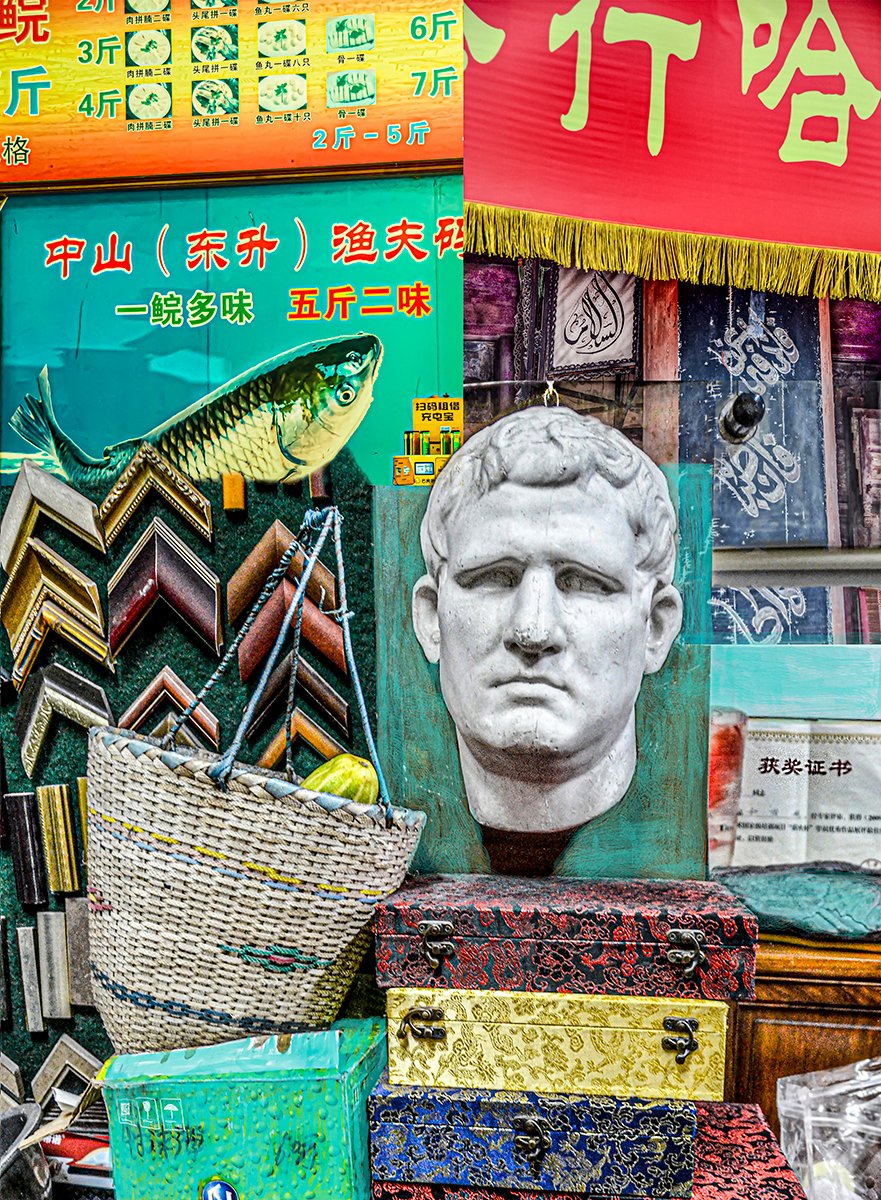
This is a chapter in a TFF anthology in the making – “If You Want To Understand China.” Introduction ”Should the West see China as a threat or as an opportunity, a friend or an enemy? Are we heading for a third world war? Does the seemingly inexorable rise of China spell the doom of many values in which we have long believed? Might some form of communism prevail after all? Are China’s motives sinister? Is it trying to subvert us? Is it plotting mischief? Given the very bad press China has been getting in Western media, one might certainly think so. But the word ‘sinister’ has an interesting derivation. Its original meaning has nothing to do with wily orientalism. It means simply left-handed. Most of us are right-handed, using our dominant left-brain hemispheres which are wired to the right side of our bodies. But a few of us are...
WarColl_PaixQuand_small_100dpi
Throughout modern world history, great powers, empires and civilisations have succeeded each other. No one has stayed on top indefinitely – there is a birth, the new thing grows creatively and materially until it reaches a peak and perhaps begins to relax, and then sooner or later it goes downhill – in relation to new powers that emerge – only to lose the leadership role completely and become one among many in a new world order. This is the natural law of global society – of humanity – and it is quite inexorable. The downturn can have many (combinations) of causes, here are some of the classic ones in macro-history: weakening innovation and economic growth; over-militarisation and lost wars; wanting to rule the whole world but lacking the necessary leadership capacity; declining legitimacy in the eyes of others; others learning from us but coming up with new social constructs that...
Int.Law_
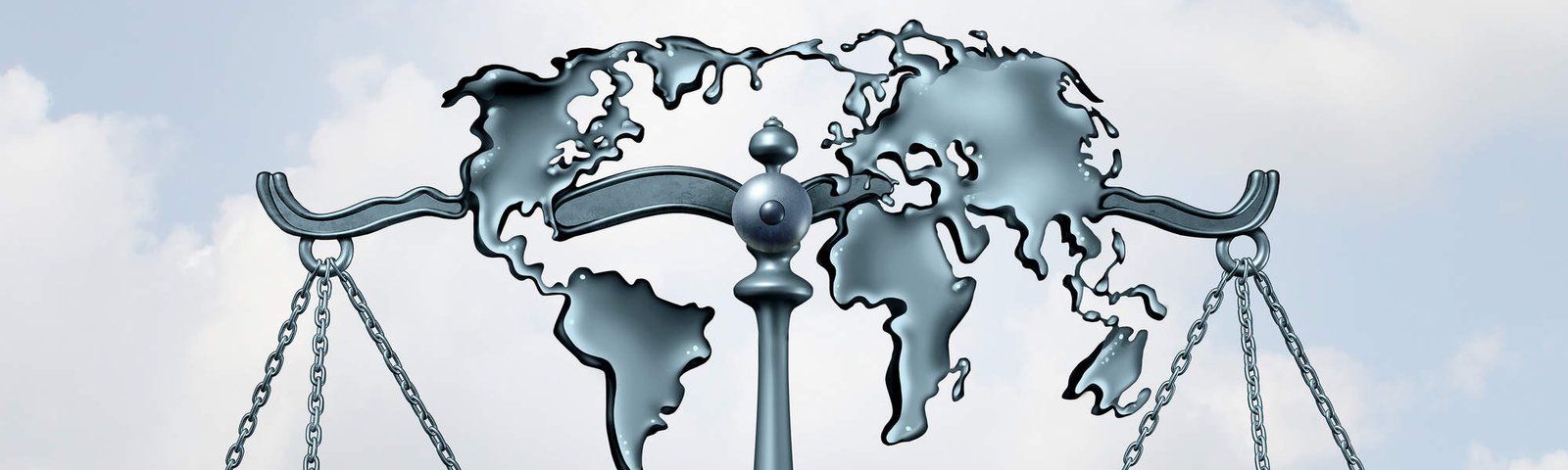
Richard FalkAnd TFF Associate and dear friend since 1986. June 5, 2024 An intriguing sideshow during the seven months of savage genocidal violence against the entrapped Palestinian population of an estimated 2.3 million has been the attention given to international law and to international procedures available for its interpretation and enforcement. To begin with, many concerned persons wonder about why there are two distinct tribunals: the International Court of Justice (ICJ) and the International Criminal Court (ICC). Beyond this, for many never exposed to a sophisticated explanation of the process by which international law is judicially implemented the distinction between these two tribunals, both located in The Hague, is far from transparent. This short essay is a simplified introduction to the ICJ and ICC, both indispensable judicial resources of a functionally effective and equitable international legal order. Their positive contributions to law and justice are diminished to the extent that...
6656fed685f54002e12983dc
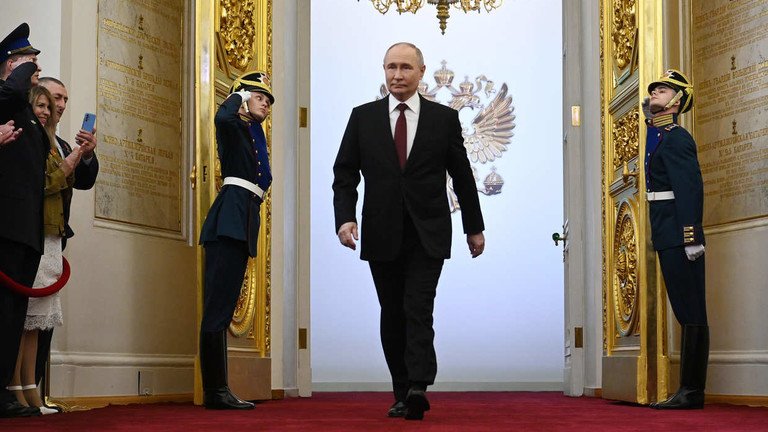
When he first took office, the Russian president was trying to integrate with the West, now the whole ball game has changed Fyodor Lukyanov May 30, 2024 The question of how Russia’s foreign policy will be managed during President Vladimir Putin’s new term seems redundant, if not irrelevant. The head of state is a man who has led the country in one form or another for almost a quarter of a century. He is known for his conservatism – not only in the ideological sense, but also in his aversion to sharp turns. Moreover, Russia is engaged in an intensive military campaign against an international coalition, and there is little point in making plans until it is over, and while its prospects are still unclear. The successful completion of this campaign remains a task of incomparable importance. Nevertheless, it is necessary to reflect on this issue. Firstly, all of the...
Gaza-destruction-at-Al-Shifa-hospital-precinct-2-April-2024-c
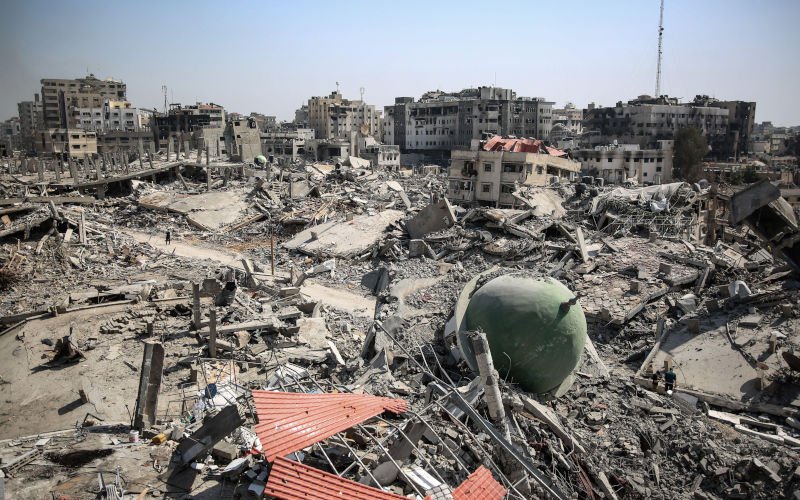
Daryl Guppy April 11, 2024 This article, first published by Pearls & Irritations on April 4, 2024, focuses on Australia but there is no reason that you could not insert any Western country in its place. Hannah Arendt’s BANALITY OF EVIL report on the Eichmann trial failed to adequately address a key question. How could the German people not have known and how could they have let the holocaust happen? Arendt’s observation that the administrative industrialisation of evil led to its banality is most relevant today, but it is enhanced and magnified by the pervasive distribution of horrendous images by ubiquitous social media. What the mainstream Western media chooses not to show, or report, is readily available on Facebook, X and Instagram. Israel’s disproportionate response in Gaza to the Hamas’ attack, the al-Shifa hospital massacre, images of children crushed beneath tanks, joyous Israeli troops looting houses and the outright lie...
mcompass
With the superego dissolved, there is no felt obligation to judge oneself in reference to any external or abstract standard. Narcissistic tendencies flourish. A similar psychology removes the requisite for experiencing shame. Is there now a moral void at the heart of Western societies?  That question haunts us as governments in the United States and Europe act as accomplices in Israel’s atrocious crimes against the Palestinians. The Jewish state’s conduct meets the standard of genocide as stated in the United Nations Convention on Genocide, of which they all are signatories. Confirmation is likely to come soon in a conclusive determination by the International Court of Justice. The ICJ already in January recognized a prime facie case for genocide. The UN’s top court ordered Israel to take all measures to prevent genocidal acts in Gaza. The ICJ found it did have jurisdiction on the matter, and decided there was a plausible case under the 1948 Genocide Convention. At...
Eclecticism_90cm_300dpi_1200_100dpi
A theory serves comprehension, prediction and identification of conditions for change. Seven such historical-cultural pointers will be indicated for China; using the West in general, and the USA in particular, for comparisons. The presentation draws on countless dialogues in China over 40 years, since 1973. Published by Counterpunch in 2015 China: in time, as dynasties; West: in space as empires. Look at a histomap combining world history and geography, time and space: China shows up through 4,000 years as relatively coherent dynasties with complex transitions – and the West as empires–birth-growth-peaking-decline-fall, like the Roman, UK and now the US empire – duration vs bubbles that burst; as China-centric vs Western hegemonic. Chinese space: Barbarian; US time: to create, past irrelevant. China marginalized space peopled by South-West-North-East barbarians – outside the “Chinese pocket” between Himalayas-Gobi desert-Tundra-Sea–except for Silk roads and Silk lane East China-East Africa, destroyed by Portugal and England from...
Categories

Year

Author / Contributor

Region