Sanctions

Showing 1-10 of 172 stories

Sort by
Categories

Year

Author / Contributor

Region

whatsappimage2022-10-21at2.32.51pm_001
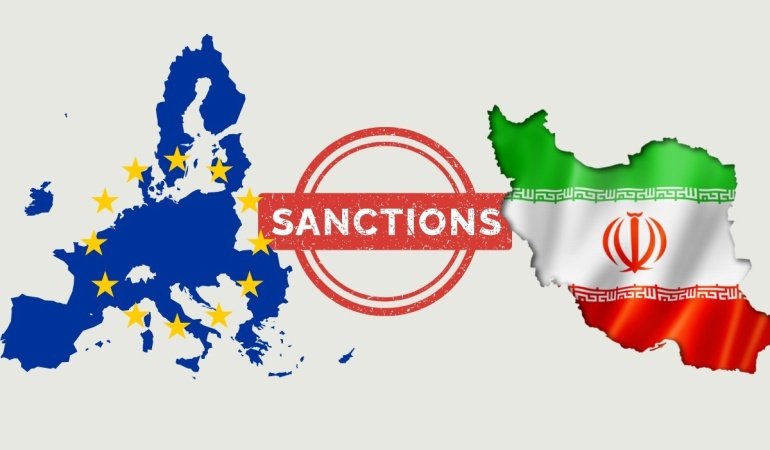
TFF Associate and former Board member On 28 August 2025, France, Germany, and the United Kingdom (the EU Troika) decided to trigger the so-called “snapback mechanism” and reimpose stringent sanctions on Iran after 30 days for its alleged violation of the terms of the Iran nuclear deal, known as the Joint Comprehensive Plan of Action (JCPOA), if Iran did not give in to their demands within 30 days. In the lawless world in which we are living at the moment, discussing the principles of international law is futile and irrelevant. We have reverted to the age of imperial dictatorship and big power dominance. This state of affairs is dangerous for the whole world, especially the Global South, which is at the mercy of the dictates of the superpowers. However, a return to the rivalry between powerful empires outside the scope of international law, which led to the two world wars,...
no.-25-the-european-crisis-big-2692823010
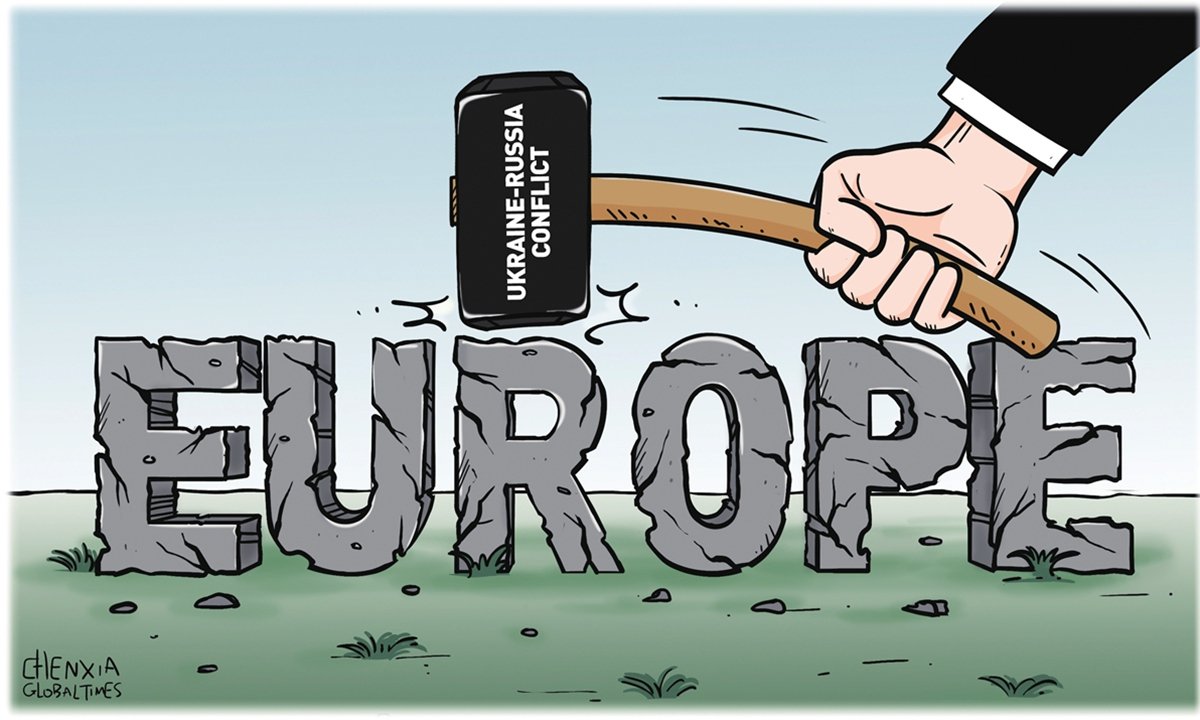
Vijay Prashad April 16, 2024 On March 19, 2024, the head of France’s ground forces, General Pierre Schill, published an article in the newspaper, Le Monde, with a blunt title: “The Army Stands Ready.” Schill cut his teeth in France’s overseas adventures in the Central African Republic, Chad, Côte d’Ivoire, and Somalia. In this article, General Schill wrote that his troops are “ready” for any confrontation and that he could mobilize 60,000 of France’s 121,000 soldiers within a month for any conflict. He quoted the old Latin phrase—“if you want peace, prepare for war”—and then wrote, “The sources of crisis are multiplying and carry with them risks of spiralling or extending.” General Schill did not mention the name of any country, but it was clear that his reference was to Ukraine since his article came out just over two weeks after French President Emmanuel Macron said on February 27 that...

bc572812-4ee1-4356-92b2-3caae02c81c2
One of the enigmatic aspects of international politics is that big and militarily superior countries have systematically lost wars in smaller countries – the last 50 years, from Vietnam to Ukraine. ’Losing’ here means military defeat, being forced out, losing the struggle for the hearts and minds of the people, and facing fiasco when it comes to achieving the presumed noble motives like introducing human rights, democracy, freedom or liberating women. And given the tremendous human costs, particularly in the Middle East, the US’s Global War On Terror since September 11, 2001, is also an intellectual and moral disaster. The United States – the world’s by far largest military spender, interventionist, warrior, occupier, global base-builder with the most militarised foreign policy – is in a class of its own. In losing wars too. It is now rapidly losing legitimacy, relevance and credibility in the eyes of most of the world...
1551
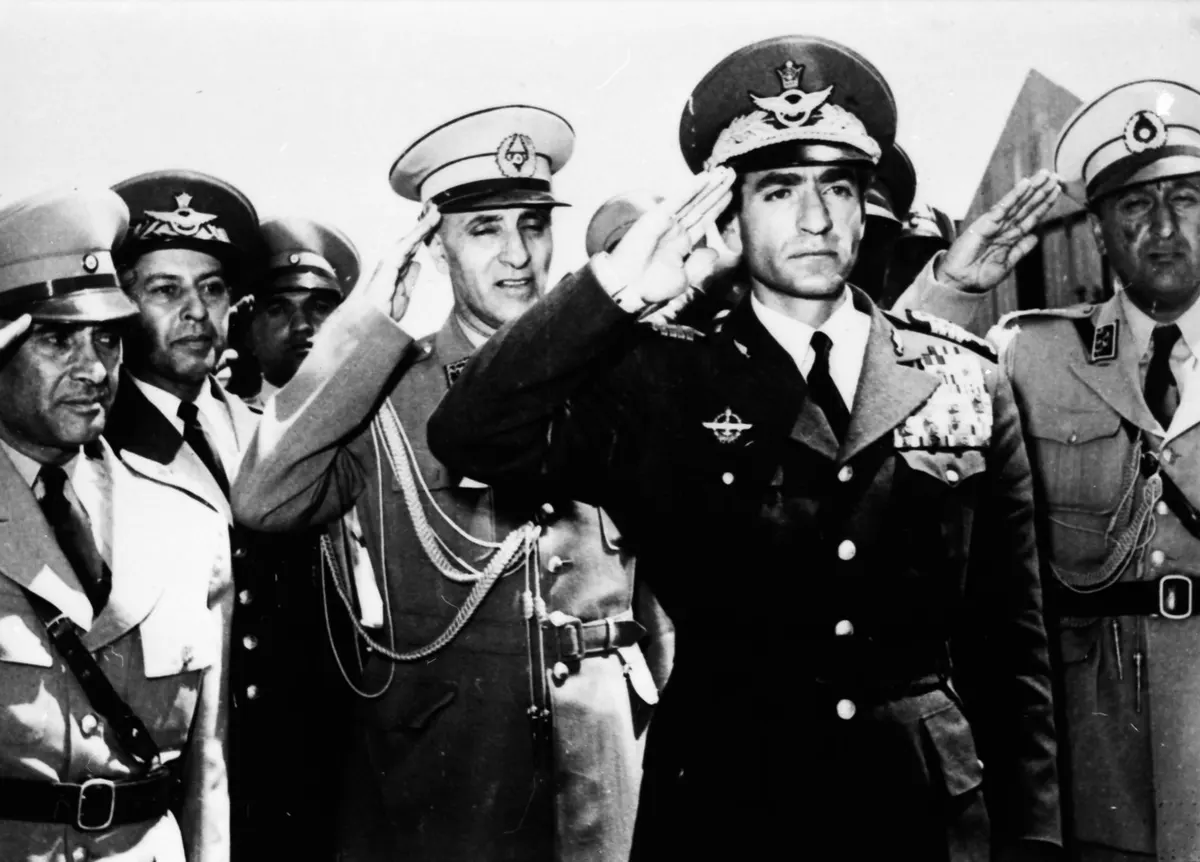
On August 19, 2023, it is 70 years ago that the US/CIA and others, with the assistance of their British peers, did one of its countless regime changes worldwide, namely in Iran: The U.S.- and UK-instigated, Iranian army-led overthrow of the democratically elected Prime Minister Mohammad Mosaddegh in favour of strengthening the monarchical rule of the shah, Mohammad Reza Pahlavi. Here is Wikipedia’s detailed account of this shameful act. And with the exception of the years under the Shah’s rule, relations between the West and Iran have been utterly conflictual ever since, and every potential for cooperation has been squandered. The US has felt its usual exceptionalist privilege to harass the country decade after decade, telling it that it will never acquire nuclear weapons, which the US itself and Israel have plenty of – and which it’s doubtful that Iran ever wanted to acquire – scrapping the JCPOA nuclear accords...
489ba0b9-20ae-4fa5-a4bb-53720a04aac1_5233x3510
Harold Pinter in 1970. / Evening Standard/Hulton Archive/Getty Images. Lessons in Western self-sabotage from the Ukraine War Seymour Hersh August 16, 2023 The British playwright and Nobel Prize winner Harold Pinter was an early critic of the Bush administration’s decision, endorsed by British Prime Minister Tony Blair, to declare a worldwide war on Islamist terrorism in the aftermath of 9/11. In the fall of 2002, Pinter was invited to make his case against the war before the House of Commons. He began his talk with a bit of embellished British history about an earlier wave of terror in Ireland: There’s an old story about Oliver Cromwell. After he had taken the town of Drogheda, the citizens were brought to the main square. Cromwell announced to his Lieutenants: ‘Right! Kill all the women and rape all the men.’ One of his aides said: ‘Excuse me General. Isn’t it the other way...
Ollie-Vargas-Image-of-countries-Sanctions-Ukraine-WEF-Energy
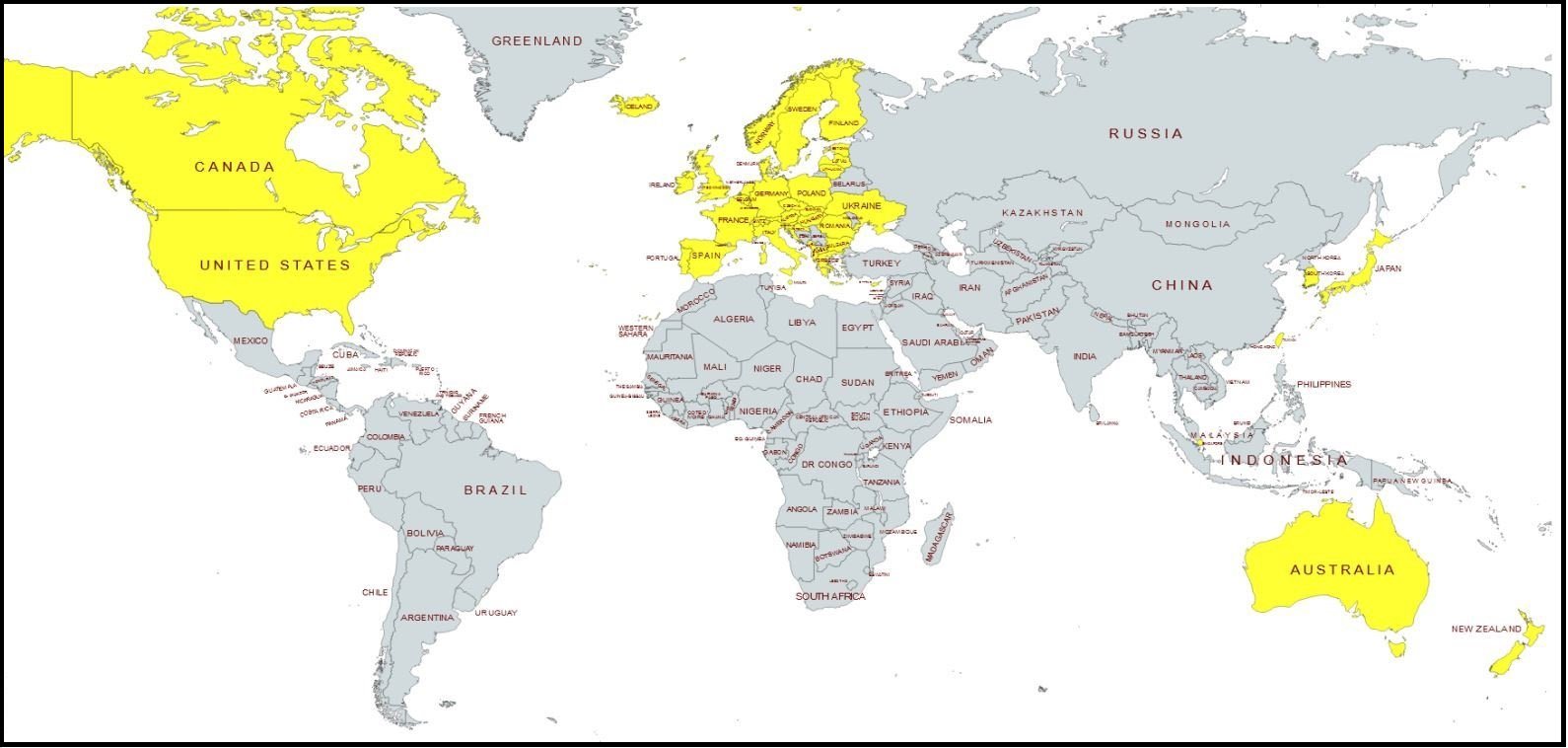
Map Shows Countries That Support Western Govt Sanctions Against Russia vs Those Who Do Not By Krishen Mehta February 22, 2023 In October 2022, about eight months after the beginning of the war in Ukraine, the University of Cambridge in the UK harmonized surveys that asked the inhabitants of 137 countries about their views of the West, Russia, and China. The findings in the combined study are robust enough to demand our serious attention. These findings have caused some surprise and even anger in the West. It’s difficult for Western thought leaders to comprehend that two-thirds of the world’s population is just not lining up with the West in this conflict. However, I believe there are five reasons why the Global South is not taking the West’s side. I discuss these reasons in the short essay below.  Originally published at US-Russia Accord on February 22, 2023 1. The Global South does not...
Avery
The Illegality of NATO: Violation of the UN Charter and the Nuremberg Principles In recent years, participation in NATO has made European countries accomplices in US efforts to achieve global hegemony by means of military force, in violation of international law, and especially in violation of the UN Charter, the Nuremberg Principles. Former UN Assistant Secretary-General Hans Christof von Sponeck – also a TFF Associate – used the following words to express his opinion that NATO now violates the UN Charter and international law: “In the 1949 North Atlantic Treaty, the Charter of the United Nations was declared to be NATO’s legally binding framework.” However, the United Nations’ monopoly of the use of force, especially as specified in Article 51 of the Charter, was no longer accepted according to the 1999 NATO doctrine. NATO’s territorial scope, until then limited to the Euro-Atlantic region, was expanded by its members to include...
front-arrow
Beyond Russia, NATO/EU policies will prove morally wrong, unrealistic, dangerous and self-destructive. Introduction: 1 year of violence on top of 30 years of conflict: Too much wrong thinking The world’s focus is on the war. On February 24, it is one year since Russia launched its so-called special military operation. Much more important is to focus on the underlying conflicts – because there exists no war or other violence without root causes. The focus on war, by definition, won’t lead to a solution or wider, sustainable peace – like feeling the pain in a patient without diagnosing where it comes from can never lead to healing. Unless you ask: What is the problem, the conflict, that stands between the conflicting parties – NATO and Russia – it will end with escalation until one of the sides feel that the nuclear button is the only way out. International politics is still...
Imagen-thumbnail-The-Transnational
Shastri Ramachandaran TFF Associate September 20, 2022 As the war in Ukraine grinds on, the US-led West is discovering that defeating Russia was easier said than done. The West is now realising that: the war will drag on for longer than foreseen; the US and Europe cannot keep boosting President Volodymyr Zelensky’s regime with a steady flow of readily usable weapons; Russia, far from being beaten by sanctions, has reaped economic gains in the process; and, above all, weaponising resources is a game that both sides can play.   Originally published at WION on September 6, 2022 To take the last point first, OPEC+ which has discussed an output cut to prop up oil prices, has proved that it is no pushover. Petroleum prices have acquired a new urgency in the wake of Russia’s decision last week to shut down the Nordstream gas pipeline to Germany. Moscow said that this...
Skaermbillede-2022-08-24-200715
Yet ‘experts’ still cling to the narrative that Ukraine can somehow ‘win.’ If Ukraine can hang on for just a few more months. Image: iStock Cameron Leckie August 24, 2022 The more events proved them to be wrong, the stronger their defences became against admitting this to be the case’ – Norman Dixon (On the Psychology of Military Incompetence) In my last piece for Pearls and Irritations I argued that the conflict in, or more accurately, over Ukraine was rapidly accelerating the transfer of the balance of power from West to East. The progress of events associated with the conflict has resulted in a re-evaluation of this assessment. What we are witnessing is the self-inflicted demise of the West as a major power bloc. The belief in a series of delusions by Western leaders and governments is the driving force behind this demise, with the conflict in Ukraine being the focal point. Originally published...
Skaermbillede-2022-08-24-194631
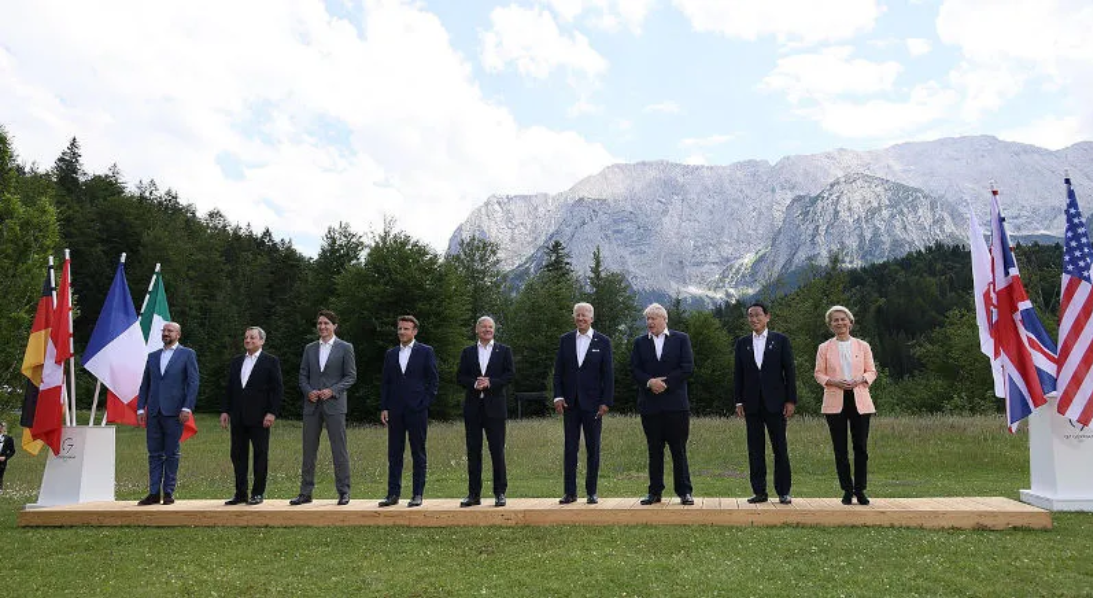
Image: Wikimedia Commons By P&I Guest Writers August 24, 2022 The G-7 countries are democratic domestically but are dictatorial globally. By contrast, the G-20 group, which has many autocratic regimes, represents a more democratic forum for governance. The G-7 is dictatorial, while the G-20 is democratic. This statement is obviously paradoxical. The G-7 countries are very proud of their liberal democratic societies. And they should be. However, while they are democratic domestically, they are dictatorial globally. By contrast, the G-20 group, which has many autocratic regimes, is more representative of the world’s population. The spiritual essence of democracy is conveyed in the phrase: a government of the people, by the people, for the people. In short, it must represent a hundred per cent of the people. The G-7 represent just 10 per cent of the world’s population. Yet, they make decisions and take actions that disrupt the lives of billions of...
AbolNATO_FinalCover
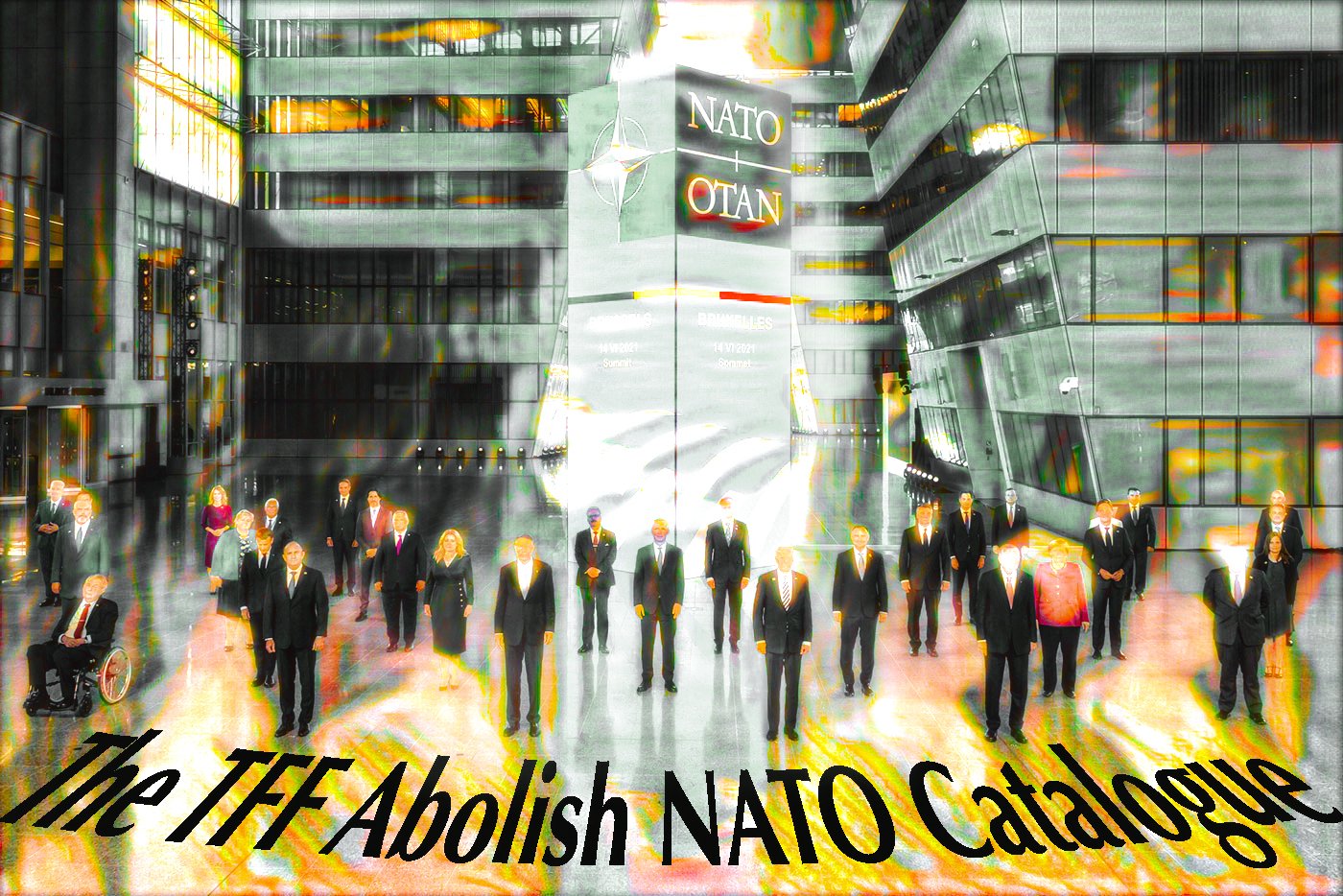
Abolish NATOOr Convert ItTo ServePeace 30 Arguments & 100s of Inspirations This report can be reproduced or quoted freely,but only when referring clearly to TFF, the author and the link Read and download as PDF at the end of the catalogue • Read as Flipbook Media & other inquiries to TFF@transnational.org or +46 738 52 52 00 EXECUTIVE SUMMARY This Catalogue contains 30 arguments for the abolition of NATO. Each argument is based on rational peace research analysis, in contrast to the fact-resistant propaganda that NATO and mainstream politics and media promote about the ’defensive’ peace alliance. The Catalogue is based on the democratic assumption that diverse perceptions and concepts can exist – for instance, about what peace is – and that this hugely influential Western organisation is not sacrosanct and shall, therefore, not be exempt from critical analysis. While set up in 1949, NATO passed its ”best before” date long ago. The alliance of...
Categories

Year

Author / Contributor

Region