Refugee crisis

Showing 1-10 of 14 stories

Sort by
Categories

Year

Author / Contributor

Region

22902
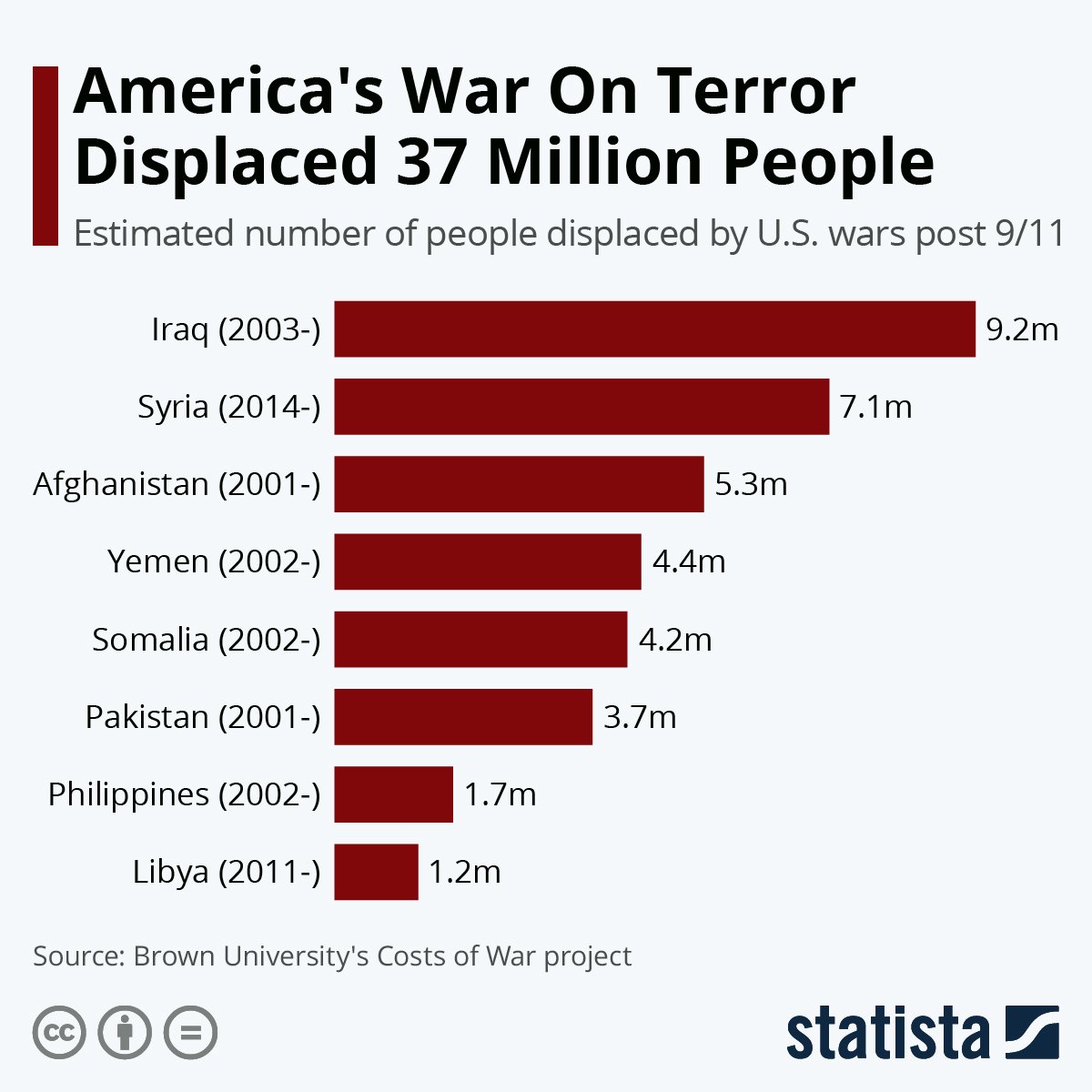
Here’s why we used the numbers we did — and what they can and can’t tell us. David Vine December 5th, 2020 Over the last week, considerable debate arose around a calculation I helped produce showing that the wars the U.S. government has fought since the attacks of September 11, 2001, have forced at least 37 million people — and perhaps as many as 59 million — to flee their homes. Originally published by Foreign Policy In Focus, FPIF, on September 23, 2020 As a co-author of the underlying report, produced for Brown University’s Costs of War Project, I was encouraged by the attention in the media — which ranged from the New York Times to Fox News — because it has generated interest in the millions of people displaced by the U.S. “global war on terror.” My American University co-authors and I note that no one inside or outside the U.S. government has previously calculated how many people these...
Screenshot
Last year, the Danish artist Gudrun Steen-Andersen created a multimedia installation under the theme: “Perpetuum Mobile – What Would Happen If Migration Was Free Worldwide?” Naturally, it is a thought experiment – not the least in these times of multi-crisis where nationalism, xenophobia, populism and the building of walls seem to have emerged as just another – political – virus way before the Coronavirus. The Danish-language version was made in 2019 and in March this year, we repeated – more or less, that is – the video lectures in English. It was about the time when the Coronavirus had just begun its race to the top of the global agenda. You’ll find them all the videos here or click on this: Steen-Andersen’s heuristic intention – somewhat in the tradition of the great future-thinker Robert Jungk’s future workshop – was realized through her own amazing installation and by invitation to a...
soldiersnature
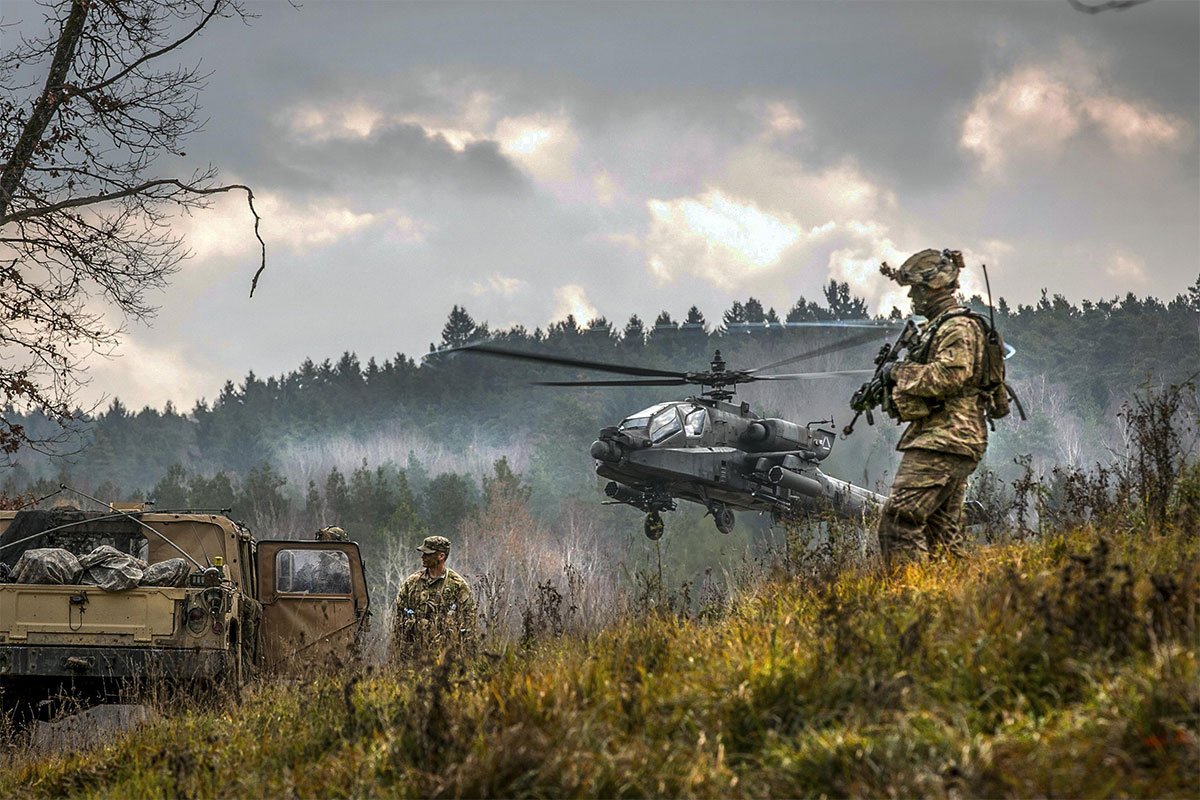
Today TFF launches “Bootprint – Militarism and Environment” – a curated, free-of-charge online magazine that brings you quality knowledge about the connections between the two most urgent problems that humanity faces. These two main clusters of problems which, if not solved, threaten to destroy humanity, our Earth and all future potentials are: Environment – with catchwords such as climate change, global warming, CO2 footprint, non-sustainability, pollution, resource depletion, species extinction, variety and diversity reduction, rain forest destruction, overconsumption, fossil fuels economy, limitless material growth, etc. etc. – and Militarism – with catchwords such as warfare, nuclear weapons, arms production and trade, militarization of land, air, space and oceans, tension creating, interventionism, base networks, terrorism, cyber and propaganda warfare, other weapons of mass destruction, special forces operations, intelligence agency crimes, imperialism, etc. The two clusters a fundamentally connected – militarism is enormously destructive of the environment; climate change and other processes...

AleppoGirl
. On December 12, 2012, on the day, 4 years earlier, Western countries and allies – perversely calling themselves ‘Friends of Syria’ – carried through a regime change by statement and set up a Syrian National Council of people never elected by anyone in Syria and told the world that it was, from now on, the only ‘legitimate representative of the Syrian people!’ During the 4 years, Western, Saudi, Turkish and the Gulf States supported innumerable illegal, destructive and mainly foreign terrorist groups with the goal to undermine the legitimate Syrian government and destabilise the country – as had been recommended by US ambassador William Roebuck (1) in Damascus as far back as in 2006 (WikiLeaks documentation here). December 12, 2016, marked a fundamental turning point. Aleppo did not “fall to the dictator/butcher/mass murderer” aka President Bashar al-Assad – no, it was liberated and the occupation by terrorist groups such...
changingmeconstell
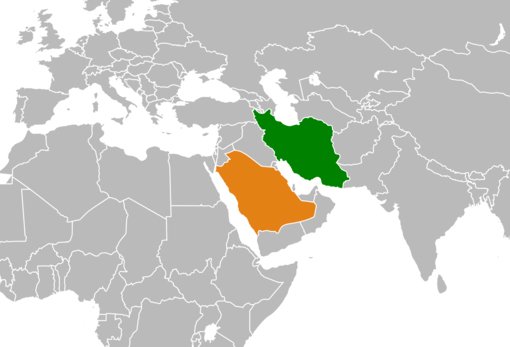
By Conn M. Hallinan November 27, 2019 The fallout from the September attack on Saudi Arabia’s Aramco oil facilities is continuing to reverberate throughout the Middle East, sidelining old enmities – sometimes for new ones – and re-drawing traditional alliances. While Turkey’s recent invasion of northern Syria is grabbing the headlines, the bigger story may be that major regional players are contemplating some historic re-alignments. Originally posted on Counterpunch on November 8, 2019, here After years of bitter rivalry, the Saudis and the Iranians are considering how they can dial down their mutual animosity. The formerly powerful Gulf Cooperation Council (GCC) of the Persian Gulf monarchs is atomizing because Saudi Arabia is losing its grip. And Washington’s former domination of the region appears to be in decline. Some of these developments are long-standing, pre-dating the cruise missile and drone assault that knocked out 50 per cent of Saudi Arabia’s oil...
bofuq374gwgf
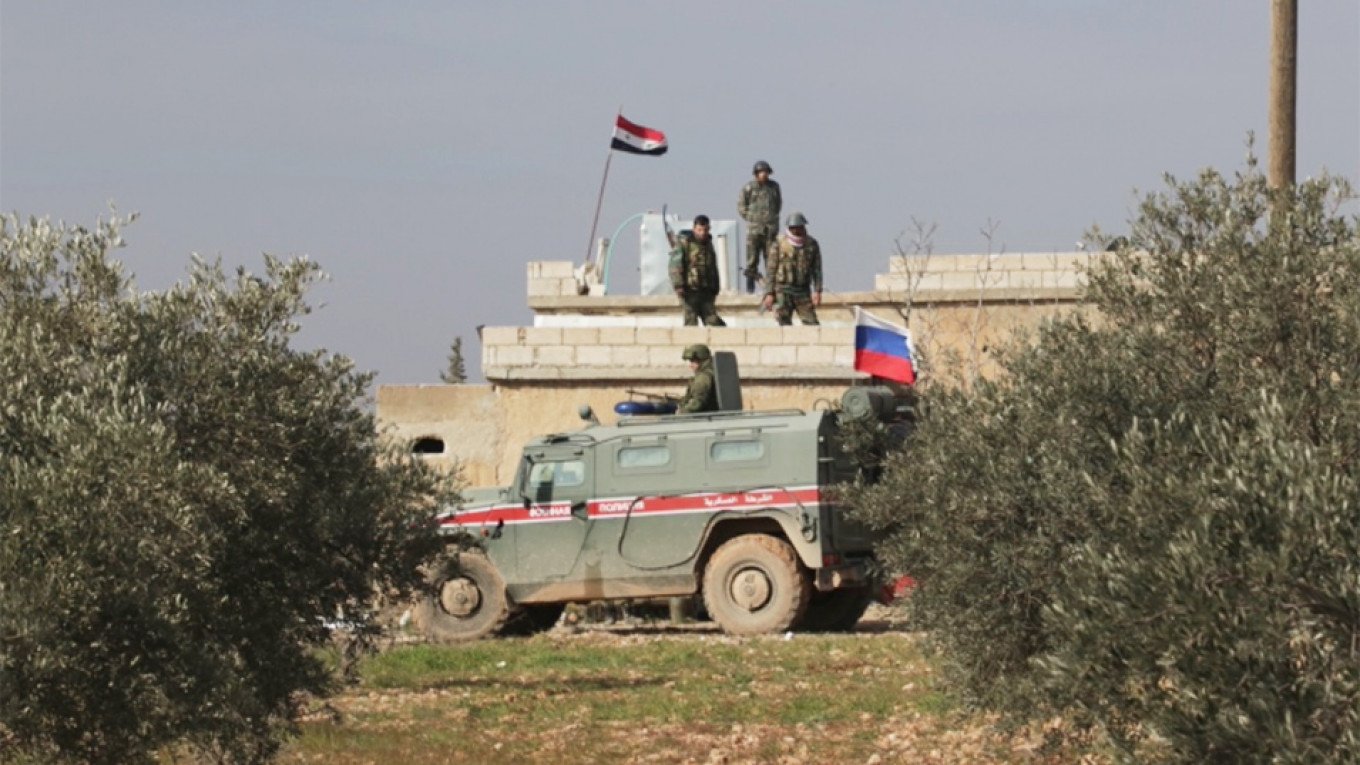
By Scott Ritter November 4, 2019 At a time when the credibility of the United States as either an unbiased actor or reliable ally lies in tatters, Russia has emerged as the one major power whose loyalty to its allies is unquestioned, and whose ability to serve as an honest broker between seemingly intractable opponents is unmatched. Originally posted on Truthdig.com on October 30, 2019 here If there is to be peace in Syria, it will be largely due to the patient efforts of Moscow employing deft negotiation, backed up as needed by military force, to shape conditions conducive for a political solution to a violent problem. If ever there was a primer for the art of diplomacy, the experience of Russia in Syria from 2011 to the present is it. Like the rest of the world, Russia was caught off guard by the so-called Arab Spring that swept through the Middle...
jonathanpower
“In the beginning there was a river. The river became a road and the road branched out to the whole world. And because the road was once a river it was always hungry.” This must be one of the best opening lines ever penned by a novelist. It’s the work of the Nigerian novelist, Ben Okri, who won English literature’s premier annual award, the Booker prize, for his book, The Famished Road. It’s an exceptional novel. The words are often thrown up in the air and then, catching the sun’s rays, light up like emeralds, rubies, diamonds, gold and silver as they tumble down onto the page. When I met Ben Okri on saturday at Denmark’s annual literary festival at the Louisiana Museum for Modern Art I wanted to ask him how is it that Nigeria has become a veritable factory of good novelists. Besides the Nobel Prize winner for...
cropped-120302-asylum-seekers
Somebody once said that courage is when you do something today you wouldn’t dare doing yesterday. That is why I decided to express my opinion whereas normally I would choose – wisely – to restrain my lips. Have you ever had an opportunity to speak with your friends about migrants and mass immigration? Especially with your international friends living in different parts of the world and changing their residence like migrating birds? How do you explain your views if they differ from the usual, dominating or politically correct one? Or, how do you actually explain that you are against immigration without risking being categorized as a racist? During my latest visit to Switzerland, while conversing with a friend about many topics including politics, somehow we started discussing immigration. My friend’s opinion was that Swiss people may seem cold and distant, but in reality they are very open-minded and friendly to...
JesperMJ
Regeringen har for nylig fremlagt sin strategi for Danmarks udenrigs- og sikkerhedspolitik for 2019-2020. Et af hovedpunkterne er ”flygtninge, migration og udvikling”, og selvom regeringen er bekymret for flygtningenes livssituation, fremstår de mest bekymrede over, hvor mange der slår sig ned indenfor den danske grænse. Desværre er strategien nærig med oplysninger om, hvorfor det er afgørende for Danmarks sikkerhed og udenrigspolitik. Måske er det fordi  bekymringens årsag har lettest ved at være usagt, da det kunne pirke til en fornemmelse af inkompetence og vores allesammens dårlige samvittighed: Vores krige i Mellemøsten og det kaos, som vi har skabt.   Det holder sig ofte på et minimum, når det overhovedet hænder, at danske politikere erkender, at deres gigantiske udenrigspolitiske brølere har konsekvenser som fx, at mennesker flygter fra de krigsramte lande. Gerne uden nogen form for refleksion eller evaluering, og derfor vender jeg ofte tilbage til det her korte klip fra...
jonathanpower
  At first I was a bit surprised to find that the English admonition, “Good fences makes for good neighbours” exists in many other languages. I shouldn’t have been taken aback. A moment’s reflection should have told me that fences and walls to divide off peoples have been going on for millennia. There’s nothing in particular new about the fence between the US and Mexico, the Cold War wall between East and West Germany or the one between Israel and the Palestinian West Bank. Look at the Great Wall of China. The Mexicans have a joke about the planned wall to replace the fence. “It’s not built to keep Mexicans out of the US; it’s built to keep Donald Trump out of Mexico!” Today the Mexicans have a problem in that the migrant “caravan”, made up of 6,000 fleeing Central Americans, is pouring into the south of Mexico where there...
jonathanpower
The arrival in Sweden of 163,000 refugees, mainly Syrians, in 2015 – making for a higher proportion of Sweden’s population than almost any other European country – has been used by the far right to drum up broader fears about immigration. A recent spate of shootings, grenade attacks and burnt-out cars has made many Swedes feel afraid of what is going on. This is despite international surveys showing it’s the best nation at everything from economic competitiveness to doing good for humanity to achieving happiness. Sweden, a country of 10m people, rebounded stronger from the financial crisis than any other big western country, faster even than the US, and its economy has been solid ever since, benefiting from historically strong public finances and low government debt. The economy ploughs ahead, unemployment is low, having escaped relatively unscathed from the Great Recession. One would assume, since in democracies economic wellbeing is...
immigration
  By Roberto Savio* August 1, 2018 • According to the latest statistics, the total flow of immigrants so far in 2018 is 50.000 people, compared with 186,768 last year, 1,259,955 in 2016 and 1,327,825 in 2015. The difference between reality and perceptions is so astonishing, we are clearly witnessing one of the most brilliant manipulations in history. The latest survey carried out of 23,000 citizens of France, Germany, Italy, Sweden, the United Kingdom and the United States shows an enormous level of disinformation. In five of those countries, people believe that immigrants are three times higher than they actually are. Italians believe they account for 30% of the population when the figure is actually 10%, an average which is lower than the media of the European Union. Swedes are those closest to reality: they believe immigrants account for 30%, when in fact the figure is 20%. Italians also believe...
Categories

Year

Author / Contributor

Region