EU Countries Trends

Showing 1-10 of 36 stories

Sort by
Categories

Year

Author / Contributor

Region

Thinkers
How amazing! The Danish government seemed unprepared for the eventuality that President Trump, if elected, would insist once again on getting Greenland – and a few other “things.” Who was asleep – or much too occupied with hating Russia and helping Ukraine to see what was coming? Secondly, Trump – who is no peace-maker but has other motives – grabbed the phone to Russian President Putin. Why did no European leader do exactly that during the last almost three years? And why did Europe not foresee that he would do that; Trump had said time and again that he would engage in the Ukraine war and stop it. They sat there hearing and seeing nothing of what – very predictably – happened outside their European groupthink box. This interview by the China Academy and Thinkers Forum was recorded on February 12, that is, before the disaster unfolded further at the...
no.-25-the-european-crisis-big-2692823010
Vijay Prashad April 16, 2024 On March 19, 2024, the head of France’s ground forces, General Pierre Schill, published an article in the newspaper, Le Monde, with a blunt title: “The Army Stands Ready.” Schill cut his teeth in France’s overseas adventures in the Central African Republic, Chad, Côte d’Ivoire, and Somalia. In this article, General Schill wrote that his troops are “ready” for any confrontation and that he could mobilize 60,000 of France’s 121,000 soldiers within a month for any conflict. He quoted the old Latin phrase—“if you want peace, prepare for war”—and then wrote, “The sources of crisis are multiplying and carry with them risks of spiralling or extending.” General Schill did not mention the name of any country, but it was clear that his reference was to Ukraine since his article came out just over two weeks after French President Emmanuel Macron said on February 27 that...

IMG_6045-1
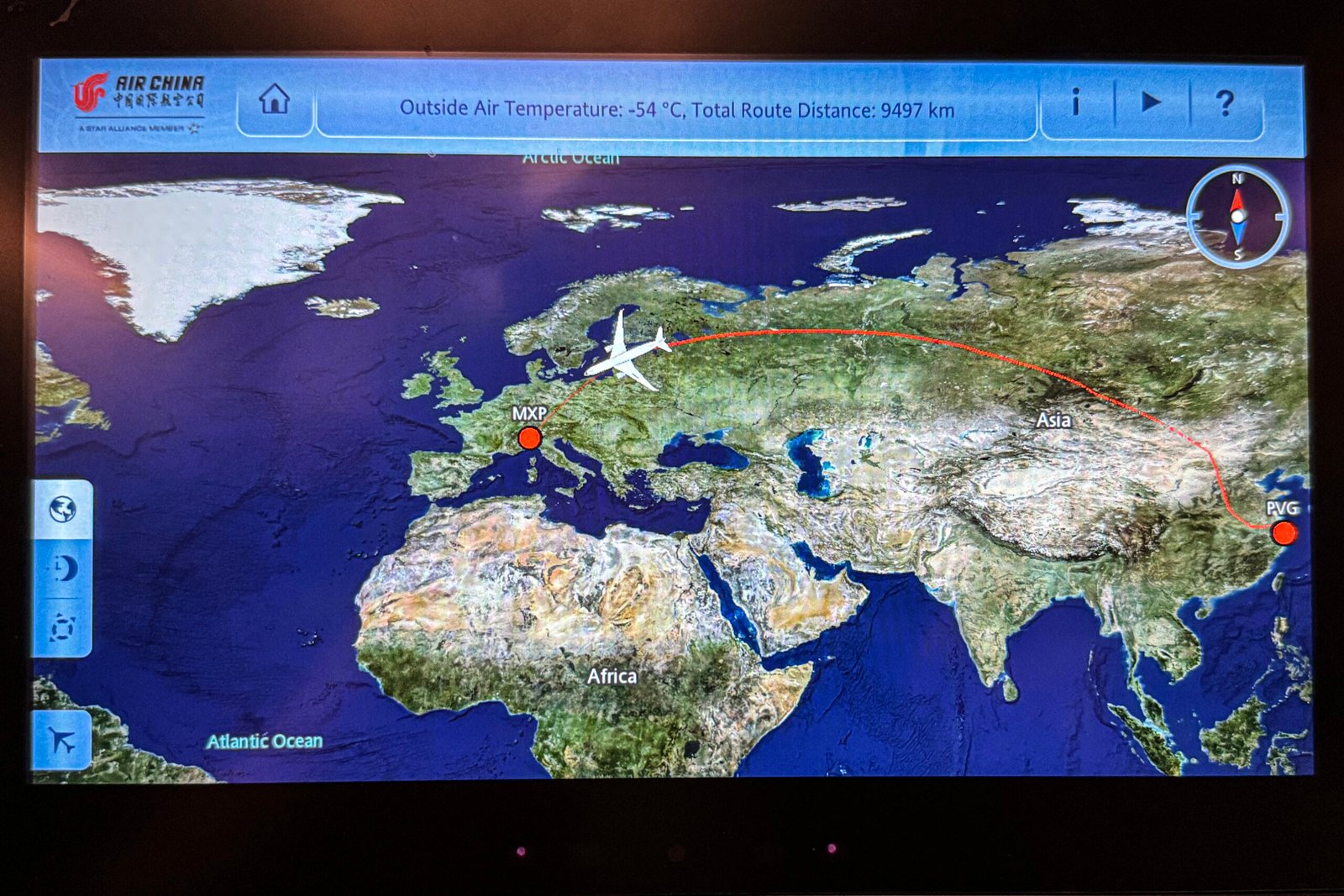
In 2020, I wrote an impressionistic article, ”Could everyday micro malfunctions be signs of a coming macro breakdown?” It was inspired by the brilliant sociologist C. Wright Mill’s concept of the sociological imagination. Out of many more, I selected 14 examples of everyday things that I had experienced simply did not work, from lost luggage and flight delays to bank cards that prevent payment, postal services that do not bring out parcels and letters on time, and French pay road toll that prevents you from paying, etc. To quote one example from the article: ”A little story about the decay in my town: I arrive in Lund where I live, after 6 weeks travelling around entirely on my own in China. Everything has worked perfectly there – trains, flights, ticket reservations, no queues anywhere, my WeChat app, ATMs, etc – although English is still a problem for an ignorant person...
489ba0b9-20ae-4fa5-a4bb-53720a04aac1_5233x3510
Harold Pinter in 1970. / Evening Standard/Hulton Archive/Getty Images. Lessons in Western self-sabotage from the Ukraine War Seymour Hersh August 16, 2023 The British playwright and Nobel Prize winner Harold Pinter was an early critic of the Bush administration’s decision, endorsed by British Prime Minister Tony Blair, to declare a worldwide war on Islamist terrorism in the aftermath of 9/11. In the fall of 2002, Pinter was invited to make his case against the war before the House of Commons. He began his talk with a bit of embellished British history about an earlier wave of terror in Ireland: There’s an old story about Oliver Cromwell. After he had taken the town of Drogheda, the citizens were brought to the main square. Cromwell announced to his Lieutenants: ‘Right! Kill all the women and rape all the men.’ One of his aides said: ‘Excuse me General. Isn’t it the other way...
11111
By Lily Lynch May 29, 2023 The anti-war movement has fallen for a progressive circus In January 2018, Nato Secretary-General Jens Stoltenberg held an unprecedented press conference with Angelina Jolie. While InStyle reported that Jolie “was dressed in a black off-the-shoulder sheath dress, a matching capelet and classic pumps (also black)”, there was a deeper purpose to this meeting: sexual violence in war. The pair had just co-authored a piece for the Guardian entitled “Why NATO must defend women’s rights”. The timing was significant. At the height of the #MeToo movement, the most powerful military alliance in the world had become a feminist ally. “Ending gender-based violence is a vital issue of peace and security as well as of social justice,” they wrote. “NATO can be a leader in this effort.” Originally published at UnHerd on May 16, 2023 This was a new and progressive face for NATO, the same one it has...
ChInvest
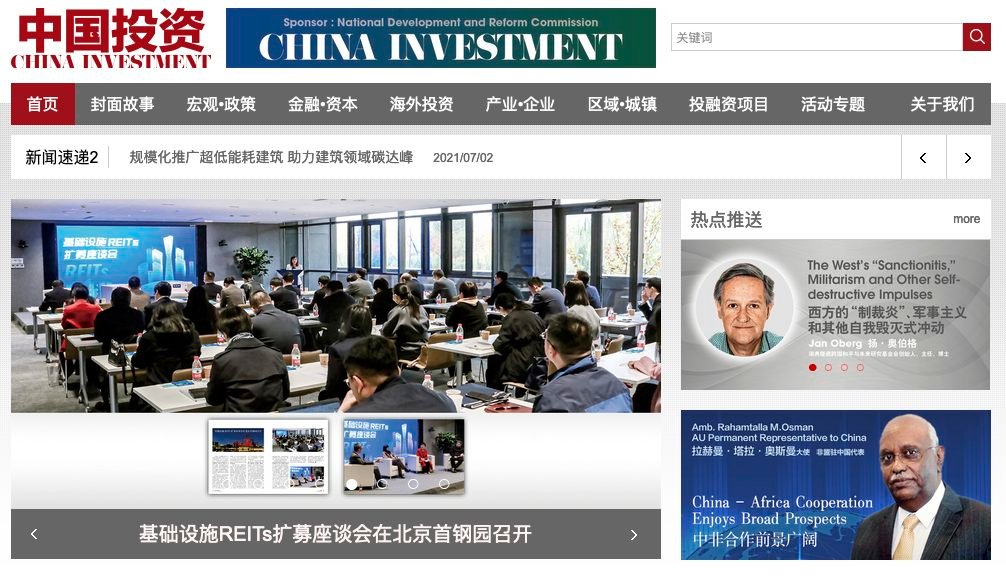
This article was written in October for the distinguished China Investment – a magazine sponsored by China’s National Development and Reform Commission. It was published in November here in both Chinese and English. Due to the reactions to my articles there, it looks like I shall become a regular contributor to China Investment like I am to the China Daily. The European Commission has just decided on new sanctions against Russia – in fact, the eighth round of such sanctions. This time the reason is that Russia has held referenda in the Donbas region of Ukraine. I sense we’re witnessing a new disease – Sanctionitis. It seems related to a larger, fatal disease with few treatment options, namely the SHMSI Syndrome:Sanctionitis + Hubris + Masochism + Self-Destructive Impulses. The patient has foggy ideas about reality and his own strength and exaggerates ad absurdum the positive effects of his supposedly noble...
AbolNATO_FinalCover
Abolish NATOOr Convert ItTo ServePeace 30 Arguments & 100s of Inspirations This report can be reproduced or quoted freely,but only when referring clearly to TFF, the author and the link Read and download as PDF at the end of the catalogue • Read as Flipbook Media & other inquiries to TFF@transnational.org or +46 738 52 52 00 EXECUTIVE SUMMARY This Catalogue contains 30 arguments for the abolition of NATO. Each argument is based on rational peace research analysis, in contrast to the fact-resistant propaganda that NATO and mainstream politics and media promote about the ’defensive’ peace alliance. The Catalogue is based on the democratic assumption that diverse perceptions and concepts can exist – for instance, about what peace is – and that this hugely influential Western organisation is not sacrosanct and shall, therefore, not be exempt from critical analysis. While set up in 1949, NATO passed its ”best before” date long ago. The alliance of...
30340854716_5233219d44_k
Boaventura de Sousa Santos April 8, 2022 Originally posted on Independent Media Institute’s homepage on April 4th, 2022 More than 100 years after World War I, Europe’s leaders are sleepwalking toward a new all-out war. In 1914, the European governments believed that the war would last three weeks; it lasted four years and resulted in more than 20 million deaths. The same nonchalance is visible with the war in Ukraine. The dominant view is that the aggressor should be left broken and humbled. Then, the defeated power was Germany. Some dissenting voices, such as John Maynard Keynes, felt that the humbling of Germany would be a disaster. Their warnings went unheeded. Twenty-one years later, Europe was back at war, which lasted six years and killed 70 million people. History neither repeats itself nor seems to teach us anything, but it does illustrate similarities and differences. The hundred years before 1914...
green-pass-protest-turin-italy
This article is based on observations sent to me by an academic friend living in Italy who wants to be anonymous, given the views it expresses in this situation. The reason we publish it here with a few comments, videos and links is that it is obviously a very serious situation in and of itself but also an example of how democracy can quickly be undermined and how nonviolent demonstrations are squeezed out, framed as neo-Fascists and de-legitimated – as is the entire peace discourse in Western democracies (if we can still call them that). It’s an illustration of how far democratic governments seem ready to go in the direction of authoritarianism in the name of protecting their citizens – without giving those same citizens a chance to express themselves as part of the decision-making process. There is a huge risk that the fear of the pandemic is exploited to...
shubham-dhage-MNOPbe4XmxU-unsplash
Artwork by Shubham Dhage Jim Lobe October 4, 2021 But there’s a prevailing view that the EU is more aligned with Washington’s military competition with China and Russia. Even as President Joe Biden insisted at the United Nations this week that he seeks cooperation with potential foreign rivals, most Europeans believe that the United States is already engaged in a new “cold war” with China and Russia, they feel their own nations are not involved, according to a new survey of respondents in 12 EU countries released Tuesday by the European Council on Foreign Relations. Originally published at Responsible Statecraft on September 23, 3021 However, they see their own European institutions, notably the European Union, as somewhat more invested in aligning the continent with Washington’s perceived interest in such a conflict, according to the report which warned that there appears to be a growing gap between the EU’s national publics and the EU leadership,...
R2103B_DU
Rana Mitter and Elsbeth Johnson August 23, 2021 Many people have wrongly assumed that political freedom would follow new economic freedoms in China and that its economic growth would have to be built on the same foundations as in the West. The authors suggest that those assumptions are rooted in three essentially false beliefs about modern China: (1) Economics and democracy are two sides of the same coin; (2) authoritarian political systems can’t be legitimate; and (3) the Chinese live, work, and invest like Westerners. But at every point since 1949 the Chinese Communist Party—central to the institutions, society, and daily experiences that shape all Chinese people—has stressed the importance of Chinese history and of Marxist-Leninist doctrine. Until Western companies and politicians understand this and revise their views, they will continue to get China wrong. Originally appeared in the May-June 2021 Harvard Business Review here When we first traveled to China, in the early...
Categories

Year

Author / Contributor

Region