Can war crimes be deterred?

With a bit more pushing and – after, unfortunately, a bit more killing – the three remaining serious wars on the planet, in Syria, Afghanistan and Yemen, should come to an end. Then it will be time to take stock on what caused the killing, especially why so many innocents lost their lives and whether wars of this kind can be deterred in the future.

The world has already made a lot of progress over the last few decades: there are no inter-state wars and the number of civil wars has steadily fallen, (albeit the graph has begun an upward turn in the last two years mainly because of mini-wars in West Africa).

Eighteen years ago the International Criminal Court (ICC) to prosecute war criminals was established by treaty. Nearly all the world signed up. The US, Israel, Russia, China and India did not.

However, the latter three have not taken an activist obstructionist view. The US did at first under President George W. Bush. Then he relented and the US lent a hand to bringing some African war criminals to justice.

President Barack Obama, even more vigorously, helped the ICC along, both actively and with funds. Obama wanted the US to join but a Republican majority in the Senate made that impossible.

President Donald Trump, for his part, has tried to undermine the ICC. Indeed, he is furious that the ICC’s prosecutor is investigating alleged war crimes committed by American soldiers in Afghanistan.

The big unanswered question is, does the worldwide prosecution of war crimes deter future ones? Will politicians and generals be more wary of the way they fight, in case they end up in the dock in The Hague where the multinational bench of justices sit and then be incarcerated for a long term in a Dutch jail?

Syria should be a test case. Yet despite manifest atrocities on both sides, the Russians have a veto in the UN’s Security Council and can therefore squash a prosecution of President Bashar al-Assad and his henchmen going forward.

However, as with the indictment of US soldiers today, the ICC can embarrass the offending nation, just by investigating it, and then attempting a prosecution, even though it knows it will be vetoed.

The ICC’s predecessor, that laid the way for its creation, was the International Tribunal for the former Yugoslavia. There have also been ad hoc UN-mandated courts to try suspected war criminals from Cambodia, Indonesia, East Timor and Sierra Leone.

Many convictions have been sustained. Many leaders are serving long jail terms. The former president of ex-Yugoslavia, Slobodan Milosevic, died in prison. The ICC prosecutor is currently investigating crimes in Colombia, Myanmar, Syria and Israel.

So is deterrence now working? Has the ICC demonstrated its reach enough so that from now on politicians and generals will act more cautiously in future and so that war crimes on a large scale are coming to an end? Or do we conclude, as we do with common criminality, that the threat of prison does deter crime, but does not abolish it?

A valuable 34-page study of this question has been made by Professor Jacqueline McAllister in the current issue of Harvard University’s quarterly, International Security.

She concludes that international prosecution can deter. But only in cases where the backers of one of the protagonists have been liberal democracies – which they have been 50% of the time, as in the Congo, Cambodia, ex-Yugoslavia and East Timor.

Where the antagonist is backed by a powerful authoritarian country, as with Russia in the case of Syria, it is much more difficult to go to court.

Her study which analyses 14 combatant groups from the Yugoslav conflicts shows that the above conclusion offers a detailed explanation of why the Yugoslav court succeeded in deterrence with the Macedonian army and the rebel NLA forces, fighting for union of its Albanian population with Albania, but failed with government and rebel groups from the conflicts in Serbia, Croatia, Bosnia and Kosovo. 

The fact is that the Yugoslav court was founded towards the end of the conflict and thus had no chance of acting preemptively before passions were unleashed.

Besides, when it was founded it was not much known about by front line combatants and it didn’t start to prosecute cases until the wars were over.

The Macedonian conflict came later after the ex-Yugoslav court was geared up for action.

Many difficulties remain before the ICC will be truly feared by would-be warmongers.

As the appalling persecution of Myanmar’s Rohingya minority show, a government, despite having a former Nobel Peace Prize winner, Aung San Suu Kyi, at its head, has been prepared to expel half a million of Rohingya to refugee camps in neighboring Bangladesh, kill hundreds of thousand innocents and destroy thousands of villages.

Myanmar’s rulers are well aware of the ICC yet they have continued with their prosecution of a helpless minority.

Set against that failure to deter, there are undoubtedly cases where conflicts don’t manifest themselves in large-scale violent form because deterrence is working.

We can only guess at which they might be – perhaps Venezuela and Colombia, Thailand’s militant Muslims versus Buddhist-orientated government troops in its south, and Israel versus Palestine.

ISIS and its colleague in arms, Boko Haram, in the Middle East and West Africa, seem immune to any type of influence, despite the fact that Security Council members are united against them.

The impact of deterrence is particularly true when countries that take human rights seriously say they are no longer prepared to support one side or another in a civil war (Before the coming of the ICC half of them were prepared to give support to protagonists on one side or the other).

Even so, in the present-day civil war in Yemen, the UK and the US along with Saudi Arabia and the UAE are supplying arms to the government’s side, a government that is clearly carrying out atrocities against civilians. The ICC should prosecute these five governments.

The ICC has taken only a few steps forward in the long march towards deterrence.

Undoubtedly, some progress has been made but more time must pass before we get a clearer picture.

If you think this article was useful, reward TFF with a dollar or two

[paypal-donation]

Foreign affairs columnist, film-maker and author

Share

Leave a Reply

Your email address will not be published. Required fields are marked *

Related Posts

The MIMAC – Military-Industrial-Media-Academic Complex – drives the world’s rampant militarism and wars without end. Here is a short reflection of how it works against all interests of humanity. #5 deals with why there is no real enemy or threat images/analysis. It’s all ex-post constructions. And, btw, theTFF Peace Pulse is now on Rumble.
Jan Oberg, TFF director April 28, 2026 In this third TFF Peace Pulse, I make the important distinction between the violence and the conflict that violence is a symptom of. If you want peace, focus on the underlying conflict because that is the key to resolution, peacemaking, and a better future for the parties. The West is obsessed with violence, just look around you – and 90+ per cent of the public debate is about military issues and other violence – totally wasted for peace. These Peace Pulses will only be published here a few times. You will also not find them on YouTube and Vimeo because both platforms have blocked TFF and me; you know, peace is dangerous these days. Most TFF’s videos since 2007 are now on Rumble.
In contrast to most, we’ll bring alternatives, solutions, hope and strategies for a better future. Times are dangerous, yes, but that only intensifies the need for constructive thinking and action! Jan Oberg, TFF director April 13, 2026 The new TFF Peace Pulse uses video messages in a new way: Max 3-5-minute-long comments, ideas or perhaps mini-lectures, all about peace – positive peace. We launch them today on April 13, 2026 with a carefully crafted visual aesthetic fitting the content. We hope to publish them regularly from now on. We launch Peace Pulse (PP) – for a number of reasons. The world is in chaos, and there are countless reasons to feel concerned, frustrated, even angry. The atmosphere is saturated with doom and gloom, with negative energy and rear‑mirror thinking, while vision, imagination, alternatives, strategies and genuine future‑mindedness remain in short supply. And without them, we simply can’t save the world. Looking at problems from a hundred angles will...

Recent Articles

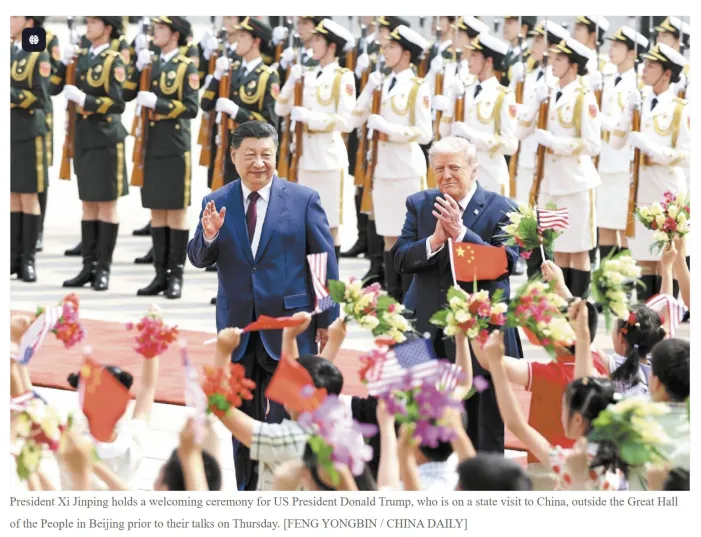
Jan Oberg May 15, 2026 Go to this Fox News page and scroll the whole way down: President Donald Trump tells the world that his meeting with President Xi Jinping yielded a lot of very concrete political and economic results – of course, only where the Chinese side, according to him, agreed with him. He does not mention the Taiwan issue, but Secretary of State, Marco Rubio, says that it did not feature prominently in their talks and that the US policy on Taiwan has not changed. Then go to China Daily – or Global Times – and you will see that for the Chinese it is framework, principles, structure of cooperation etc. that matters – all embedded in the overall idea of “constructive bilateral relationship of strategic stability.” Nowhere is any concrete agreement or deal – all that Trump refers to – mentioned. At the general level, this gives you insights into the very different social...
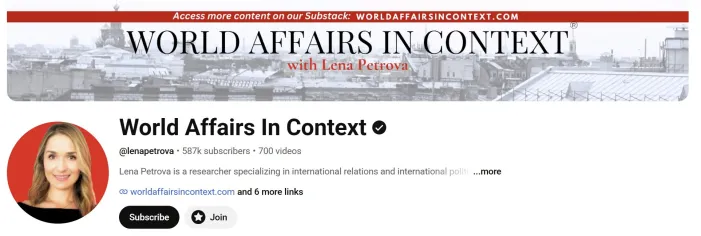
Lena Petrova of “World Affairs In Context” with more than half a million subscribers on YouTube wanted to explore what a peace researcher like me has to say about, among other things, the First and the Second Cold War and why eethics has disappeared from politics. I am particularly happy about this conversation that also yielded an amazing number of very appreciative comments on YouTube. No doubt, people are longing for alternatives, including peace perspectives.
The MIMAC – Military-Industrial-Media-Academic Complex – drives the world’s rampant militarism and wars without end. Here is a short reflection of how it works against all interests of humanity. #5 deals with why there is no real enemy or threat images/analysis. It’s all ex-post constructions. And, btw, theTFF Peace Pulse is now on Rumble.

TFF on Substack

Discover more from TFF Transnational Foundation & Jan Oberg.

Most Popular

Jan Oberg May 15, 2026 Go to this Fox News page and scroll the whole way down: President Donald Trump tells the world that his meeting with President Xi Jinping yielded a lot of very concrete political and economic results – of course, only where the Chinese side, according to him, agreed with him. He does not mention the Taiwan issue, but Secretary of State, Marco Rubio, says that it did not feature prominently in their talks and that the US policy on Taiwan has not changed. Then go to China Daily – or Global Times – and you will see that for the Chinese it is framework, principles, structure of cooperation etc. that matters – all embedded in the overall idea of “constructive bilateral relationship of strategic stability.” Nowhere is any concrete agreement or deal – all that Trump refers to – mentioned. At the general level, this gives you insights into the very different social...
Lena Petrova of “World Affairs In Context” with more than half a million subscribers on YouTube wanted to explore what a peace researcher like me has to say about, among other things, the First and the Second Cold War and why eethics has disappeared from politics. I am particularly happy about this conversation that also yielded an amazing number of very appreciative comments on YouTube. No doubt, people are longing for alternatives, including peace perspectives.
The MIMAC – Military-Industrial-Media-Academic Complex – drives the world’s rampant militarism and wars without end. Here is a short reflection of how it works against all interests of humanity. #5 deals with why there is no real enemy or threat images/analysis. It’s all ex-post constructions. And, btw, theTFF Peace Pulse is now on Rumble.
Read More
Screenshot-2026-05-15-103534
Jan Oberg May 15, 2026 Go to this Fox News page and scroll the whole way down: President Donald Trump tells the world that his meeting with President Xi Jinping yielded a lot of very concrete political and economic results – of course, only where the Chinese side, according to him, agreed with him. He does not mention the Taiwan issue, but Secretary of State, Marco Rubio, says that it did not feature prominently in their talks and that the US policy on Taiwan has not changed. Then go to China Daily – or Global Times – and you will see that for the Chinese it is framework, principles, structure of cooperation etc. that matters – all embedded in the overall idea of “constructive bilateral relationship of strategic stability.” Nowhere is any concrete agreement or deal – all that Trump refers to – mentioned. At the general level, this gives you insights into the very different social...
Screenshot-2026-05-12-104023
Lena Petrova of “World Affairs In Context” with more than half a million subscribers on YouTube wanted to explore what a peace researcher like me has to say about, among other things, the First and the Second Cold War and why eethics has disappeared from politics. I am particularly happy about this conversation that also yielded an amazing number of very appreciative comments on YouTube. No doubt, people are longing for alternatives, including peace perspectives.
Screenshot-2026-04-13-154551 (2)
The MIMAC – Military-Industrial-Media-Academic Complex – drives the world’s rampant militarism and wars without end. Here is a short reflection of how it works against all interests of humanity. #5 deals with why there is no real enemy or threat images/analysis. It’s all ex-post constructions. And, btw, theTFF Peace Pulse is now on Rumble.
Screenshot-2026-04-13-154551 (1)
Jan Oberg, TFF director April 28, 2026 In this third TFF Peace Pulse, I make the important distinction between the violence and the conflict that violence is a symptom of. If you want peace, focus on the underlying conflict because that is the key to resolution, peacemaking, and a better future for the parties. The West is obsessed with violence, just look around you – and 90+ per cent of the public debate is about military issues and other violence – totally wasted for peace. These Peace Pulses will only be published here a few times. You will also not find them on YouTube and Vimeo because both platforms have blocked TFF and me; you know, peace is dangerous these days. Most TFF’s videos since 2007 are now on Rumble.
Screenshot-2026-04-13-154551
In contrast to most, we’ll bring alternatives, solutions, hope and strategies for a better future. Times are dangerous, yes, but that only intensifies the need for constructive thinking and action! Jan Oberg, TFF director April 13, 2026 The new TFF Peace Pulse uses video messages in a new way: Max 3-5-minute-long comments, ideas or perhaps mini-lectures, all about peace – positive peace. We launch them today on April 13, 2026 with a carefully crafted visual aesthetic fitting the content. We hope to publish them regularly from now on. We launch Peace Pulse (PP) – for a number of reasons. The world is in chaos, and there are countless reasons to feel concerned, frustrated, even angry. The atmosphere is saturated with doom and gloom, with negative energy and rear‑mirror thinking, while vision, imagination, alternatives, strategies and genuine future‑mindedness remain in short supply. And without them, we simply can’t save the world. Looking at problems from a hundred angles will...
IMG_5165 (1)
PART II — Publishing Peace in a System That Prioritises Militarism Jan Oberg, TFF director April 10, 2026 How TFF Maintains a Daily Voice in a Digital World Built for Noise This article is part of the series “TFF at 40″ and it invites you to learn about Four Decades of Publishing Peace. It takes a look at how a small, people‑financed peace foundation has communicated across four generations of technology — from wax stencils and fax machines to mass email and Substack — and why TFF continues to publish every single day in a system that rewards noise, conflict, and militarism. ◆ What it means to publish peace every single day in a digital system built for 24/7 news and other noise, confrontation, and militarism. How TFF’s independence, continuity, and global readership defy algorithms, donor cycles, and Western media censorhip — and why the Majority World keeps listening. When the...