Alternative defence for states - transarmament

Speech held in the Senate, Rome

Your Excellencies, Foreign Affairs, Defense, EU…

SYSTEMS: A Reorientation

[1] Transarmament: States use armies for defense, and for offense, for wars. Si vis pacem, para bellum, peace through security tries to cover both; but offensive military threatens, provokes arms races, even wars. Si vis pacem para pacem, security through peace is not disarmament leaving regions, states and local level defense-less; rather, it identifies conflicts and traumas underlying violence in order to solve them, builds peaceful state relations, and defensive defense “just in case”.

[2] Nonalignment: Solidarity and help to victims of aggression should be based on the merits of the case, not by alliance membership. This implies NATO and EU transarmament to regional defensive defense, and UN world collective defense under representative military command.

[3] Being useful to other countries: having developed positive relations such that others want to enhance, not destroy the country. There are many ways: through mutually beneficial trade, tourism for nature or culture, through support when suffering attacks, or social and natural catastrophes, by serving as experts in peace-building.

[4] Being less vulnerable: political-military decentralization so that aggression against any sector-part does not paralyze the whole country; resistance, and much normal life, can be continued.

Economic self-reliance, especially energy/food–self-sufficiency only as a possibility in emergencies–not to be tempted into attacking others if trade fails, keeping economic sectors–primary, secondary, tertiary, quaternary for reproduction–intact; producing for basic needs at home as much as possible, getting the rest through trade.

Defense against spying by not having secrets; transarmament works openly, to prevent and deter. A more cooperative, less competitive economy (more cooperatives, less companies); inviting others to join.

ALTERNATIVE: Building Peace

[5] Conflict resolution. Conflict means incompatible goals; conflict resolution means making goals compatible in an acceptable and sustainable way. The method is dialogue with all parties to map goals and test them for legitimacy; then try to bridge legitimate goals through compromise or by creating some new reality. Making solution orientation a part of the culture and media; not just “winning”. Massive education-practice for domestic-global conflict resolution.

[6] Trauma reconciliation. Clearing the past by revisiting traumatic events, acknowledging wrongs done, dialogue about why it happened, building peaceful futures together; making reconciliation orientation a part of the culture and media; not just “forgetting”. Massive education-practice for domestic-global trauma reconciliation.

[7] Empathy for harmony. Promoting knowledge of how the world looks from the angle of the other gender, generations, races, classes, nations, states, regions, civilizations–professions like business, military, religion, politics–not only one’s own angle; capability to suffer the suffering of others and to enjoy the joy of others, for harmony. Understanding their traumas and glories is a major part of education in geography and history in the age of globalization.

[8] Cooperation. Building projects for mutual and equal benefit, also across conflict borders and faultlines in general, for parity among genders, generations, races and nations, states and regions, civilizations, and for massive reduction of inequality.

Politically that calls for regionalization, one state one vote.

Militarily that calls for solidarity within and between regions.

Economically that calls for transactions with equal long term side-effects, like challenge to develop further and to the environment.

Culturally that calls for more than tolerance: for dialogue based on mutual respect and curiosity, and for openness to mutual learning.

DEFENSE: Defensive Defense

[9] Non-offensive, non-provocative, only deploying weapons one would tolerate in others, limited to defense; not offense, attack, war. This calls for short-range arms and platforms; ditches that can be made unbridgeable, mining fields, armed vehicles, PGMs, MTBs, coast artillery, helicopters, air defense also by beams; for defense only.

[10] Conventional Military Defense, to mark land, sea and air borders, neither provoking arms races, nor instilling fear of war.

[11] Para-Military Defense, militia, locally based and supported, using guerrilla tactics, prepared for the long haul.

[12] Non-Military Defense, preparing, training the population[i] for massive civil disobedience/non-cooperation with any illegitimate regime imposed on the country, cooperating with CMD and PMD above.

[13] A Ministry of Peace for coordination of as many steps on as many of the 12 points above as possible; sections and sub-sections as indicated. Could be under the Prime Minister’s Office.

A country based on security through peace, nonaligned, useful to others, invulnerable, mediating relevant conflicts and traumas, high on empathy and equitable projects, only non-provocative arms, prepared to defend its borders and any part of its territory with military and nonmilitary defense and a Ministry of Peace; attack very unlikely.

A country with long range military, aggressive alliances, useless, vulnerable, with victory as approach to conflict and amnesia to traumas inflicted, autistic, exploitative, no defensive defense, with no Ministry of Peace; attack, and being attacked, likely. Most countries are mixes.

A country with high scores is not only more secure but a gift to the world, surrounded by expanding circles of friendship; one with low scores is a threat, surrounded by enemies. Switzerland in Europe and Nepal in Asia are high-score countries almost never attacked; EU in Europe and ASEAN in Asia are examples of regions with wars (almost) unthinkable.

NOTE:

[i]. See : “La Loi Peillon des formations á la prévention et á la résolution non-violente des conflits” pour les enseignants et tous les personnels de l’éducation en formation initiale et continue dans le cadre des Ecoles Supérieures du Professorat et de l’Education (ESPE)”, adopté le 25 juin 2013.

Originally published at Transcend here.
Share

Leave a Reply

Your email address will not be published. Required fields are marked *

Related Posts

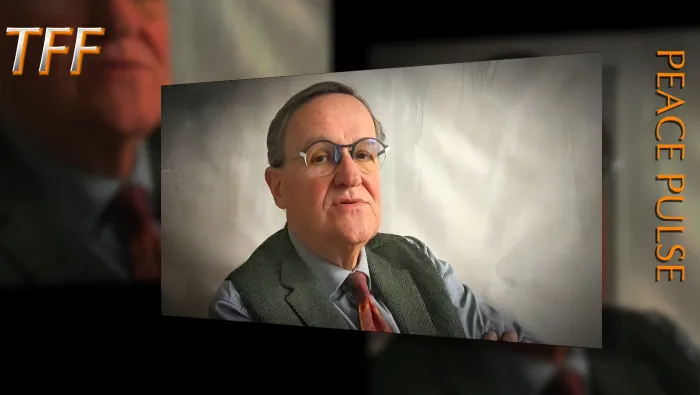
Jan Oberg, TFF director April 28, 2026 In this third TFF Peace Pulse, I make the important distinction between the violence and the conflict that violence is a symptom of. If you want peace, focus on the underlying conflict because that is the key to resolution, peacemaking, and a better future for the parties. The West is obsessed with violence, just look around you – and 90+ per cent of the public debate is about military issues and other violence – totally wasted for peace. These Peace Pulses will only be published here a few times. You will also not find them on YouTube and Vimeo because both platforms have blocked TFF and me; you know, peace is dangerous these days. Most TFF’s videos since 2007 are now on Rumble.
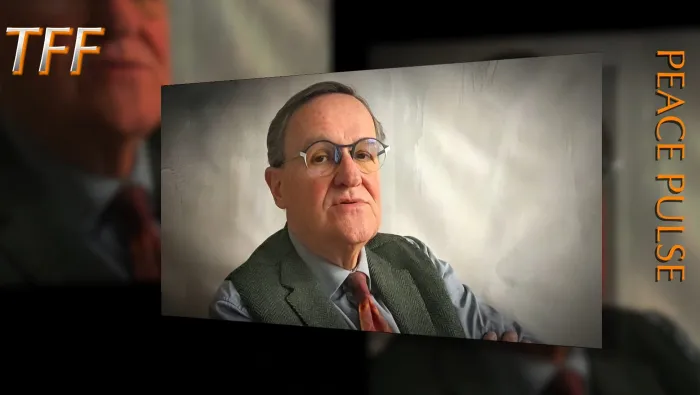
In contrast to most, we’ll bring alternatives, solutions, hope and strategies for a better future. Times are dangerous, yes, but that only intensifies the need for constructive thinking and action! Jan Oberg, TFF director April 13, 2026 The new TFF Peace Pulse uses video messages in a new way: Max 3-5-minute-long comments, ideas or perhaps mini-lectures, all about peace – positive peace. We launch them today on April 13, 2026 with a carefully crafted visual aesthetic fitting the content. We hope to publish them regularly from now on. We launch Peace Pulse (PP) – for a number of reasons. The world is in chaos, and there are countless reasons to feel concerned, frustrated, even angry. The atmosphere is saturated with doom and gloom, with negative energy and rear‑mirror thinking, while vision, imagination, alternatives, strategies and genuine future‑mindedness remain in short supply. And without them, we simply can’t save the world. Looking at problems from a hundred angles will...
PART II — Publishing Peace in a System That Prioritises Militarism Jan Oberg, TFF director April 10, 2026 How TFF Maintains a Daily Voice in a Digital World Built for Noise This article is part of the series “TFF at 40″ and it invites you to learn about Four Decades of Publishing Peace. It takes a look at how a small, people‑financed peace foundation has communicated across four generations of technology — from wax stencils and fax machines to mass email and Substack — and why TFF continues to publish every single day in a system that rewards noise, conflict, and militarism. ◆ What it means to publish peace every single day in a digital system built for 24/7 news and other noise, confrontation, and militarism. How TFF’s independence, continuity, and global readership defy algorithms, donor cycles, and Western media censorhip — and why the Majority World keeps listening. When the...

Recent Articles

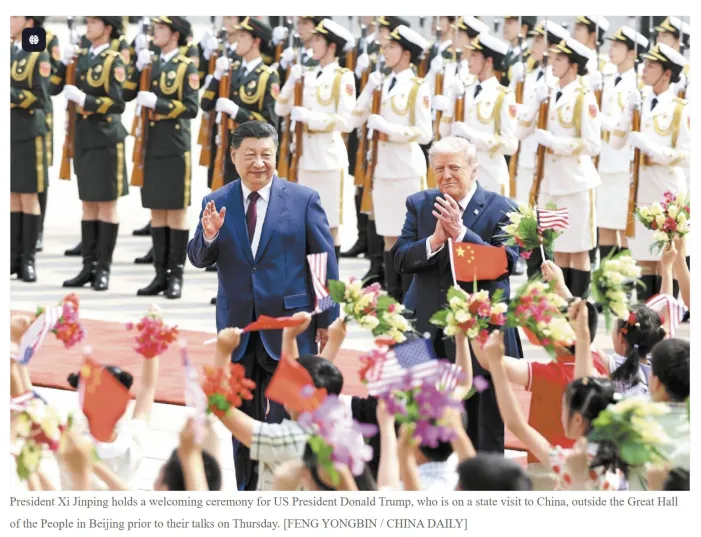
Jan Oberg May 15, 2026 Go to this Fox News page and scroll the whole way down: President Donald Trump tells the world that his meeting with President Xi Jinping yielded a lot of very concrete political and economic results – of course, only where the Chinese side, according to him, agreed with him. He does not mention the Taiwan issue, but Secretary of State, Marco Rubio, says that it did not feature prominently in their talks and that the US policy on Taiwan has not changed. Then go to China Daily – or Global Times – and you will see that for the Chinese it is framework, principles, structure of cooperation etc. that matters – all embedded in the overall idea of “constructive bilateral relationship of strategic stability.” Nowhere is any concrete agreement or deal – all that Trump refers to – mentioned. At the general level, this gives you insights into the very different social...
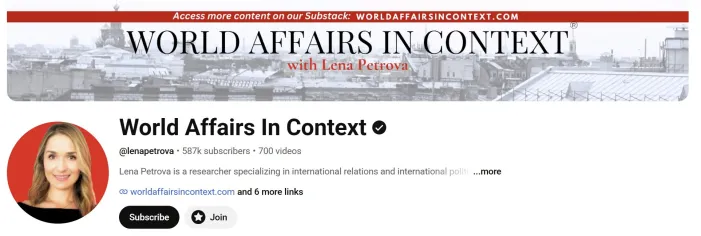
Lena Petrova of “World Affairs In Context” with more than half a million subscribers on YouTube wanted to explore what a peace researcher like me has to say about, among other things, the First and the Second Cold War and why eethics has disappeared from politics. I am particularly happy about this conversation that also yielded an amazing number of very appreciative comments on YouTube. No doubt, people are longing for alternatives, including peace perspectives.
The MIMAC – Military-Industrial-Media-Academic Complex – drives the world’s rampant militarism and wars without end. Here is a short reflection of how it works against all interests of humanity. #5 deals with why there is no real enemy or threat images/analysis. It’s all ex-post constructions. And, btw, theTFF Peace Pulse is now on Rumble.

TFF on Substack

Discover more from TFF Transnational Foundation & Jan Oberg.

Most Popular

Jan Oberg May 15, 2026 Go to this Fox News page and scroll the whole way down: President Donald Trump tells the world that his meeting with President Xi Jinping yielded a lot of very concrete political and economic results – of course, only where the Chinese side, according to him, agreed with him. He does not mention the Taiwan issue, but Secretary of State, Marco Rubio, says that it did not feature prominently in their talks and that the US policy on Taiwan has not changed. Then go to China Daily – or Global Times – and you will see that for the Chinese it is framework, principles, structure of cooperation etc. that matters – all embedded in the overall idea of “constructive bilateral relationship of strategic stability.” Nowhere is any concrete agreement or deal – all that Trump refers to – mentioned. At the general level, this gives you insights into the very different social...
Lena Petrova of “World Affairs In Context” with more than half a million subscribers on YouTube wanted to explore what a peace researcher like me has to say about, among other things, the First and the Second Cold War and why eethics has disappeared from politics. I am particularly happy about this conversation that also yielded an amazing number of very appreciative comments on YouTube. No doubt, people are longing for alternatives, including peace perspectives.
The MIMAC – Military-Industrial-Media-Academic Complex – drives the world’s rampant militarism and wars without end. Here is a short reflection of how it works against all interests of humanity. #5 deals with why there is no real enemy or threat images/analysis. It’s all ex-post constructions. And, btw, theTFF Peace Pulse is now on Rumble.
Read More
Screenshot-2026-05-15-103534
Jan Oberg May 15, 2026 Go to this Fox News page and scroll the whole way down: President Donald Trump tells the world that his meeting with President Xi Jinping yielded a lot of very concrete political and economic results – of course, only where the Chinese side, according to him, agreed with him. He does not mention the Taiwan issue, but Secretary of State, Marco Rubio, says that it did not feature prominently in their talks and that the US policy on Taiwan has not changed. Then go to China Daily – or Global Times – and you will see that for the Chinese it is framework, principles, structure of cooperation etc. that matters – all embedded in the overall idea of “constructive bilateral relationship of strategic stability.” Nowhere is any concrete agreement or deal – all that Trump refers to – mentioned. At the general level, this gives you insights into the very different social...
Screenshot-2026-05-12-104023
Lena Petrova of “World Affairs In Context” with more than half a million subscribers on YouTube wanted to explore what a peace researcher like me has to say about, among other things, the First and the Second Cold War and why eethics has disappeared from politics. I am particularly happy about this conversation that also yielded an amazing number of very appreciative comments on YouTube. No doubt, people are longing for alternatives, including peace perspectives.
Screenshot-2026-04-13-154551 (2)
The MIMAC – Military-Industrial-Media-Academic Complex – drives the world’s rampant militarism and wars without end. Here is a short reflection of how it works against all interests of humanity. #5 deals with why there is no real enemy or threat images/analysis. It’s all ex-post constructions. And, btw, theTFF Peace Pulse is now on Rumble.
Screenshot-2026-04-13-154551 (1)
Jan Oberg, TFF director April 28, 2026 In this third TFF Peace Pulse, I make the important distinction between the violence and the conflict that violence is a symptom of. If you want peace, focus on the underlying conflict because that is the key to resolution, peacemaking, and a better future for the parties. The West is obsessed with violence, just look around you – and 90+ per cent of the public debate is about military issues and other violence – totally wasted for peace. These Peace Pulses will only be published here a few times. You will also not find them on YouTube and Vimeo because both platforms have blocked TFF and me; you know, peace is dangerous these days. Most TFF’s videos since 2007 are now on Rumble.
Screenshot-2026-04-13-154551
In contrast to most, we’ll bring alternatives, solutions, hope and strategies for a better future. Times are dangerous, yes, but that only intensifies the need for constructive thinking and action! Jan Oberg, TFF director April 13, 2026 The new TFF Peace Pulse uses video messages in a new way: Max 3-5-minute-long comments, ideas or perhaps mini-lectures, all about peace – positive peace. We launch them today on April 13, 2026 with a carefully crafted visual aesthetic fitting the content. We hope to publish them regularly from now on. We launch Peace Pulse (PP) – for a number of reasons. The world is in chaos, and there are countless reasons to feel concerned, frustrated, even angry. The atmosphere is saturated with doom and gloom, with negative energy and rear‑mirror thinking, while vision, imagination, alternatives, strategies and genuine future‑mindedness remain in short supply. And without them, we simply can’t save the world. Looking at problems from a hundred angles will...
IMG_5165 (1)
PART II — Publishing Peace in a System That Prioritises Militarism Jan Oberg, TFF director April 10, 2026 How TFF Maintains a Daily Voice in a Digital World Built for Noise This article is part of the series “TFF at 40″ and it invites you to learn about Four Decades of Publishing Peace. It takes a look at how a small, people‑financed peace foundation has communicated across four generations of technology — from wax stencils and fax machines to mass email and Substack — and why TFF continues to publish every single day in a system that rewards noise, conflict, and militarism. ◆ What it means to publish peace every single day in a digital system built for 24/7 news and other noise, confrontation, and militarism. How TFF’s independence, continuity, and global readership defy algorithms, donor cycles, and Western media censorhip — and why the Majority World keeps listening. When the...