After Corona, changing societies' priorities

Perspective and proportion are everything in this Pandemic of Fear that now consumes our attention and our daily lives.

With very rare exceptions the media ignores this. As I write there have been world-wide 436,005 deaths from coronavirus. But a remarkable, barely noticed, 4,137,712 have recovered.

In comparison, the number who died last year from AIDS/HIV is 770,000. In its worst year – 2004 – it claimed 1,600,000 lives.

The number who died from alcohol consumption last year was 3 million.  Smoking claimed 8 million deaths last year. The number from malaria was almost the same as deaths from Corona – 416,000. The number who died in motor accidents was 1.4 million. Traffic injuries are now the top killer of people aged five to twenty-nine.

The screamers must stop or at least get a hold of themselves – except in countries like India and Brazil where the Coronavirus is in danger of becoming out of control.

A simple question is raised: Why aren’t we putting the same energy as we are into the Coronavirus into defeating AIDS/HIV, alcoholism, smoking, malaria infections and traffic accidents? Why? Why? Why?

The human being is supposed to be rational or, at least, attempting rationality.

Alcohol could be much higher priced by taxation and the number of sales outlets limited – and only opened for a limited number of hours a day and closed on Sunday, as in Sweden.

Cigarettes should also be taxed much more and their packets should have the gory pictures on one side as practiced in Europe, but with brown cardboard on the back, as not practiced. The punishment for smoking underage should be raised. The use of nets in malaria-infested countries should become mandatory.

It is when we start to discuss car accidents that the argument becomes more complex. Tobacco and alcohol are not necessary for life. (Neither are drugs but drug deaths are only 166,000, contrary to the general, often hysterical, perception.) But cars and lorries in many places are.

1.4 million motor deaths are far more than deaths from alcohol and nearly three times as many who die from the Coronavirus. The number is growing fast. This figure doesn’t include the number who are injured, not killed, but some grievously. That’s 50 million people.

In the more developed countries, death rates caused by vehicles have been falling. In the US by a third since the middle of the last century. Even so, 36,560 died last year – about as many who were killed by guns.

Improved car safety, pioneered by Sweden’s Volvo, and tougher drinking-driving laws have had a good impact.

Set against that, the increase in bicycling and walking has increased America’s traffic accidents. Bike accidents totalled 7,140 in 2018, a 41% increase in a decade.

The poorer Third World countries which have just 1% of the world’s motor vehicles have 13% of the deaths. Ethiopia has ten times per head the number of traffic deaths than Sweden.

Janette Sadik-Khan, a former New York commissioner of the department of transportation, and her deputy, Seth Solomonow, in their book, “Streetfight: Handbook for an Urban Revolution” argue that it is the roads that are the main problem.

Traffic deaths in the US, they write, were 26 in 1899 and rose to 29,592 in 1929. As car numbers rose engineers widened roads both in the countryside and in the cities. As we have known for a long time, traffic expands to fill the space available.

Until very recently this observation was ignored. Interestingly, New York has a much lower number of deaths than other US cities – its streets are narrow, impossible to widen, with traffic forced to move slowly. It also has wide pavements unlike many other urban areas. In central Dubai, they have very few pavements at all.

Research has shown that cyclists and pedestrians die not because they don’t wear helmets or don’t take care but because of the behavior of vehicle drivers – ignoring zebra crossings, speeding, being drunk or drugged and also because of using a mobile phone while driving.

When the two authors worked for Mayor Michael Bloomberg they opted for means that were simple and cost-effective. “Instead of dreaming up megaprojects, we took a long, hard, look at the streets we already had, this time from the perspective of the most vulnerable people”.

Between 2007 and 2013 they organized the redesign of lengthy portions of 137 streets and revamped 113 intersections. They expanded the space to walk, decreased crossing distances for pedestrians and made streets navigable enough for children and old people.

Speed limits were reduced, streets narrowed and monitoring cameras introduced. 2.5 acres of Times Square became car-free. Broadway became a walkers’ haven.

All this reduced traffic deaths in the city by 44%. There was a reduction of 37% in pedestrian deaths.

Mexico City’s mayor, Miguel Angel Mancera, did much the same with similar good results. Before the city had been one of the world’s most dangerous. In two years the number of bike riders killed each year fell by 78%.

If the transport and traffic authorities were given the same budgets now being spent on the lesser killer, Coronavirus, they would save the lives of many more than are being saved from the virus.

Of course, making significant changes in traffic problems are more straightforward than dealing with the Coronavirus, drinking or tobacco smoking, AIDS/HIV and malaria. These are more demanding.

But there is no good reason why a lot more progress shouldn’t be made with these five as has happened with traffic deaths in the developed countries

This doesn’t mean cutting the budgets for overcoming the effects of the Coronavirus. It means increasing them for these other needs.

The money is there – in reduced arms spending, in taxing the ever-growing high incomes of the well-to-do and the large sums often inherited, in taxing inflated salaries in parts of industry and banking, in imposing high taxes on drinking and smoking, and in much higher taxes on car and plane fuel.

And we certainly also mustn’t forget the need for financing the defeat of climate-warming.

Corona has been a useful human experience. It has shown what in severe crisis governments can do if they have to.

Now we need a restructuring of society’s priorities. We need a road map to the future. Thus far only a handful of governments have tried to make one. Humanity has been given a warning.

We must act while the iron is hot. As the great Afro-American novelist James Baldwin wrote, “It will be the fire next time”.

If you think this article was useful, reward TFF with a dollar or two

[paypal-donation]

Foreign affairs columnist, film-maker and author

Share

Leave a Reply

Your email address will not be published. Required fields are marked *

Related Posts

The MIMAC – Military-Industrial-Media-Academic Complex – drives the world’s rampant militarism and wars without end. Here is a short reflection of how it works against all interests of humanity. #5 deals with why there is no real enemy or threat images/analysis. It’s all ex-post constructions. And, btw, theTFF Peace Pulse is now on Rumble.
Jan Oberg, TFF director April 28, 2026 In this third TFF Peace Pulse, I make the important distinction between the violence and the conflict that violence is a symptom of. If you want peace, focus on the underlying conflict because that is the key to resolution, peacemaking, and a better future for the parties. The West is obsessed with violence, just look around you – and 90+ per cent of the public debate is about military issues and other violence – totally wasted for peace. These Peace Pulses will only be published here a few times. You will also not find them on YouTube and Vimeo because both platforms have blocked TFF and me; you know, peace is dangerous these days. Most TFF’s videos since 2007 are now on Rumble.
In contrast to most, we’ll bring alternatives, solutions, hope and strategies for a better future. Times are dangerous, yes, but that only intensifies the need for constructive thinking and action! Jan Oberg, TFF director April 13, 2026 The new TFF Peace Pulse uses video messages in a new way: Max 3-5-minute-long comments, ideas or perhaps mini-lectures, all about peace – positive peace. We launch them today on April 13, 2026 with a carefully crafted visual aesthetic fitting the content. We hope to publish them regularly from now on. We launch Peace Pulse (PP) – for a number of reasons. The world is in chaos, and there are countless reasons to feel concerned, frustrated, even angry. The atmosphere is saturated with doom and gloom, with negative energy and rear‑mirror thinking, while vision, imagination, alternatives, strategies and genuine future‑mindedness remain in short supply. And without them, we simply can’t save the world. Looking at problems from a hundred angles will...

Recent Articles

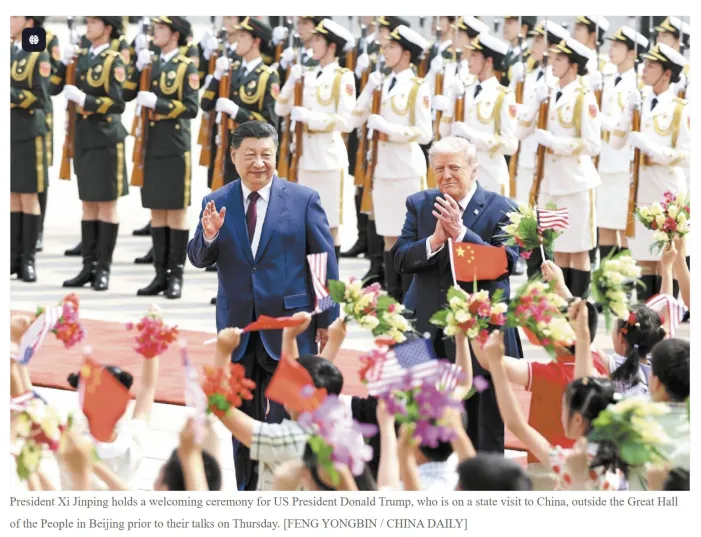
Jan Oberg May 15, 2026 Go to this Fox News page and scroll the whole way down: President Donald Trump tells the world that his meeting with President Xi Jinping yielded a lot of very concrete political and economic results – of course, only where the Chinese side, according to him, agreed with him. He does not mention the Taiwan issue, but Secretary of State, Marco Rubio, says that it did not feature prominently in their talks and that the US policy on Taiwan has not changed. Then go to China Daily – or Global Times – and you will see that for the Chinese it is framework, principles, structure of cooperation etc. that matters – all embedded in the overall idea of “constructive bilateral relationship of strategic stability.” Nowhere is any concrete agreement or deal – all that Trump refers to – mentioned. At the general level, this gives you insights into the very different social...
Lena Petrova of “World Affairs In Context” with more than half a million subscribers on YouTube wanted to explore what a peace researcher like me has to say about, among other things, the First and the Second Cold War and why eethics has disappeared from politics. I am particularly happy about this conversation that also yielded an amazing number of very appreciative comments on YouTube. No doubt, people are longing for alternatives, including peace perspectives.
The MIMAC – Military-Industrial-Media-Academic Complex – drives the world’s rampant militarism and wars without end. Here is a short reflection of how it works against all interests of humanity. #5 deals with why there is no real enemy or threat images/analysis. It’s all ex-post constructions. And, btw, theTFF Peace Pulse is now on Rumble.

TFF on Substack

Discover more from TFF Transnational Foundation & Jan Oberg.

Most Popular

Jan Oberg May 15, 2026 Go to this Fox News page and scroll the whole way down: President Donald Trump tells the world that his meeting with President Xi Jinping yielded a lot of very concrete political and economic results – of course, only where the Chinese side, according to him, agreed with him. He does not mention the Taiwan issue, but Secretary of State, Marco Rubio, says that it did not feature prominently in their talks and that the US policy on Taiwan has not changed. Then go to China Daily – or Global Times – and you will see that for the Chinese it is framework, principles, structure of cooperation etc. that matters – all embedded in the overall idea of “constructive bilateral relationship of strategic stability.” Nowhere is any concrete agreement or deal – all that Trump refers to – mentioned. At the general level, this gives you insights into the very different social...
Lena Petrova of “World Affairs In Context” with more than half a million subscribers on YouTube wanted to explore what a peace researcher like me has to say about, among other things, the First and the Second Cold War and why eethics has disappeared from politics. I am particularly happy about this conversation that also yielded an amazing number of very appreciative comments on YouTube. No doubt, people are longing for alternatives, including peace perspectives.
The MIMAC – Military-Industrial-Media-Academic Complex – drives the world’s rampant militarism and wars without end. Here is a short reflection of how it works against all interests of humanity. #5 deals with why there is no real enemy or threat images/analysis. It’s all ex-post constructions. And, btw, theTFF Peace Pulse is now on Rumble.
Read More
Screenshot-2026-05-15-103534
Jan Oberg May 15, 2026 Go to this Fox News page and scroll the whole way down: President Donald Trump tells the world that his meeting with President Xi Jinping yielded a lot of very concrete political and economic results – of course, only where the Chinese side, according to him, agreed with him. He does not mention the Taiwan issue, but Secretary of State, Marco Rubio, says that it did not feature prominently in their talks and that the US policy on Taiwan has not changed. Then go to China Daily – or Global Times – and you will see that for the Chinese it is framework, principles, structure of cooperation etc. that matters – all embedded in the overall idea of “constructive bilateral relationship of strategic stability.” Nowhere is any concrete agreement or deal – all that Trump refers to – mentioned. At the general level, this gives you insights into the very different social...
Screenshot-2026-05-12-104023
Lena Petrova of “World Affairs In Context” with more than half a million subscribers on YouTube wanted to explore what a peace researcher like me has to say about, among other things, the First and the Second Cold War and why eethics has disappeared from politics. I am particularly happy about this conversation that also yielded an amazing number of very appreciative comments on YouTube. No doubt, people are longing for alternatives, including peace perspectives.
Screenshot-2026-04-13-154551 (2)
The MIMAC – Military-Industrial-Media-Academic Complex – drives the world’s rampant militarism and wars without end. Here is a short reflection of how it works against all interests of humanity. #5 deals with why there is no real enemy or threat images/analysis. It’s all ex-post constructions. And, btw, theTFF Peace Pulse is now on Rumble.
Screenshot-2026-04-13-154551 (1)
Jan Oberg, TFF director April 28, 2026 In this third TFF Peace Pulse, I make the important distinction between the violence and the conflict that violence is a symptom of. If you want peace, focus on the underlying conflict because that is the key to resolution, peacemaking, and a better future for the parties. The West is obsessed with violence, just look around you – and 90+ per cent of the public debate is about military issues and other violence – totally wasted for peace. These Peace Pulses will only be published here a few times. You will also not find them on YouTube and Vimeo because both platforms have blocked TFF and me; you know, peace is dangerous these days. Most TFF’s videos since 2007 are now on Rumble.
Screenshot-2026-04-13-154551
In contrast to most, we’ll bring alternatives, solutions, hope and strategies for a better future. Times are dangerous, yes, but that only intensifies the need for constructive thinking and action! Jan Oberg, TFF director April 13, 2026 The new TFF Peace Pulse uses video messages in a new way: Max 3-5-minute-long comments, ideas or perhaps mini-lectures, all about peace – positive peace. We launch them today on April 13, 2026 with a carefully crafted visual aesthetic fitting the content. We hope to publish them regularly from now on. We launch Peace Pulse (PP) – for a number of reasons. The world is in chaos, and there are countless reasons to feel concerned, frustrated, even angry. The atmosphere is saturated with doom and gloom, with negative energy and rear‑mirror thinking, while vision, imagination, alternatives, strategies and genuine future‑mindedness remain in short supply. And without them, we simply can’t save the world. Looking at problems from a hundred angles will...
IMG_5165 (1)
PART II — Publishing Peace in a System That Prioritises Militarism Jan Oberg, TFF director April 10, 2026 How TFF Maintains a Daily Voice in a Digital World Built for Noise This article is part of the series “TFF at 40″ and it invites you to learn about Four Decades of Publishing Peace. It takes a look at how a small, people‑financed peace foundation has communicated across four generations of technology — from wax stencils and fax machines to mass email and Substack — and why TFF continues to publish every single day in a system that rewards noise, conflict, and militarism. ◆ What it means to publish peace every single day in a digital system built for 24/7 news and other noise, confrontation, and militarism. How TFF’s independence, continuity, and global readership defy algorithms, donor cycles, and Western media censorhip — and why the Majority World keeps listening. When the...