
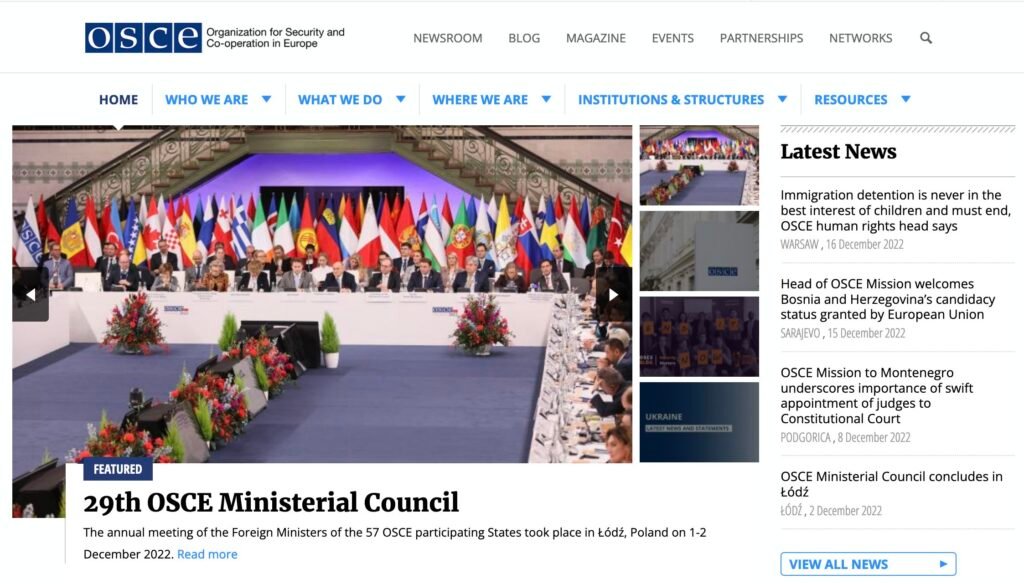
A Russian Voice - Andrey Kortunov: The OSCE remains a platform for dialogue

Andrei Kortunov

December 28, 2022

Poland’s defiant refusal to allow the Russian foreign minister’s attendance at the OSCE Ministerial Council meeting in Lodz on December 1-2 provoked a boisterous diplomatic uproar. As might be expected, it gave a new impulse to the long-standing debate about the OSCE’s value to Russia. With less than a month remaining before the Polish OSCE chairmanship expires, it is barely possible to imagine that the new chairmanships—North Macedonia in 2023, Estonia in 2024 and even Finland in 2025—might change the general algorithm of Moscow’s interaction with this organization for the better.

It is not surprising that the voices of those calling for a withdrawal from the OSCE altogether are getting louder in Russia, especially given that our country has already left the Council of Europe this spring. The cases for withdrawal range from ideological (“the OSCE promotes values alien to Russians”) to financial (“Russia could make a better use of EUR 8 million that it annually contributes to the OSCE budget”).

Some hope that the OSCE, without Russia, would not be able to function, perhaps even losing its legitimacy as a pan-European institution. Moscow, for its part, could start an alternative “Eurasian” OSCE—for example, on the basis of the SCO or some other Russia-friendly multilateral platform.

The desire to turn the page on Russia’s foreign policy of the past as soon as possible is understandable and, to some extent, even justified. Yet, it is far from accidental that the address of Alexander Lukashevich, the Russian Permanent Representative to the OSCE, at the final session of the Council of Foreign Ministers’ meeting sounded restrained and even stroke a note of cautious optimism.

The special military operation does not change the fact that Russia is the largest European nation. The tough stand-off between Moscow and Brussels does not mean that the European continent has ceased to be a common geographical space for Russia and its Western neighbors. And the OSCE remains one of the few threads that bind this space into a coherent whole.

Assuming that a full-fledged dialogue between Russia and NATO, as well as between Russia and the EU, won’t be reinstated in the foreseeable future, the OSCE appears to be the most promising, even if very modest for the time being, continent-wide platform for discussing issues pertaining to security and development.

Incidentally, this has always been the case, despite many alternative platforms present. It was at the OSCE summit late the previous century that an adapted version of the CFE Treaty was signed. It’s on the OSCE venues that the Vienna Document on Confidence and Security-Building Measures was negotiated and adopted in 2011. It is within the framework of the OSCE that the so-called structured dialogue on security issues was launched in 2016.

We should add that the OSCE was the only international organization that was able to deliver a tangible contribution to de-escalation of the conflict in eastern Ukraine by deploying a special monitoring mission to the Donbass as early as March 2014 and maintaining its presence in the conflict zone for eight years. Even though the experience of the OSCE observers does not look unambiguously successful and is heavily criticized both in Moscow and in Kiev, we must still admit the obvious: no other international structure has a comparable experience in the “field presence”. This means that this experience of OSCE will have to be invoked one way or another, as soon as the need for international monitoring of any prospective ceasefire agreement between Russia and Ukraine arises.
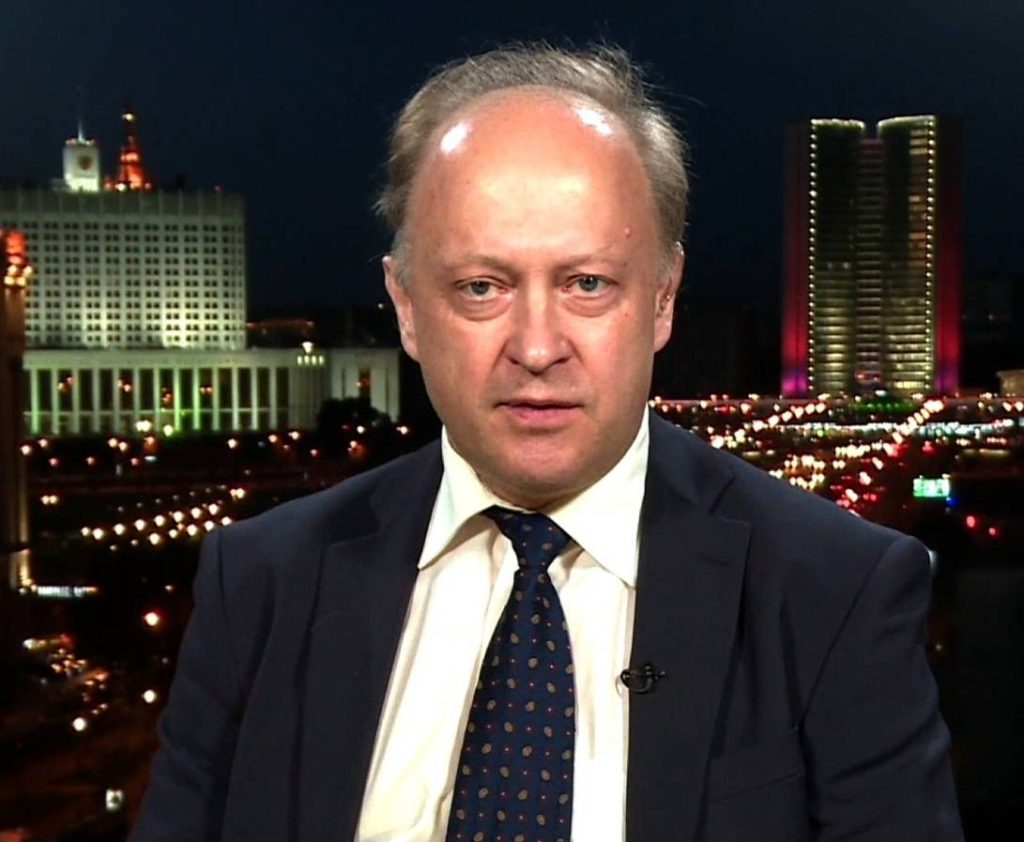
Dr Andrey Kortunov, RIAC Director General

No doubt, we should not overestimate the possible role of the OSCE in Europe’s future. If there ever was a chance to place this organization at the core of the future European security and development framework, that chance was irrevocably lost a quarter century ago. Neither the OSCE nor any other international institution will carry us back into the world that had existed prior to February 24, 2022, let alone into the world of hopes and illusions, dating from the Charter of Paris for a New Europe of 1990.

Yet, the Helsinki Final Act of the Conference on Security and Cooperation in Europe, dated 1975, which launched the process of multilateral pan-European cooperation, was signed in a deeply divided Europe. The main goal of the Helsinki process was not so much to immediately overcome a glaring divide between the East and the West, as to stabilize the European politics amid that split. In the present-day environment, the lessons learnt through the pan-European process about 50 years ago are becoming relevant once again.

First published in Izvestiya. The published by the RIAC – The Russian International Affairs Council on December 5, 2022 – of which Dr Kortunov is the director general since 2011.

Unlike our mainstream adversaries, warmongering propagandists and other destructive forces, TFF has no source of state, corporate or institutional finance whatsoever. Such are the conditions for truly independent peace research in these times. Everything peace has been cancelled. But we are still here – and will be. 

The foundation and this homepage run entirely on voluntary support from its readers and we who produce it, are all volunteers. To support TFF, you do not have to agree with every argument or article, only to welcome alternative voices, research-based knowledge and dialogue about important matters. Click to do a good deed:

[paypal-donation]

Bonus video

An interview with Dr Kortunov from March 2022

No data was found

Share

Leave a Reply

Your email address will not be published. Required fields are marked *

Related Posts

In 2021 the administration said it would pursue ‘relentless diplomacy.’ They call it something else today in Ukraine. Ted Snider October 9, 2024 It is said that Henry Kissinger asserted that little can be won at the negotiating table that isn’t earned on the battlefield. In several wars in recent weeks, U.S. officials have echoed that approach. State Department spokesperson Matthew Miller recently said that the U.S. “supports[s] a ceasefire” in Lebanon while simultaneously recognizing that “military pressure can at times enable diplomacy.” Meanwhile, Secretary of State Antony Blinken has expressed the doctrine as doing “all that we can to strengthen Ukraine’s position on the battlefield so it has the strongest possible position at the negotiating table.” This article was published first by Responsible Statecraft on October 8, 2024 here But during the Biden administration, the iteration of Kissinger’s doctrine has gone well beyond the generals supporting the diplomats. The...
John J. Mearsheimer Aug 05, 2024 The question of who is responsible for causing the Ukraine war has been a deeply contentious issue since Russia invaded Ukraine on 24 February 2022. The answer to this question matters enormously because the war has been a disaster for a variety of reasons, the most important of which is that Ukraine has effectively been wrecked. It has lost a substantial amount of its territory and is likely to lose more, its economy is in tatters, huge numbers of Ukrainians are internally displaced or have fled the country, and it has suffered hundreds of thousands of casualties. Of course, Russia has paid a significant blood price as well. On the strategic level, relations between Russia and Europe, not to mention Russia and Ukraine, have been poisoned for the foreseeable future, which means that the threat of a major war in Europe will be with...
Given their lack of information about the Ukraine-Russia deal scuttled by Boris Johnson early in the war, many Americans will be inclined to believe Biden’s evidence-free claims in last week’s CNN debate. Ray McGovernSpecial to Consortium News, July 2, 2024 July 5, 2024 At Thursday’s debate with Donald Trump, President Joe Biden, calling Russian President Vladimir Putin a “war criminal,” claimed that he “wants all of Ukraine. … Do you think he’ll stop? … What do you think happens to Poland and other places?” Spoiler Alert: Official Ukrainian sources confirm that Putin did stop in March 2022, after Ukrainian President Volodomyr Zelensky agreed to forswear membership in NATO. This was the key provision in the Ukraine-Russia deal initialed by Davyd Arakhamia, who at the time was Zelensky’s chief negotiator (and his party’s faction leader in the Rada) at the talks in Istanbul at the end of March, hardly a month...

Recent Articles

– nästan 11 månader Till Sofia nästan 11 månader # 1  Till Sofias huvudsida Till alla Privata Foto-Serier
Till Sofias huvudsida
OK, Trump did not get it. But he got a full endorsement of a possible future US regime change in Venezuela. And that is what Ms Machado has advocated. On October 10, 2025, the Norwegian Nobel Committee awarded its Peace Prize to Venezuelan opposition figure María Corina Machado. The citation praised her “tireless work promoting democratic rights.” But Ms Machado has openly called for U.S. military intervention in Venezuela, stating on CBS: “The only way to stop the suppression is by force—U.S. force.” She or her party has received funding from the National Endowment for Democracy (NED), a U.S. government-backed body known as a CIA front organisation and for supporting regime-change operations worldwide. And in 2018, she sent a letter to Israeli Prime Minister Benjamin Netanyahu, asking him to use “force and influence” to help dismantle Venezuela’s government—citing alleged ties to terrorism, Iran and narcotrafficking. This year’s NATO Norwegian prize...

TFF on Substack

Discover more from TFF Transnational Foundation & Jan Oberg.

Most Popular

– nästan 11 månader Till Sofia nästan 11 månader # 1  Till Sofias huvudsida Till alla Privata Foto-Serier
Till Sofias huvudsida
OK, Trump did not get it. But he got a full endorsement of a possible future US regime change in Venezuela. And that is what Ms Machado has advocated. On October 10, 2025, the Norwegian Nobel Committee awarded its Peace Prize to Venezuelan opposition figure María Corina Machado. The citation praised her “tireless work promoting democratic rights.” But Ms Machado has openly called for U.S. military intervention in Venezuela, stating on CBS: “The only way to stop the suppression is by force—U.S. force.” She or her party has received funding from the National Endowment for Democracy (NED), a U.S. government-backed body known as a CIA front organisation and for supporting regime-change operations worldwide. And in 2018, she sent a letter to Israeli Prime Minister Benjamin Netanyahu, asking him to use “force and influence” to help dismantle Venezuela’s government—citing alleged ties to terrorism, Iran and narcotrafficking. This year’s NATO Norwegian prize...
Read More
– nästan 11 månader Till Sofia nästan 11 månader # 1  Till Sofias huvudsida Till alla Privata Foto-Serier
Till Sofias huvudsida
BlackNobel
OK, Trump did not get it. But he got a full endorsement of a possible future US regime change in Venezuela. And that is what Ms Machado has advocated. On October 10, 2025, the Norwegian Nobel Committee awarded its Peace Prize to Venezuelan opposition figure María Corina Machado. The citation praised her “tireless work promoting democratic rights.” But Ms Machado has openly called for U.S. military intervention in Venezuela, stating on CBS: “The only way to stop the suppression is by force—U.S. force.” She or her party has received funding from the National Endowment for Democracy (NED), a U.S. government-backed body known as a CIA front organisation and for supporting regime-change operations worldwide. And in 2018, she sent a letter to Israeli Prime Minister Benjamin Netanyahu, asking him to use “force and influence” to help dismantle Venezuela’s government—citing alleged ties to terrorism, Iran and narcotrafficking. This year’s NATO Norwegian prize...
Screenshot-2025-10-08-163458
PRESS RELEASE – 6 OCTOBER 2025 LAY DOWN YOUR ARMSPEACE PRIZE FOR 2025 is awarded Francesca Albanese The United Nations Special Rapporteur on the occupied Palestinian territories – as the person who, in accordance with Alfred Nobel’s will, has “done the most or the best work for fraternity between nations and for the abolition or reduction of standing armies as well as for the holding and promotion of peace congresses.” Francesca Albanese has forcefully and unwaveringly worked against Israel’s full-scale war on the occupied Palestinian territories, in particular Israel´s ongoing genocide against the Palestinian people. She has confronted Israel’s systematic war crimes and crimes against humanity in a truly global outreach. Further, she has brought governments, international organisations and people’s groups together to underline the responsibility of the world at large to act and to stop arming, enabling, and profiting from Israel’s ongoing criminal actions. But first of all, Albanese...
Copilot_20251003_003414
Officially, the drones were not identified. By simply thinking critically – which journalists and selected experts no longer do – there may be a good reason for that. And this article will never be mentioned in Denmark… Drones over Denmark. No damage. No trace. No answers. Yet the headlines scream “Russian threat,” and Prime Minister Mette Frederiksen speaks with a certainty that defies logic: “We don’t know they were Russian—but we know Russia is the biggest threat to Europe.” It could be nobody else – unless you make an interest analysis which I did two days ago. This is not security policy. It’s theatre. And the audience is being played. Let’s rewind. These drones—unphotographed, untracked, unclaimed—appear and vanish like ghosts. Airports shut down. Panic spreads. Military budgets swell. And the narrative hardens: Russia is behind it. But what if that’s not just wrong but deliberately misleading? Here’s a hypothesis for...
Screenshot-2025-09-30-231913-1
And why the world, especially the EU, must now declare itself independent of the United States. UN’s 80th anniversary This year, the United Nations celebrates the 80th anniversary of its founding. The UN was formed after the scourge of the Second World War, in which 70 to 85 million people were killed and many countries were destroyed. That war came on the heels of the First World War, which also killed between 15 and 22 million people. After the Second World War, especially after the use of nuclear weapons by the United States, which marked a turning point in the history of warfare that could result in the end of civilisation as we know it, humanity decided to move away from the era of empires and big power politics and usher in a new era of peace, freedom and cooperation. These were the principles enshrined in the UN Charter. The United States...