Xinjiang

Showing 1-10 of 13 stories

Sort by
Categories

Year

Author / Contributor

Region

XinjiangTop_Improv_SMALL
Launched on November 17, 2024Updated with new materials regularly TFF Board members Thore Vest. Everywhere, the delegation was met with a sincere wish to develop knowledge, dialogue, cooperative projects, and initiatives based on citizens’ diplomacy – in general, but with the West in particular. For more, see “Report from the Nordic delegation to China’s Xinjiang Province, September 7-15, 2024.” While the delegation was in Xinjiang, various ideas were already being discussed from the local to the top level, i.e., with the governor and party leaders of Xinjiang. The two TFF Associates suggested that TFF set up a special section – in addition to its “China and Silk” – where various quality materials about Xinjiang would regularly be published to promote public education about Xinjiang, particularly its contemporary development – worldwide but in the West in particular. This is now a reality – as can be seen below – but it...

YiningAvenueWoman_1200-copy
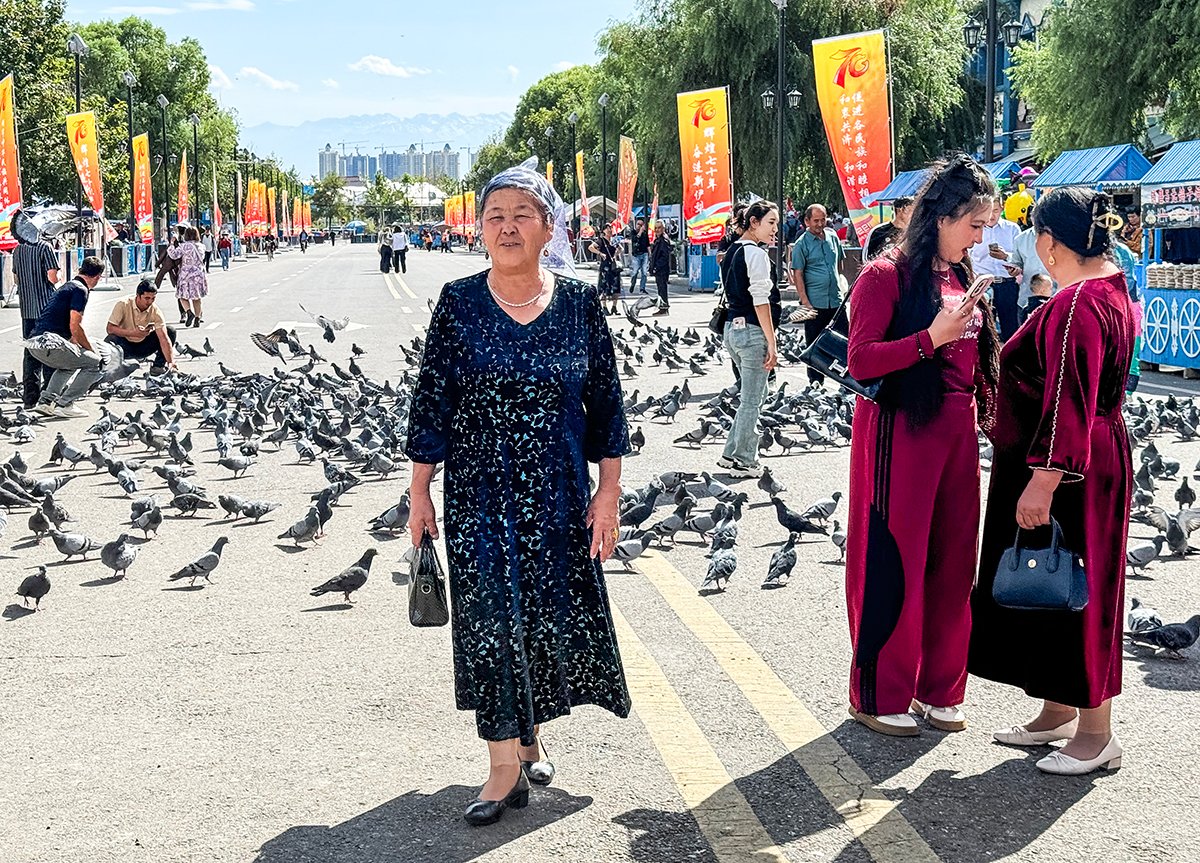
For the last time, I am stating my views on the West’s genocide accusation and why I refuse to let the US/NATO/EU Cold War policy set the agenda and discourse about China in general and Xinjiang in particular. PART I Part II A daring prediction I shall be surprised if, in about 10-15 years, Xinjiang – the North-Western province of China, its largest province three times larger than France – has not become a world-leading cultural and economic hub in humanity’s multipolar/nodal future world. It exhibits a tremendous cultural variety that seems to be moving towards unity in an amazing diversity. It has a vast natural resource potential. It interacts with eight very important neighbouring countries. It’s the crossroads of past, present and future. Xinjiang is the sine qua non of the new Silk Roads, also called the Belt and Road Initiative (BRI), which involves over 140 countries worldwide and...
YiningAvenueWoman_1200-copy
Why it is essential to travel and see for yourself and then build networks and promote dialogues in the world’s likely most serious conflict. PART II PART I I recommend you read Part I before reading this second part. A dynamic melting pot You may ask where Xinjiang’s immense cultural diversity comes from. While I have not studied its history, I have learned that it has always been one big meeting place, dating back to the first Silk Roads, where people travelled, traded, explored, and migrated. Crisscrossing also borders with eight neighbours so that over time, it became a melting pot. There is a lot of diversity; each national group or ethnicity seems to have preserved vital elements of its own culture, language, aesthetics, way of living, dancing, etc. and also become part of the unity called Xinjiang and China. A woman I met told me that each nationality’s way of dancing could be...
Rapport-Top_small
I. Introduction The initiative for the “Nordic Delegation to China, September 7-15, 2024” was taken from the Norwegian side. Journalist and former editor Arild Vollan wanted to investigate claims in the media about an ongoing genocide against the Uyghurs in the autonomous region of Xinjiang in western China. Vollan selected an independent, cross-disciplinary and cross-political delegation group consisting of people who have worked with China and who wanted to get personal impressions of the conditions described in the previous section. The delegation consisted of: The delegation itself developed the project’s mandate. Following an excursion to Xinjiang province, the delegation’s mandate was to clarify whether observations made during the trip substantiated claims in the media that there is an ongoing genocide in Xinjiang today. Arild Vollan prepared the excursion program in dialogue with Thore Vestby, who has previously visited the province. The logistics were set up in dialogue with the Chinese Embassy in...
IMG_2300_smaller
This video was produced by the China Academy in Shanghai and uploaded by Global Times. The original version and comments under it are here. Please also check TFF’s analysis of the accusations made by US/Western media and think tanks concerning Xinjiang here.
DancingBazaar_small
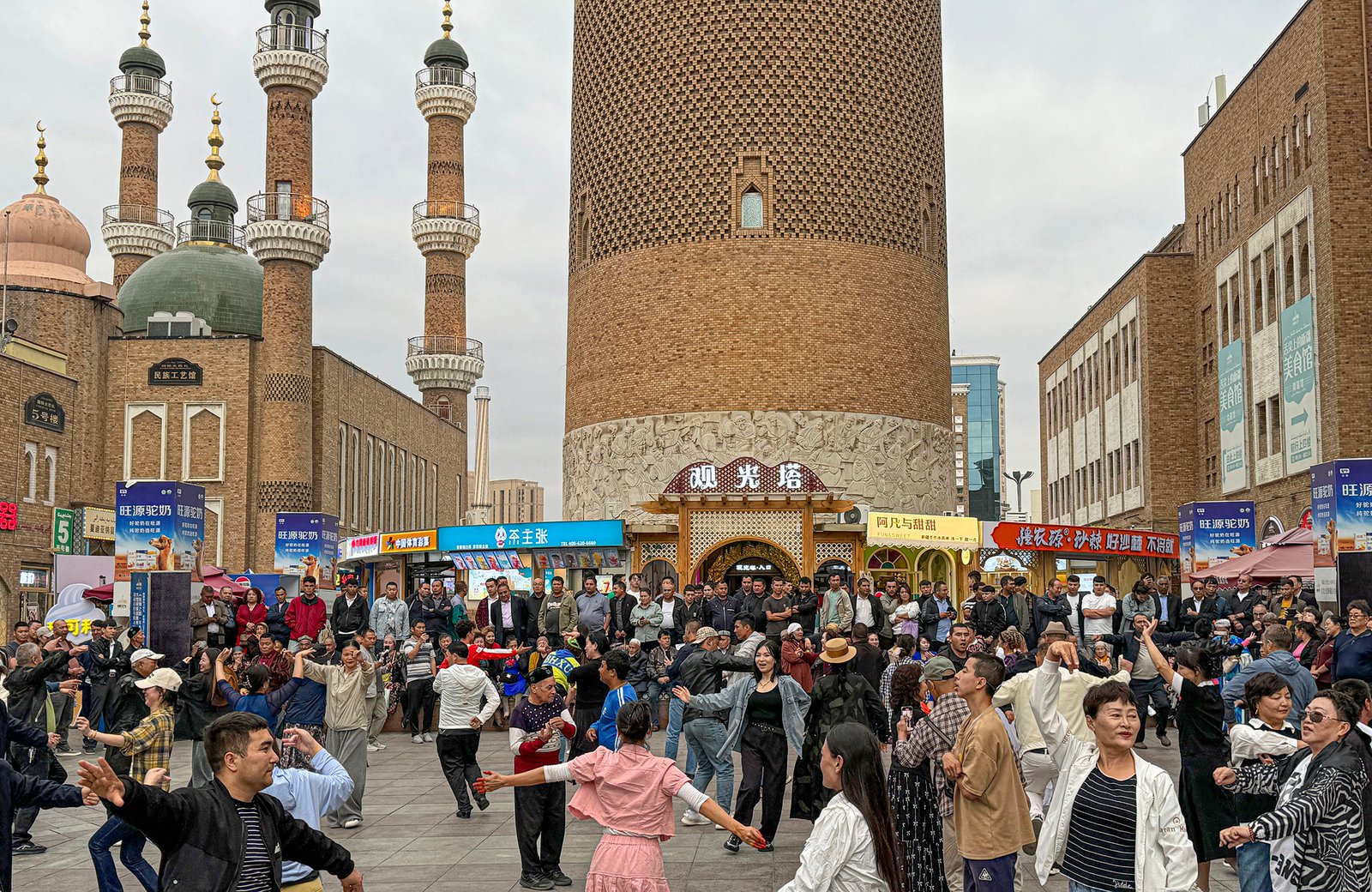
Citizens dancing on a Friday afternoon at the Grand Bazaar Square in Urumqi, Xinjiang, China – Photo Jan Oberg 2024 This is just a brief reflection on my second visit to China. Still tired from the long journey, I’m slowly adjusting to our time zone and trying to focus on the tasks waiting for me. But a flood of impressions keeps swirling in my mind, making it impossible to rest—especially after realizing how much Western propaganda had shaped my expectations. I thought I was heading to a brutal and backward corner of China, only to find myself utterly enchanted by what I encountered. What intrigued me the most was the fact that I was about to visit what is often portrayed as China’s “most notorious” region. This is the province at the centre of ongoing accusations against China—claims of massive human rights abuses and even genocide, particularly targeting the Uyghur...
8b4ce6c6-07a2-445c-9684-1d4c810b3da3_ea28b52e
Ethnic minorities expert Barry Sautman gives his take on education, the next Dalai Lama, Han chauvinism and Beijing’s treatment of Uygurs September 24, 2024 Barry Sautman is a professor emeritus at the Hong Kong University of Science and Technology’s Division of Social Science and visiting professor at Tsinghua University. An expert on China’s ethnic minorities, particularly the Tibetan and Uygur communities, his research focuses on minority rights, cultural preservation and social change. This interview first appeared in SCMP Plus.For other interviews in the Open Questions series, click here. This article/interview was first published by the South China Morning Post on September 23, 2024 What drew you to ethnic minority issues in China? I’d been to Xinjiang perhaps three or four times many years ago. I was concentrating on a particular subject, which was preferential policies. At that time I was studying them broadly, going to different minority areas including Tibet,...
7a05858df1a84b29825f136779800e22
Introduction Here we go again. On the same day, leading Western mainstream media – such as BBC, Politiken, Dagens Nyheter, Le Monde, etc – 14 media from 11 countries – publish a new accusation against China, ‘Xinjiang Police Files’: Exclusive documents reveal China’s machine of repression against the Uyghurs. They are produced by the extreme right Victims of Communism Memorial Foundation in the United States. It appeared the day after President Biden had stated, in Tokyo, that the US would come to the rescue of Taiwan if China should attack it. And it coincided also with the UN Human Rights High Commissioner, Michelle Bachelet, started her fact-finding mission in Xinjiang. Perhaps it was a coincidence. Perhaps the material was put together and made ready by the foundation so it could be published at the right moment? Clearly, the untold purpose has been to undermine Mme Bachelet’s mission and support the...
O
No, these three themes are not directly related to each other, except that they were suggested to me /” target=”_blank” rel=”noreferrer noopener”>Schiller Institute in Denmark when she kindly invited me to participate in a longer interview. If you prefer, you may also listen to it as podcast and read it here.
5e1588b4a310cf3e97afb830
By Xinhua writers Tao Fangwei and Gu Yu July 20, 2021 — Despite the Xinjiang cotton boycott instigated by some Western politicians under the pretext of “forced labor,” the region’s cotton and textile industry has shown resilience by further tapping markets and winning over more customers with its superior quality. — In the first four months of this year, China’s export volume of cotton textiles and garments hit 19.7 billion U.S. dollars, up 44 percent year on year. — “China’s cotton has contributed a lot to the global cotton industry and we deserve fair treatment and due respect,” said Gao Fang, director of the China Cotton Association. Originally posted on CCTV’s English website on July 9th, 2021 URUMQI, July 8 (Xinhua) — In a textile plant in the city of Shihezi, northwest China’s Xinjiang Uygur Autonomous Region, machines with 100,000 spindles rumbled to spin cotton into yarn. “We are producing...
CCTV
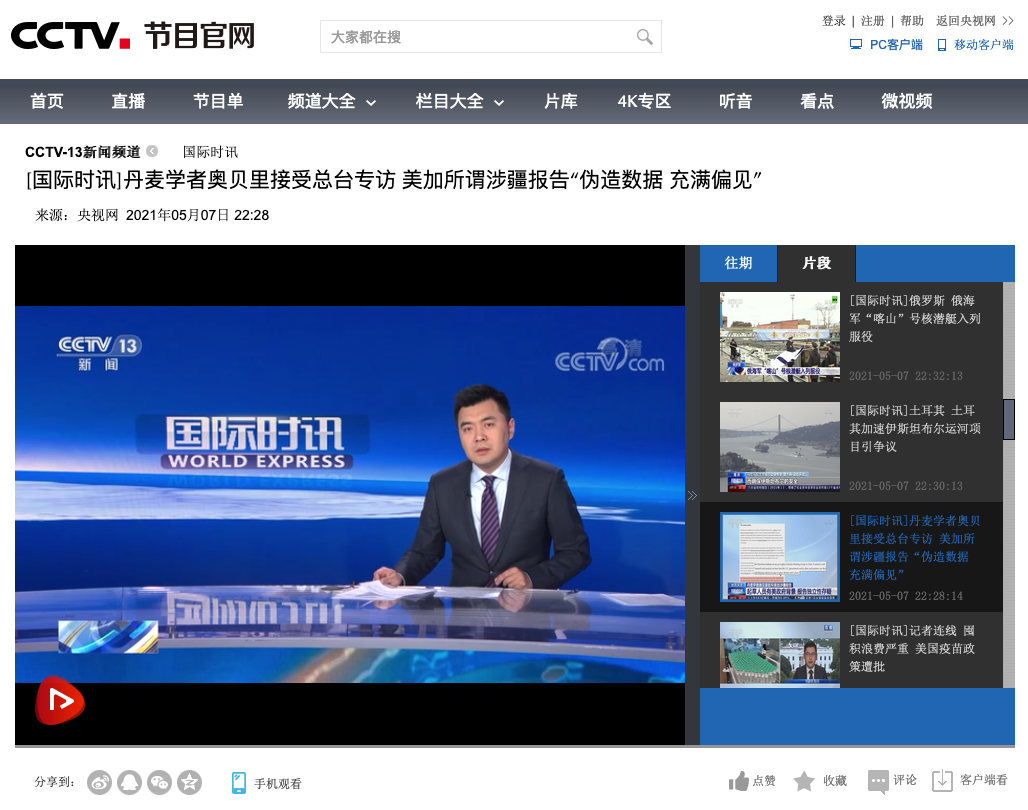
Or – it isn’t every day you address several hundred million people The TFF report “The Xinjiang Genocide Determination As Agenda” has reached more people in more countries than virtually anything else we have produced the last few years. That is, outside the West, in Asia in general and in China in particular. All leading Chinese media have paid substantial attention to it in both their Chinese and English editions. It is as if there was a need for a substantial – not political – scholarly examination of the empirical basis of the accusation, or “determination,” that Western governments have issued spearheaded, of course, by the Trump and Biden Administrations. In the report we reveal that the documentation is very weak, the scholarly work biased and bordering on the anti-academic and that those who have brought the documentation are anything but independent. Instead, many of those who have provided the...