Egypt

Showing 1-10 of 57 stories

Sort by
Categories

Year

Author / Contributor

Region

bofuq374gwgf
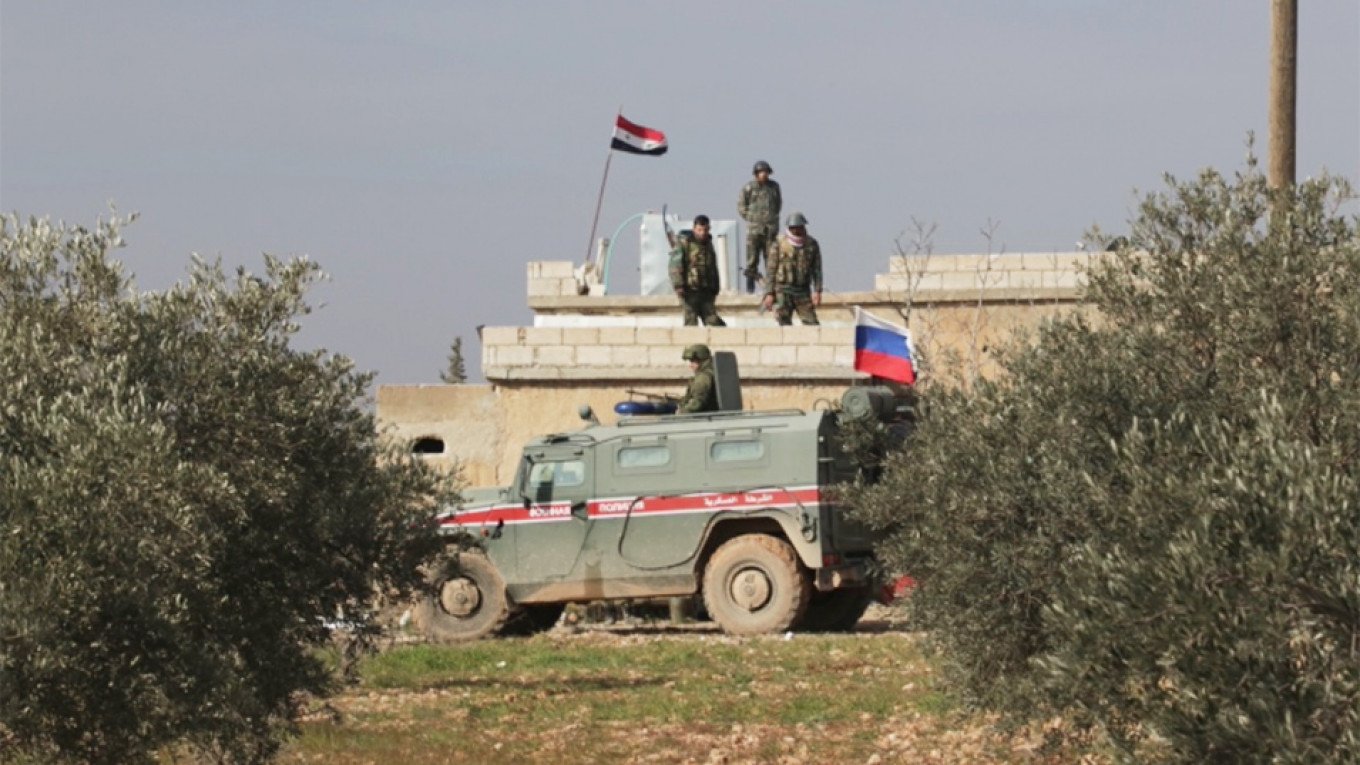
By Scott Ritter November 4, 2019 At a time when the credibility of the United States as either an unbiased actor or reliable ally lies in tatters, Russia has emerged as the one major power whose loyalty to its allies is unquestioned, and whose ability to serve as an honest broker between seemingly intractable opponents is unmatched. Originally posted on Truthdig.com on October 30, 2019 here If there is to be peace in Syria, it will be largely due to the patient efforts of Moscow employing deft negotiation, backed up as needed by military force, to shape conditions conducive for a political solution to a violent problem. If ever there was a primer for the art of diplomacy, the experience of Russia in Syria from 2011 to the present is it. Like the rest of the world, Russia was caught off guard by the so-called Arab Spring that swept through the Middle...

c8ddd0cb93fc674b1cb425fea6242d22
By Gordon M. Hahn October 1, 2019 Five or six years ago, when I was still working most intensively on issues related to jihadism in Russia and globally, I warned of the Caucasus Emirate-tied network running from Russia’s North Caucasus to ISIS in Syria and Iraq through Turkey, Azerbaijan and Georgia (with Tbilisi’s connivance) (see previous articles here and here). Originally posted on Gordon M. Hahn’s personal blog on September 29, 2019 here Somewhat more recently, I also had written about former US President Barak Obama’s Muslim Brotherhood (MB) strategy for bringing ‘Islamic democracy’ to the Muslim world and its dire consequences in Egypt, Libya, Syria and elsewhere in what came to be misnamed the ‘Arab Spring’.  America’s hopefully accidental but nevertheless resulting connivance with ISIS and Al Qai`da-tied groups (e.g., AQ-tied Jabhar al-Nusrah) was exacerbated by intentional connivance by one of Obama’s partners in creating the Arab winter: Turkish...
RichardFalk
By Richard Falk • Prefatory Note -This post addresses the need for dialogue with the political, economic, and cultural ‘other,’ that is, those multitudes acutely alienated from and angry with secular globalism and the Enlightenment legacy often equated with ‘modernity’ and ‘modernization.’ At the core is a search for closure on the nature of reality as well as feelings about equity (given many dimensions of inequality) and ethical innovation (revisionist approaches to gender, sexuality, marriage). Does reason or faith or tradition provide greater closure? Can the Thomistic grand synthesis of the 13th Century be repeated under 21st Century condition in the rough waters of controversy generated by Trump and Trumpism? Is this too Western a way of putting the problem? I write as an American, but there are many parallels in other countries. The first step is to admit being out of touch with the ferment below the surface. A...
Imagen-thumbnail-The-Transnational-1
Part A here The role – again – of marketing companies in selling wars Few wars have been so thoroughly media-managed and marketing-loaded as that on Syria. No wonder arms deals are too – otherwise citizens around the world would protest loudly that their tax money is spent on destruction and more destruction and all the promises of the past that this – or that – arms deal will increase security and peace in the world have turned out to be fake information – disinformation – and an integral part of what can only be termed “fearology” by governments against their own people. One must therefore welcome Russia Today’s excellent research by Alexey Yaroshevsky also on this dimension. This report is high-speed but listen carefully to it as it points out two US companies associated with this deal and US-Saudi relations with questionable image – a report that also highlight to some extent the...
Jibrin1
By Jan Oberg Three perspectives on the Syrian conflict formation The Syrian conflict formation is hugely more complicated than we’ve been told by Western politicians (all mainstream in spite of democratic features) and mainstream/dependent media. To some there are only internal aspects and it’s called a civil war only. That’s a necessary but not sufficient aspect. The same goes for the only regional perspective focusing on e.g. the Israel-Palestine conflict, Iran’s, Saudi-Arabia’s, Turkey’s roles and policies. To others, everything can be explained from the point of view of Western interventionism/imperialism. That’s also a necessary but not sufficient aspect. To understand anything of the Syrian conflict formation – and there are very many layers, dimensions and participants over the last 100 years – we need all three basic approaches. But given that Westerners are likely to have been informed by Western media and politicians they are likely to grossly underestimate the...
RichardFalk20141
Prefatory Note An earlier version was published by Middle East Eye on August 10, 2016. It seems so important at this time for the sake of the future of Turkey that the West look at the country and its political circumstances in a far more balanced way than how the situation has been portrayed since the coup. How to explain this imbalance is another matterthat should be explored at some point, but for now is largely put aside. Much uncertainty remains in Turkey, but there is enough evidence of positive tendencies to raise a tentative banner of hope. Being a witness to the political atmosphere in Turkey that has emerged after the failed coup of July 15th puts me at odds with the secular consensus in the West, which looks up at the sky and sees only dark, ominous clouds of human rights abuse and autocratic leadership. What I have...
Imagen-thumbnail-The-Transnational-1
The Telegraph’s Raf Sanchez in Jerusalem. The only other media carrying the story is Russia Today and Vigilant Citizen and MintPress News also carries the story and offers a wider background What is this about?A new coalition? So the usual Western media filter, meaning it must be interesting. And it is a quite sensational story: Saudi Arabia and Israel are up to a nuclear mischief against a country that has just been prevented from acquiring nuclear weapons by means of a huge legally binding document, UN Security Council endorsement and extremely tight monitoring mechanism. What’s it about? It’s about Israel’s defence minister Moshe Ya’alon saying in public at the recent Munich conference that Arab states are “not willing to sit quietly with Iran on the brink of a nuclear bomb”. He thinks that Iran was liable to break the agreement as their economic situation improves with the lifting of international...
farhangjahanpour
By Farhang Jahanpour Since achieving their independence from Western colonialism, most Arab countries have never experienced events such as they have seen during the past few years. The demonstrators in Tunisia got rid of their autocratic ruler in a remarkably short time. And the events in Egypt starting exactly five years ago today (25 January, 2015) spelled the end of Hosni Mubarak’s regime. The fire of revolutions and uprisings spread to other Arab countries, and are still continuing. Although those revolutions have not yet led to any lasting democracy or improvements in the lives of their citizens, nevertheless, what has happened during the past five years cannot be reversed, no matter how hard the autocratic rulers try to set the clock back. For better or worse, the Arab world is undergoing profound changes, which will affect both the lives of Arab citizens and the relations between those countries and the...
RichardFalk20141
There are many disturbing signs that the West is creating conditions in the Middle East and Asia that could produce a wider war, most likely a new Cold War, containing, as well, menacing risks of World War III. The reckless confrontation with Russia along its borders, reinforced by provocative weapons deployments in several NATO countries and the promotion of governing regimes hostile to Russia in such countries as Ukraine and Georgia seems to exhibit Cold War nostalgia, and is certainly not the way to preserve peace. Add to this the increasingly belligerent approach recently taken by the United States naval officers and defense officials to China with respect to island disputes and navigational rights in the South China Seas. Such posturing has all the ingredients needed for intensifying international conflict, giving a militarist signature to Obama’s ‘pivot to Asia.’ These developments are happening during the supposedly conflict averse Obama presidency....
RichardFalk20141
Prefatory Note: What follows is a modified version of the Morton-Kenney annual public lecture given at the University of Southern Illinois in Carbondale on November 18, 2015 under the joint sponsorship of the Department of Political Science and the Paul Simon Public Policy Institute. The Failure of U.S. Foreign Policy in the Middle East While focusing on the ‘failure’ of American foreign policy in the Middle East it is relevant to acknowledge that given the circumstances of the region failure to some degree was probably unavoidable. The argument put forward here is that the degree and form of failure reflected avoidable choices that could and should have been corrected, or at least mitigated over time, but by and large this has not happened and it is important to understand why. This analysis concludes with a consideration of three correctible mistakes of policy. It is also true that the Middle East...
jonathanpower2
By Jonathan Power So Putin on Monday met Obama. They are going to cooperate against ISIS, the world’s worst problem. President Vladimir Putin says we should not be surprised to see Russian jets working cooperatively – even coordinating – with the US on missile attacks. Even with both powers working in tandem it will be uphill work. ISIS has attracted over 30,000 foreign fighters, according to a UN Security Council report. At least 2,000 from Russia and ex-Soviet territories are in their number. (In contrast to Russia the US is more threatened by domestic, non-Muslim, terrorists than Muslim extremists.) Will rapprochement over Syria and ISIS wind the clock back to the benign US-Russia relationship that was begun with President Barack Obama’s early “re-set” which led to, among other things, a significant agreement on reducing nuclear arms?