Edward Curtin: There Is No Escape From Telling

Edward Curtin

May 30, 2023

By the lake’s lapping shore above the town and the railroad tracks, my wife and I stopped and marveled, struck stone silent by two dazzling Baltimore Orioles, clawed together as they tumbled, wrestling in the green morning breeze above our heads. They perched upon a branch and sang a morning hymn, an ode to joy and the spring’s morning glory. Their black and orange throats vibrated amid the green quaking aspen’s leaves as the lake’s low lapping sounds lent counterpoint. They were sublime.

Originally published at Off Guardian on May 14, 2023

I too felt a quake, a shiver down my spine as associations tumbled through my mind. Poems, songs, memories of other early morning walks in spring. Intoxication, elation, the horripilation that accompanies spring’s rising, the sexual excitement. Hope, and the loose feeling of being forever young. No solution to anything, just reverence for existence. Nothing changed, except a few years.

In quickly putting into words what I felt a half-hour ago, I drew on a vast store of personal and cultural memories that came to me with little thought as I was walking home. Words strung together without thinking. You have just read them. I felt impelled to tell them.

Now as I sit and contemplate, I think about culture and what it might mean. In my case, I was gifted by my parents and schools with the love of poetry and art from a young age. I know well that everyone is not so lucky and that, in any case, culture has many meanings. “Culture,” writes Raymond Williams, “is one of the two or three most complicated words in the English language.” From its original verbal meaning to cultivate the land to high, low, and middlebrow culture onto so many other meanings and conflicts that are often tied up with social class issues. There are cultures and culture.

When I say cultural memories, I mean my memories, no one else’s.

I learned early on that the music of verse, the sound of birds in the trees, the rush of a creek murmuring over rocks, the lilt of words spoken passionately, the placement of a certain blue paint on a canvas, a singer’s voice flying with a tune of joy or sadness, and a instrument’s vibrations were all connected to the reverence I felt as an altar boy tolling the bells and repeating Latin responses, whose full meaning I couldn’t grasp amid the incense and candle smoke: Et introibo ad altare Dei: ad Deum qui laetificat juventutem mea – “And I go to the altar of God, to God who gives joy to my youth.”

It was the sound of the bells that entranced me, and that I was allowed to ring them. To sound in, to participate in the ancient ritual that created a musical enclave from the beyond. I knew then, as I know now, that God has many altars, and that reverence before them and their mysteries is the right refrain.   Bob Dylan singing “Ring Those Bells” comes to mind:

Ring them bells, ye heathen
From the city that dreams
Ring them bells from the sanctuaries
’Cross the valleys and streams
For they’re deep and they’re wide
And the world’s on its side
And time is running backwards
And so is the bride

So while it is not necessary to draw on stored cultural memories to appreciate the birds in the trees on nature’s altar on a beautiful spring morning, for me it enriched the experience. You may have heard echoes of Yeats, Van Morrison, and others in my words, but the reality of the world I described would be the same for those who never heard of these artists, who find their inspiration in the terrible beauty of nature and have other associations.

Are we really at home in our interpreted world, a poet once asked? It is a good question. This poet was Rilke, who wrote in the Duino Elegies :

For beauty is nothing/but the beginning of terror/which we are still just able to endure/and we are so awed because it serenely/disdains to annihilate us/Every angel is terrifying/And so I hold myself back and swallow the call note of my dark sobbing/Ah, whom can we ever turn to in our need?

Whom can we ever turn to in our need?

Everyone carries different associations that come to us when we are not thinking but are only immersed in our experiences.  Snatches of trace memories, images, words, sounds, smells, the look of light, etc. that usually occur slightly after the first encounter with natural phenomena. One doesn’t have to know Shakespeare or William Wordsworth to experience nature’s beauty. Nor it’s terrors. Yet I must admit I am partial to words like these from Wordsworth:

Though nothing can bring back the hour
Of splendour in the grass, of glory in the flower;
We will grieve not, rather find
Strength in what remains behind;
In the primal sympathy
Which having been must ever be;
In the soothing thoughts that spring
Out of human suffering;
In the faith that looks through death,
In years that bring the philosophic min
d.

But whatever our backgrounds, we are all interpreters of our world and words are our fundamental way of doing so. Words and metaphors that lead us to myth and art, even when its expression is wordless sound or pictures. Words that are often unacknowledged prayers to an unknown God.

For many years I taught what are called the liberal arts. This was an extension of my own education in the classics, philosophy, theology, and sociology, disciplines divided in name only but married in reality to science, literature, history, languages, etc. It is all one study when rightly understood. But our schools and  universities have been abandoning this approach for the sterility of numbers and the cold dead hand of technology and digital dementia. For specialization, where professors know nothing outside their limited disciplines. For the study of the parts without any sense of the whole.

A new Dark Age is closing upon us, as Max Weber noted more than a century ago when he described the people who run our societies and educational institutions as specialists without spirit, sensualists without heart; this nullity imagines it has attained a level of civilization never before achieved.”

Students are being denied the rich heritage of words, images, and music that form the basis of Western culture. Without such a repository of cultural wisdom, they are left to draw only on popular cultural sources to interpret the world and their lives. More and more of these sources are anemic, if not degrading. 

It is not that some are not extraordinarily rich and meaningful, as is evident from those I link to in this essay, but a quick look around should convince any fair-minded person that the pickings are quite slim. 

We are drowning in cultural garbage that is being pumped out through digital media, primarily so-called smart phones, into young people’s minds and souls. It is poison. And the schools have devolved into protection rackets where students are protected from their own thoughts and ideas that might allow them to think and be thought.

To think, question, and debate have been replaced with censorship and the coddling of young minds.  Such censorship, of course, has its counterpart in society at large. Call it propaganda, which is exactly what it is.

If Rilke is right, we will never be at home on this earth, our interpreted world. As a poet and a man of words, he no doubt knew that there is no alternative to interpretation, to ask why, to use words to describe our experiences and to seek meaning as we travel through the mystery of time and existence.

I know, however, for those minutes I stood by the lake in rapt silence as the birds sang and the water lapped, I felt at home.

Home, of course, is a complicated word, for we are time-bound creatures always moving on, travelers who are home one minute and gone the next. Even the word culture derives from an Indo-European root meaning to revolve, tied as it is, as are we, to the idea of a natural cycle, the turning of the seasons.  Doesn’t a contemporary artist, Joni Mitchell, tell this beautifully with The Circle Game.

To say we are wayfarers is accurate, always on the way, as my recently departed dear friend Graeme MacQueen, a Buddhist and 9/11 scholar told me, when he laughingly said to me right before he recently died, that the old folk and Christian gospel song, Wayfaring Stranger, was his story too. He was a man of many talents who established the Centre for Peace Studies at McMaster University in Canada, wrote the important book, The 2001 Anthrax Deception, and much more, even a children’s book.

Graeme did all his work with the awareness that we are temporary sojourners on this earth, and that it is through stories and myths and their associations that come to us unbidden that we can connect life with death, the material and spiritual sides of our natures, in the search for peace. He died at home. I imagine him singing along with the words of the song: “I am a poor wayfaring stranger…I’m goin’ home to see my father/I’m goin’ home, no more to roam/I am just goin’ over Jordan/I am just goin’ over home”

And then laughing so hard he couldn’t breathe, just as he did earlier when he told me his doctor’s name was Dr. Sender, as he prepared to hit the road.

There is no escape from telling. Life is sublime.

From his album, On the Road, Van Morrison takes us out with “The Beauty of the Days Gone By”

Originally published at Off Guardian on May 14, 2023
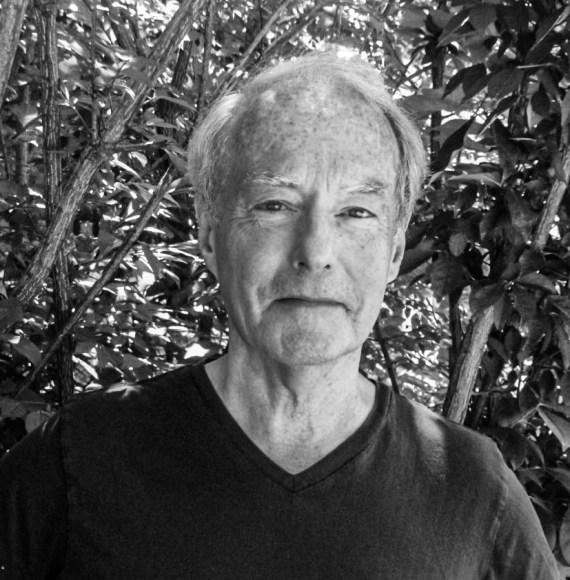
Edward Curtin is an independent writer whose work has appeared widely over many years. His website is edwardcurtin.com and his new book is Seeking Truth in a Country of Lies.

Please help TFF remain truly independent if you liked this article
Click here now!

No data was found

Share

Leave a Reply

Your email address will not be published. Required fields are marked *

Related Posts

“The future belongs to those who imagine it — not those who declare it doomed.” Silence is unusual for us. But even a foundation devoted to peace and ideas needs a pit stop now and then — a moment to refuel, re‑engineer, and prepare for the road ahead. Because the road ahead matters. On January 1, 2026, TFF turns 40. Four decades of independent research, education, and advocacy for the UN Charter norm that “peace shall be established by peaceful means.” And we are not celebrating with nostalgia — we are rebuilding for the future: We are bringing in new Associates, engaging in conferences across continents, and preparing to do what so few dare: offer solutions instead of despair. Because let’s be honest: describing the world as doomed is easy. It is also lazy, unprofessional, and unethical. Imagine a doctor telling a patient: “You’re dying, I can’t see what can...
list=PLgfli1PY64h3bpPsycG1E1PquoujN9wIIu0026ab_channel=NeutralityStudies”,”type”:”video”,”providerNameSlug”:”youtube”,”responsive”:true,”className”:”wp-embed-aspect-16-9 wp-has-aspect-ratio”} –>
Editorial for Transcend Media Service, TMS, and published in an edited Q & A version by the China Social Science Network-China Social Science News. See also this follow-up, “Condemn all UN member states: They spend 100 times more on militarism than on the entire UN system.” The UN has been extremely important over the last 80 years in terms of, for instance, global dialogue, multi-dimensional development, international law, peace-keeping, normativity, violence condemnation, and ethics. It has been the place to hold member states accountable. The UN Charter is the most Gandhian document ever signed by the world’s governments. If the great majority of member states lived up to their obligations in accordance with the UN Charter and including the resolutions they have signed up to, the world would be a much more peaceful, just, democratic, and lawful place. Regrettably, there are several reasons why the world is not in accordance with those fine Charter norms and provisions:a) The majority...

Recent Articles

Jan Øberg behandler i artiklen en lang række faktorer, som ligger til grund for den måde vores samfund er organiseret på – og derfor også for konflikter. Artiklen introducerer således sammenhængen mellem familien, foreninger, regeringer, NGO’ er, nation, stat, nationalstat og alliancer for på denne måde bedre at kunne forstå konflikter og i sidste ende blive klogere mht. at løse disse. Øberg, der er fortaler for global bevidsthed, hvilket skal ses i lyset af den øgede globalisering, skelner mellem kulturkamp og kulturdialog. Endelig behandles begrebet magt og magtesløshed: giver magt ret til at udøve magt – fordi man mener at have ret? Litteraturliste og arbejdsspørgsmål efter artiklen. Ordene vi bruger om verden I satellitperspektiv kan man godt tale om den menneskelige familie eller menneskeheden. Udtrykket understreger, at der eksisterer – eller burde eksistere – et fællesskab fordi vi alle er mennesker og sammen bebor denne klode og ingen anden. Og...
Kapitel 2: Forskellige sider af Europa og USA…fortsat 2.5 Militære relationer I forbifarten har vi allerede sagt nogle ting om USA’s militære situation. Kig lige en gang til på afsnit 2.3. Nu skal vi uddybe det militære forhold mellem USA og EU. Der er en række ligheder mellem visse europæiske landes og USA’s militær. Næsten alle er med på en eller anden måde i NATO, direkte som medlem – selv Island, der ikke har et forsvar – eller indirekte i Partnerskab for Fred. USA og Canada er med i OSCE (på dansk OSSE), Organisationen for Sikkerhed og Samarbejde i Europa, der tæller over 50 lande. USA samt England og Frankrig er kernevåbenstater og de har styrker til intervention langt borte fra hjemlandet, om end USA’s er tifold større. Alle har også en omfattende våbeneksport og bruger den som et middel til at tjene penge og få loyale venner på, det...
Background Christian Harleman and Jan Oberg conducted a fact-finding mission to Burundi between November 26 and December 6, 2003. (See websites about the country here). The first TFF mission took place in March 1999. Unfortunately, since then it has not been practically possible to implement the co-operation with Burundi’s Ministry of Education and Burundian NGOs that was planned at the time. The 2003 mission had three purposes. First, to do fact-finding in general about the situation and, in particular, the progress under the Arusha Peace Process. Second, to explore the possibilities for co-operation between the government and relevant NGOs on the one hand and TFF on the other, in order to develop and deepen the existing competence in fields such as conflict-understanding, reconciliation and peace-building. Finally, third, to find out whether it would be possible, in co-operation with the Swedish Rescue Services Agency (Statens Räddningsverk), to establish a health care unit that...

TFF on Substack

Discover more from TFF Transnational Foundation & Jan Oberg.

Most Popular

Jan Øberg behandler i artiklen en lang række faktorer, som ligger til grund for den måde vores samfund er organiseret på – og derfor også for konflikter. Artiklen introducerer således sammenhængen mellem familien, foreninger, regeringer, NGO’ er, nation, stat, nationalstat og alliancer for på denne måde bedre at kunne forstå konflikter og i sidste ende blive klogere mht. at løse disse. Øberg, der er fortaler for global bevidsthed, hvilket skal ses i lyset af den øgede globalisering, skelner mellem kulturkamp og kulturdialog. Endelig behandles begrebet magt og magtesløshed: giver magt ret til at udøve magt – fordi man mener at have ret? Litteraturliste og arbejdsspørgsmål efter artiklen. Ordene vi bruger om verden I satellitperspektiv kan man godt tale om den menneskelige familie eller menneskeheden. Udtrykket understreger, at der eksisterer – eller burde eksistere – et fællesskab fordi vi alle er mennesker og sammen bebor denne klode og ingen anden. Og...
Kapitel 2: Forskellige sider af Europa og USA…fortsat 2.5 Militære relationer I forbifarten har vi allerede sagt nogle ting om USA’s militære situation. Kig lige en gang til på afsnit 2.3. Nu skal vi uddybe det militære forhold mellem USA og EU. Der er en række ligheder mellem visse europæiske landes og USA’s militær. Næsten alle er med på en eller anden måde i NATO, direkte som medlem – selv Island, der ikke har et forsvar – eller indirekte i Partnerskab for Fred. USA og Canada er med i OSCE (på dansk OSSE), Organisationen for Sikkerhed og Samarbejde i Europa, der tæller over 50 lande. USA samt England og Frankrig er kernevåbenstater og de har styrker til intervention langt borte fra hjemlandet, om end USA’s er tifold større. Alle har også en omfattende våbeneksport og bruger den som et middel til at tjene penge og få loyale venner på, det...
Background Christian Harleman and Jan Oberg conducted a fact-finding mission to Burundi between November 26 and December 6, 2003. (See websites about the country here). The first TFF mission took place in March 1999. Unfortunately, since then it has not been practically possible to implement the co-operation with Burundi’s Ministry of Education and Burundian NGOs that was planned at the time. The 2003 mission had three purposes. First, to do fact-finding in general about the situation and, in particular, the progress under the Arusha Peace Process. Second, to explore the possibilities for co-operation between the government and relevant NGOs on the one hand and TFF on the other, in order to develop and deepen the existing competence in fields such as conflict-understanding, reconciliation and peace-building. Finally, third, to find out whether it would be possible, in co-operation with the Swedish Rescue Services Agency (Statens Räddningsverk), to establish a health care unit that...
Read More
Imagen-thumbnail-The-Transnational-1
Jan Øberg behandler i artiklen en lang række faktorer, som ligger til grund for den måde vores samfund er organiseret på – og derfor også for konflikter. Artiklen introducerer således sammenhængen mellem familien, foreninger, regeringer, NGO’ er, nation, stat, nationalstat og alliancer for på denne måde bedre at kunne forstå konflikter og i sidste ende blive klogere mht. at løse disse. Øberg, der er fortaler for global bevidsthed, hvilket skal ses i lyset af den øgede globalisering, skelner mellem kulturkamp og kulturdialog. Endelig behandles begrebet magt og magtesløshed: giver magt ret til at udøve magt – fordi man mener at have ret? Litteraturliste og arbejdsspørgsmål efter artiklen. Ordene vi bruger om verden I satellitperspektiv kan man godt tale om den menneskelige familie eller menneskeheden. Udtrykket understreger, at der eksisterer – eller burde eksistere – et fællesskab fordi vi alle er mennesker og sammen bebor denne klode og ingen anden. Og...
Imagen-thumbnail-The-Transnational-1
Kapitel 2: Forskellige sider af Europa og USA…fortsat 2.5 Militære relationer I forbifarten har vi allerede sagt nogle ting om USA’s militære situation. Kig lige en gang til på afsnit 2.3. Nu skal vi uddybe det militære forhold mellem USA og EU. Der er en række ligheder mellem visse europæiske landes og USA’s militær. Næsten alle er med på en eller anden måde i NATO, direkte som medlem – selv Island, der ikke har et forsvar – eller indirekte i Partnerskab for Fred. USA og Canada er med i OSCE (på dansk OSSE), Organisationen for Sikkerhed og Samarbejde i Europa, der tæller over 50 lande. USA samt England og Frankrig er kernevåbenstater og de har styrker til intervention langt borte fra hjemlandet, om end USA’s er tifold større. Alle har også en omfattende våbeneksport og bruger den som et middel til at tjene penge og få loyale venner på, det...
Imagen-thumbnail-The-Transnational-1
Background Christian Harleman and Jan Oberg conducted a fact-finding mission to Burundi between November 26 and December 6, 2003. (See websites about the country here). The first TFF mission took place in March 1999. Unfortunately, since then it has not been practically possible to implement the co-operation with Burundi’s Ministry of Education and Burundian NGOs that was planned at the time. The 2003 mission had three purposes. First, to do fact-finding in general about the situation and, in particular, the progress under the Arusha Peace Process. Second, to explore the possibilities for co-operation between the government and relevant NGOs on the one hand and TFF on the other, in order to develop and deepen the existing competence in fields such as conflict-understanding, reconciliation and peace-building. Finally, third, to find out whether it would be possible, in co-operation with the Swedish Rescue Services Agency (Statens Räddningsverk), to establish a health care unit that...
Imagen-thumbnail-The-Transnational-1
Former UN Under-Secretary-General with special responsibility for peacekeeping operations TFF associate August 20, 2003 YRINGHAM, Mass.- Ralph Bunche was born in Detroit 100 years ago today (August 7, 2003). His passionate determination to get results did not extend to seeking credit for them, so his work is better remembered than he is. Of all his many accomplishments – civil rights pioneer, Nobel Peace Prize laureate, chief drafter of two chapters of the United Nations charter, negotiator of the armistices that ended the first Arab-Israeli war – Bunche said he was proudest of developing what came to be known as peacekeeping. Setting up the United Nations Truce Supervision Organization in Palestine in 1948, Bunche formulated the principles that have governed peacekeeping operations ever since. In the 1956 Suez crisis, working with Secretary General Dag Hammarskjold and Lester Pearson of Canada, he organized the first peacekeeping force, the United Nations Emergency Force...
– nästan 11 månader Till Sofia nästan 11 månader # 1  Till Sofias huvudsida Till alla Privata Foto-Serier
Till Sofias huvudsida